
Michelin Plate
Our verdict
A Michelin Plate-recognised kaiseki address in Osaka's Kita Ward, Kawahara operates from a converted family home in Toyosaki where the owner-chef applies deliberate ingredient logic to each element of the menu. Rishiri kombu governs the broth; ma-kombu handles cooked preparations. The ¥¥¥ pricing sits within the mid-tier of Osaka's serious Japanese dining scene, making it one of the more accessible entry points to this level of ingredient discipline.

Pearl is the En Primeur Club membership app, where members save venues, book tables and use the concierge.
The menu
What to order
- Rice straw-fired grill fish
- Amberjack sandwich
An Old House in Toyosaki, and What Happens Inside It
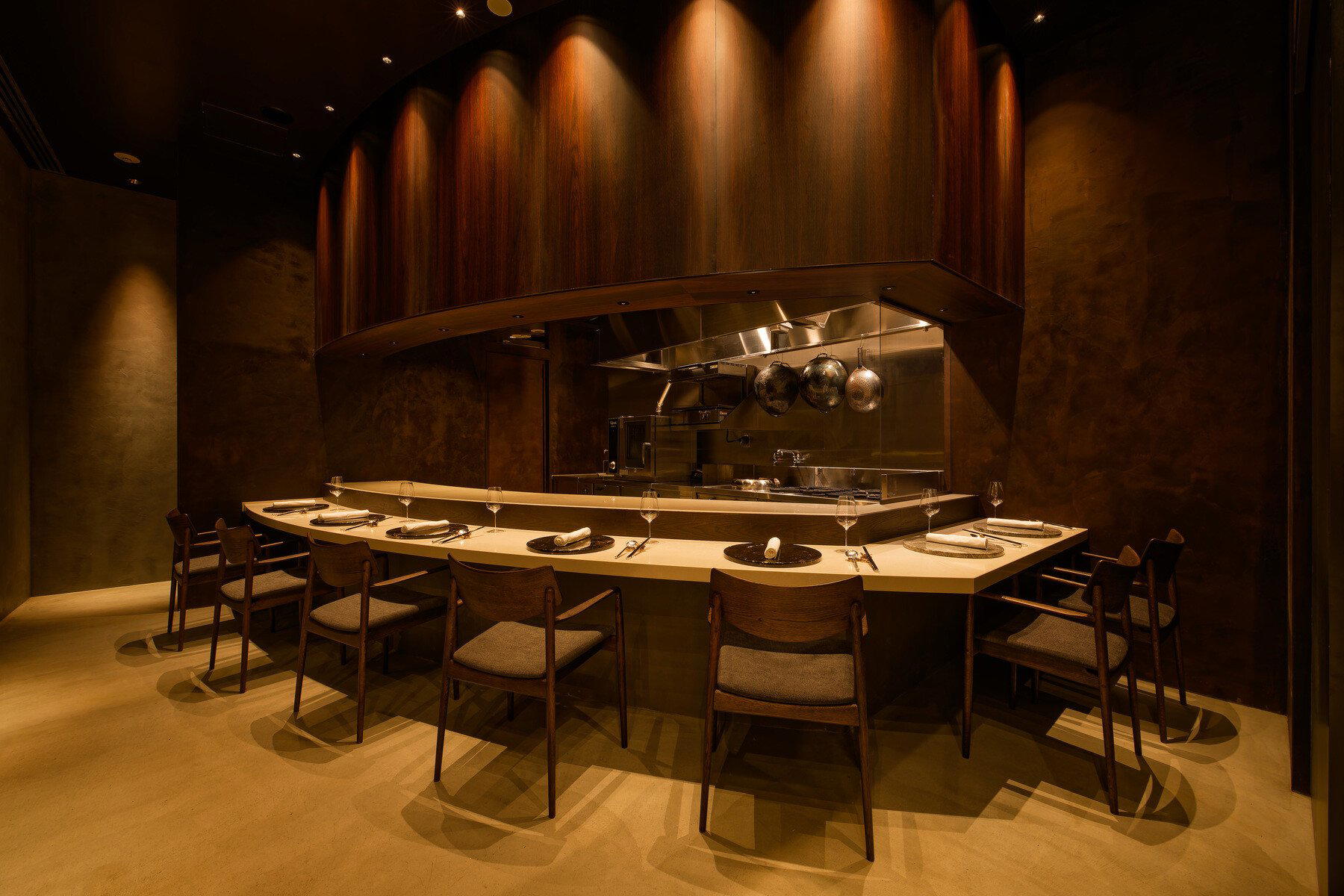
Osaka's Kita Ward is better known for its dense commercial corridors than for quiet residential pockets, which makes the Toyosaki address of Kawahara something of a contrast. The restaurant occupies an old family home, and the transition from street to interior carries the particular warmth that only a converted domestic space can produce: low ceilings, inherited wooden detail, the sense that the building has absorbed decades of meals before this one. It is not a dining room assembled from a design brief. It is a room that already existed, and that quality sets the register for everything that follows.
Within Osaka's mid-tier Japanese dining bracket, which also includes addresses like Miyamoto and Tenjimbashi Aoki, Kawahara occupies a position defined less by ceremony than by ingredient precision. The ¥¥¥ price point places it clearly below the four-symbol tier of Osaka's French and innovative houses, Hajime at three Michelin stars or La Cime at two, and adjacent to the likes of Oimatsu Hisano and Yugen. The Michelin Plate in both 2024 and 2025 signals consistent quality within that cohort rather than a new entry still finding its footing.
The Kombu Question, and Why It Matters
Japanese cuisine's relationship with kombu is long and technically specific, but few kitchens at this price point make the distinction between kombu varieties as explicit a part of their cooking logic as Kawahara does. The kitchen uses Rishiri kombu, harvested from the cold, clear waters off Rishiri Island in Hokkaido, exclusively for soup preparations. Rishiri kombu is prized among Japanese cooks for producing a broth of particular clarity and delicacy, with a lighter umami profile than the more assertive Rausu variety. Its use signals a deliberate choice about what restraint means at the soup stage of a meal.
For cooked preparations, the kitchen switches to ma-kombu, the variety most associated with Osaka's own culinary heritage and the base of the dashi tradition that runs through Kansai cooking. Ma-kombu carries a deeper, more rounded umami and holds up better under heat, which is precisely why it functions well when flavour needs to be drawn into solid ingredients rather than simply extracted into liquid. The decision to maintain two separate kombu protocols within a single kitchen is not incidental. It reflects the kind of ingredient specificity that separates cooks who use kombu from cooks who think about it. For broader context on how this level of ingredient rigour operates across Osaka's Japanese dining scene, the full Osaka restaurants guide maps the tier structure in detail.
Ingenuity as a Working Method
Within the kaiseki and washoku tradition, innovation is most credible when it operates within constraints rather than against them. Kawahara's approach to fish, marinating it in miso before frying, is a good example of this. Miso marinades are not new to Japanese cooking, but applying the technique to fish before frying rather than grilling or broiling shifts the flavour outcome in ways that are technically considered: the miso sugars caramelise differently under fry conditions, the umami compounds in the paste interact with the fish proteins at higher temperatures, and the crust that forms carries both the fermented depth of the miso and the textural quality of the fry. It is a preparation that requires the cook to understand what miso does chemically, not just what it tastes like.
The Michelin commentary on Kawahara also notes that assorted items come together within a single dish, producing variety within a course rather than across them. This is a structural choice that compresses the range of a meal into fewer, more complex plates. At restaurants where the format is fixed and the sequence is long, that compression can feel like generosity. It also demands more from the diner's attention, since the different components of a single dish need to be read in relation to each other rather than consumed sequentially.
For a comparison of how this kind of creative approach to Japanese tradition plays out at other levels of the market, Kashiwaya Osaka Senriyama operates at three Michelin stars within the same broad tradition, while Gion Sasaki in Kyoto and akordu in Nara offer further regional reference points for Japanese ingredient-led cooking at different price tiers.
Where Kawahara Sits in the Wider Scene
Osaka's dining identity is sometimes reduced to its street food reputation, takoyaki, okonomiyaki, kushikatsu, but the city's serious restaurant tier is substantial. At the leading end, Hajime's three stars and the comparable recognition held by Kashiwaya mark a cohort of kitchens operating at international reference level. Below that, the ¥¥¥ band contains a significant number of technically accomplished Japanese restaurants that rarely attract the same attention but consistently reward careful selection. Kawahara is part of that tier, and the two-year run of Michelin Plates suggests it is not an outlier within it.
For those building a broader Japan itinerary around this calibre of Japanese cooking, Harutaka in Tokyo, Goh in Fukuoka, Myojaku in Tokyo, and Azabu Kadowaki in Tokyo each represent different expressions of what Japanese kitchens at this level are doing. 1000 in Yokohama and 6 in Okinawa extend that geography further. The full Osaka hotels guide, bars guide, wineries guide, and experiences guide are available for those planning a complete visit to the city.
Know Before You Go
- Address: 2 Chome-4-21 Toyosaki, Kita Ward, Osaka, 531-0072, Japan
- Price range: ¥¥¥
- Recognition: Michelin Plate 2024, Michelin Plate 2025
- Cuisine: Japanese
- Booking: Contact details not publicly listed, reservations likely via phone or third-party booking platforms; confirm before visiting
- Nearest major station: Nakatsu (Midosuji Line) or Honmachi area; Toyosaki is a residential neighbourhood within Kita Ward
Frequently asked questions
What is the atmosphere like at Kawahara?
Kawahara occupies a converted family home on a residential street in Toyosaki, Kita Ward, a quieter address than the commercial corridors Osaka's north is typically associated with. The Michelin guide specifically notes the interior exudes warmth, and the owner-chef Koji Kawahara is described as affable, giving the room a personal register that differs from the more formal kaiseki establishments in the city. Expect an intimate setting rather than a large dining room.
Does Kawahara have a Michelin star or similar recognition?
Kawahara has received recognition including: The interior of the restaurant, an old family home, exudes warmth. The affable owner-chef, Koji Kawahara, is creative too, as his menu abounds with ingenuity. Rishiri kombu kelp is used only for soup dishes, ensuring an elegantly flavoursom….
What should I eat at Kawahara?
The cooking at Kawahara is built around ingredient-specific decisions that the Michelin guide singles out: Rishiri kombu kelp is reserved exclusively for soups, producing a clean, flavoursome broth, while ma-kombu is used in cooked preparations to develop depth. A noted signature move is marinating fish in miso before frying, a preparation that sits outside the standard washoku playbook. Dishes are composed to bring multiple elements together in a single plate, so the menu reads as a series of considered combinations rather than isolated courses.
Is Kawahara more mid-range or high-end?
Pricing at Kawahara is listed as ¥¥¥.
What's Kawahara's location?
Kawahara is located at 2 Chome-4-21 Toyosaki, Kita Ward, Osaka, 531-0072, Japan, Osaka.
Price Lens
| Venue | Cuisine | Price | Awards | Notes |
|---|---|---|---|---|
| KawaharaThis venue (the venue you are viewing) | Modern Kaiseki | $100–150 | Michelin Plate | Not listed |
| HAJIME | Avant-Garde Japanese Fine Dining | $300–500 | 3 Michelin Stars · World's 50 Best #83 | French, Innovative |
| La Cime | Modern French with Japanese Ingredients | $150–200 | 2 Michelin Stars · World's 50 Best #13 | French |
| Kashiwaya Osaka Senriyama | Seasonal Kaiseki Omakase | $200–300 | 3 Michelin Stars · La Liste Top Restaurants | Japanese |
| Taian | Traditional Japanese Kaiseki Omakase | $150–200 | 3 Michelin Stars · La Liste Top Restaurants | Kaiseki, Japanese |
| Fujiya 1935 | Modern Japanese with European influences | $100–150 | 2 Michelin Stars · La Liste Top Restaurants | Innovative |
Recognition history
Dated appearances from independent guides and award organizations, with the underlying list record or original source where available.
Michelin Plate
Michelin
Full recognition history (3 entries)
Michelin Plate
Michelin
Michelin Plate
Michelin
Continue exploring
More in Osaka
Restaurants in Osaka
All restaurants in Osaka →



Bars in Osaka
All bars in Osaka →




Hotels in Osaka
All hotels in Osaka →



Wineries in Osaka
Browse all →
Details
- Intimate
- Cozy
- Elegant
- Special Occasion
- Date Night
- Chefs Counter
- Open Kitchen
- Historic Building
- Sake Program
- Local Sourcing
- Omakase
- Counter Dining
- Sake Program
Current opening hours
- Monday
- 6–9 PM
- Tuesday
- 6–9 PM
- Wednesday
- 6–9 PM
- Thursday
- 12–2:30 PM, 6–9 PM
- Friday
- 12–2:30 PM, 6–9 PM
- Saturday
- 12–2:30 PM, 6–9 PM
- Sunday
- Closed
Hours can change for holidays and private events. Hours as of .
Warm, welcoming interior of an old family home with stylish, relaxing atmosphere.