
Tabelog 100 #15
Our verdict
Kyoto’s wagashi culture rewards precision over spectacle: bean paste, rice flour, sugar and seasonal motifs are handled with the restraint of a tea-school discipline. Kameya Yoshinaga belongs in that serious confectionery tier, backed by selection in Tabelog’s 2023 Japanese sweets and sweets cafe 100 for West Japan, and suits travellers who want Kyoto’s sweet craft without turning it into a long meal.

Pearl is the En Primeur Club membership app, where members save venues, book tables and use the concierge.
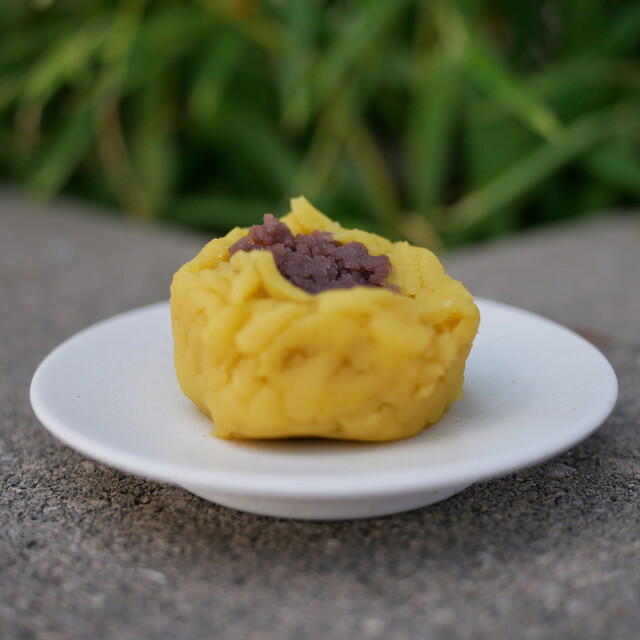
The menu
What to order
- Sliced Yokan
- Karasubatama sweet bean balls
- Seasonal nerikiri
- Kinton wagashi
- Hichigiri
Approaching a Kyoto wagashi shop is rarely about drama. The signal is quieter: a disciplined frontage, sweets arranged as small seasonal arguments, and the sense that sugar is being treated as a material with rules rather than as decoration. In Kyoto, that restraint matters. This is a city where civic routines, temple culture and shopping habits overlap, and its confectionery culture has long served many purposes: gifts, tea gatherings, household rituals and quick purchases carried away in careful wrapping.
Wagashi in Kyoto is inseparable from sourcing and seasonality. The form may be small, but the ingredient logic is exacting: bean paste, rice-derived textures, sugar traditions, agar and seasonal references that change the meaning of a sweet without requiring excess. The point is not abundance. It is calibration, especially in a city where confectionery has to stand beside matcha, temple calendars and the etiquette of formal tea.
Kyoto wagashi is a sourcing culture before it is a dessert culture
Kameya Yoshinaga is useful because it sits inside that older grammar rather than the cafe-dessert wave. Its category is Japanese traditional sweets, and its 2023 Tabelog recognition places it among shops judged within a regional craft field, not against restaurants chasing tasting-menu theatrics. That distinction matters for travellers: this is a confectionery stop, not a substitute for lunch, and the value lies in reading Kyoto through bean paste, rice texture and seasonal design.
Compared with Kyoto’s restaurant spectrum, wagashi operates on a different clock. Sit-down addresses such as Chez Moi or NAKATSUKA belong to the city’s reservation-led dining economy, while a venue such as Berangkat answers a looser evening rhythm. Traditional sweets shops sit between daily purchase and ceremonial use. They can be casual in transaction and exacting in craft at the same time. That tension is part of Kyoto’s food intelligence: formality does not always require a long sitting.
The city also rewards travellers who separate “sweet” from “dessert.” Dessert often follows a meal; wagashi frequently precedes tea, marks a season, or travels as a gift. That is why ingredient handling carries such weight. Bean paste must read cleanly, rice textures must avoid heaviness, and sweetness has to leave room for bitter tea. Kyoto’s better confectioners are not trying to outsize the palate; they are trying to make a small object hold a calendar.
Where a short stop can say more than another full meal
For a Kyoto itinerary, this kind of shop works differently from the city’s better-known sit-down addresses. Smart Coffee, for example, belongs to another Kyoto rhythm, where the pleasure is time spent over a more leisurely stop. Kameya Yoshinaga is closer to a focused confectionery visit, practical between temple visits, shopping streets or a longer restaurant booking, but the editorial case is not convenience alone. It is the ability to taste a craft category that helped define Kyoto’s hospitality before modern restaurant culture became the traveller’s default lens.
The sourcing angle is also what keeps wagashi from becoming souvenir shorthand. Kyoto sweets are often bought as gifts, but the serious examples are not merely packaged memories. They depend on ingredient discipline, seasonally coded shapes and a restrained sweetness that reflects the tea room as much as the retail counter. In that sense, a small box can tell a visitor more about Kyoto’s food culture than another generic cafe stop.
There is a useful contrast with casual Kyoto eating nearby and beyond. A quick snack, a relaxed everyday meal, or a contemporary table elsewhere in the city can show the breadth of Kyoto’s appetite. Wagashi asks for a narrower kind of attention. The purchase is small, but the craft language is dense.
How to place it within a serious Kyoto food day
Kameya Yoshinaga works better as a calibrated stop than as the anchor of a day. Pair it with a deeper Kyoto dining plan: a longer meal at another Kyoto dining room, a comparison with other traditional sweets, or a broader crawl through the city’s restaurant grid. The point is contrast. Different sweet traditions carry different textures, rituals and levels of formality; refined wagashi belongs to a more formal confectionery vocabulary. Seeing more than one register keeps Kyoto from flattening into a single idea of “traditional.”
Travellers building a full Kyoto stay should treat this as one piece of the city rather than a standalone claim. For restaurants, start with Our full Kyoto restaurants guide; for where to stay, use Our full Kyoto hotels guide. Kyoto’s drinking culture has its own tempo, covered in Our full Kyoto bars guide, while regional bottles and cultural programming sit in Our full Kyoto wineries guide and Our full Kyoto experiences guide.
For wider Japan context, the contrast becomes sharper. Grilled meat formats, Tokyo counter dining, or Osaka cafe culture all operate with different expectations of appetite and pace. Kyoto wagashi is narrower, more encoded and more dependent on context.
That context can extend beyond Japan, too. Casual Japanese-influenced dining abroad often shows how food culture travels, adapts and simplifies. Kyoto wagashi does the opposite: it asks the traveller to slow down and read the original code at its source.
Frequently asked questions
How much does it cost to eat at Kameya Yoshinaga?
Pricing at Kameya Yoshinaga is listed as JPY 1,000 - JPY 1,999 View spending breakdown.
How do I find Kameya Yoshinaga?
Kameya Yoshinaga is located in Kyoto.
What has Kameya Yoshinaga built its reputation on?
Kameya Yoshinaga is known for Japanese traditional sweets, and it was selected for Tabelog recognition in 2023. Its Kyoto setting places it within the city’s long wagashi tradition.
How It Stacks Up
Comparable venues at similar price and category levels.
| Venue | Cuisine | Price | Awards | Notes |
|---|---|---|---|---|
| Kameya YoshinagaThis venue (the venue you are viewing) | Traditional Kyoto Wagashi (Japanese Sweets) | $10–20 | Tabelog 100 #15 | Not listed |
| 幻の中華そば加藤屋 百万遍にぼ次朗 | Niboshi (Dried Sardine) Jiro-Style Ramen | Not listed | Not listed | Hyakumanben, Sakyo Ward |
| Umezono Kawaramachi ten | Traditional Japanese sweets café | $10–20 | Tabelog 100 #30 | Nakagyō |
| Kansen Do | Traditional Japanese Wagashi & Sweets | $10–20 | Tabelog 100 #83 | Higashiyama |
| 実伶 | Modern Kyoto Kaiseki A La Carte | $150–200 | 1 Michelin Star | Nakagyō |
| Ryokujuan Shimizu | Japanese Traditional Sweets | $1–10 | Tabelog 100 #81 | Sakyō |
Recognition history
Dated appearances from independent guides and award organizations, with the underlying list record or original source where available.
Tabelog 100 #15 · No. 15
Tabelog · Tabelog 100 - Japanese traditional sweets / Japanese sweets cafe - WEST - 2023
Continue exploring
More in Kyoto
Restaurants in Kyoto
All restaurants in Kyoto →


Bars in Kyoto
All bars in Kyoto →


Hotels in Kyoto
All hotels in Kyoto →


Wineries in Kyoto
Browse all →
Details
- Classic
- Quiet
- Well Known
- Solo
- Family
- Casual Hangout
- After Work
- Historic Building
- Standalone
- Design Destination
- Local Sourcing
- A La Carte
- Counter Dining
- Tea
Current opening hours
- Monday
- 8 AM–6 PM
- Tuesday
- 8 AM–6 PM
- Wednesday
- Closed
- Thursday
- 8 AM–6 PM
- Friday
- 8 AM–6 PM
- Saturday
- 8 AM–6 PM
- Sunday
- Closed
Hours can change for holidays and private events. Last verified .
Traditional Kyoto confectionery shop with a calm, understated atmosphere; most of the space functions as a retail counter for beautifully displayed seasonal sweets, with just a few seats in a simple, bright back area that feels more like a classic tea corner than a full café.