
Kakomo gives Kobe’s tachinomi culture a compact Sumiyoshi address: standing-only, fish-focused, and built around sake and shochu rather than ceremony. Its selection for Tabelog 100 - Tachinomi - 2025 places it among Japan’s recognised stand-up drinking rooms, with a low spend, counter format, and a local rhythm that suits solo drinkers as much as small groups.
Pearl is the En Primeur Club membership app — saves, bookings, and concierge access live there. Same editors, same standards.
- Address
- Japan, 〒658-0053 Hyogo, Kobe, Higashinada Ward, Sumiyoshimiyamachi, 4 Chome−4−1 KiLaLa住吉 1F 南側
- Phone
- +81 78-841-5576
- Website
- instagram.com
 Saves & bookings on Pearl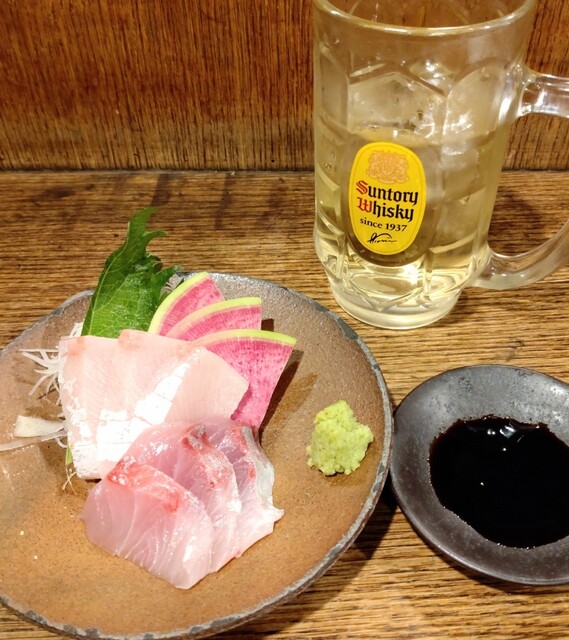
At street level in Sumiyoshi, the appeal of tachinomi is physical before it is culinary: no dining room choreography, no long progression, no theatrical hush. The counter does the work. Drinkers stand close enough for ordering to feel immediate, and the format keeps the evening mobile, closer to a working neighbourhood ritual than a destination tasting menu.
Kobe is often read through beef, port-city cosmopolitanism, and Kitano dining rooms, but its everyday drinking culture belongs to smaller spaces where sake, shochu, fish, and short-stay habits shape the night. Kakomo sits inside that tradition rather than outside it. Its Tabelog 100 - Tachinomi - 2025 selection is useful because tachinomi rarely travels well in translation: the category rewards tempo, value, and repeatability as much as polish.
Standing-room drinking, treated as a serious Kobe format
Tachinomi is not simply a cheaper izakaya without chairs. Food needs to arrive without slowing the room, drinks need enough range to carry several rounds, and the customer has to understand that lingering is a different act here than at a reserved counter. Kakomo’s standing-only setup and 20-seat capacity put it in the compact end of the genre, where proximity and turnover define the experience.
The fish focus matters in this part of Japan. Kobe’s drinking rooms often borrow from the wider Kansai habit of pairing clean, salty, grilled, fried, or lightly dressed seafood with sake rather than building a meal around large plates. Here, the categories are plain but telling: stand-up bar, seafood, and Japanese shochu bar. That combination points to a night built through small decisions, not a chef-led sequence.
For visitors mapping Kobe by category, the contrast is instructive. Beef specialists such as Aburi Niku Kobo Wakkoku Shinkobe ten and Aburi Niku Kobo Wakkoqu Kitano Sakamoto Ten represent the city’s better-known dining identity, while smaller local addresses such as Akari show how neighbourhood eating works away from the steak-house script. Kakomo belongs to that second Kobe: less ceremonial, more habitual, and more dependent on the fit between drink, counter, and regular-use pricing.
Fish, sake, and shochu make the case
The drinks signal is unusually clear for a compact standing bar. Sake and shochu are not side notes; they are listed as points of emphasis. That places the room closer to Japan’s specialist drinking culture than to a casual beer-and-snack stop. For a traveller, the useful reading is not that the list is large, but that the format is organised around Japanese spirits and seafood rather than cocktails, wine, or Western bar conventions.
The Tabelog score of 3.59 and inclusion in the 2025 tachinomi list should be read in that context. Tabelog’s scoring culture is conservative, and stand-up bars compete on a narrower set of virtues than formal restaurants. Recognition in this category says the venue is being judged against other compact drinking rooms, not against Kobe’s polished high-spend counters. In local comparison terms, that separates it from a higher-ticket yakitori address such as Yakitori Takashima, and far from the fine-dining spend associated with Mikage Juenu.
That distinction is helpful when deciding how to use the night. A standing seafood bar can be the whole evening for a solo drinker or the first stop before a larger meal. It can also sit after coffee or a daytime Kobe route that includes old-city cafés such as Akaneya Coffee Ten. The city’s range is wider than one meal type: Ali's Halal Kitchen points to Kobe’s international food layer, while Kakomo keeps the lens on Japanese drinking-room fundamentals.
How to place it in a Kobe itinerary
This is a low-friction stop by design, but not a blank-slate one. Reservations are unavailable, credit cards are not accepted, private rooms are unavailable, smoking is allowed, and parking is unavailable. Those details shape the decision more than any decorative language could. It suits drinkers comfortable with close quarters, counter pace, and a cash-led local format; it is less suited to travellers looking for a quiet seated dinner or a smoke-free room.
Sumiyoshi also changes the read. This is not Sannomiya spectacle or Kitano special-occasion dining. It belongs to a station-area pattern common across Japanese cities, where commuter flow supports quick drinking rooms with strong repeat custom. For readers building a broader Kobe plan, Our full Kobe restaurants guide, Our full Kobe bars guide, Our full Kobe hotels guide, Our full Kobe wineries guide, and Our full Kobe experiences guide help separate neighbourhood drinking from larger dining and travel decisions.
Japan’s casual dining spectrum rewards precision. A low spend does not mean low standards; it means the value is compressed into format, product, and pace. That same principle appears in different registers across the country, from -Grilled beef Sukiyaki- KAMAKURA TANUKIAN 鎌倉 たぬき庵 in Kamakura to. 鮪と炭火焼き うお炭 秋葉原店 in Tokyo.cafe in Osaka.know in Kumamoto, (Shoku) Vietnam in Kawasaki, and [Curry Senmon Ten] Maruyama Kyoju. in Sapporo. Even outside Japan, places such as Jōdo Saké Bar in Los Angeles and Onigiri Time in Pasadena show how specific Japanese formats travel, though the standing-bar rhythm is hardest to export intact.
The editorial case for Kakomo is therefore not luxury in the conventional sense. It is category clarity. Kobe’s premium table culture has its place, but the city is also built from rooms where the measure is whether a short drink, a seafood order, and another pour make sense without explanation. In that register, a recognised tachinomi counter says more about local eating than another formal reservation.
Cost and Credentials
Comparable venues to calibrate price, style, and recognition.
| Venue | Cuisine | Price | Notes |
|---|---|---|---|
| KakomoThis venue — the venue you are viewing | Not listed | $$ | Not listed |
| Stand Classic | Not listed | $$ | Chūō, Japanese standing bar (tachinomi) with a sake focus |
| Grill Ippei Motomachi ten | Chūō, Traditional Kobe yoshoku grill | $$ | Not listed |
| Tachinomi ZUTTO | Chūō, Japanese Tachinomi Izakaya | $$ | Not listed |
| Moriguchi | Nada, Okonomiyaki & Teppanyaki | $$ | Not listed |
| Yoshoku GURa | Not listed | $$ | Chūō, Japanese Western (Yoshoku) |
Recognition history
Dated appearances from independent guides and award organizations, with the underlying list record or original source where available.
Tabelog 100 #81 · No. 81
Tabelog · Tabelog 100 - Tachinomi - 2025
Continue exploring
More in Kobe
Restaurants in Kobe
Browse all →


Bars in Kobe
Browse all →



Hotels in Kobe
Browse all →




At a Glance
- Lively
- Cozy
- After Work
- Casual Hangout
- Solo
- Group Dining
- Late Night
- Standalone
- Sake Program
- Beer Program
Current opening hours
- Monday
- 4 PM–12 AM
- Tuesday
- 4 PM–12 AM
- Wednesday
- 4 PM–12 AM
- Thursday
- 4 PM–12 AM
- Friday
- 4 PM–12 AM
- Saturday
- 3:30–10 PM
- Sunday
- 3:30–10 PM
Hours can change for holidays and private events. Last verified .