
Toyama’s soba culture reads differently from the city’s higher-spend counters: grain, water, and milling technique matter more than ceremony. Jintsu Cho Tamura brings that argument into focus with 100% buckwheat soba built around multiple stone-milled flours, a 2025 Tabelog 100 Soba WEST selection, and a modest lunch-range price point that keeps the experience grounded rather than theatrical.
Pearl is the En Primeur Club membership app — saves, bookings, and concierge access live there. Same editors, same standards.
- Address
- 2 Chome-1-3 Jinzumachi, Toyama, 930-0009, Japan
- Phone
- +81 76-432-1505
- Website
- j-tamura.jp
 Saves & bookings on Pearl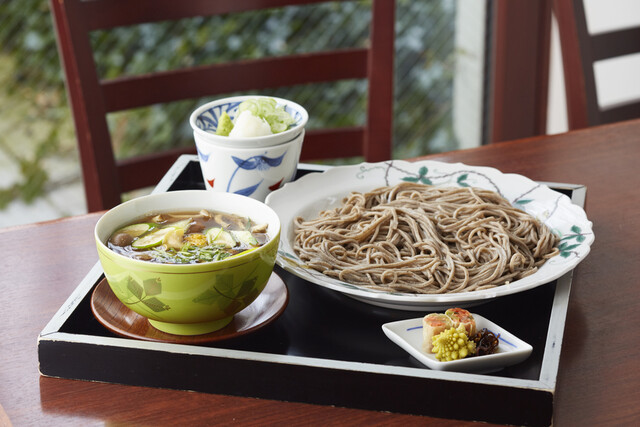
Approach Toyama’s Jinzumachi area and the tempo changes from station-front transit to low-rise neighbourhood dining. The soba house format suits that shift: a quieter room, counter seating in the mix, and a meal built less around spectacle than around grain. In a city better known to many travellers for seafood, mountain water, and access to the Tateyama corridor, soba gives a different reading of Toyama: inland, agricultural, and precise.
That matters because serious soba is not only a noodle category in Japan. It is an argument about origin and handling. Buckwheat has little tolerance for carelessness; milling, hydration, cutting, and boiling all show themselves quickly. Jintsu Cho Tamura sits in that tradition with 100% buckwheat soba and a flour program that draws from Hokkaido, Fukui, Toyama, Kyushu, and Yamagata, plus a monthly seasonal variety. The choice of flour is not decorative. It puts regional buckwheat character at the centre of the meal rather than treating soba as a neutral vehicle for dipping sauce.
Multiple buckwheat origins make the meal about grain, not garnish
Japan’s soba regions often speak through climate as much as technique. Hokkaido brings scale and consistency to buckwheat production; Fukui has a long soba identity built around colder inland conditions; Toyama connects the bowl directly to the prefecture; Yamagata carries a northern, mountain-linked soba culture; Kyushu broadens the map southward. A restaurant that lets diners choose among those flours is working in a comparative mode, closer to a tasting of agricultural source material than a standard noodle lunch.
The emphasis on stone-milled flour also places the kitchen in a more exacting lane. Stone milling is slower than industrial processing and is valued because it can preserve aroma and texture when handled well. With 100% buckwheat soba, there is no wheat flour safety net to soften the structure. That makes the format revealing: the noodle has to hold, but it also has to express the flour. This is where the restaurant’s 2025 Tabelog 100 Soba WEST selection carries weight. In a category with deep regional competition, recognition for soba is a signal that the craft is being judged against specialist peers, not against general casual dining.
Toyama’s dining scene can split sharply by spend. At one end are destination counters and high-ticket rooms such as Himawari Shokudo 2 or Tempura Koizumi Takano; at another are everyday, lower-cost specialists where repetition and technique matter more than luxury cues. Jintsu Cho Tamura belongs to the second camp, yet its ingredient framing gives it a seriousness that does not depend on a long tasting menu. That is the appeal: the meal is accessible in price but narrow in focus, and narrow focus is often where Japanese regional dining becomes persuasive.
A Toyama soba stop with a specialist's logic
The city’s food reputation usually starts with Toyama Bay, but that shorthand misses how much the prefecture depends on water, grain, and mountain-adjacent agriculture. Soba fits neatly into that broader identity. It is lighter than a sushi counter, less formal than kaiseki, and more technical than its modest price band suggests. For travellers moving through Toyama Station, this kind of lunch can be more revealing than another generic station-area meal because it connects the city to a wider Japanese soba map while keeping Toyama buckwheat in the conversation.
The room’s practical character reinforces the point. There are 26 seats, private rooms for eight, and a non-smoking policy, with drinks spanning sake, shochu, and wine. Those details put it between casual noodle shop and small restaurant rather than pure quick-service soba. The format works for diners who want to pay attention to flour choice without entering the full ritual economy of a luxury counter.
Reservations are unavailable, so timing matters more than concierge access. The restaurant operates as a daytime soba address, which suits the food: buckwheat is at its clearest when lunch has not been overloaded with courses. Closures fall on the 10th, 11th, 20th, 21st, 30th, and 31st of each month, a rhythm that rewards checking the calendar before building a Toyama itinerary around it. The location is close enough to Toyama Station for a station-based day, but the meal feels more neighbourhood than transit-hall.
Where it fits in a Toyama food itinerary
Use this as a grain-focused counterpoint to Toyama’s seafood and high-spend dining. For sauce-driven local comfort, compare the city through Boteyan and Boteyan Tanaka. For a different register, Cave Yunoki, Daimon, and Daruma show how Toyama’s restaurant culture moves beyond a single genre. Broader planning sits in Our full Toyama restaurants guide, with parallel city context in Our full Toyama hotels guide, Our full Toyama bars guide, Our full Toyama wineries guide, and Our full Toyama experiences guide.
Travellers building a wider Japan dining map can read this soba address against other focused specialists rather than against only Toyama restaurants: -Grilled beef Sukiyaki- KAMAKURA TANUKIAN 鎌倉 たぬき庵 in Kamakura,. 鮪と炭火焼き うお炭 秋葉原店 in Tokyo,.cafe in Osaka,.know in Kumamoto, (Shoku) Vietnam in Kawasaki, [Curry Senmon Ten] Maruyama Kyoju. in Sapporo, Jōdo Saké Bar in Los Angeles, and Onigiri Time in Pasadena. The common thread is specificity: a narrow format, a clear ingredient logic, and enough discipline that the category itself becomes the story.
- 100% buckwheat soba tasting with multiple flours
- Hokkaido Kitawase soba
- Fukui Ozasa soba
- Toyama Yamada-mura Nobuko No.1 soba
- Kyushu soba
- Yamagata soba
- limited Hokkaido Kamihara Farm organic soba
How It Stacks Up
Comparable venues by cuisine and price in the same metro.
| Venue | Cuisine | Price | Awards | Notes |
|---|---|---|---|---|
| Jintsu Cho TamuraThis venue — the venue you are viewing | Traditional 100% soba noodle shop | $ | , | |
| Ishitani Mochiya Toyama chuo dori honten | Japanese Traditional Sweets Cafe | $ | , | Chuo-dori |
| Hagiwara | Toyama Omakase | $$$ | , | Ote Mall |
| Boteyan (ぼてやん多奈加) | Square Okonomiyaki Specialist | $$ | , | Toyama Station area |
| Tonjinchi Ramen | Toyama Himi Niboshi Ramen | $ | , | Himi |
| Sushi Namba | Traditional Sushi Omakase | $$$ | , | Kumonmyo |
Continue exploring
More in Toyama
Restaurants in Toyama
Browse all →
At a Glance
- Quiet
- Classic
- Cozy
- Hidden Gem
- Solo
- Casual Hangout
- Standalone
- Local Sourcing
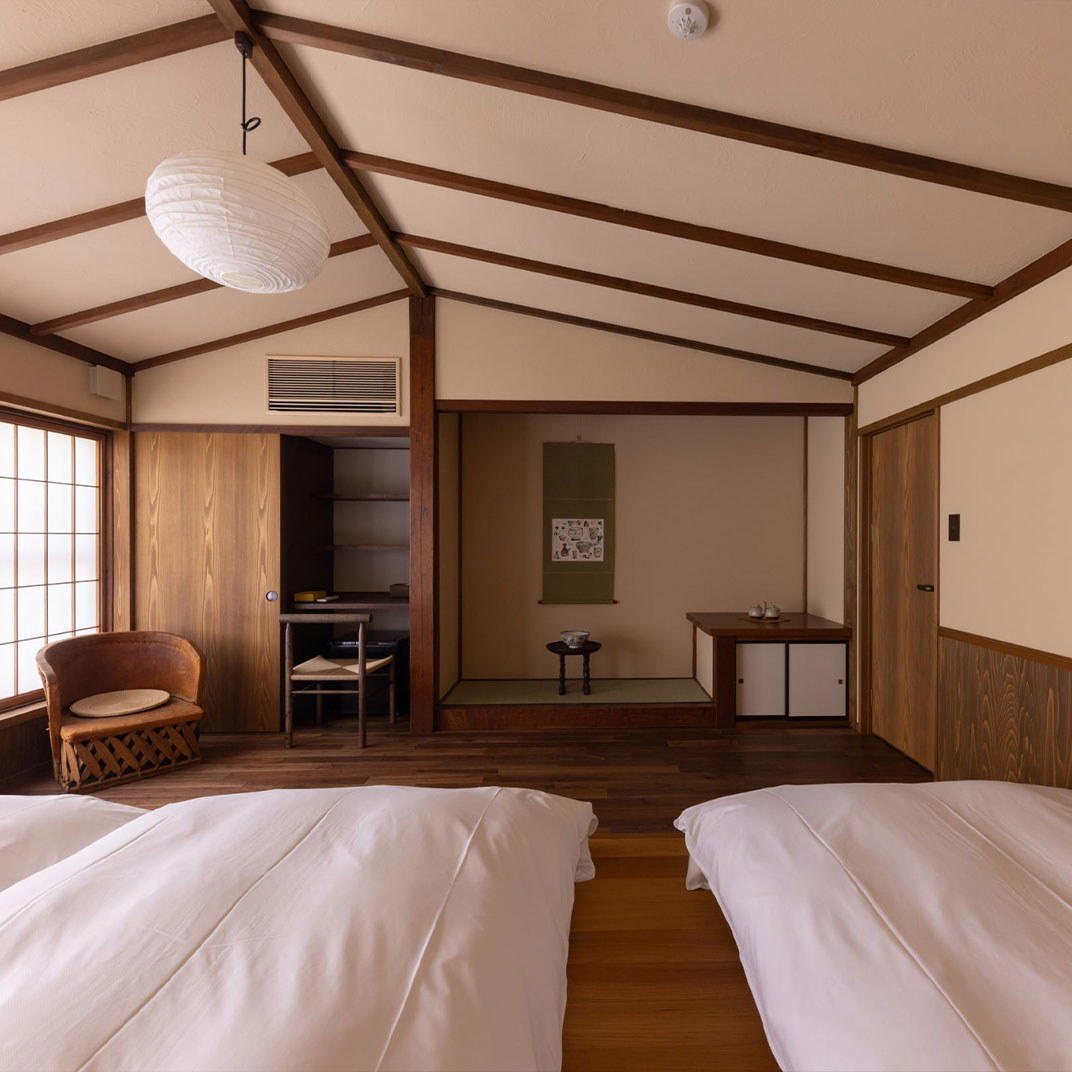
Traditional, understated soba-ya atmosphere focused on the food rather than decor, with a calm, quiet setting suited to savoring and comparing different soba flours.
- 100% buckwheat soba tasting with multiple flours
- Hokkaido Kitawase soba
- Fukui Ozasa soba
- Toyama Yamada-mura Nobuko No.1 soba
- Kyushu soba
- Yamagata soba
- limited Hokkaido Kamihara Farm organic soba