

Michelin Plate · Tabelog 100 #19
Our verdict
A Tabelog Award 2026 Silver winner in Nishiazabu, Ji-Cube applies the precision of Japanese omakase thinking to Sichuan cuisine, rotating its menu monthly between Japanese-ingredient dinner courses and dim sum lunch formats. With 26 seats, reservation-only access, and a Tabelog score of 4.34, it occupies a distinct position in Tokyo's serious Chinese dining tier, accomplished, deliberately low-profile, and consistently sought out by regulars.

Pearl is the En Primeur Club membership app, where members save venues, book tables and use the concierge.
The menu
What to order
- Peking duck
- Shark fin soup
- Steamed chicken with spicy scallion soy sauce
- Braised prawn with mayonnaise sauce
- Black sesame pudding
Sichuan in the Tokyo Mould
Tokyo's premium Chinese dining scene has developed in a direction that mirrors the city's wider fine-dining instincts: smaller rooms, omakase-adjacent formats, menus that shift with the seasons, and a deliberate resistance to the kind of banquet-hall scale that defines high-end Chinese restaurants in Hong Kong or Shanghai. Ji-Cube, operating from a residential pocket of Nishiazabu since June 2021, fits precisely into that pattern. The address, a low-key stretch of Minato ward rather than a high-visibility Roppongi frontage, signals the register immediately. You are not walking into a dining room designed to impress on approach. The impression builds from within.
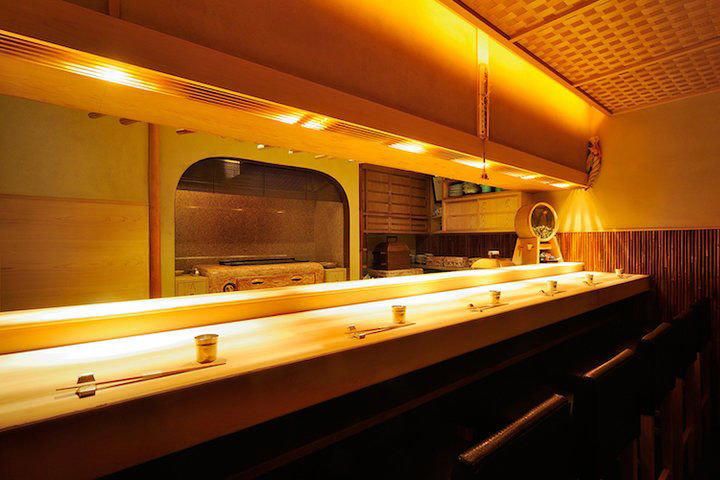
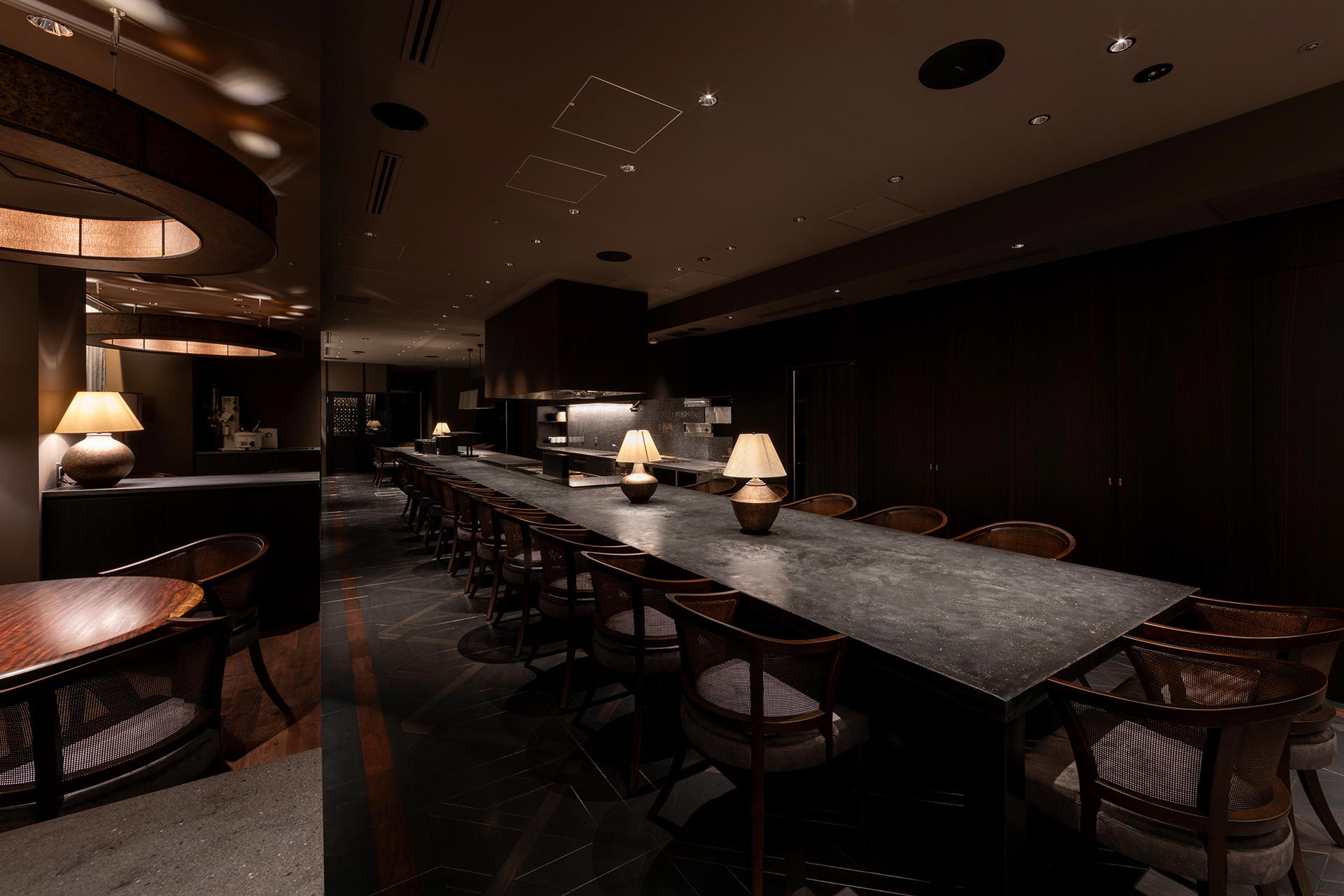
At 26 seats across counter, sofa, and private room configurations, the space is compact by any measure. The Tabelog listing categorises it as a "hideout" and a "house restaurant," and those tags do real descriptive work: the atmosphere is closer to an intimate specialist's atelier than a Chinese restaurant in the conventional sense. Counter seats open at 6 PM, while private rooms for two, four, six, or eight guests operate on separate booking logic. There is no service charge and no private room fee, which, at this price tier, is worth noting.
Monthly Rotation as Culinary Method
What separates Ji-Cube from most Chinese restaurants operating at the ¥¥¥ tier in Tokyo is the monthly reinvention of its programme. Dinner courses in odd-numbered months feature Japanese ingredients worked into a Sichuan framework; even-numbered months shift the lunch format toward dim sum. Dishes are rarely repeated. This is not a chef cycling through a fixed repertoire for variety, it is a structural commitment to keeping both the kitchen and the regulars in a state of active engagement. The result is a reservation list sustained by returning guests, who come back not to re-order favourites but to encounter something new within a format they trust.
That format sits in the omakase tradition Tokyo has applied to everything from sushi to tempura to French cuisine: a single course, determined by the kitchen, priced at a fixed rate. For Ji-Cube, dinner runs JPY 20,000–29,999 per person based on official pricing, while review-based data places average dinner spend in the JPY 15,000–19,999 range. Lunch, focused on dim sum in even-numbered months, runs JPY 8,000–9,999 officially, with review averages in the JPY 6,000–7,999 bracket. By the standards of Tabelog Silver-tier Chinese dining in Tokyo, these figures position Ji-Cube at an accessible point relative to the category's upper ceiling.
Where Ji-Cube Sits in the Tokyo Chinese Tier
Tabelog's Chinese Tokyo rankings function as a useful proxy for the competitive shape of the city's Chinese dining scene. Ji-Cube's 4.34 score and 2026 Silver award place it in an upper bracket that also includes recognised names such as Chugoku Hanten Fureika and Chugoku Hanten Kohakukyu (Amber Palace), both operating with longer institutional histories. Ji-Cube's consecutive selections for Tabelog Chinese TOKYO "Tabelog 100" in 2023 and 2024, alongside the 2026 Silver, represent a consistent performance record for a restaurant that opened only in 2021. The 2024 Michelin Plate recognition adds a second credentialing axis, though it places Ji-Cube below the three-star tier occupied by RyuGin or L'Effervescence in Tokyo's broader fine-dining map.
For context on what the Sichuan sub-category looks like within Tokyo's Chinese dining field: Sichuan cuisine here has moved well beyond the mala-heavy casual segment that dominates in other global cities. Restaurants like Ippei Hanten and Koshikiryori Koki represent the kind of refined Chinese cooking Tokyo has absorbed and refined over decades. Ji-Cube operates in that same refined register, using the monthly rotation mechanism to push the category further toward the kappo and omakase sensibilities the city's diners already understand. For a comparable approach applied to Japanese cuisine in Tokyo's quiet neighbourhood dining tier, itsuka offers a useful reference point for how restraint and intimacy translate across cuisines.
The Roasting Tradition Reimagined
The editorial angle of char siu, Peking duck, and Chinese roasting deserves direct address here, because Ji-Cube's approach to Sichuan cuisine creates an interesting friction with the roast tradition. Canonical Chinese roasting, the lacquered precision of Peking duck, the caramelised char of quality char siu, is typically a spectacle of surface and fire, techniques that reward scale and repetition. Sichuan cooking, by contrast, builds complexity through layered aromatics, the numbing heat of Sichuan peppercorn, and the interplay of fermented pastes. At a restaurant that rotates its menu monthly and positions itself within an omakase logic, the question is how roasting techniques survive, or evolve, within that framework.
The answer, in kitchens operating at this level, is that roasting becomes contextual rather than centrepiece. Char is deployed as contrast or accent within a course that builds toward broader flavour architecture. The monthly shift between Japanese ingredients and dim sum formats creates different conditions for those techniques: odd-month dinners with Japanese produce might apply smoke or high-heat caramelisation to ingredients not traditionally associated with Chinese roasting; even-month dim sum lunches bring the tradition closer to its origins through pastry and filling work that echoes the roasted-meat buns and char siu bao of Cantonese tradition. This crossover is where Tokyo's Chinese dining scene does something no other city quite replicates.
Globally, the ambition to apply fine-dining rigour to Chinese roasting traditions appears in different forms. Mister Jiu's in San Francisco works within the Cantonese-American tradition with a similar commitment to seasonal rotation, while Restaurant Tim Raue in Berlin reframes Chinese flavour logic through a European fine-dining lens. Ji-Cube's approach is distinct from both: it applies Japanese dining culture's structural disciplines to Sichuan technique, producing something that belongs neither to mainland Chinese tradition nor to the westernised Chinese fine dining category.
Booking and Access
Ji-Cube operates on a reservation-only basis with no walk-ins. The practical booking process runs through TableCheck via the restaurant's official website, or through the OMAKASE reservation platform. Phone reservations are technically possible, but the restaurant notes that lines are frequently unavailable during service hours (17:30 to 21:00), making online booking the more reliable route. Wednesday is the fixed closing day, with additional irregular closures noted. Saturday, Sunday, and public holidays add a lunch service from 11:30 to 15:00 alongside the standard evening session, making those days the only opportunity to access the dim sum lunch format without mid-week availability.
The 26-seat total includes counter seats (available from 18:00 only) and private rooms for parties of two to eight. No service charge applies to any configuration, and BYO drinks are permitted alongside the wine list. Credit cards are accepted across all major networks including AMEX and Diners. For families: children are welcome, with strollers accommodated in the second-floor private rooms, though the building's stair configuration requires advance consideration.
Reservations: Reservation only via TableCheck (website) or OMAKASE platform; phone available but limited during service hours. Hours: Mon, Tue, Thu, Fri 17:30–22:00; Sat, Sun, Public Holidays 11:30–15:00 and 17:30–22:00; closed Wednesday. Budget: Dinner JPY 20,000–29,999 per person; Lunch JPY 8,000–9,999 per person. Payment: Credit cards accepted (VISA, Mastercard, JCB, AMEX, Diners, UnionPay); no electronic money or QR payments. Private rooms: Available for 2–8 guests; no room fee. Getting there: Ten minutes on foot from Roppongi Station (approximately 720 metres).
Further Reading
For more on Tokyo's dining, drinking, and hotel scene, see our full Tokyo restaurants guide, our full Tokyo hotels guide, our full Tokyo bars guide, our full Tokyo wineries guide, and our full Tokyo experiences guide. For exceptional dining elsewhere in Japan, HAJIME in Osaka, Gion Sasaki in Kyoto, akordu in Nara, Goh in Fukuoka, 1000 in Yokohama, and 6 in Okinawa each represent their cities' most considered tables.
Frequently asked questions
What dish is Ji-Cube famous for?
Ji-Cube does not anchor its reputation to a single signature dish in the way that roast-focused Chinese restaurants build identity around Peking duck or char siu. Its awards, Tabelog Award 2026 Silver, consecutive Tabelog Chinese TOKYO 100 selections in 2023 and 2024, and a 2024 Michelin Plate, are tied to the restaurant's omakase format and monthly rotation rather than to any fixed preparation. Dinner menus shift between Japanese-ingredient Sichuan courses in odd-numbered months and dim sum lunch programmes in even-numbered months, with dishes rarely repeated. The draw for regulars is the format's consistency and the kitchen's range, not a single item to re-order.
Cuisine and Recognition
Comparable venues nearby, for context on price, style, and recognition.
| Venue | Cuisine | Price | Awards | Notes |
|---|---|---|---|---|
| Ji-CubeThis venue (the venue you are viewing) | Seasonal Sichuan Omakase | $50–100 | Michelin Plate · Tabelog 100 #19 | Not listed |
| Tokyo Chinese Ichirin | Modern Sichuan | $50–100 | Michelin Plate · Tabelog 100 #72 | Chūō |
| Nogizaka yui | Modern Sichuan-Chinese with Japanese Seasons | $100–150 | Michelin Plate · Tabelog 100 #53 | Minato |
| Ryuen | Creative Modern Chinese | $150–200 | Michelin Plate · Tabelog 100 #46 | Taitō |
| jeeten | Healthy Chinese Yakuzen | $50–100 | Michelin Bib Gourmand | Shibuya |
| Sudachi | Creative Japanese Kappo | $50–100 | Michelin Plate | Minato |
Recognition history
Dated appearances from independent guides and award organizations, with the underlying list record or original source where available.
Michelin Plate
Michelin
Tabelog 100 #19 · No. 19
Tabelog · Tabelog 100 - Chinese cuisine - TOKYO - 2026
Full recognition history (5 entries)
Tabelog Silver #47
Tabelog
Michelin Plate
Michelin
Michelin Plate
Michelin
Continue exploring
More in Tokyo
Restaurants in Tokyo
All restaurants in Tokyo →








Details
- Elegant
- Intimate
- Quiet
- Sophisticated
- Special Occasion
- Date Night
- Celebration
- Private Dining
- Open Kitchen
- Garden
- Standalone
- Extensive Wine List
- Sommelier Led
- Omakase
- Tasting Menu
- Wine
Current opening hours
- Monday
- 6–10 PM
- Tuesday
- 6–10 PM
- Wednesday
- Closed
- Thursday
- 6–10 PM
- Friday
- 6–10 PM
- Saturday
- 11:30 AM–3 PM, 6–10 PM
- Sunday
- 11:30 AM–3 PM, 6–10 PM
Hours can change for holidays and private events. Hours as of .
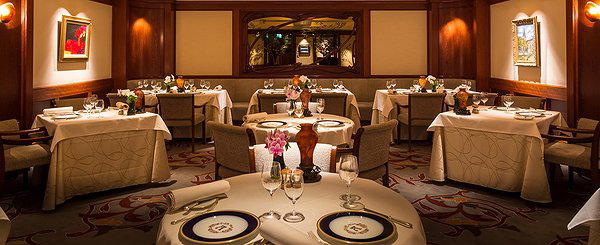
Calm, relaxing space with stylish decor resembling a square house set in a quiet residential area, filled with the aromas of traditional Sichuan cuisine.