On Devonshire Street in Surry Hills, Jazushi occupies a stretch of Sydney dining where Japanese technique and Australian produce increasingly converge. The name alone signals the hybrid intent, and the address places it among a neighbourhood that has long rewarded restaurants willing to work across culinary registers. For Sydney diners tracking the city's more considered cross-cultural dining, this is a address worth knowing.
Pearl is the En Primeur Club membership app — saves, bookings, and concierge access live there. Same editors, same standards.
- Address
- 145 Devonshire St, Surry Hills NSW 2010, Australia
- Phone
- +61296998977
- Website
- jazushi.com.au
- Directions
- Get directions
 Saves & bookings on Pearl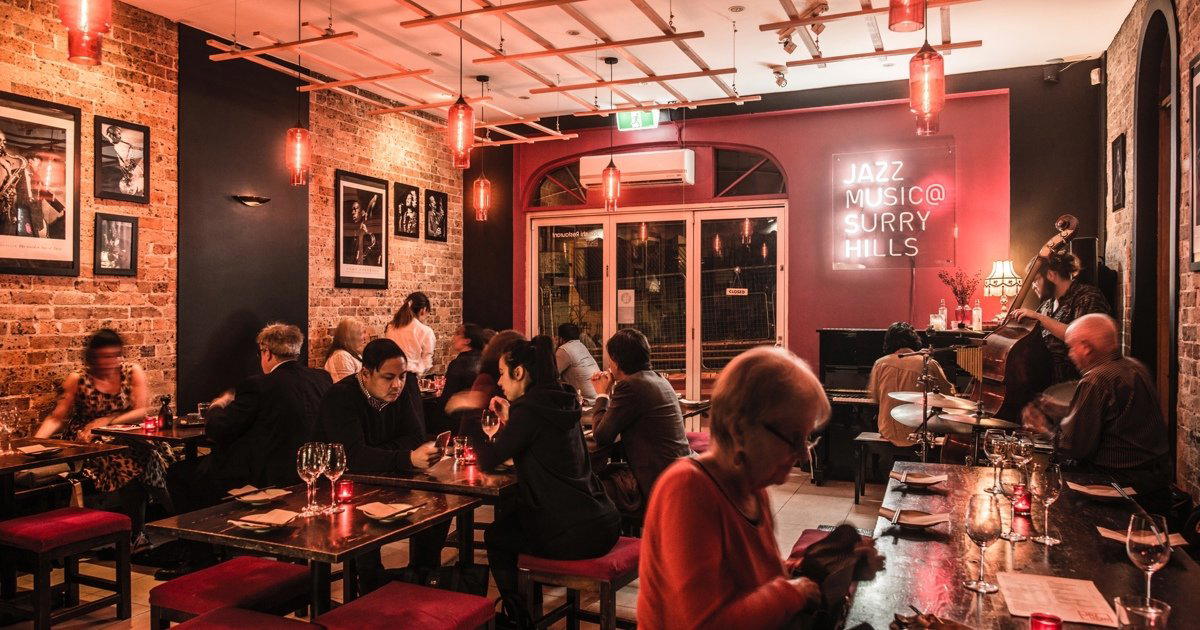
Where Surry Hills Places Its Bets on Japanese-Australian Cooking
Devonshire Street in Surry Hills runs through one of Sydney's most reliable corridors for serious independent dining. The street and its surrounding blocks have accumulated a density of chef-driven rooms that sit outside the harbour-view premium tier, drawing a crowd that is more likely to be reading kitchen credentials than checking Instagram geometry. The neighbourhood has a specific character: low-key on the approach, precise on the plate. Jazushi, at number 145, fits that register. The name compresses the premise — Japanese technique applied to Australian ingredients, or something close to it — and the address signals an operator who understands that Surry Hills diners tend to be repeat visitors, not once-a-year occasion seekers.
Sydney's cross-cultural cooking scene has matured considerably over the past decade. What once read as novelty fusion has, in many rooms, resolved into something more disciplined: a genuine methodology around where ingredients come from, how Japanese preparation logic (precision, restraint, respect for raw material quality) can surface the best of Australian produce rather than override it. Across the city, from the long-established benchmark of Rockpool to the hyper-focused sourcing model at Saint Peter, the strongest Sydney kitchens have built their identity around knowing exactly where their fish, meat, and vegetables originate. The ingredient sourcing question is not a marketing footnote in these rooms, it is the operating logic.
The Sourcing Question in Sydney's Japanese-Inflected Kitchens
Australian produce occupies a specific position in the global ingredient conversation. The country's fisheries, particularly along the New South Wales coast, yield species that appear in very few other markets. Southern bluefin tuna from Port Lincoln, Sydney rock oysters from the Hawkesbury, Patagonian toothfish from the sub-Antarctic, these are not interchangeable with their Northern Hemisphere equivalents, and a kitchen working in the Japanese mode is well-positioned to make that case. Japanese technique, at its core, is an argument for the ingredient itself: the preparation should recede so the source material can speak. Applied to Australian seafood and pastured meat, that philosophy can produce something genuinely specific to this country and this moment in its dining culture.
The broader Sydney scene has been moving in this direction for years. Restaurants like Saint Peter have built entire programs around native species and sustainable catch sourcing, while operators at 10 William St and 10 Pounds have demonstrated that Sydney diners in the inner-city belt respond to rooms with a clear sourcing identity. In Melbourne, Attica and Brae have made ingredient provenance the organising principle of their menus entirely. The trend is not confined to any single cuisine category, it is the defining editorial position of serious Australian cooking across formats and price tiers.
For a Surry Hills room working at the Japanese-Australian intersection, that sourcing conversation is both an opportunity and a credibility test. Japanese dining culture in Australia has expanded well beyond the grocery-store sushi roll, and Sydney in particular now has a tier of omakase and kaiseki-influenced rooms that price against Japanese metropolitan benchmarks. The diners walking into these rooms know the difference between farmed salmon and wild-caught species, and they are increasingly asking which farms, which boats, which seasons. A kitchen that can answer those questions with specificity, and then demonstrate the answer on the plate, earns a different kind of loyalty than one that simply plates well.
Surry Hills in Context: The Neighbourhood and Its Dining Register
Surry Hills functions as a kind of testing ground for Sydney's independent restaurant scene. Rents are lower than the CBD or the eastern suburbs, foot traffic skews toward residents and repeat visitors rather than tourists, and the neighbourhood has historically rewarded operators who invest in the kitchen rather than the fitout. This means the room at 145 Devonshire Street is working in a context where the food is expected to carry the experience, not the view or the occasion. Compare this to dining precincts in Kirribilli, where Bayly's Bistro draws from a different residential and occasion demographic, or Bondi Beach, where bills built a global reputation on a format tied to a specific place and time of day. Surry Hills operates on different terms: the expectation is technique and intention, and the crowd is forgiving of a spare room if the cooking is sharp.
The wider Sydney dining network extends this further. Crows Nest has Johnny Bird; the CBD and inner ring pull diners toward 1021 Mediterranean. Outside Sydney, the conversation about what Australian dining can be continues in Wollongong at Kulcha, in Ballarat at Jaani Street Food, and in Newcastle at Hungry Wolfs. Internationally, the Japanese-influenced fine dining model has produced some of the most scrutinised rooms in the world, Atomix in New York City applies Korean technique with a similar sourcing rigour, while Le Bernardin remains the reference point for what it means to let seafood speak without distraction. The Sydney rooms working in this vein are part of a global conversation, even when the setting is a quiet street in an inner-suburb.
Planning Your Visit
Jazushi sits at 145 Devonshire Street, Surry Hills, accessible by bus along the Oxford Street corridor or a short walk from Central Station. Surry Hills parking is limited on evenings, so public transport is the practical default for most visitors. The inner-city Sydney dining scene is well-mapped in our full Sydney restaurants guide, which covers the full range from neighbourhood rooms to destination dining. For the broader Melbourne-to-Sydney comparison on Japanese-influenced cooking, Bar Carolina in South Yarra and Barry Cafe in Northcote offer reference points for how the Melbourne side of this conversation is developing.
Continue exploring
More in Sydney
Restaurants in Sydney
Browse all →
Bars in Sydney
Browse all →
Hotels in Sydney
Browse all →

At a Glance
- Cozy
- Lively
- Elegant
- Date Night
- Special Occasion
- Live Music
- Open Kitchen
- Sake Program
Current opening hours
- Monday
- Closed
- Tuesday
- 5–9:30 PM
- Wednesday
- 12–2 PM, 5–9:30 PM
- Thursday
- 12–2 PM, 5–9:30 PM
- Friday
- 12–2 PM, 5–10 PM
- Saturday
- 12–2 PM, 5–10 PM
- Sunday
- 5–9:30 PM
Hours can change for holidays and private events. Last verified .
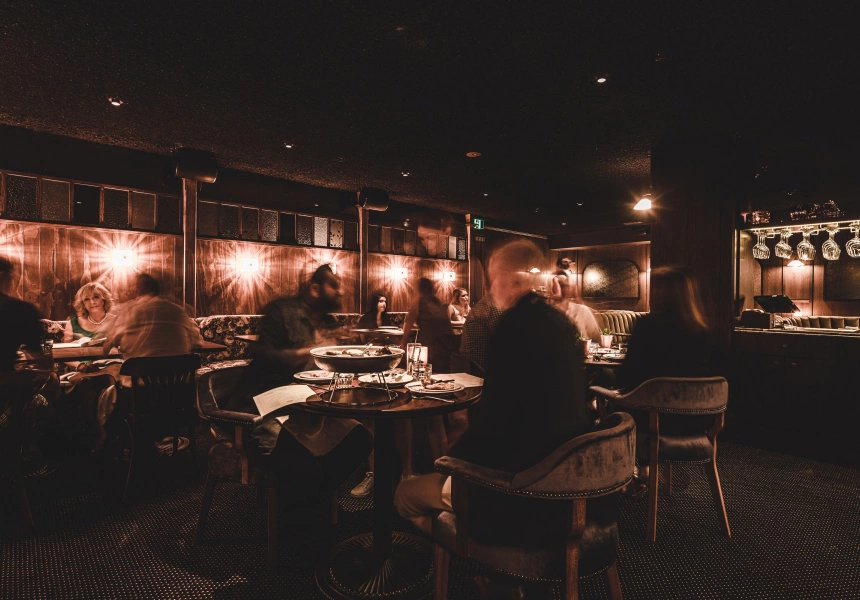
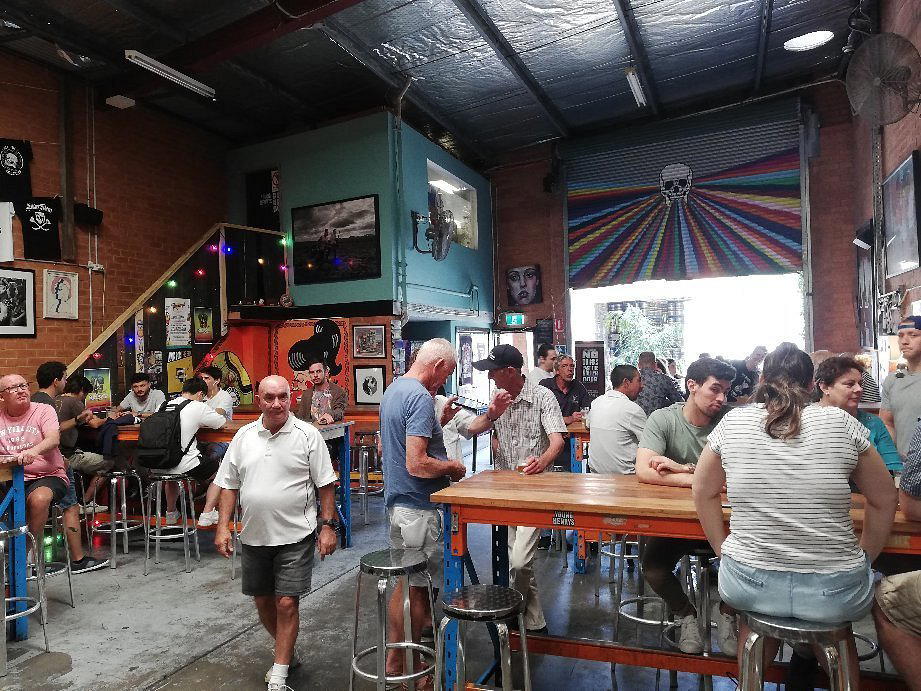
Ambient atmosphere in the main dining room enhanced by live jazz music, cozy and warm with stylish and elegant setting.
Know Before You Go
- Getting there
- 145 Devonshire St, Surry Hills NSW 2010, Australia