Zushi sits in Barangaroo, Sydney's waterfront financial district, where Japanese technique meets the produce rhythms of the Australian coastline. The format positions it within a growing tier of Sydney restaurants that apply precision-led methods to southern-hemisphere ingredients rather than importing a ready-made tradition wholesale. For those eating around the harbour precinct, it occupies a distinct lane from the steakhouse and modern-Australian formats that dominate the neighbourhood.
Pearl is the En Primeur Club membership app — saves, bookings, and concierge access live there. Same editors, same standards.
- Address
- 10/33 Barangaroo Ave, Barangaroo NSW 2000, Australia
- Phone
- +61280727383
- Website
- zushi.com.au
- Directions
- Get directions
 Saves & bookings on Pearl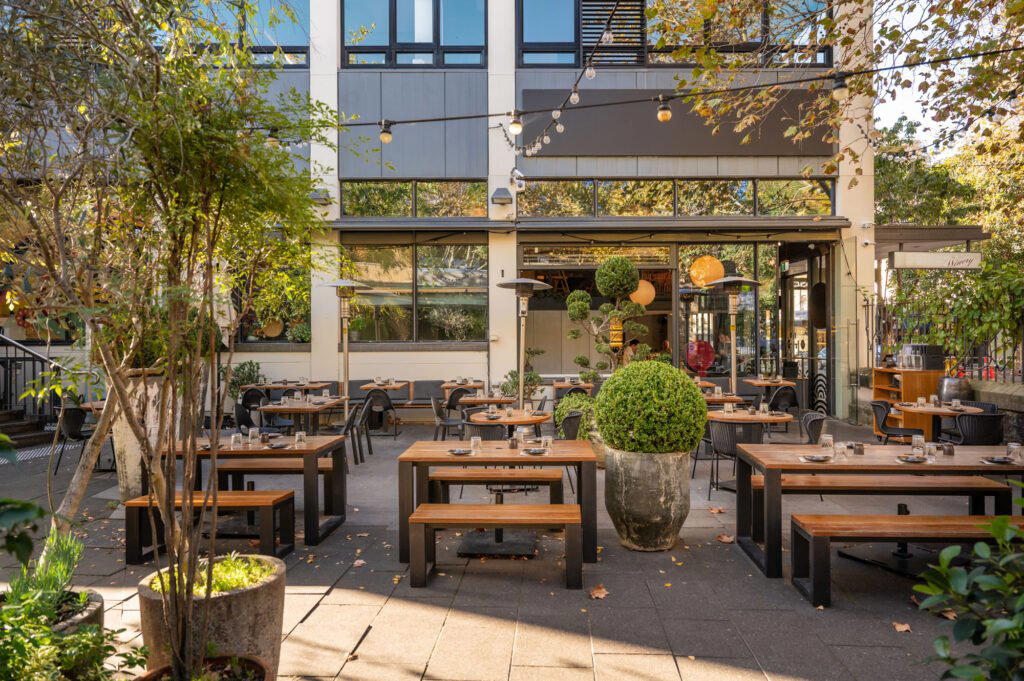
Japanese Precision in a Southern-Hemisphere Context
Sydney's relationship with Japanese cuisine has deepened considerably over the past two decades. What began as a sushi-train and teriyaki tier has stratified into something more considered: a cohort of restaurants applying genuine technical discipline, knife work, temperature control, the logic of umami balance, to ingredients that are unmistakably Australian in origin. Zushi, a modern Japanese izakaya in Barangaroo at 10/33 Barangaroo Ave, operates within that context. The address matters: Barangaroo is Sydney's most significant urban waterfront redevelopment of the past generation, and it has drawn a dining population that skews professional and internationally travelled, with expectations shaped by Tokyo, New York, and London as much as by the local scene.
That demographic has, in turn, created space for a format that takes Japanese culinary logic seriously without requiring the full ceremony of a high-end omakase counter. Across Australia's east coast, a pattern has emerged where Japanese-influenced restaurants occupy a productive middle register: technically grounded, ingredient-focused, but accessible enough to function as a regular dining option rather than a once-a-year event. For comparison, venues like Rockpool (Australian Cuisine) and Saint Peter (Australian Seafood) have demonstrated how rigorously applied technique, matched to locally sourced product, defines the upper-middle tier of Sydney dining more broadly. Zushi operates with a comparable logic, filtered through a Japanese rather than European-Australian lens.
The Barangaroo Address and What It Implies
Precinct location shapes a restaurant's rhythm in ways that neighbourhood placements do not. Barangaroo draws a lunchtime crowd from the financial towers above and an evening crowd that arrives purposefully rather than wandering in from a residential street. The precinct's waterfront orientation also means proximity to the harbour itself, relevant not as scenery alone, but because Sydney's seafood supply chain runs through these waters, and a restaurant applying Japanese technique to Australian fish is, in a real sense, drawing on what the harbour and the broader New South Wales coastline produce. That intersection of imported method and local ingredient is where Zushi finds its clearest editorial position.
This approach mirrors a broader Australian dining trend that has gathered momentum in Melbourne and Sydney simultaneously. Attica in Melbourne and Brae in Birregurra have made the application of global technique to indigenous and regional Australian produce a critical framework for serious dining. Japanese cuisine, with its emphasis on seasonal rhythm and minimal intervention, adapts particularly well to this framework, more naturally, in many respects, than French or Italian traditions, which were built around European ingredient cycles that only partially map onto Australian seasonality.
Technique Over Tradition: The Local-Ingredients Argument
The strongest case for Japanese technique applied to Australian produce is a practical one. Australia's coastline generates seafood species, kingfish, barramundi, bay lobster, various flathead, that respond well to the preservation, aging, and preparation methods developed in Japan for analogous species. Sashimi-grade handling of an Australian kingfish is not a compromise; it is a genuinely appropriate treatment. The same logic applies to wagyu cattle, which Australia now produces at significant scale, and to the country's subtropical and temperate produce, which shares seasonal markers with parts of Japan without being identical to them.
The question any Japanese-influenced restaurant in Australia must answer is how faithfully it follows Japanese precedent versus how creatively it adapts to what is actually available and in season locally. Restaurants that import all their key ingredients from Japan are making one argument; restaurants that source primarily from Australian producers and apply Japanese method are making another. The latter position is increasingly coherent and, in Sydney's current dining conversation, carries more critical weight. It is also the harder path, it requires genuine technical competence rather than the shortcut of flying in a ready-made product.
For additional context on how Sydney's dining scene has evolved around this kind of technique-meets-local-produce argument, the full Sydney restaurants guide maps the precinct-by-precinct variation in more detail. Venues including 10 William St and 1021 Mediterranean illustrate how different culinary traditions are navigating the same local-versus-imported tension from their own angles.
The Competitive Set
Within the Barangaroo precinct specifically, Zushi sits between the expense-account steakhouse tier and the quick-service lunch market. Its closest Sydney peers are venues that have built a following around technically applied Japanese methods without anchoring their identity to a single theatrical format like omakase. Globally, the standard for this kind of precision seafood work is set by restaurants such as Le Bernardin in New York City, where French technique and Atlantic seafood have been refined over decades, or Atomix in New York City, which applies Korean culinary logic to a fine-dining format. Zushi operates at a different scale and price register, but the underlying argument, that non-European technique applied to premium local produce is a credible and distinct dining proposition, connects these venues to a common conversation.
Within Sydney's broader neighbourhood landscape, restaurants like Bayly's Bistro in Kirribilli, bills in Bondi Beach, and Johnny Bird in Crows Nest each hold a defined neighbourhood identity. Zushi's precinct placement in Barangaroo gives it a different kind of anchor: a destination rather than a local, driven by the waterfront development's capacity to pull diners from across the city and from Sydney's hotel stock.
Planning Your Visit
Zushi is located at 10/33 Barangaroo Avenue, within easy walking distance of Wynyard station and the broader Barangaroo ferry terminal. The precinct is designed for pedestrian access, and parking is limited by design, arriving by public transport or water taxi from the CBD or North Sydney is the practical default for most visitors. For those exploring the wider NSW and interstate dining scene, the EP Club also covers venues in adjacent markets: Hungry Wolfs Italian Restaurant in Newcastle, Kulcha Restaurant Wollongong in Wollongong, and Jaani Street Food in Ballarat each offer useful reference points for how regional Australian dining is developing outside the major city centres. Additional Melbourne context is available through Bar Carolina in South Yarra and Barry Cafe in Northcote, while 10 Pounds provides a Sydney-specific data point for the bar-focused end of the Barangaroo precinct's dining mix.
Cuisine and Credentials
Comparable venues nearby, for context on price, style, and recognition.
| Venue | Cuisine | Price | Notes |
|---|---|---|---|
| ZushiThis venue — the venue you are viewing | Modern Japanese Izakaya | $$ | Not listed |
| IKI Dining - Ramen and Izakaya | Ramen and Izakaya | $$ | Potts Point |
| Hinataya | Authentic Japanese | $$ | Mascot |
| Sensei Sushi North Curl Curl | Japanese-Brazilian Fusion Sushi | $$ | North Curl Curl |
| Jazushi | Japanese Fusion with Live Jazz | $$ | Surry Hills |
| Shinmachi Newtown | Japanese Ramen and Tapas | $$ | Newtown |
Continue exploring
More in Sydney
Restaurants in Sydney
Browse all →
Bars in Sydney
Browse all →
Hotels in Sydney
Browse all →
At a Glance
- Modern
- Trendy
- Group Dining
- Casual Hangout
- Date Night
- Waterfront
- Open Kitchen
- Sake Program
- Craft Cocktails
- Local Sourcing
- Waterfront
Current opening hours
- Monday
- 12–3 PM, 5:30–10 PM
- Tuesday
- 12–3 PM, 5:30–10 PM
- Wednesday
- 12–3 PM, 5:30–10 PM
- Thursday
- 12–3 PM, 5:30–10 PM
- Friday
- 12–3 PM, 5:30–10 PM
- Saturday
- 12–10 PM
- Sunday
- 12–9 PM
Hours can change for holidays and private events. Last verified .
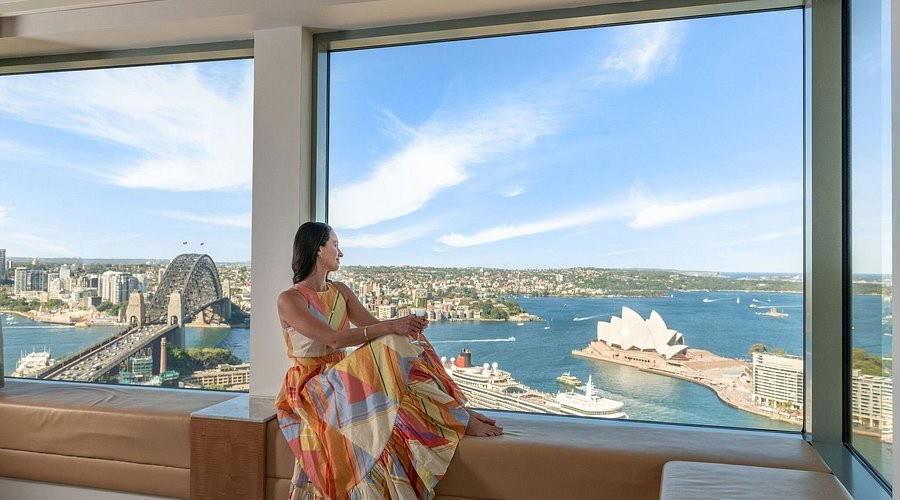
Relaxed and comfortable modern space with harbour views and stylish designer decor.