Yakitori Yurippi brings the focused discipline of Japanese skewer cooking to Crows Nest, one of Sydney's more understated dining precincts. The ground-floor address on Falcon Street places it within walking distance of a cluster of neighbourhood restaurants that reward those who know where to look. For a format defined by restraint and precision over spectacle, it fits the area's character well.
Pearl is the En Primeur Club membership app — saves, bookings, and concierge access live there. Same editors, same standards.
- Address
- Ground Floor/6-8 Falcon St, Crows Nest NSW 2065, Australia
- Phone
- +61402092680
- Website
- yurippi.com.au
- Directions
- Get directions
 Saves & bookings on Pearl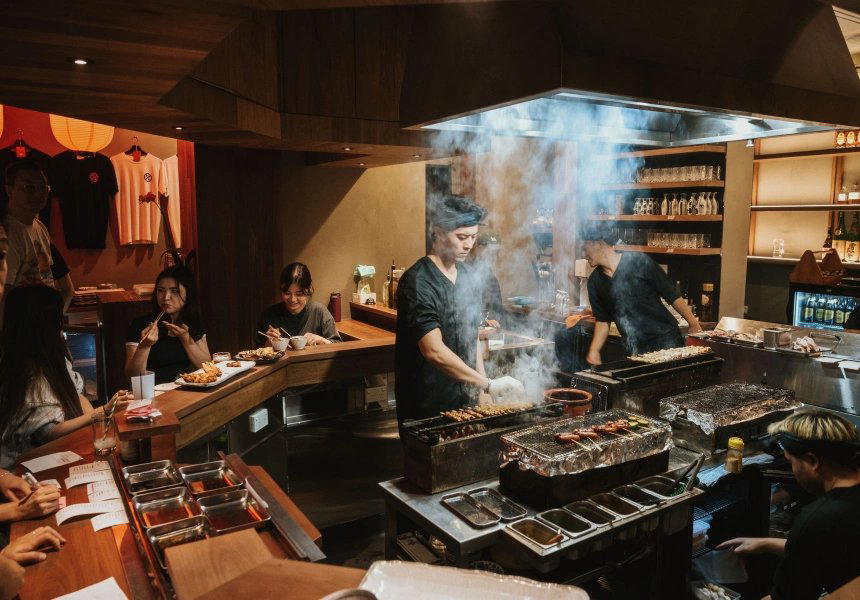
Crows Nest and the Quiet Case for Neighbourhood Yakitori
Sydney's Japanese dining scene has long been weighted toward the CBD and inner east, where omakase counters and ramen specialists compete for attention alongside the city's higher-profile restaurants. The lower North Shore has historically operated at a different register: less concentrated, more residential, and defined by the kind of repeat-visit loyalty that sustains neighbourhood spots over years rather than seasons. Crows Nest, in particular, has built a modest but coherent dining identity along and around Military Road, where a range of cuisines coexist without the competitive intensity of Surry Hills or Darlinghurst. Johnny Bird in Crows Nest reflects that same neighbourhood character, occupying a similar low-key tier in a precinct that tends to reward regulars rather than tourists.
Yakitori Yurippi sits on the ground floor of 6-8 Falcon Street, a side-street address that signals something about the format before you even arrive. Yakitori, as a dining tradition, has never relied on prime real estate or theatrical room design. Its Japanese precedents are almost uniformly modest in scale and setting: narrow counters, charcoal smoke, the sound of skewers turning. The question in Sydney has always been how faithfully those conditions translate outside Japan, and whether the local market will support the focused, relatively austere experience the format demands.
The Physical Container: What the Room Does and Doesn't Do
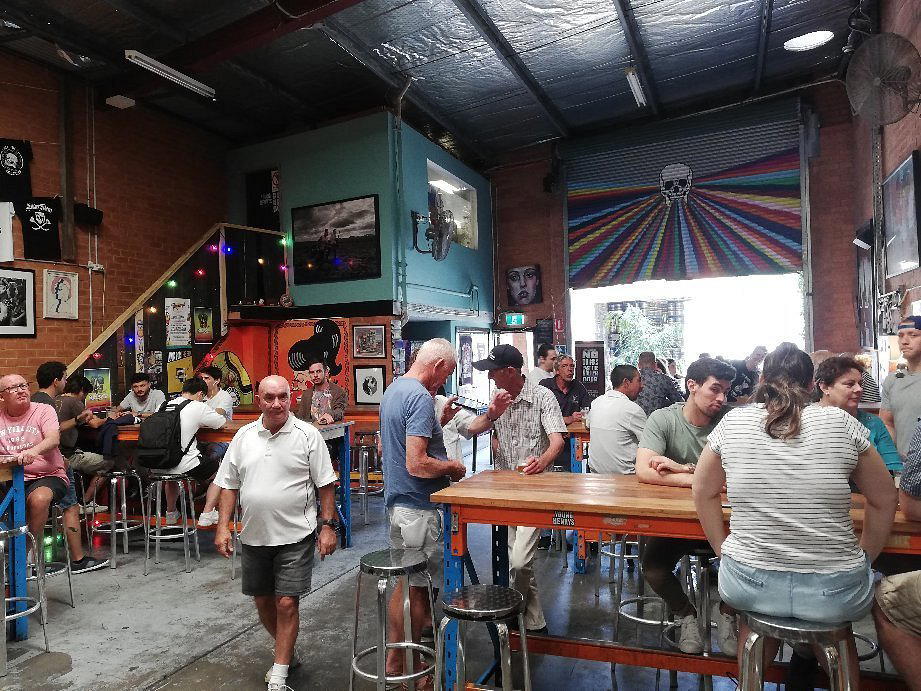
Ground-floor positioning on a side street in Crows Nest creates a particular set of spatial conditions. There is no refined view, no heritage grandeur, and no design gesture competing for attention with the food. In yakitori specifically, that absence of distraction is often a feature rather than a limitation. The leading Japanese skewer counters in Tokyo's shitamachi districts operate in rooms that strip away everything except the grill, the counter, and the exchange between kitchen and guest. Whether Yurippi's interior achieves that discipline or approximates it more loosely is something the room itself communicates on arrival.
What a ground-floor Falcon Street address does provide is accessibility and a certain informality of approach. The setting places it in a category distinct from Sydney's more formally designed Japanese restaurants, which have tended toward either the sleek minimalism of CBD omakase venues or the deliberate rusticity of izakaya-inflected spaces in Newtown and Surry Hills. A neighbourhood yakitori spot operates in its own sub-category, where the spatial logic is organised around the grill and the counter rather than around design statements. For a format built on the repetitive, meditative rhythm of skewer-by-skewer service, a room that recedes into the background is the right kind of room.
Yakitori's design tradition also dictates a particular relationship between diner and kitchen. Counter seating, where available, collapses the distance between the cook and the guest in ways that table service cannot replicate. The choreography of the grill, the timing of each skewer, the char-to-smoke ratio on different cuts: these are things observed from proximity, not inferred from a distance. Venues in Sydney that have committed to counter-forward yakitori formats, even at small scale, tend to generate a different quality of engagement than their table-service equivalents. The physical container shapes the experience directly.
Yakitori as a Format: What Sydney's Market Expects
Yakitori sits in an interesting position within Sydney's broader Japanese dining conversation. It is neither the prestige tier occupied by multi-course omakase (which has grown significantly in the CBD since the mid-2010s, with venues pricing against Tokyo peer counters rather than local casual Japanese) nor the high-volume casual tier of ramen and sushi train formats. Yakitori occupies a middle ground defined by craft specificity: the skill is in the sourcing of chicken, the preparation of different cuts, the management of binchōtan charcoal, and the calibration of tare sauce over long periods of use. These are not skills that announce themselves loudly, which partly explains why yakitori has been slower than other Japanese formats to establish a dense footprint in Sydney.
For context, Sydney's Japanese dining scene competes for critical attention with the city's broader fine dining tier, which includes institutions like Rockpool (Australian Cuisine) and seafood-focused venues like Saint Peter (Australian Seafood). Japanese cuisine, outside of the leading omakase tier, tends to be evaluated on value-for-craft rather than on prestige signalling. A yakitori specialist that executes its core format well, with appropriate sourcing and proper charcoal management, occupies a credible niche in that evaluation framework. It is a format where the details carry the weight that plating and room design carry elsewhere.
Across the Tasman, Melbourne's dining scene has produced a somewhat denser cluster of Japanese specialists at various price points, from the highest-end destination restaurants like Attica in Melbourne to neighbourhood-oriented spots comparable in register to Crows Nest. The comparison is useful: Sydney's lower North Shore has more in common with Melbourne's inner-north dining ecology than it does with Sydney's own CBD, in terms of the pace at which diners return and the loyalty that sustains a specialist format over time.
The Neighbourhood Context
Crows Nest's dining strip has diversified considerably over the past decade. The area now holds enough variety to function as a destination in its own right for lower North Shore residents, even if it draws fewer destination diners from across the bridge than its southern equivalents. Bayly's Bistro in Kirribilli, a short distance south, reflects similar neighbourhood-first dining dynamics. The pattern across this part of Sydney is consistent: smaller rooms, less social-media saturation, and a higher proportion of returning local guests relative to first-time visitors. For a yakitori format that depends on repeat visits to build the kind of familiarity the experience rewards, that demographic profile is an asset.
Visitors travelling specifically to Sydney for a broader dining programme might anchor their itinerary around venues like 10 William St or 10 Pounds before making the twenty-minute trip north to Crows Nest. The lower North Shore works as an extension of a Sydney dining agenda, not as a competing destination. Falcon Street specifically is a quiet address in that precinct, meaning the visit has a particular character: deliberate, unhurried, resident-paced. For a full picture of where this fits within Sydney's dining geography, our full Sydney restaurants guide maps the wider context.
Planning Your Visit
Yakitori Yurippi's ground-floor address on Falcon Street, Crows Nest, is reachable from the CBD by train to St Leonards station or by a short bus ride across the Harbour Bridge. The format suits an early-evening visit before the area thickens on weekend nights, and a counter seat, if available, will give you the closest read on what the kitchen is doing. Booking ahead is advisable for any specialist format in a small room, particularly on Thursday through Saturday evenings when the Crows Nest strip draws more traffic from across the lower North Shore. Phone and online booking details are best confirmed directly with the venue.
Continue exploring
More in Sydney
Restaurants in Sydney
Browse all →
Bars in Sydney
Browse all →
Hotels in Sydney
Browse all →

At a Glance
- Cozy
- Casual
- Intimate
- Casual Hangout
- After Work
- Open Kitchen
- Sake Program
Current opening hours
- Monday
- 5–9:30 PM
- Tuesday
- 5–9:30 PM
- Wednesday
- 5–9:30 PM
- Thursday
- 5–9:30 PM
- Friday
- 5–10:30 PM
- Saturday
- 5–10:30 PM
- Sunday
- 5–9:30 PM
Hours can change for holidays and private events. Last verified .
Homely and comfortable with 90s J-pop music, friendly staff, and an energetic atmosphere at the grill bar.
Know Before You Go
- Getting there
- Ground Floor/6-8 Falcon St, Crows Nest NSW 2065, Australia