
Star Wine List · World Best Burgers World's 101 Best Burgers #19
Our verdict
A basement steakhouse beneath Sydney's CBD, The Gidley pairs an old-world dining room of dark timber and leather booths with dry-aged Australian beef cooked over an ironbark and charcoal open-fire grill. The wine list holds a White Star recognition from Star Wine List, placing it among Sydney's more seriously curated rooms. The format suits slow business lunches and considered evening dinners in equal measure.

Pearl is the En Primeur Club membership app — saves, bookings, and concierge access live there. Same editors, same standards.
- Address
- Basement/161 King St, Sydney NSW 2000, Australia
- Phone
- +61 2 9169 6898
- Hours
- Mon–Sat 12 PM–12 AMSun 12–10 PM
- Website
- liquidandlarder.com.au
- Directions
- Get directions
- Booking
- Book on SevenRooms
Below Street Level, Above the Noise
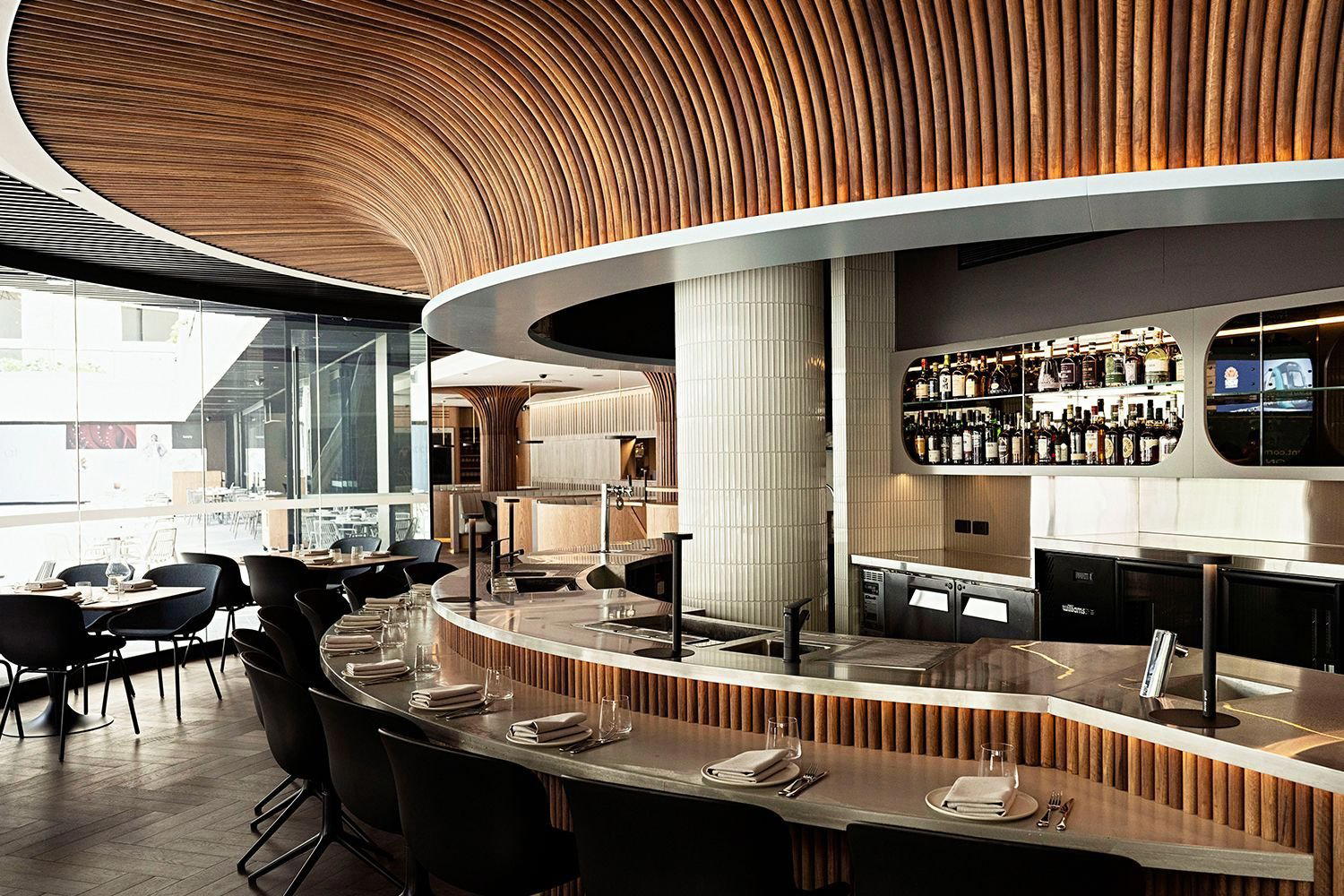
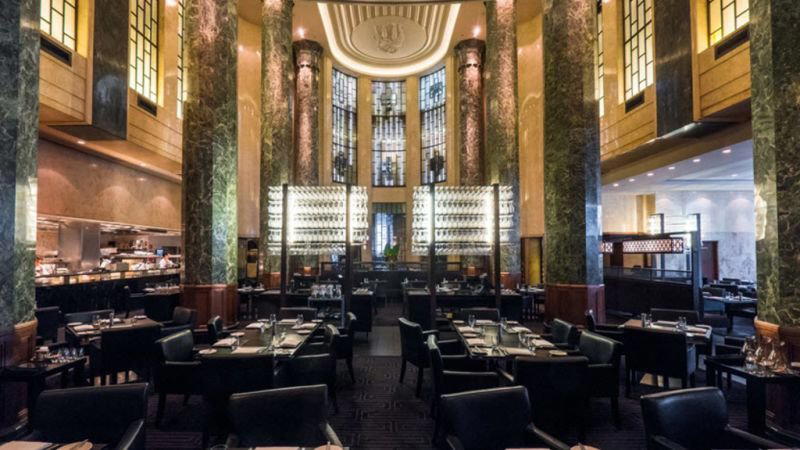
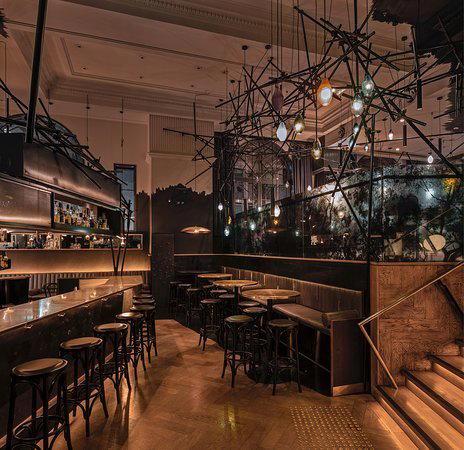
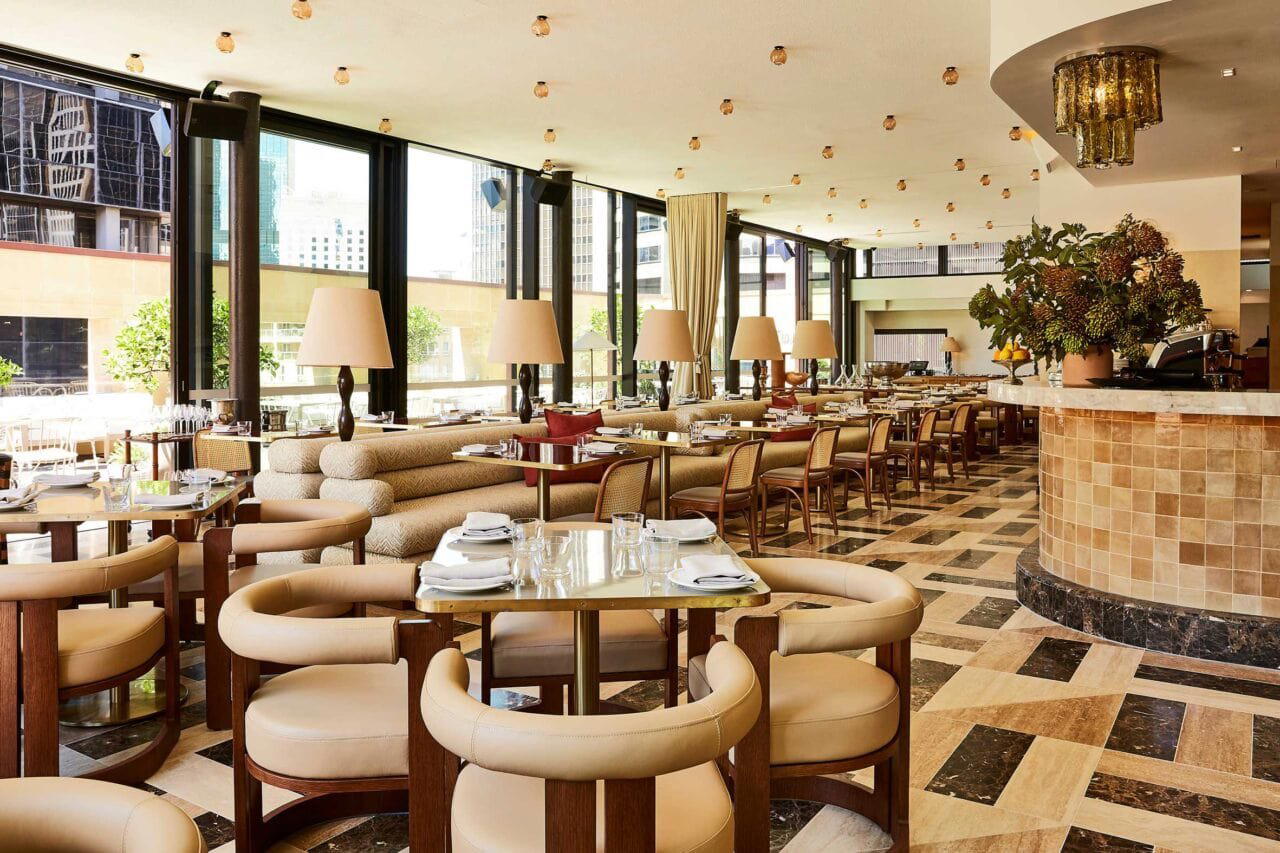
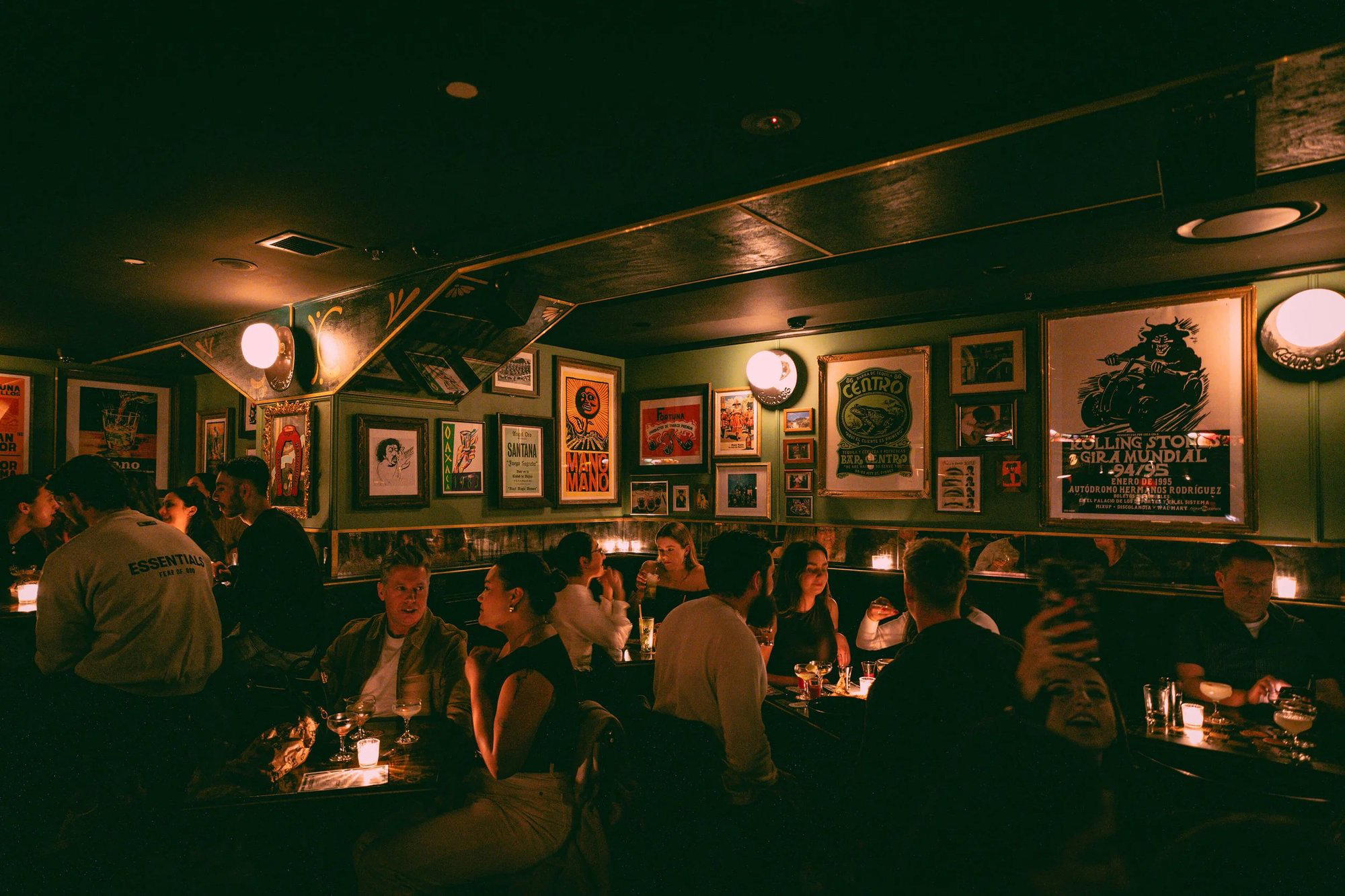
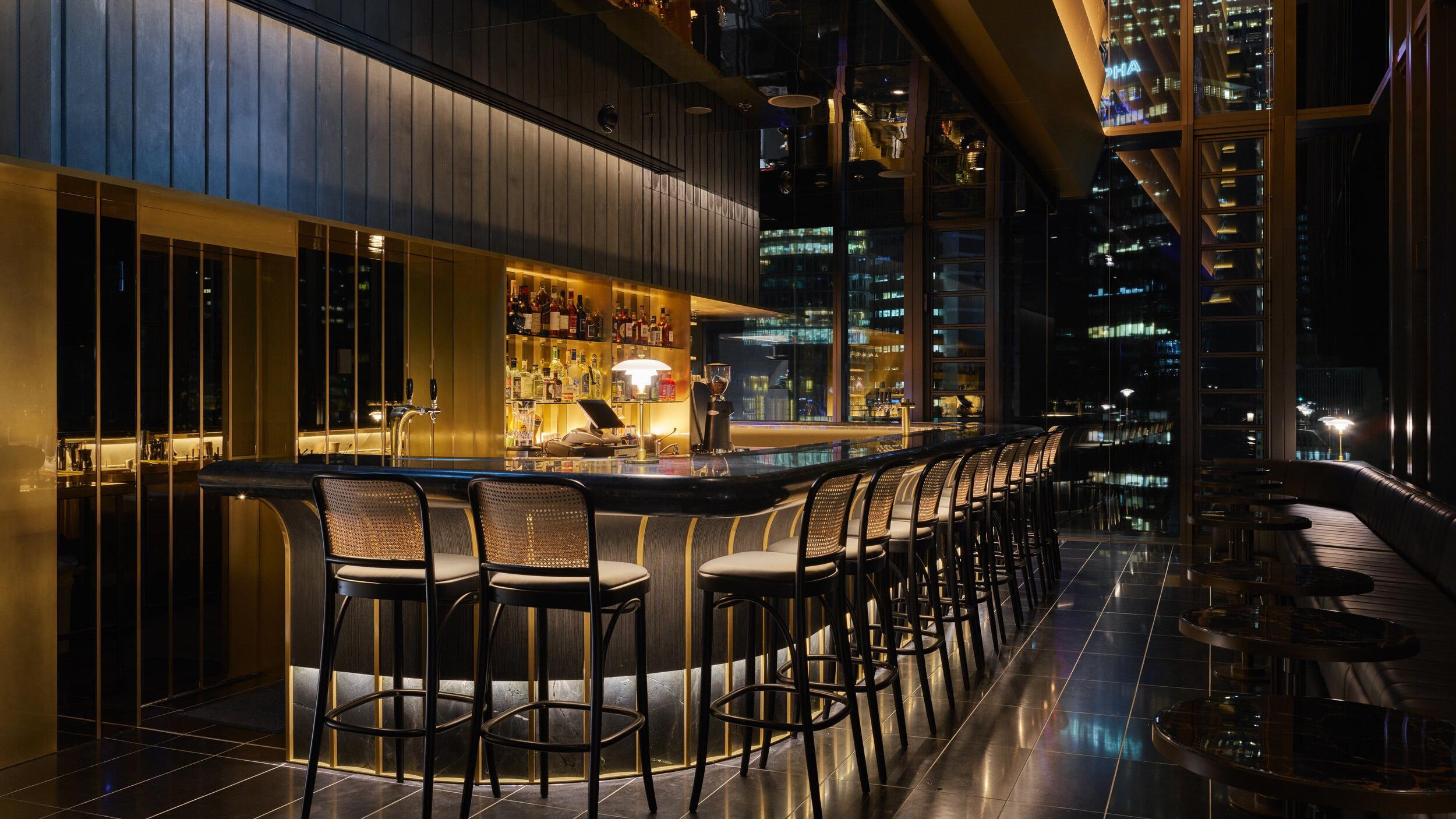
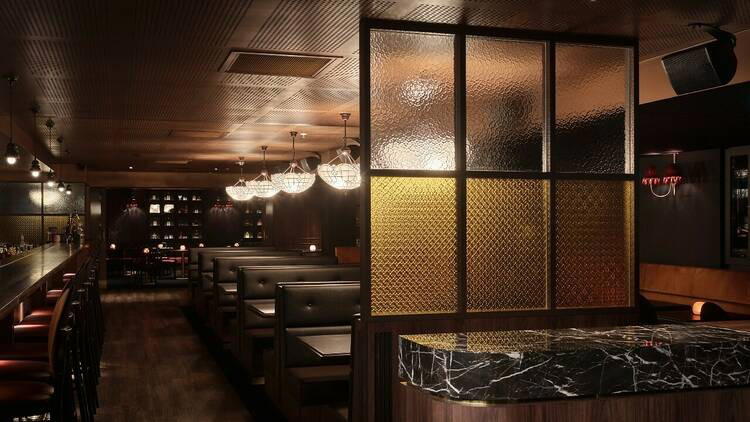
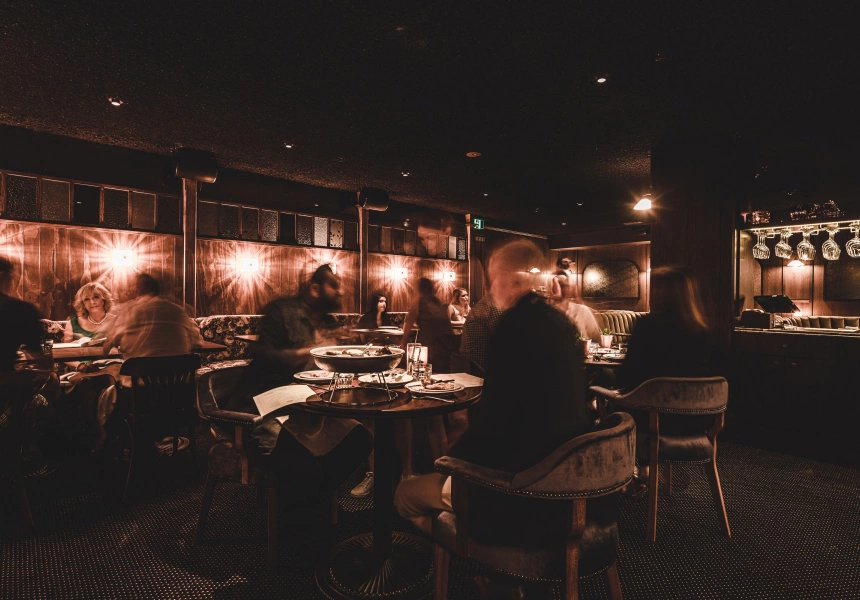
Descending into The Gidley from King Street feels like a deliberate act of subtraction. The CBD's foot traffic and glass towers recede; what replaces them is a basement dining room built around dark wood panelling, plush leather booths, and vintage lighting calibrated to make every conversation feel private. It is a room designed with a specific atmosphere in mind — one that borrows from the American chophouse tradition and the European supper club while staying grounded in a distinctly Australian context. The physical environment is not accidental; it is the argument the restaurant makes before a single dish arrives.
That kind of deliberate atmosphere-building has become its own category within Sydney's restaurant scene. Where many CBD venues default to the open, light-filled, Scandinavian-minimalist approach that has defined Australian fine dining for the past decade, The Gidley plants its flag in the opposite direction: dim, intimate, theatrical in a quietly confident way. It sits alongside venues like AALIA and 20 Chapel as part of a cohort of Sydney restaurants where room design is as considered as the menu itself.
The Grill at the Centre of It
Australian steak culture has matured considerably over the past fifteen years, and The Gidley sits at the more considered end of that spectrum. The kitchen works with mainly Australian beef, predominantly dry-aged, cooked over an ironbark and charcoal open-fire grill. That grill detail matters: ironbark is a dense hardwood that burns hot and long, imparting a smoke character distinct from gas or standard wood-fired setups. The choice signals a kitchen that has thought carefully about its heat source, not just its sourcing.
The beef-forward menu positions The Gidley differently from the broader-canvas Australian restaurants in Sydney's upper tier. Rockpool spans a wider culinary register; Saint Peter pivots entirely toward seafood. The Gidley's commitment to the steakhouse format — dry-aged cuts, classic sides executed with care, a wine list built to support red meat, gives it a clearer brief and allows the kitchen to concentrate rather than diversify. The Riverine Black Angus ribeye is noted as a reference point for the program; cuts like the bone-in sirloin and rib on the bone complete a menu that treats the grill as the kitchen's primary instrument.
The supporting cast of sides reflects the same discipline. Creamed spinach, hand-cut fries, and bone marrow with truffle jus are steakhouse classics, but the framing here suggests they are executed with enough precision to function as more than filler. In a restaurant where the beef is the protagonist, sides that can hold their own are a meaningful signal about kitchen standards overall.
The Front-of-House as Collaborator
Editorial angle that most distinguishes The Gidley from comparable steakhouses in Sydney and beyond is the role of the front-of-house team in shaping the experience. The service model described across independent coverage of the restaurant is consistent: the floor staff operate with a combination of technical knowledge and social ease that is harder to maintain than either quality alone. In a steakhouse context, where the wine list carries serious weight, that balance matters in practical terms.
Wine program at The Gidley holds a White Star recognition from Star Wine List, published in October 2021. That credential places the list in a category recognised for quality and curation, not merely volume. In practical terms, it means the list is built with intent, bold Australian vintages alongside Old World references, and that the staff are trained to navigate it with guests rather than simply hand over a heavy book. For a steakhouse where the beef and the wine are expected to work together, having floor staff who understand both sides of that pairing is a structural advantage, not a luxury.
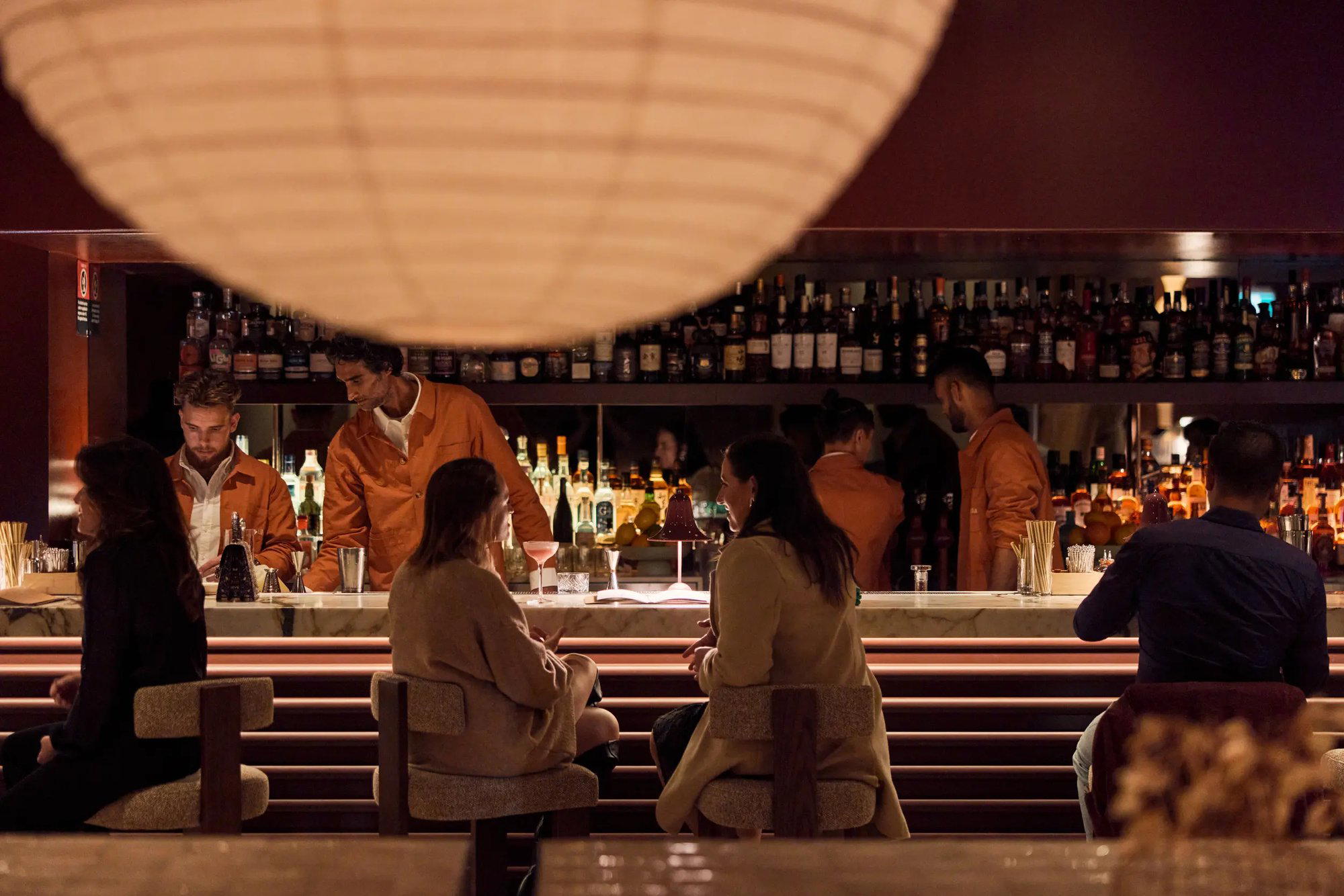
Collaboration between kitchen and floor is particularly evident at the bar, where The Gidley's burger has developed a following that sits somewhat independently of the full dining experience. Built from a blend of premium Australian beef cuts and served with melted cheese, pickles, and a toasted bun, it reads as a kitchen that respects the format rather than condescending to it. The fact that it can be ordered at the bar with a cocktail reflects a front-of-house model flexible enough to serve both the full-occasion dinner and the more casual drop-in without the experience degrading at either end.
That kind of service architecture, where the same team calibrates to the register of each table, is common in the leading hotel dining rooms and in long-running establishments with deeply experienced floor staff. In Sydney's CBD, where turnover in hospitality staffing is high and many rooms feel inconsistent visit to visit, it represents a meaningful commitment to the guest experience as a sustained operational priority rather than a peak-night performance.
Where The Gidley Sits in Sydney's Steak Conversation
Sydney has a number of credible addresses for premium beef. Rockpool Bar & Grill set much of the benchmark for the modern Australian steakhouse format; Bathers Pavilion takes a broader approach that incorporates seafood and produce-led cooking. The Gidley's differentiation is atmospheric as much as culinary: it is the room, the service model, and the specificity of the dry-aged, open-fire format working together that defines its position.
For context across the Australian scene, the steakhouse format at this price point sits in a particular tier. Comparable commitments to provenance and technique can be found at Bacchus in Brisbane and Botanic in Adelaide, while at the other end of the formality spectrum, Brae in Birregurra and Amaru in Armadale represent how seriously the broader Australian dining scene treats produce-driven cooking. Internationally, the comparison with rooms like Le Bernardin in New York City or Atomix in New York City underscores how a clear, sustained format executed with rigour across kitchen and floor tends to generate lasting credibility in any city's restaurant culture. Flower Drum in Melbourne and 400 Gradi in Brunswick East are further examples of Australian venues where format consistency over time builds a reputation that marketing alone cannot manufacture.
Planning a Visit
The Gidley sits at Basement, 161 King Street in Sydney's CBD, making it direct to reach from Central Station or any of the city's main transport corridors. The room suits business dinners and considered evening visits where pace matters; the bar format allows for a more compact lunch or early-evening stop without requiring a full dining commitment. Booking in advance is advisable, particularly for prime evening slots. For anyone building a wider Sydney itinerary, our full Sydney restaurants guide, Sydney hotels guide, Sydney bars guide, Sydney wineries guide, and Sydney experiences guide cover the broader picture.
Frequently asked questions
Has Thr Gidley won any awards?
Thr Gidley has received recognition including: The Gidley is a restaurant in Sydney, Australia. It was published on Star Wine List on October 28, 2021 and is a White Star.; The Gidley - Sydney’s Modern Tribute to Old-World Steakhouse Glamour Hidden beneath the streets of Sydney’s bustli….
Does The Gidley work for a family meal?
The Gidley's basement dining room on King Street is set up for intimate dinners and business evenings rather than family groups with young children. The atmosphere — dim lighting, leather booths, a serious wine program — orients toward adults. It functions well for older teenagers or family occasions where the focus is on a considered beef-and-wine dinner rather than a casual shared meal.
What is the atmosphere like at The Gidley?
Below street level on King Street, the room trades the CBD's glass-and-light aesthetic for dark timber panelling, vintage lighting, and plush leather booths. The Gidley holds a White Star rating from Star Wine List, and the room reflects that seriousness — it's a place where a long dinner feels appropriate. The layout allows both group conviviality and enough separation for private conversation.
What's the must-try dish at The Gidley?
The kitchen centres on dry-aged Australian beef cooked over an ironbark and charcoal open fire grill — that technique is where the menu earns its reputation. The Riverine Black Angus ribeye is the cut most referenced by regulars. The Gidley's burger has also attracted a following of its own, made from a blend of premium Australian beef cuts and served within the full dining room or at the bar.
Style and Standing
| Venue | Cuisine | Price | Awards | Notes |
|---|---|---|---|---|
| Thr GidleyThis venue — the venue you are viewing | Opulent Steakhouse | $100–150 | Star Wine List · World Best Burgers World's 101 Best Burgers #19 | Not listed |
| Rockpool | Modern Australian Steakhouse | $150–200 | World's 50 Best #49 · La Liste Top Restaurants | Australian Cuisine |
| Saint Peter | Modern Australian Seafood | $150–200 | World's 50 Best #66 · La Liste Top Restaurants | Australian Seafood |
| BENTLEY Restaurant & Bar | Modern Australian Fine Dining | $150–200 | La Liste Top Restaurants · Star Wine List | Not listed |
| Bennelong | Modern Australian Fine Dining | $200–300 | La Liste Top Restaurants · Star Wine List | Not listed |
| Rockpool Bar & Grill | Australian Grill | Not listed | Not listed | Not listed |
Recognition history
Dated appearances from independent guides and award organizations, with the underlying list record or original source where available.
Star Wine List
Star Wine List
World Best Burgers World's 101 Best Burgers #19
World Best Burgers
World's Best Steaks 101 Best Steak Restaurants #48
World's Best Steaks
Full recognition history (5 entries)
World's Best Steaks 25 Best Burgers #12
World's Best Steaks
World's Best Steaks 101 Best Steak Restaurants #32
World's Best Steaks