Island Pride
Island Pride brings Caribbean culinary tradition to Rockville's Hungerford Drive corridor, a stretch that concentrates some of Maryland's most geographically diverse dining. The restaurant sits within a suburban market that increasingly rewards cooking rooted in specific regional identities rather than generalized ethnic categories. For diners tracking where to eat in Montgomery County, Island Pride represents the Caribbean end of that spectrum.
Pearl is the En Primeur Club membership app — saves, bookings, and concierge access live there. Same editors, same standards.
- Address
- 823 Hungerford Dr, Rockville, MD 20850
- Phone
- +13013152668
- Website
- jamaicanfoodrockville.com
- Directions
- Get directions
 Saves & bookings on Pearl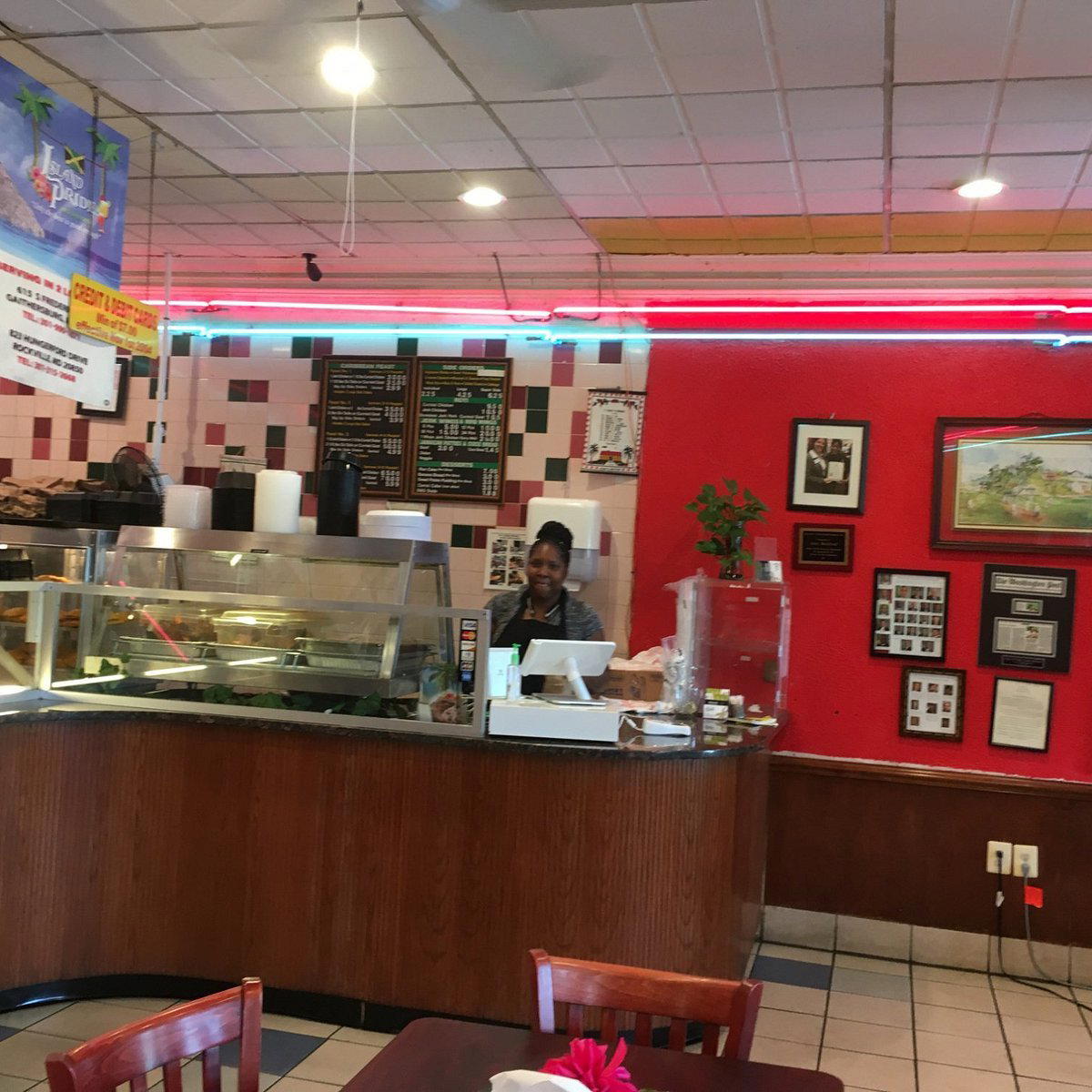
Where Caribbean Tradition Meets a Suburban Maryland Dining Scene
Hungerford Drive in Rockville runs through among the more culinarily diverse suburban corridors in the Mid-Atlantic. The stretch between Veirs Mill Road and the city center has accumulated decades of immigrant-owned restaurants serving cuisines that rarely appear within ten miles of each other: Northern Chinese hand-pulled noodles at A&J Restaurant, wood-fired Mexican at Al Carbon, Sichuan at Asia Cafe, Indian subcontinental at Bombay Bistro, and Mexican-inflected botanero culture at Botanero. Island Pride at 823 Hungerford Dr sits within that same corridor, occupying the Caribbean position in a lineup that effectively functions as an informal world food market strung along a single arterial road.
That geographic context matters because it shapes expectations. Diners arriving on Hungerford Drive are generally not looking for approximations or fusion compromise. The restaurants that have sustained a following here tend to be the ones anchored to a specific culinary tradition rather than a generalized category. Caribbean cooking in the United States has historically been flattened into a single undifferentiated genre, when in practice the food cultures of Jamaica, Trinidad, Haiti, Barbados, and the Eastern Caribbean islands differ from each other as sharply as Cantonese differs from Shanghainese. How a Caribbean restaurant positions itself within that specificity is often the clearest indicator of its culinary seriousness.
The Intersection of Imported Method and Indigenous Product
Caribbean cuisine at its most considered operates at an intersection that formal culinary training has only recently started to articulate clearly: the convergence of West African technique, Spanish and British colonial influence, and the extraordinary indigenous product base of the islands. Scotch bonnet peppers, allspice, callaloo, plantain, salt fish, oxtail, and fresh seafood from warm Atlantic waters are not ingredients that European or East Asian culinary frameworks were designed to showcase. The cuisines that grew up around them developed their own logic, their own heat management, their own braising times, and their own balancing acts between fat, acid, and spice.
The broader American restaurant conversation has spent the last decade reassessing exactly this kind of culinary lineage. At the high-end tier, restaurants like Le Bernardin in New York City and Providence in Los Angeles have demonstrated how rigorous technique applied to specific regional seafood traditions can generate Michelin-level recognition. Further along the technique-meets-place axis, Blue Hill at Stone Barns in Tarrytown and Single Thread Farm in Healdsburg have built their entire identities around the argument that indigenous product, treated with technical seriousness, is more interesting than imported luxury ingredient. The same argument applies at every price point, including the neighborhood level where most people actually eat.
Island Pride occupies that neighborhood tier on Hungerford Drive, where the question is not whether the cooking will carry a tasting menu price tag but whether it will be anchored to genuine Caribbean product knowledge rather than a simplified version of the cuisine designed for maximum accessibility. Montgomery County's Caribbean dining options are limited enough that a restaurant doing this well functions as a genuine reference point for the community it serves.
Reading Rockville's Caribbean Dining Context
Maryland's Caribbean population is concentrated largely in Prince George's County and the inner suburbs of Montgomery County, which means Rockville sits at the outer edge of the geographic density where Caribbean restaurants tend to cluster. That positioning gives Island Pride a degree of local relevance that a comparable restaurant in a city with higher Caribbean population density, say Miami or Brooklyn, would have to compete harder to establish. In lower-density suburban markets, the restaurants that survive long-term tend to be the ones that have built repeat regulars rather than relying on destination traffic.
The pattern across Rockville's Hungerford Drive corridor broadly supports that reading. The restaurants with multi-year staying power here, across every cuisine category, have generally prioritized cooking fidelity over aesthetic presentation. The dining rooms tend toward the functional rather than the designed. The value proposition is in the plate. Compare this to the format discipline that defines high-investment tasting menu restaurants like Alinea in Chicago, Lazy Bear in San Francisco, or Atomix in New York City, where the room, the sequence, and the service architecture carry as much weight as the food itself. Neighborhood Caribbean cooking operates on entirely different terms: proximity, consistency, and product authenticity are the measures that matter.
Internationally, the conversation about Caribbean culinary technique reaching fine dining formats has accelerated in cities like London and New York, and in markets as far afield as Hong Kong, where restaurants like 8 1/2 Otto e Mezzo Bombana (Hong Kong) have shown how diaspora food cultures can achieve formal recognition when treated with technical rigor. Closer to home, The Inn at Little Washington and Addison in San Diego represent the American fine dining tier where regional identity and technique converge at the highest level of investment. The neighborhood restaurant version of that same argument, played out on Hungerford Drive, is quieter but no less real.
Planning Your Visit
Island Pride is located at 823 Hungerford Dr, Rockville, MD 20850, in a corridor that is direct to reach by car from the I-270 corridor and within reasonable distance of the Rockville Metro station on the Red Line. Hungerford Drive restaurants in this stretch tend to operate with walk-in capacity as the default, though calling ahead for larger groups is advisable given that independently owned Caribbean spots at this price tier rarely maintain the reservation infrastructure of higher-investment operations. The restaurant is walk-in friendly and open Monday through Saturday from 10 AM to 8 PM; it is closed on Sunday.
For diners building a meal around the corridor's diversity, the restaurant pairs logically with a broader Hungerford Drive itinerary. The concentration of options in this stretch, from the Chinese northern cooking at A&J Restaurant to the Indian subcontinent flavors at Bombay Bistro, means that a single afternoon or evening can cover significant culinary range without leaving a half-mile radius. Caribbean cooking, with its emphasis on slow-braised proteins, fried starch, and chile heat, makes a particularly good anchor for a meal that moves across multiple stops, since it tends to hold well and travel in takeout format. And for anyone tracking where Emeril's in New Orleans-style elevation of American regional cooking has filtered down to the neighborhood level, the Rockville Caribbean corridor is a useful case study in how culinary tradition sustains itself outside formal fine dining structures.
Comparable Spots
Comparable venues nearby, for context on price, style, and recognition.
| Venue | Cuisine | Price | Notes |
|---|---|---|---|
| Island PrideThis venue — the venue you are viewing | Authentic Jamaican | $ | Not listed |
| A&J Restaurant | Northern Chinese Dim Sum | $ | Rockville Pike |
| Polleria Tres Amigos | Salvadoran Rotisserie & Latin American | $ | Rockville |
| Asia Cafe | Chinese Takeout | $$ | Downtown Rockville |
| Green Bamboo Asian Bistro | Chinese, Japanese & Thai Fusion | $$ | Twinbrook |
| Al Carbon | Authentic Wood-Fire Latin American | $ | Rockville |
Continue exploring
More in Rockville
Restaurants in Rockville
Browse all →
Bars in Rockville
Browse all →
Hotels in Rockville
Browse all →


At a Glance
- Cozy
- Casual Hangout
- Standalone
Current opening hours
- Monday
- 10 AM–8 PM
- Tuesday
- 10 AM–8 PM
- Wednesday
- 10 AM–8 PM
- Thursday
- 10 AM–8 PM
- Friday
- 10 AM–8 PM
- Saturday
- 10 AM–8 PM
- Sunday
- Closed
Hours can change for holidays and private events. Last verified .
Casual, relaxed hole-in-the-wall spot with limited seating, counter service, and occasional live music.