Indrapura
Indrapura on Rembrandtplein has held a place in Amsterdam's Indonesian dining conversation for decades, occupying a broad, traditionally styled dining room that positions it apart from the city's contemporary restaurant wave. Where much of Amsterdam's fine dining has moved toward Modern Dutch minimalism, Indrapura maintains an Indonesian table in a central, high-footfall square, making it a reference point for rijsttafel in the city's older European-colonial dining tradition.
Pearl is the En Primeur Club membership app — saves, bookings, and concierge access live there. Same editors, same standards.
- Address
- Rembrandtplein 40, 1017 CV Amsterdam, Netherlands
- Phone
- +31206237329
- Website
- indrapura.nl
- Directions
- Get directions
 Saves & bookings on Pearl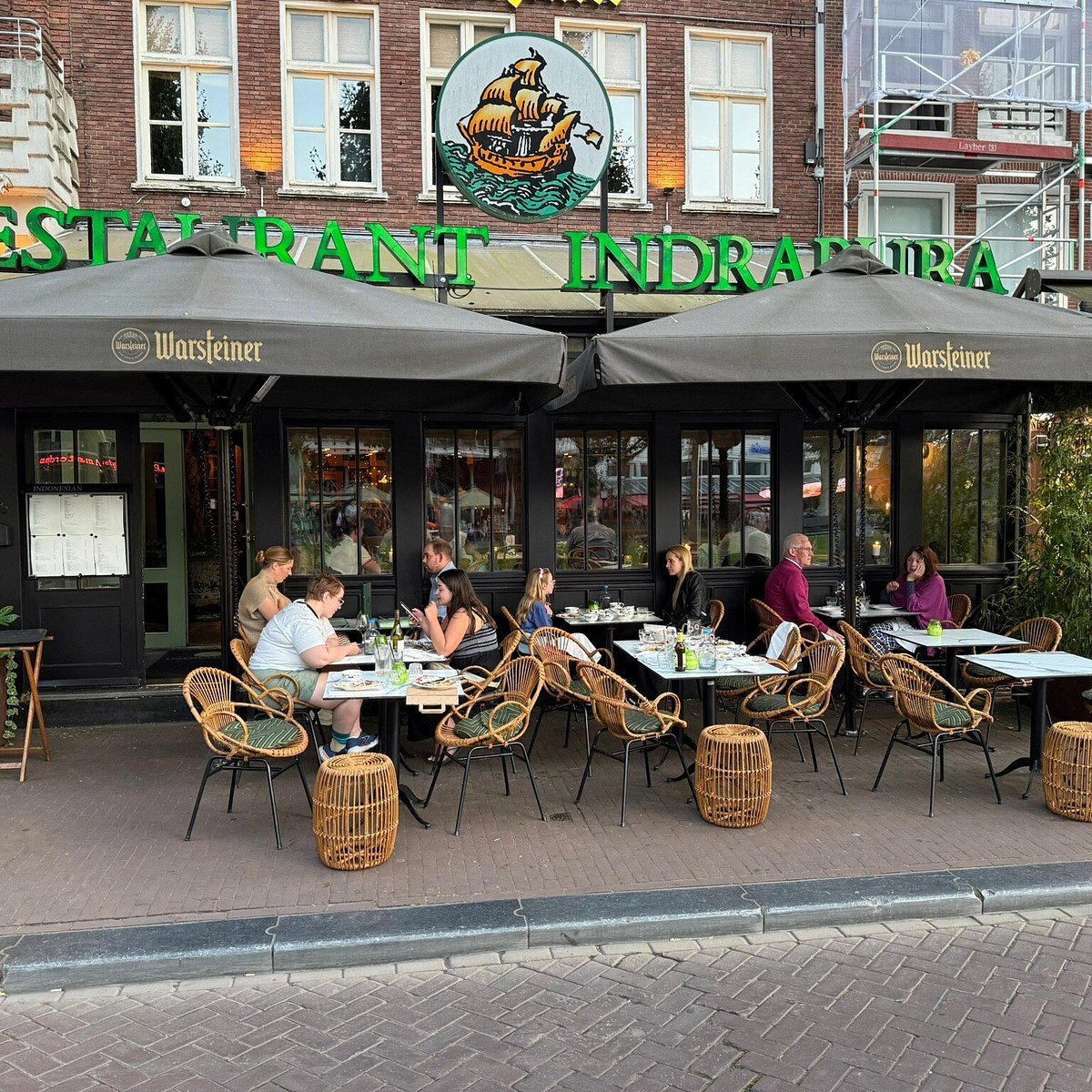
A Square Built for Spectacle, a Room Built for Something Else
Rembrandtplein is one of Amsterdam's loudest intersections, a square where terraces compete for attention, menus are laminated, and the evening trade runs on volume. The restaurants that have survived here across multiple decades have done so not by chasing the square's energy but by sitting slightly apart from it. Indrapura, at number 40, occupies that category: an address on one of the city's most trafficked tourist corridors that has nonetheless built an identity around a specific culinary tradition rather than the broadest possible crowd appeal.
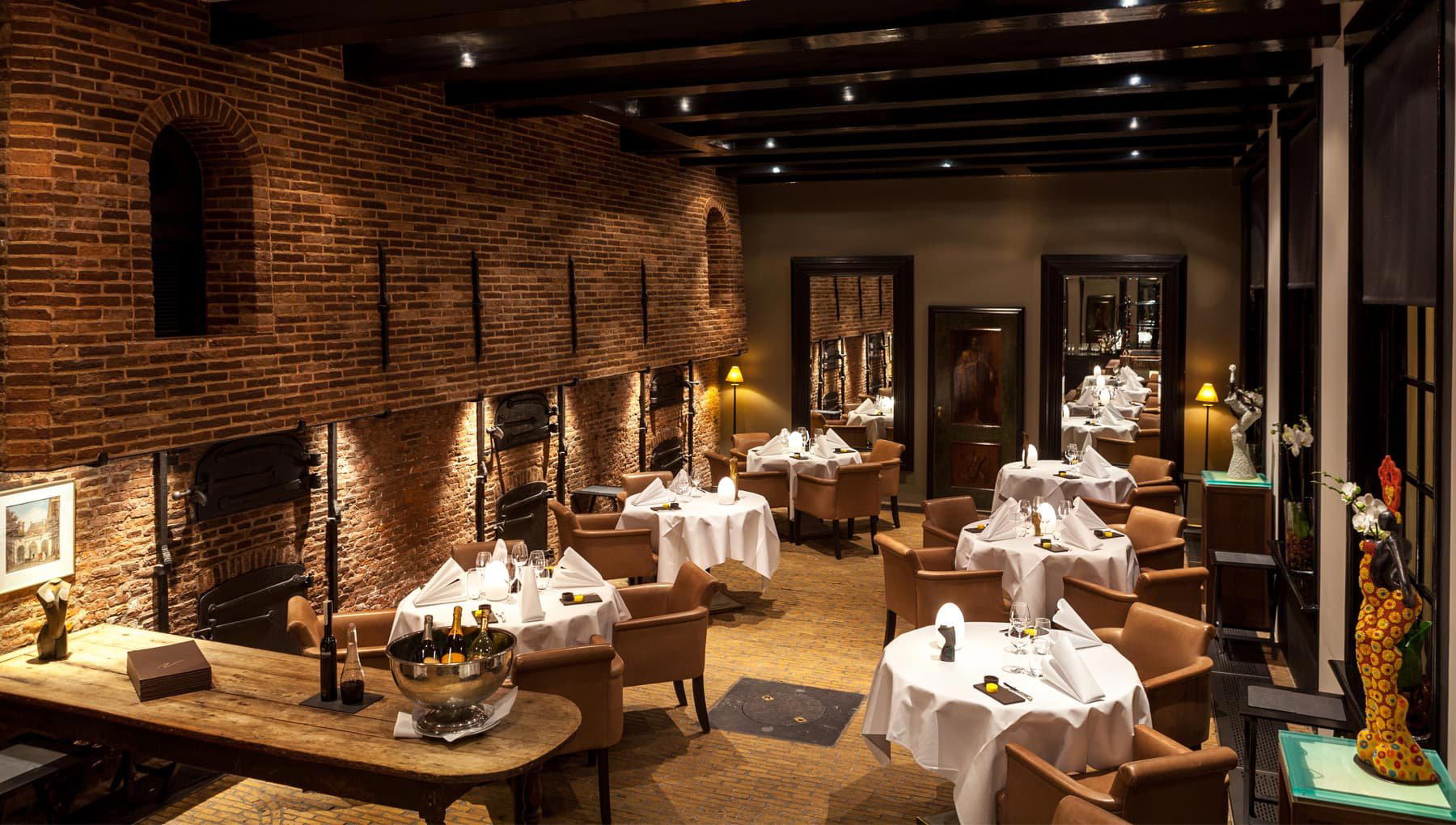
The dining room itself operates as the primary signal of intent. Where Amsterdam's contemporary restaurant wave, represented at the upper end by places like Ciel Bleu, Flore, Spectrum, and Vinkeles, has moved toward architectural minimalism and chef-as-protagonist formats, Indrapura's physical container reads as a deliberate counter-position. The space is traditionally styled, with the kind of density and warmth that signals a different dining logic: the meal as a communal table of shared dishes rather than a sequenced tasting exercise.
The Indonesian Rijsttafel in Its Amsterdam Context
To understand what Indrapura represents, it helps to understand the rijsttafel's specific position in Dutch culinary history. The format, which translates literally as 'rice table,' arrived in the Netherlands as a direct consequence of Dutch colonial presence in what is now Indonesia. In its original colonial form it was a banquet format, dozens of small dishes arranged around a central rice course, designed to display the range of the Indonesian archipelago's cooking for European tables. Amsterdam absorbed this tradition more thoroughly than most European capitals absorbed their own colonial-era food imports, and the city developed a tier of Indonesian restaurants across the twentieth century that made rijsttafel a recognizable part of the local dining repertoire.
That tier has thinned considerably. The generation of Indonesian restaurants that defined Amsterdam's mid-century dining fabric has not been fully replaced by younger operators, and the format now sits in a smaller, more specific niche than it occupied thirty years ago. Indrapura is among the establishments that have held a position in this niche across that longer arc, making it a reference point within a tradition that the city's newer restaurant generation has largely bypassed rather than updated. For comparison, the broader Dutch fine dining conversation has moved decisively toward Creative and Modern Dutch formats, with recognized addresses like De Librije in Zwolle and Aan de Poel in Amstelveen representing the direction the country's chef-driven dining has taken. Indonesian table traditions have not followed the same trajectory into Michelin recognition, which tells its own story about where the Dutch fine dining establishment has directed its attention.
Space as Argument: What the Room Communicates
The editorial angle on any long-standing restaurant in a high-traffic location is always partly about physical space, because the room is what allows the kitchen's proposition to survive commercial pressure. A dining room designed for volume looks different from one designed for a specific format. Indrapura's interior, with its traditional styling on a square better known for terrace seating and casual trade, functions as an argument that the rijsttafel format requires a particular physical environment to make sense: table space for multiple small dishes arriving across an extended meal, a room temperature and noise level that accommodates the kind of unhurried eating the format demands.
This physical logic separates the rijsttafel dining room from what surrounds it on Rembrandtplein. The square's dominant format is the open terrace built for quick turnover and the visual draw of the square itself. An enclosed, traditionally styled room on the same footprint represents a different calculation, one that bets on the specific occasion over the walk-in crowd. Whether that calculation continues to pay off in a square that has increasingly consolidated around higher-volume operators is the operational tension any visitor can observe simply by looking at who is eating there and how long they are staying.
Where Indrapura Sits in the Amsterdam Dining Sequence
Visitors building an Amsterdam dining itinerary from the city's restaurant map will find Indrapura occupying a distinct position. The city's upper tier is now heavily weighted toward Modern Dutch and Creative formats, and its mid-tier has diversified considerably. Indonesian dining in Amsterdam remains a category with genuine historical depth, but few addresses that position it with the same seriousness that, say, Atomix in New York City applies to Korean cooking, or that Le Bernardin in New York City applies to French seafood technique. The rijsttafel tradition in Amsterdam is more about cultural continuity than culinary ambition in the contemporary sense, and Indrapura should be read inside that frame rather than against the benchmarks of the city's Michelin-tracked restaurants.
For a fuller picture of where Amsterdam's dining sits across formats and price points, including addresses like Bistro de la Mer at the classic end of the spectrum, the full Amsterdam restaurants guide provides broader coverage. Those planning day trips into the wider Netherlands will find the country's most recognized fine dining at addresses like 't Nonnetje in Harderwijk, Brut172 in Reijmerstok, De Bokkedoorns in Overveen, De Groene Lantaarn in Staphorst, De Lindehof in Nuenen, De Lindenhof in Giethoorn, De Nieuwe Winkel in Nijmegen, and De Treeswijkhoeve in Waalre, each representing the Modern Dutch and Creative directions that have defined the country's recognized dining over the past decade.
Planning Your Visit
Indrapura is located at Rembrandtplein 40, placing it in walking distance of the city centre's major hotels and canal belt neighborhoods. Rembrandtplein is well connected by tram and easily reached on foot from the Amstel and Reguliersbreestraat axis. Website and phone details were not confirmed at time of publication, so direct contact should be verified through current listings.
Just the Basics
Comparable venues nearby, for context on price, style, and recognition.
| Venue | Cuisine | Price | Notes |
|---|---|---|---|
| IndrapuraThis venue — the venue you are viewing | Not listed | $$ | Not listed |
| Dynasty | Kalverdriehoek, Chinese & Thai Fusion | $$ | Not listed |
| Lavinia Good Food | Not listed | $$ | Van Loonbuurt, Healthy Mediterranean Cafe |
| Hearth | Not listed | $$ | Oosterparkbuurt Noordwest, Plant-Based Fusion with Global Influences |
| Mount Everest Tandoori | Vogelbuurt, Indian & Nepalese Tandoori | $$ | Not listed |
| IJ-kantine | Not listed | $$ | NDSM terrein, Modern European Brasserie with Seafood |
Continue exploring
More in Amsterdam
Restaurants in Amsterdam
Browse all →
Bars in Amsterdam
Browse all →
Hotels in Amsterdam
Browse all →
Wineries in Amsterdam
Browse all →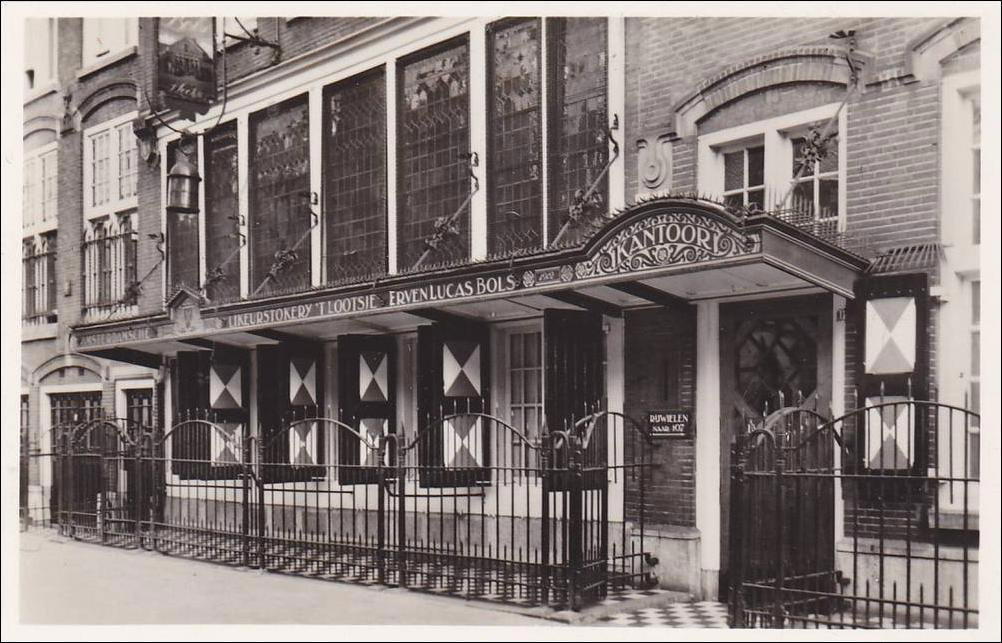
At a Glance
- Cozy
- Lively
- Group Dining
- Family
- Date Night
- Private Dining
- Street Scene
Current opening hours
- Monday
- 12–10:30 PM
- Tuesday
- 12–10:30 PM
- Wednesday
- 12–10:30 PM
- Thursday
- 12–10:30 PM
- Friday
- 12–10:30 PM
- Saturday
- 12–10:30 PM
- Sunday
- 12–10:30 PM
Hours can change for holidays and private events. Last verified .
Relaxed and cozy atmosphere with a buzzy feel during dinner service.