
Tabelog 100 #47
Our verdict
IL PAPPALARDO sits in Kyoto's Higashiyama district at Miyahochōmae-gawa 451-1, placing it within one of Japan's most concentrated pockets of traditional culture. With virtually no public-facing information available, the restaurant operates at the quieter end of Kyoto's dining spectrum, where word-of-mouth and local knowledge do the work that marketing does elsewhere. Visitors should verify current details directly before planning.

Pearl is the En Primeur Club membership app, where members save venues, book tables and use the concierge.
The menu
What to order
- Margherita pizza
- Spaghetti Vongole
Higashiyama and the Italian Question in Kyoto
Kyoto has always absorbed outside influences on its own terms. The city that spent centuries refining kaiseki into a codified seasonal discipline has, over the past two decades, also become a serious address for European cooking, particularly Italian. The address cluster around Higashiyama, one of the city's most intact historical neighbourhoods, is where this cultural layering is most interesting to read. Temples and tofu shops share the same postal districts as small Italian rooms where local sourcing principles align more closely with Japanese seasonal thinking than they ever do with the tourist-facing trattoria format. IL PAPPALARDO, at 東山区妙法院前側町451-1, sits inside this geography.
The Miyahochōmae-gawa stretch of Higashiyama places a restaurant within easy walking distance of the Sanjusangendo temple complex and the wider cultural infrastructure of the ward. For a dining address, that matters. Higashiyama's foot traffic is predominantly cultural rather than commercial, which tends to filter the clientele toward people with a specific purpose rather than casual passers-by. Restaurants that open here are, almost by definition, counting on deliberate visits rather than walk-in volume.
What the Silence Tells You
In a city where venues like Gion Sasaki and Kikunoi Honten maintain careful public presences to manage reservation demand, that kind of absence is itself a data point. It suggests a format built around regulars and referrals, a booking process that runs through personal contact rather than an online system, and an operation small enough to function without the infrastructure larger rooms require.
This is a recognisable mode in Kyoto dining. Some of the city's most respected tables operate with minimal digital footprint by design, the assumption being that the people who need to know will find out through the right channels. It positions the restaurant alongside small-room formats at Mizai or Isshisoden Nakamura in spirit, even if the cuisine tradition is Italian rather than kaiseki. The operating logic is similar: limited access, earned trust, no mass-market outreach.
Italian Cooking in a Japanese City: The Broader Frame
To understand what an Italian restaurant in Kyoto is doing culturally, it helps to look at the wider pattern. Japan's engagement with Italian cooking runs deeper than most Western observers expect. The country has its own culinary certification culture around Italian technique, its own import networks for regional Italian ingredients, and a generation of chefs who trained in Italy and returned to apply those methods to Japanese produce. The result is a hybrid discipline that often looks more rigorous about seasonal sourcing than its Italian counterparts, partly because Japanese professional culture around ingredient quality is unusually demanding.
Kyoto, specifically, has a parallel with Italian regional cooking that other Japanese cities lack: a strong indigenous produce tradition. Kyoto yasai, the city's heritage vegetables, occupy a similar cultural position to the designated regional products of northern Italy. Both represent a hyper-local ingredient identity tied to a specific soil and climate, requiring a certain kind of kitchen to honour them. When Italian technique encounters Kyoto produce, the conversation is less about fusion and more about two ingredient-respecting traditions finding common ground.
Comparison venues within Kyoto's European dining tier, such as cenci at the ¥¥¥ level, show that the market for serious Italian cooking in the city exists and holds. Beyond Kyoto, restaurants like akordu in Nara demonstrate that this Japan-European hybrid discipline extends across the Kansai region. Further afield, HAJIME in Osaka represents the premium end of what European-influenced fine dining can achieve in Japan's western cities when applied with full technical commitment.
Placing IL PAPPALARDO in the Kyoto Picture
What the address and operating mode suggest is a small, referral-dependent room in a historically significant part of the city, most likely running a format that requires advance contact to access. That profile aligns with the quieter tier of Kyoto's Italian dining scene rather than the high-volume European bistro format occasionally found near the main tourist corridors.
For travellers already familiar with the kaiseki geography of the city, the Higashiyama address will read as a deliberate location choice rather than an incidental one. The ward carries cultural weight, and restaurants that settle there tend to be working within, rather than against, the neighbourhood's identity. The contrast with the more aggressively contemporary dining development around Gion or the Kawaramachi corridor is instructive. Higashiyama operates at a slower register, which suits an Italian room built on quiet reputation rather than social media presence.
Those building a wider Japan itinerary around serious eating should note that the Kansai region offers significant range across traditions. Hyotei anchors the kaiseki end of Kyoto at its most formal, while venues like Goh in Fukuoka and Harutaka in Tokyo show how other Japanese cities are developing their own premium dining identities. Our full Kyoto restaurants guide maps the city's dining across traditions and price tiers.
Planning a Visit
Given the absence of a listed phone number, website, or booking platform, reaching IL PAPPALARDO requires a different approach than most Kyoto reservations. In-person enquiry or a contact made through a hotel concierge with local knowledge is the most reliable path. Higashiyama is accessible by foot from Kyoto Station in approximately thirty minutes or by taxi in under ten, and the Miyahochōmae-gawa address is within the walkable core of the ward's main sightseeing corridor. Travellers combining the restaurant with the wider Higashiyama circuit, which includes the Kenninji temple and the streets toward Gion, will find the geography manageable. Because no hours or seasonal schedule are publicly listed, flexibility on visit timing is advisable, and confirming current operation before travelling specifically for this address is essential.
Frequently asked questions
Would IL PAPPALARDO be comfortable with kids?
Given its location on a quiet side street in Kyoto's Higashiyama district (妙法院前側町451-1) and the general character of Italian restaurants at this neighbourhood tier in Japan, it is reasonable to assume a calm, adult-oriented atmosphere. Confirming suitability for young children requires contacting the venue directly, which itself requires some effort given the absence of a listed phone number or website.
How do I find IL PAPPALARDO (イル パッパラルド)?
IL PAPPALARDO (イル パッパラルド) is located at 東山区妙法院前側町451-1, 京都市, 京都府, 605-0932, Kyoto.
How hard is it to get a table at IL PAPPALARDO (イル パッパラルド)?
Reservations are recommended for IL PAPPALARDO (イル パッパラルド) in Kyoto. Confirm current policy via the venue's official channels.
What makes IL PAPPALARDO (イル パッパラルド) worth seeking out?
IL PAPPALARDO (イル パッパラルド) is best approached by focusing on the core concept and signature offerings.
Budget Reality Check
Comparable venues nearby, for context on price, style, and recognition.
| Venue | Cuisine | Price | Awards | Notes |
|---|---|---|---|---|
| IL PAPPALARDO (イル パッパラルド)This venue (the venue you are viewing) | Authentic Italian Pizza and Pasta | $20–30 | Tabelog 100 #47 | Not listed |
| PIZZERIA MARITA | Traditional Neapolitan Pizzeria | $20–30 | Tabelog 100 #20 | Nakagyō, Traditional Neapolitan Pizzeria |
| Rigoletto | Smoke-Infused Spanish-Italian | $30–50 | Not listed | Higashiyama, Smoke-Infused Spanish-Italian |
| Il Ghiottone | Modern Italian with Kyoto influences | $50–100 | Tabelog 100 #44 · We're Smart World 2 Radishes | Higashiyama, Modern Italian with Kyoto influences |
| Ludens | Medicinal Italian (Yakuzen) in a Kyoto Machiya | $100–150 | Tabelog 100 #99 | Nakagyō, Medicinal Italian (Yakuzen) in a Kyoto Machiya |
| caffellatte | Italian Gelato Cafe | Not listed | Tabelog 100 #31 | Ukyō, Italian Gelato Cafe |
Recognition history
Dated appearances from independent guides and award organizations, with the underlying list record or original source where available.
Tabelog 100 #47 · No. 47
Tabelog · Tabelog 100 - Italian - WEST - 2025
Continue exploring
More in Kyoto
Restaurants in Kyoto
All restaurants in Kyoto →
Bars in Kyoto
All bars in Kyoto →
Hotels in Kyoto
All hotels in Kyoto →
Wineries in Kyoto
Browse all →
Details
- Cozy
- Intimate
- Casual Hangout
- Date Night
- Open Kitchen
- Sake Program
- Local Sourcing
- A La Carte
- Wine
- Vegetarian Friendly
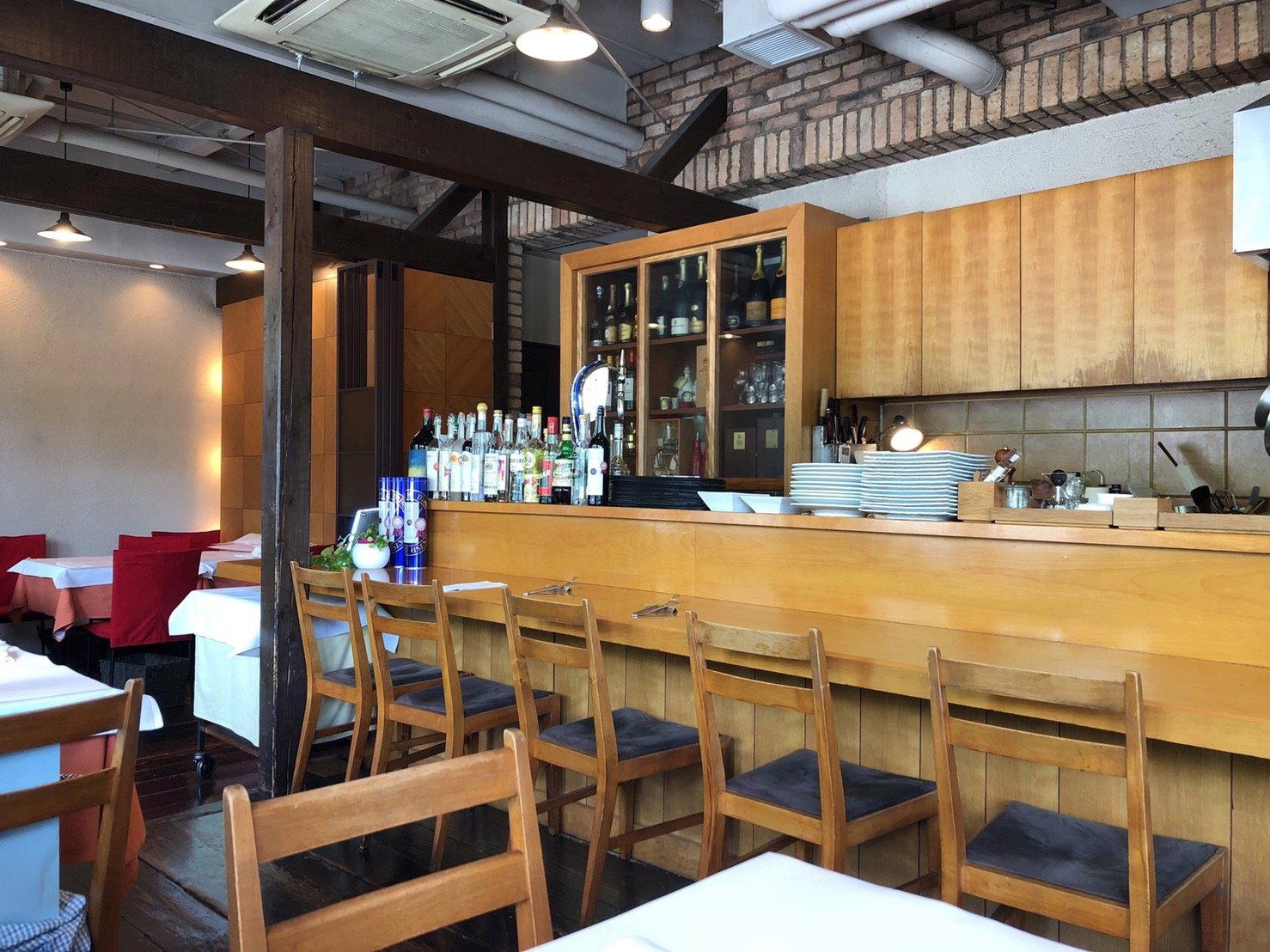
Casual and welcoming with white walls and red awning, offering a homey Italian atmosphere amid Kyoto's historic district.