III Forks - Addison
Our verdict
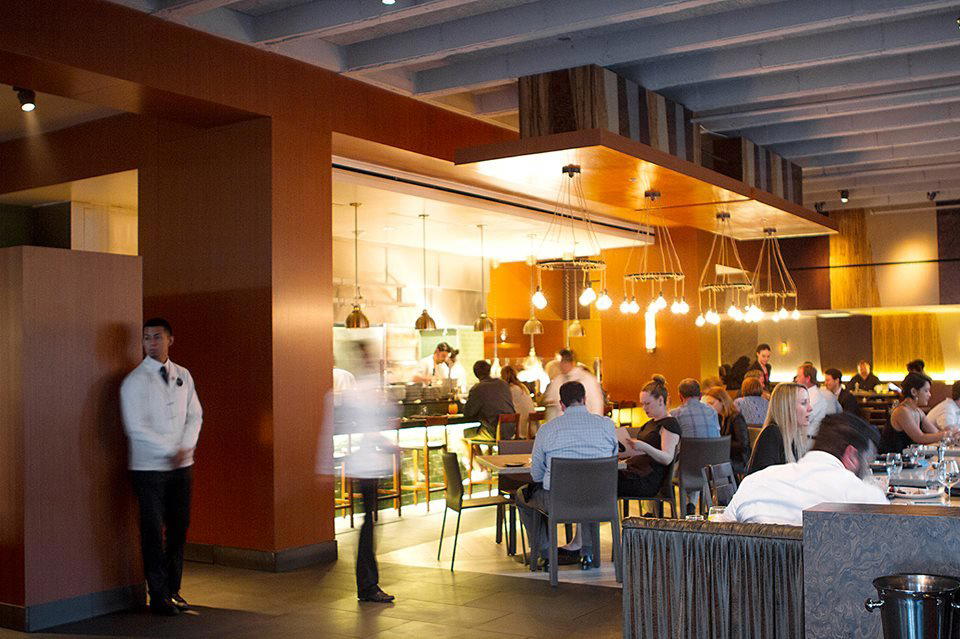
III Forks in Addison sits at the denser, more formal end of Dallas steakhouse dining, where the service model and wine program carry as much weight as the beef. Located on Belt Line Road in Addison's restaurant corridor, it draws a clientele that treats the room as a destination rather than a stopover. The format is classic American steakhouse, executed with deliberate team coordination across kitchen, floor, and cellar.

Pearl is the En Primeur Club membership app, where members save venues, book tables and use the concierge.

The Addison Steakhouse Tier: Where the Room Earns Its Keep
Dallas has always maintained a steakhouse culture that operates on a different register from the rest of the country. The city's premium steak tier is not simply about the cut on the plate; it is about the choreography of a full-service dining room where the sommelier, the floor manager, and the kitchen work as a coordinated unit rather than separate departments. III Forks in Addison occupies a specific position within that tradition, sitting on Belt Line Road in Addison's established dining corridor, a stretch that has attracted destination restaurants for decades precisely because it sits outside the more volatile real estate pressures of downtown Dallas.
The address matters contextually. Addison's restaurant density is one of the highest per capita in Texas, which means the competition for a mid-week cover is genuine. A steakhouse that survives long-term in that environment does so through repeat business, and repeat business in this price tier depends almost entirely on service consistency. The room at III Forks is built to support that model: formal enough to signal occasion dining, but not so theatrical that it becomes about itself.
The Coordination Model: Kitchen, Floor, and Cellar
American fine dining steakhouses, at their functional leading, run on a tight triangulation between the kitchen's output timing, the floor team's read of the table, and the sommelier's ability to pace the wine through a meal that can run two hours or more. This is the model III Forks operates within, and it is the dimension that separates the upper steakhouse tier from mid-market operators across the Dallas metro.
When a steakhouse gets this coordination right, the experience reads as effortless even when the mechanics behind it are complex. A properly timed dry-aged cut arriving at the correct internal temperature, paired with a Cabernet that has been decanted to the right window, and delivered by a floor team that has read whether the table wants to linger or move, is a logistical achievement. It requires investment in training and staffing depth that cheaper operations cannot sustain. For Dallas diners familiar with the category, Fearing's at The Ritz-Carlton and Tei-An on Flora Street both demonstrate what happens when kitchen and floor work in close alignment, albeit in very different formats. III Forks operates within the classic American steakhouse lane, where that coordination is the core value proposition rather than a secondary consideration.
For reference points outside Texas, the floor-and-cellar coordination model is central to how rooms like Le Bernardin in New York City and The Inn at Little Washington in Washington maintain long-term reputations. The mechanics differ by cuisine, but the principle is identical: the guest's experience is assembled in real time by a team working from the same read of the room.
Placing III Forks in the Dallas Steakhouse Conversation
Dallas supports a layered steakhouse ecosystem. At the lower end of the premium tier, you find operations where the beef is competent but the service model is transactional. At the upper end, where III Forks positions itself, the expectation is that every element of the meal is managed rather than merely delivered. The comparison set is not the $45 strip steak at a national chain; it is the full-service American steakhouse where the wine list runs several hundred labels and the front-of-house team has genuine sommelier-level knowledge.
Within Dallas proper, that peer group is not large. Lucia in the Bishop Arts District operates at a comparable price point but in a different format and cuisine tradition. Tatsu Dallas brings Japanese precision to the premium tier without operating in the steakhouse lane at all. Mamani and 3Eleven Kitchen and Cocktails represent adjacent but distinct formats. For a direct competitive read on the beef-forward, full-service steakhouse format, III Forks competes against a short list of Dallas operators, which is part of why its Addison location maintains relevance even as newer concepts open in more fashionable parts of the city.
Those interested in how the American steakhouse format compares to other premium meat-focused dining should look at how 12 Cuts Brazilian Steakhouse approaches the category differently, and how internationally the format diverges further at places like 8½ Otto e Mezzo Bombana in Hong Kong, where European fine dining technique replaces the service-driven American model entirely.
Occasion Dining in the Suburbs: The Case for Addison
There is a broader pattern in American dining where suburban locations sustain a premium format more durably than downtown equivalents, because the clientele is less transient and more repeat-oriented. Addison exemplifies this. The corporate dining base in the area, combined with a residential demographic that treats Belt Line Road restaurants as a local institution rather than a destination, creates the kind of consistent cover count that supports a properly staffed dining room. The contrast with downtown Dallas, where occasion dining competes directly with hotel restaurants and new openings, is significant.
This is not a context unique to Dallas. Blue Hill at Stone Barns in Tarrytown and Single Thread Farm in Healdsburg both demonstrate how removing a restaurant from a major urban center can actually deepen its identity and guest commitment. The scale and ambition differ considerably from a suburban Dallas steakhouse, but the structural logic is similar: distance from the noise of a competitive urban dining market allows a restaurant to build a stable identity.
For diners traveling to Dallas who want to map the full range of the city's dining scene, our full Dallas restaurants guide provides the broader context. Those looking to compare what premium occasion dining looks like in other American cities will find useful reference points at Lazy Bear in San Francisco, Alinea in Chicago, Providence in Los Angeles, Emeril's in New Orleans, and Addison in San Diego. For those focused on precision-driven formats, Atomix in New York City and The French Laundry in Napa set the national benchmark for team coordination at the tasting-menu level. Given its position in the Addison dining corridor, the room draws consistent weeknight traffic from the surrounding corporate and residential base, which means weekend reservations in particular benefit from advance planning. For a room of this type and price positioning in the Dallas market, booking several days to a week ahead for weekday visits and further in advance for Friday and Saturday evenings is the practical standard. For dietary or allergy requirements, contact the restaurant directly through their current booking channels, as specifics are best confirmed with the team ahead of arrival. Those building a broader Dallas dining itinerary around a visit here might also consider 360 Brunch House for a daytime alternative in the area.
Frequently asked questions
Where is III Forks - Addison located?
III Forks - Addison is located at 5100 Belt Line Rd Suite 800, Addison, TX 75254, Dallas.
Does III Forks Addison work for large group or private dining events in the Dallas suburbs?
The Addison location on Belt Line Road is structured to handle business dining and group bookings, which aligns with a broader pattern of suburban Dallas restaurants sustaining private dining infrastructure that downtown venues often deprioritize. III Forks across its Texas locations has historically positioned itself around corporate and occasion formats. check the venue's official channels to confirm private room availability and minimum spend requirements for group events.
What's the signature dish at III Forks - Addison?
III Forks built its reputation across Texas on prime beef, and the Addison location at 5100 Belt Line Road operates within that same framework.
How far ahead should I plan for III Forks - Addison?
For business dinners or occasion meals in Addison, booking at least one to two weeks ahead is a practical baseline for a steakhouse at this tier. Peak dining periods, Friday and Saturday evenings, and corporate event seasons, compress availability faster. Call the restaurant directly to confirm current lead times.
What's the signature at III Forks - Addison?
The defining format at III Forks Addison is the full-service American steakhouse model: prime cuts, tableside attention, and a room calibrated for business and occasion dining. The Addison address on Belt Line Road positions it squarely as the suburban counterpart to downtown Dallas steak operations, with a clientele that skews toward corporate and celebratory bookings.
Is III Forks - Addison allergy-friendly?
Reach out directly before your reservation to discuss requirements, particularly for dairy, gluten, or shellfish, which are common in steakhouse side preparations.
Is eating at III Forks - Addison worth the cost?
III Forks sits in the premium tier of the Dallas steakhouse market, where the price of entry covers not just the beef but the room, the service coordination, and the format suited to client dinners or milestone occasions. For diners whose priority is a structured, full-service experience in Addison rather than a drive into central Dallas, the suburban location carries practical value alongside the food.
Quick Comparison
| Venue | Cuisine | Price | Awards | Notes |
|---|---|---|---|---|
| III Forks - AddisonThis venue (the venue you are viewing) | Prime Steakhouse | $100–150 | Not listed | Not listed |
| Fearing's | Southwestern American Steakhouse | $100–150 | Michelin Plate · Wine Spectator Award of Excellence | Southwestern, American |
| Lucia | Contemporary Italian | $50–100 | Michelin Bib Gourmand · James Beard Award Semi Finalist | Italian |
| Tei-An | Japanese Soba House | $100–150 | Michelin Plate | Izakaya, Japanese |
| Tatsu Dallas | Traditional Edomae Omakase | $150–200 | 1 Michelin Star | Japanese |
| Cattleack Barbeque | Texas Barbecue | $20–30 | Michelin Bib Gourmand | Barbecue |