
Tabelog 100 #66
Our verdict
A Kyoto sweets stop with unusual historical weight: Ichiwa Ichimonjiya Wasuke traces its founding to 1000 AD and sits in the shrine-side tradition rather than the hotel-patisserie lane. Its Tabelog 100 selection for Japanese traditional sweets and sweets cafes in WEST 2023 gives modern recognition to a format built around old Kyoto ingredients, modest pricing, and a casual cafe setting.

Pearl is the En Primeur Club membership app, where members save venues, book tables and use the concierge.
The menu
What to order
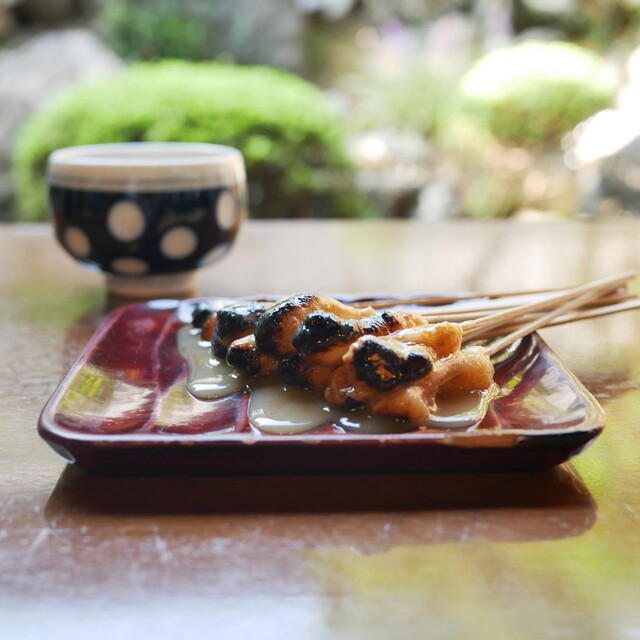
- Aburi-mochi (grilled mochi skewers with sweet miso or soybean sauce)
- Warabimochi
Approaching Ichiwa Ichimonjiya Wasuke in Kyoto, the city’s sweet-shop culture feels less like dessert after lunch and more like a small ritual of its own. This is not the Kyoto of kaiseki counters and hotel lounges; it is older in mood, plainer in tone, and built around small acts of eating tied to place. Ichiwa Ichimonjiya Wasuke belongs to that register: Japanese traditional sweets and a cafe featuring Japanese sweets, with the low ceiling of everyday pricing rather than ceremony priced for visitors.
The useful way to read a shop like this is through ingredients and context. Kyoto wagashi is often discussed as craft, but the deeper distinction is sourcing logic: rice, beans, sugar, tea, miso, and seasonal flavorings handled in compact forms, made to accompany temples, walks, and pauses rather than a long meal. In Kyoto, sweets can function as edible punctuation. They give the route a rhythm, a reason to stop, and a local taste memory that does not require a tasting menu.
Kyoto sweets, not restaurant theatre
Kyoto’s premium dining reputation can flatten the city into omakase, kaiseki, and reservation anxiety. The wagashi and sweets-cafe tier works differently. It is lower in price, more casual in spirit, and often more revealing of local food culture than a formal counter. Ichiwa Ichimonjiya Wasuke has a Tabelog score of 3.72 and was selected in 2023 in Tabelog Hyakumeiten for Japanese traditional sweets / Japanese sweets cafe, a useful signal because this category rewards a different set of strengths from luxury dining: consistency, local attachment, and a narrow format executed over time.
The value of a shop like this matters less as romance than as context for Kyoto’s continuity businesses. A traditional sweet-shop format places the venue within the city’s everyday food culture, where familiar forms survive by repetition rather than reinvention. That makes it a counterpoint to contemporary Kyoto dining rooms, where the meal may read through chef intent, menu structure, or urban dining style. Here, the tradition is the frame.
That frame also explains why Aburi Mochi Honke Nemoto Kazariya belongs in the same conversation. Kyoto has clear examples of food tied to a particular style of visit, not merely a commercial street with good snacks. Compared with broader casual dining, the appeal is narrower and more rooted in site: this is not general-purpose comfort food, but a Kyoto sweet-shop tradition that makes full sense as part of the city’s older rhythm.
Why the ingredients matter in Kyoto wagashi
Kyoto sweets are often small, but they carry heavy cultural work. The city’s wagashi tradition developed alongside tea, ritual gifting, temple precincts, and seasonal observance. Ingredient restraint is part of the point. Rice-based sweets, bean pastes, roasted notes, and miso or soy accents can deliver depth without the dairy-rich vocabulary of Western pastry. That makes the category especially good for reading regional taste: sweetness tends to be calibrated, texture does much of the talking, and the serving format is brief.
Ichiwa Ichimonjiya Wasuke sits in the low-price band for Kyoto dining, which changes the decision-making. This is not where to allocate a formal dinner slot; it is where to understand how Kyoto turns a simple outing into a food ritual. The format keeps the tone in a public, casual lane. The price range listed at - JPY 999 reinforces the idea of a short pause rather than a long, highly structured session.
For travelers mapping Kyoto by category, the distinction is useful. A sweets stop in Kyoto does not compete with soba, contemporary Japanese, or a polished dinner elsewhere in the city. It adds a different layer to the day. Use Our full Kyoto restaurants guide for meal structure, then treat this as a cultural stop. For the rest of a Kyoto itinerary, Our full Kyoto hotels guide, Our full Kyoto bars guide, Our full Kyoto wineries guide, and Our full Kyoto experiences guide help separate dining time from lodging, drinking, wine, and cultural planning.
How to place it in a Kyoto day
The strongest case for Ichiwa Ichimonjiya Wasuke is timing. Kyoto rewards visitors who stop treating every food decision as a major reservation and start giving room to small, place-specific formats. A sweets cafe is better before or after a Kyoto walk than as a substitute for dinner. The experience belongs to the day’s open spaces rather than a tightly engineered evening.
Planning should stay flexible. A venue like this is best treated as a concise stop in a broader Kyoto route, with details checked close to the visit if timing matters. The appeal is not a long list of luxury-service features, but the clarity of the category: Japanese traditional sweets, a cafe format featuring Japanese sweets, and pricing that keeps the stop accessible.
For readers building a wider Japan food map, the useful comparison is not quality hierarchy but format. Other dining in Kyoto and beyond can show how local eating formats shift across cities, while sweets culture in Kyoto has its own logic. Overseas Japanese food culture follows different patterns, but Kyoto’s traditional sweets are harder to detach from setting. That is the reason to make room for a stop like this: the food, the pause, and the city’s older everyday ritual economy still feel joined in one compact experience.
Frequently asked questions
Is Ichiwa Ichimonjiya Wasuke suitable for children?
Yes, it can work well for families looking for a shorter sweets stop in Kyoto, because the focus is Japanese traditional sweets and the price range sits at - JPY 999.
Is Ichiwa Ichimonjiya Wasuke better for a quiet night or a lively one?
It is better understood as a casual Kyoto sweets stop than as a lively night venue. The appeal is the focused format: Japanese traditional sweets and a cafe featuring Japanese sweets.
What's the price range at Ichiwa Ichimonjiya Wasuke?
Pricing at Ichiwa Ichimonjiya Wasuke is listed as - JPY 999.
What time does Ichiwa Ichimonjiya Wasuke open and close?
Check the venue's official channels for current opening and closing times before visiting.
Where is Ichiwa Ichimonjiya Wasuke in Kyoto?
Kyoto.
What is Ichiwa Ichimonjiya Wasuke known for?
It is known for Japanese traditional sweets and as a cafe featuring Japanese sweets. It has a Tabelog score of 3.72 and was selected in 2023 in Tabelog Hyakumeiten for Japanese traditional sweets / Japanese sweets cafe. Check the venue's official channels for the latest details.
Fast Comparison
Comparable venues in the metro at similar price points.
| Venue | Cuisine | Price | Awards | Notes |
|---|---|---|---|---|
| Ichiwa Ichimonjiya WasukeThis venue (the venue you are viewing) | Traditional Kyoto wagashi & aburi-mochi teahouse | $1–10 | Tabelog 100 #66 | Not listed |
| Kamo Mitarashi Chaya | Traditional Japanese sweets café & mitarashi dango shop | $1–10 | Tabelog 100 #27 | Sakyō |
| Kissa Tirol | Classic Kyoto kissaten & yoshoku cafe | $1–10 | Tabelog 100 | Nakagyō |
| Fuka Nishiki ten | Traditional Kyoto nama-fu & Japanese sweets | $1–10 | Tabelog 100 #1 | Nakagyō |
| Awamochidokoro Sawaya | Traditional Japanese sweets (wagashi) cafe | $1–10 | Tabelog 100 #90 | Kamigyō |
| Menya Takakura Nijou | Kyoto ramen and tsukemen shop | $10–20 | Tabelog 100 #66 | Nakagyō |
Recognition history
Dated appearances from independent guides and award organizations, with the underlying list record or original source where available.
Tabelog 100 #66 · No. 66
Tabelog · Tabelog 100 - Japanese traditional sweets / Japanese sweets cafe - WEST - 2023
Continue exploring
More in Kyoto
Restaurants in Kyoto
All restaurants in Kyoto →
Bars in Kyoto
All bars in Kyoto →
Hotels in Kyoto
All hotels in Kyoto →
Wineries in Kyoto
Browse all →
Details
- Well Known
- Classic
- Cozy
- Rustic
- Solo
- Casual Hangout
- Family
- After Work
- Historic Building
- Standalone
- Garden
- A La Carte
- Tea
Current opening hours
- Monday
- 10 AM–5 PM
- Tuesday
- 10 AM–5 PM
- Wednesday
- Closed
- Thursday
- 10 AM–5 PM
- Friday
- 10 AM–5 PM
- Saturday
- 10 AM–5 PM
- Sunday
- 10 AM–5 PM
Hours can change for holidays and private events. Last verified .
Traditional Kyoto teahouse atmosphere in an old wooden house with tatami rooms, low tables, and views toward the shrine grounds, creating a quiet, nostalgic feel that immerses guests in historic Japan.