
Otaru’s ramen culture sits at the meeting point of port-city appetite, Hokkaido agriculture, and cold-weather cooking. Ramen Shodai Otaru honten belongs in that conversation through a low-price, no-reservations format, 30-seat room, and selection for Tabelog’s Ramen HOKKAIDO 100 in 2024 and 2025.
Pearl is the En Primeur Club membership app — saves, bookings, and concierge access live there. Same editors, same standards.
- Address
- 14-8 Sumiyoshicho, 住吉町 Otaru, Hokkaido 047-0015, Japan
- Phone
- +81 134-33-2626
- Website
- syodai.jp
 Saves & bookings on Pearl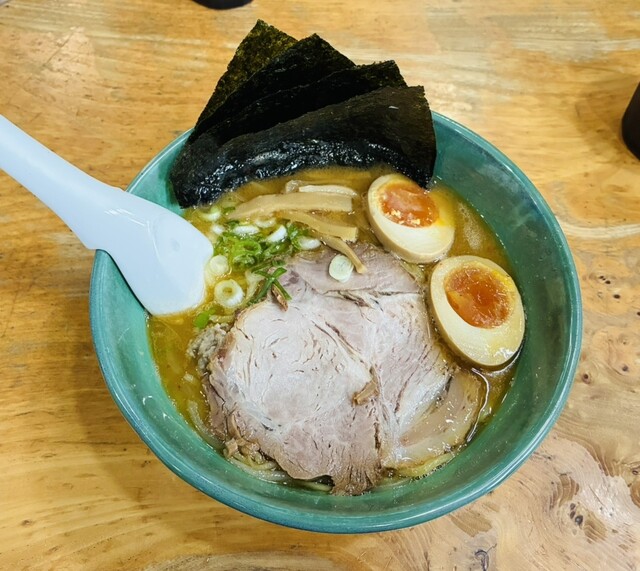
Approaching the Sumiyoshicho address, the mood is closer to working-town lunch counter than destination dining room: a compact ramen shop, counter seats, table seating, and the practical rhythm of people eating before the next train, errand, or canal-side walk. That matters in Otaru. This is a city where food is shaped by short distances between port, market, rail station, and snow country, so the strongest meals often read as direct rather than theatrical.
Ramen Shodai Otaru honten sits inside that everyday Hokkaido grammar. The price band is under JPY 999, reservations are unavailable, and the room runs 30 seats, including 12 at the counter and three six-seat tables. Those numbers tell the reader what kind of ramen experience this is: not a chef’s-counter tasting format, not a late-night bar with noodles as an accessory, but a quick, high-turnover ramen stop with enough structure for solo diners, friends, and families.
Otaru ramen belongs to Hokkaido's cold-weather pantry
Hokkaido ramen is often discussed through Sapporo miso, Hakodate shio, and Asahikawa shoyu, but Otaru adds a port-city lens. The local table is built around seafood access, dairy and grain from the wider prefecture, and a climate that makes hot broth feel less like comfort branding and more like daily infrastructure. Ramen here competes with seafood bowls, market grills, and old-school sweets rather than only with other noodle shops.
That context explains why a bowl under JPY 999 can carry more editorial weight than its price suggests. In Otaru, value dining is not a downgrade from the city’s premium seafood identity; it is the counterpoint. Visitors moving between Minshuku Aotsuka Shokudo, Otaru Seafood Donburi Restaurant "Shinkai", and Shirokuma Shokudo will see a city that treats seafood, noodles, and set-meal cooking as parallel expressions of the same northern appetite.
The ingredient story should be read at category level rather than through invented dish mythology. Hokkaido’s ramen culture leans on wheat, dairy-adjacent richness, miso traditions, seafood proximity, and winter-proof seasoning. A shop selected for Tabelog’s Ramen HOKKAIDO 100 in both 2024 and 2025 is being judged inside that regional field, not against Tokyo’s reservation-only ramen counters or Kyoto’s lighter tourist routes. The recognition places it among Hokkaido ramen specialists with sustained local relevance.
A low-price counter with award signals, not fine-dining theatre
The practical shape is part of the critical assessment. Credit cards and electronic money are not accepted, while PayPay is accepted; parking is available with 3 spaces in front and 10 in a second lot; private rooms are unavailable; the shop is non-smoking. These details point to a ramen house built for throughput, repeat use, and mixed local demand. The absence of reservations supports the same reading: arrival timing matters more than advance planning.
Within Otaru’s ramen set, the natural comparison is Ramen Mikan, another low-price ramen address in the city. The useful distinction is not a forced ranking but a reader decision: choose this Sumiyoshicho counter when the appeal is a recognized Hokkaido ramen shop with family-friendly infrastructure and proximity to Minami Otaru Station; choose the wider Otaru dining circuit when seafood, sweets, or bar-hopping are driving the day. For a broader itinerary, Our full Otaru restaurants guide gives the city more shape than a single bowl can.
The children’s details are unusually concrete for a ramen shop: preschoolers and school-age children are welcome, children’s ramen is available, and three children’s chairs are listed. That puts the shop in a different category from cramped counter-only ramen rooms where families feel like they are negotiating the space. Here, the tables matter. So does the price band, which keeps a family meal from drifting into seafood-market territory.
Otaru days often stretch beyond lunch. Pairing ramen with Ice cream Parlor Misono makes sense for a classic local-food route, while travelers building a longer stay can use Our full Otaru hotels guide, Our full Otaru bars guide, Our full Otaru wineries guide, and Our full Otaru experiences guide to avoid treating the city as a day-trip footnote to Sapporo.
How to place it in a Japan food itinerary
The right expectation is precision within a modest format. Ramen Shodai Otaru honten opened in 1994, and that longevity gives the shop a different signal from a new ramen address built around social-media novelty. Add the Tabelog 3.59 score and the Ramen HOKKAIDO 100 selections, and the case becomes clear: this is a credible regional ramen stop, not a luxury detour.
For travelers comparing categories across Japan, the lesson is useful. A ramen counter in Otaru, a beef sukiyaki specialist such as -Grilled beef Sukiyaki- KAMAKURA TANUKIAN 鎌倉 たぬき庵 in Kamakura, an Akihabara grill like. 鮪と炭火焼き うお炭 秋葉原店 in Tokyo, and a Sapporo curry shop such as [Curry Senmon Ten] Maruyama Kyoju. in Sapporo do not compete on the same terms. Japan rewards format literacy. Counter noodles, set meals, sweets, sake bars, and cafés each have their own rules of speed, price, and expectation.
That is why links across the wider EP Club map can be useful rather than random:.cafe in Osaka,.know in Kumamoto, (Shoku) Vietnam in Kawasaki, Jōdo Saké Bar in Los Angeles, and Onigiri Time in Pasadena all sit in different food traditions with different measures of seriousness. In Otaru, seriousness can look like a 30-seat ramen room, a low check, no reservations, and a regional award badge that says the bowl belongs in the Hokkaido conversation.
Quick Comparison
Comparable venues by cuisine and price in the same metro.
| Venue | Cuisine | Price | Awards | Notes |
|---|---|---|---|---|
| Ramen Shodai Otaru hontenThis venue — the venue you are viewing | Japanese Ramen | $$ | , | |
| Shirokuma Shokudo | Cozy Hokkaido izakaya & cafeteria | $$ | , | Ironai |
| Otaru Seafood Donburi Restaurant "Shinkai" | Otaru Seafood Donburi (Kaisen-don) | $$ | , | Shinonomecho |
| Yoichiya Uni Specialty Restaurant, Hokkaido-Otaru | Premium Sea Urchin Donburi & Seafood Bowls | $$$ | , | Otaru Unga / Sakai-machi Street |
| Aotsuka Shokudo (青塚食堂) | Traditional Japanese Seafood Cafeteria | $$ | , | Shukutsu |
| Wagyu Kurosawa Otaru Main Store (和牛黒澤 本店) | Japanese Wagyu Sukiyaki | $$$ | , | Ironai |
Continue exploring
More in Otaru
Restaurants in Otaru
Browse all →
Bars in Otaru
Browse all →
Hotels in Otaru
Browse all →
Wineries in Otaru
Browse all →
At a Glance
- Classic
- Cozy
- Hidden Gem
- Solo
- Family
- Casual Hangout
- Group Dining
- Standalone
- Beer Program
- Street Scene
A straightforward, local ramen shop atmosphere centered on classic Hokkaido ramen rather than a highly stylized dining room.