
Hummus Abu Hassan on Ha-Dolfin Street is one of Tel Aviv's most closely watched addresses for the Arab-Israeli hummus tradition. The format is stripped to its essentials: a short menu, communal seating, and a queue that functions as its own quality signal. For the full Jaffa-adjacent hummus experience, the related Abu Hassan in Jaffa operates nearby as the original outpost.
Pearl is the En Primeur Club membership app — saves, bookings, and concierge access live there. Same editors, same standards.
- Address
- Ha-Dolfin St 1, Tel Aviv-Yafo, Israel
- Phone
- +972 4-851-7096
- Directions
- Get directions
 Saves & bookings on Pearl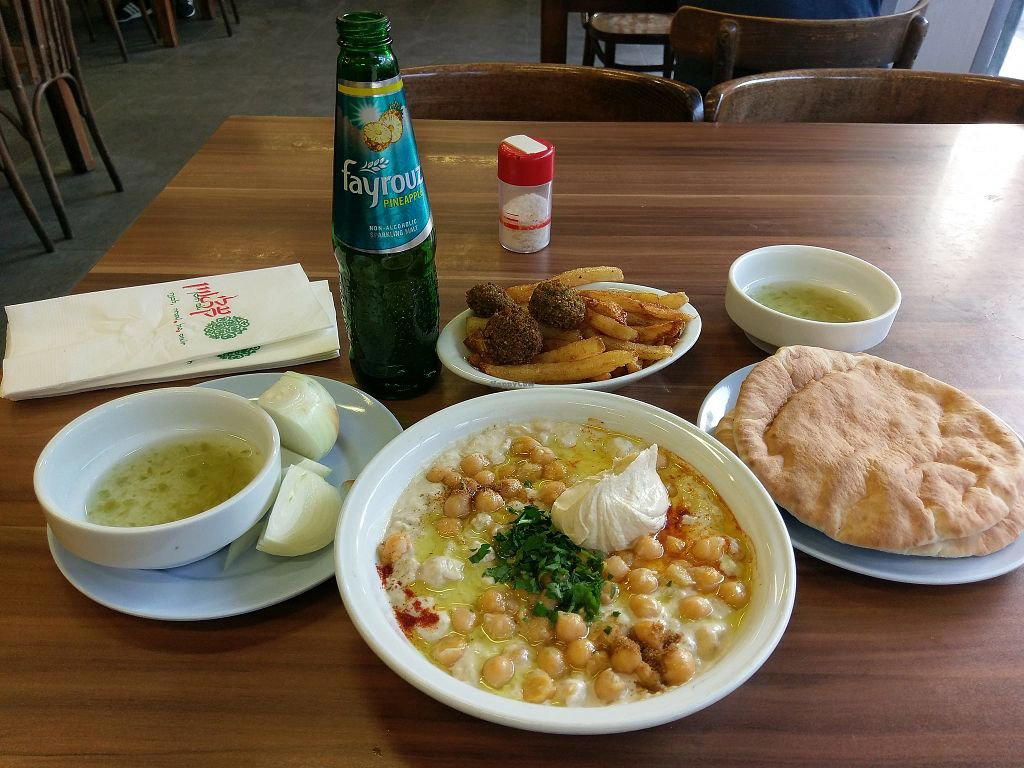
Where the Queue Is the Review
On Ha-Dolfin Street in Tel Aviv, the approach to Hummus Abu Hassan tells you most of what you need to know before you reach the door. The street sits at the seam between Tel Aviv proper and Jaffa, a neighbourhood boundary that carries genuine cultural weight in this city. The crowd outside — a mix of local Arab and Jewish residents, construction workers, office staff, and the occasional bewildered tourist — is not performing diversity. It is simply what a place looks like when the food earns its reputation on the plate rather than through media coverage. In a city where new openings arrive with considerable fanfare, a decades-old hummusiya with a pavement queue functions as one of the more credible signals a diner can find.
Hummus as Civic Tradition
To understand what Abu Hassan represents, it helps to understand how hummus functions in the Arab-Israeli cultural context. This is not a dish that begins and ends with blended chickpeas. In the Levantine tradition, and specifically in the Palestinian and Arab-Israeli kitchen from which the hummusiya format descends, hummus is a morning food, a communal food, and a political food all at once. The leading hummusiyot open early and close when the pot is empty, often by early afternoon. That operating logic is not an affectation; it reflects a production method in which chickpeas are soaked overnight, cooked fresh each morning, and served at their optimal texture within a few hours of preparation. A place that runs out by noon is, by that logic, doing it correctly.
Abu Hassan belongs to this tradition in a way that the newer wave of Tel Aviv hummus restaurants, which extend into dinner service and offer expanded menus, does not. The format disciplines the product. Limiting the menu, controlling the hours, and keeping the seating unceremonious are not constraints; they are the conditions under which the dish performs at its ceiling. Among the comparison restaurants in the Tel Aviv middle-Eastern casual tier, which includes Azura and Jasmino, Abu Hassan occupies a specific register: older, simpler, more focused, and operating as a reference point rather than a participant in current dining trends.
The Jaffa Connection and the Tel Aviv Outpost
The relationship between this address and the original Abu Hassan in Jaffa is central to understanding what you are eating and where. The Jaffa location, on Ali Hassan Bakr Street near the old port, is the founding outpost and the one most frequently cited in the context of Israel's best-known hummus institutions. The Tel Aviv branch on Ha-Dolfin carries the same recipe and the same family operation into a slightly different geographic and demographic catchment. Neither location has pivoted toward the contemporary restaurant formats that characterise the broader Tel Aviv dining scene, the kind of chef-driven tasting menus found at Alena at The Norman or the more composed Israeli cooking at a and Abie. Abu Hassan's value proposition is precisely its refusal to modernise.
That positioning matters for a reader deciding which version of Tel Aviv's food scene to engage with. If the goal is to track the city's current creative output, addresses like Aria or the Israeli-Mediterranean cooking at HaSalon represent that wave. Abu Hassan answers a different question: what does this city's most socially embedded food tradition look like when it has been allowed to run on its own terms for generations.
What to Order and How to Arrive
The menu at any serious hummusiya is short by design, and Abu Hassan follows that structure. The core offering is hummus masabacha, warm whole chickpeas folded into fresh hummus with olive oil and optional hard-boiled egg, alongside plain hummus with tahini and the option of foul, the slow-cooked fava bean preparation that is standard in the Arab breakfast tradition. Ful and hummus together, topped with olive oil, chopped parsley, and a squeeze of lemon, is the configuration that regulars default to and the one most consistent with how the dish is eaten in the broader Levantine context.
On the practical side: Abu Hassan operates on a no-reservation basis. Walk-in only. The kitchen runs from early morning and closes once the day's preparation is exhausted, which in practice means arriving before noon significantly improves your chances of eating at full capacity. The afternoon window is unreliable. There is no dinner service in the hummusiya format, this is not a place you plan for an evening meal. Payment is cash-preferred at many establishments of this type in Israel, though practices can vary and it is worth confirming locally before you arrive. The seating is communal and fast-moving; linger over the food, not the table.
Abu Hassan in the Wider Israeli Hummus Geography
Within Israel, the hummusiya tradition anchors several regional reputations. Acre's Arab quarter is frequently cited as its own benchmark, a context in which Uri Buri in Acre operates as a different kind of reference point for northern coastal cooking. Jerusalem has its own hummus culture, distinct in emphasis from Tel Aviv's, and the Arab-Jewish cooking at Majda in Har Nof and the more formal Israeli dining at Chakra in Jerusalem represent the capital's broader food range. For coastal and southern Israel, Pescado in Ashdod and Helena in Caesarea speak to a different set of influences.
None of those addresses compete with Abu Hassan on the hummusiya's own terms. The format is self-defining: stripped, repetitive, dependent on a single product executed with accumulated precision. That is a different ambition from what drives, say, Le Bernardin in New York City or Lazy Bear in San Francisco, where complexity and transformation are the operational logic. Abu Hassan's authority comes from doing less, more consistently, over a longer period than most food institutions manage. For the broader Tel Aviv picture, see our full Tel Aviv restaurants guide.
A Pricing-First Comparison
| Venue | Price |
|---|---|
| Hummus Abu HassanThis venue — the venue you are viewing | This venue |
| Dr. Shakshuka | Middle Eastern |
| Ha'Achim | Israeli |
| Habasta | Israeli |
| HaSalon | Israeli - Mediterranean, Israeli |
| Jasmino | Kebabs |
Recognition history
Dated appearances from independent guides and award organizations, with the underlying list record or original source where available.
Opinionated About Dining Cheap Eats in Europe Ranked #2
Opinionated About Dining
Continue exploring
More in Tel Aviv
Restaurants in Tel Aviv
Browse all →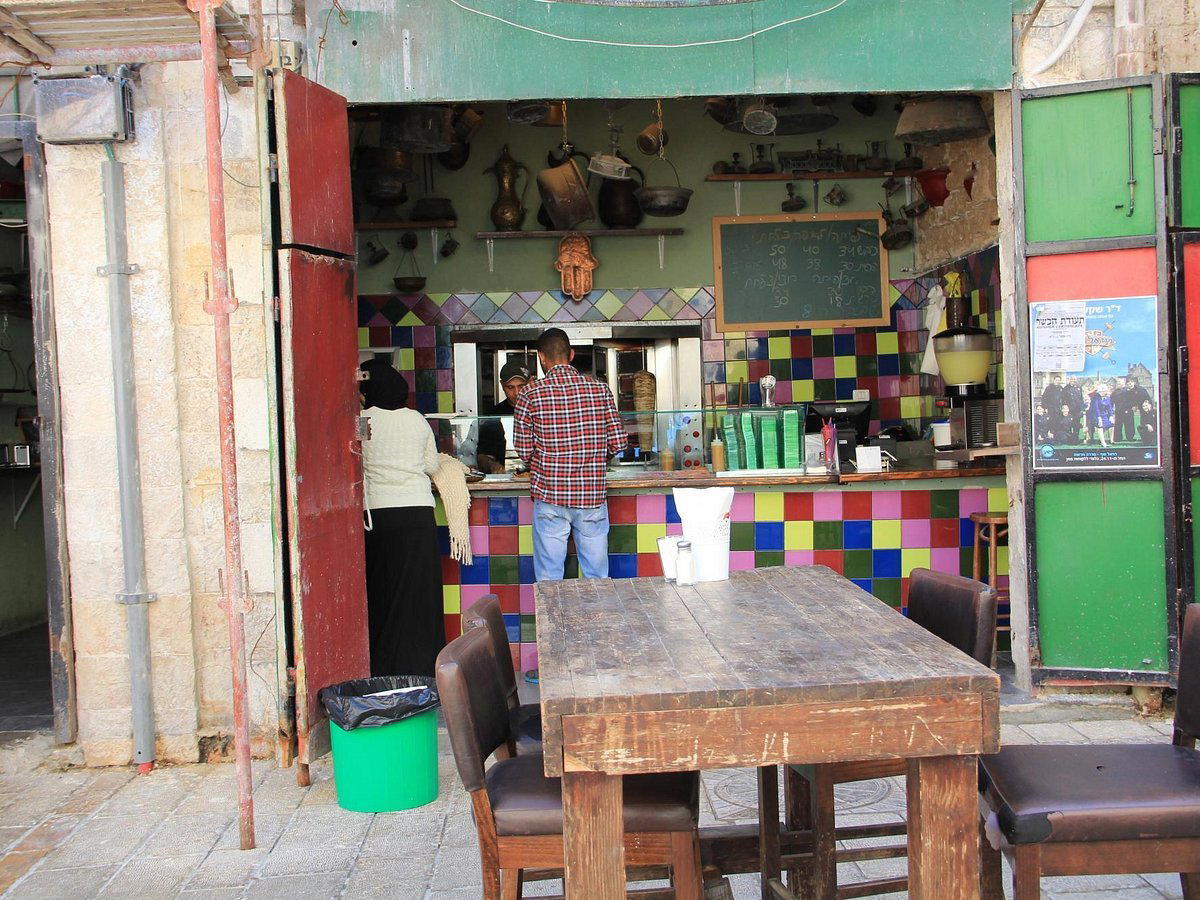
Bars in Tel Aviv
Browse all →

Hotels in Tel Aviv
Browse all →


At a Glance
- Lively
- Well Known
- Cozy
- Casual Hangout
- Standalone
Current opening hours
- Monday
- 8 AM–3 PM
- Tuesday
- 8 AM–3 PM
- Wednesday
- 8 AM–3 PM
- Thursday
- 8 AM–3 PM
- Friday
- 8 AM–3 PM
- Saturday
- Closed
- Sunday
- 8 AM–3 PM
Hours can change for holidays and private events. Last verified .
Crammed tables with a bustling, communal atmosphere of Arabs and Jews, laborers and tourists sharing meals amid the excitement of peak lunch crowds.
Know Before You Go
- Getting there
- Ha-Dolfin St 1, Tel Aviv-Yafo, Israel