One of Xiamen's most enduring street-food institutions, Huang Zehe Peanut Soup has served its signature slow-cooked peanut broth from the same Zhongshan Road address for generations. The bowl is small, sweet, and precise, a thread connecting modern Xiamen to its Hokkien past. For anyone mapping Fujian's snack culture, this is a reference point rather than a curiosity.
 Discover on Pearl
Pearl is the En Primeur Club membership app — saves, bookings, and concierge access live there. Same editors, same standards.
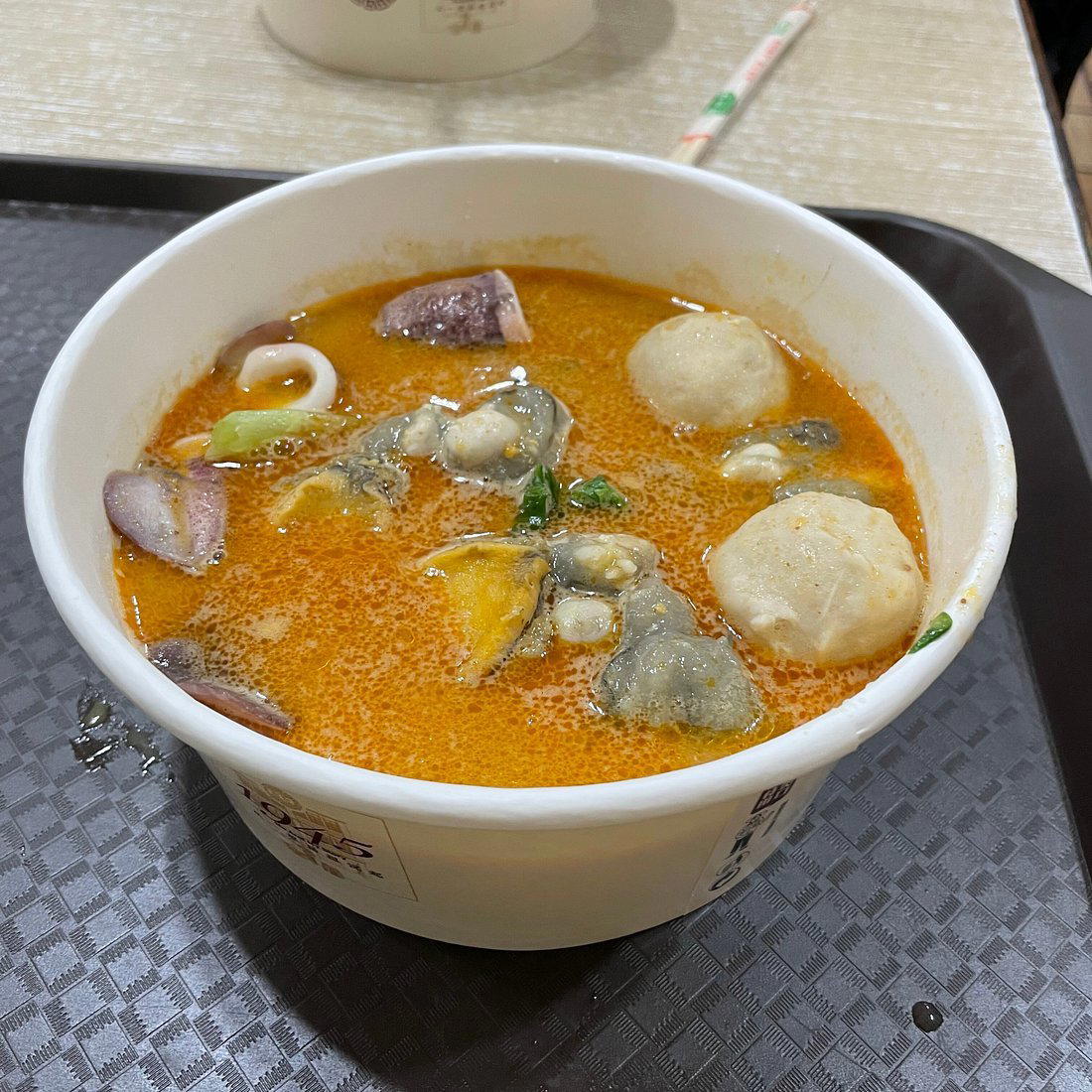
Where Xiamen's Morning Ritual Begins
On Zhongshan Road, before the souvenir shops pull their shutters and the tourist foot traffic thickens, there is already a queue. It forms outside Huang Zehe Peanut Soup with the kind of patience that suggests habit rather than novelty, regulars who have been coming here for years standing beside first-timers holding their phones. The smell arrives before the stall does: something warm and faintly sweet, with the low, fatty depth of peanuts that have been cooked long past softness into something closer to silk. This is not a grand entrance. The space is compact, the surfaces plain, the transaction quick. And yet the sensory simplicity of that first bowl explains precisely why the place has lasted as long as it has.
Xiamen's food culture sits at a crossroads between the Hokkien diaspora traditions that shaped Southeast Asian Chinese cooking and the coastal Fujian pantry of seafood, soy, and subtle sweetness. Within that context, peanut soup is less a dish than a civic ritual, a way that the city's older generation has marked mornings for decades. Huang Zehe is, in most accounts, the most cited address for this ritual, its name appearing in food-travel writing about Xiamen with a regularity that functions as its own form of credential.
The Logic of the Bowl
Fujian's snack food tradition operates on restraint. Where Cantonese dim sum emphasises variety and Shanghainese xiaochi lean toward richness, the Hokkien approach tends toward single-subject precision: one ingredient, long preparation, served without distraction. Peanut soup in this tradition is precisely that. Peanuts are soaked, skinned, and simmered for hours until the broth turns opaque and the nuts themselves dissolve at the edges, releasing their oils into a liquid that is thicker than water but lighter than porridge. Sugar is added sparingly. The result is something that reads as breakfast in Xiamen's cultural grammar, warming, filling, and brief.
The pairing convention matters here too. Across Fujian's snack culture, peanut soup is traditionally served alongside fried dough or glutinous rice dumplings, a contrast of textures that turns a single-note broth into a complete small meal. Huang Zehe follows this logic, and the combination is the correct way to encounter the dish if you are eating it for the first time. Ordering the soup alone, without something to pull against its sweetness and density, misses the structural point.
A Street Food Institution in Context
Xiamen's most interesting food addresses are not clustered in hotel dining rooms or new-wave restaurant strips. They are distributed across older commercial streets and neighbourhood markets where longevity is a stronger signal than design or press. Huang Zehe fits that pattern. Its reputation is not built on awards or media positioning but on the kind of sustained daily relevance that makes a place part of how locals describe their city to outsiders. That is a different kind of trust signal, and in street food terms, arguably a more durable one.
For comparison, Xiamen's more formal end of Fujian cuisine, as represented by places like Hokklo or Yanyu (Jiahe Road), positions the same regional ingredients inside composed tasting menus at a different price point entirely. 1927 Dong Yuan Si Chu operates in a heritage dining register that contextualises Fujian cooking through a historical lens. Huang Zehe does none of that. It makes no argument for its food beyond the fact that the bowl is good and has always been good. That argumentlessness is, in its own way, a form of confidence.
The ¥ price tier places it alongside other single-dish specialists in the city's street food register, including 1980 Shaorouzong, where the focus narrows similarly to a single preparation done at volume and at low cost. In cities with strong snack traditions, these places function as the baseline against which more expensive interpretations of the same cuisine are measured. Eating at Huang Zehe before sitting down at a Fujian fine-dining counter elsewhere in Xiamen is the kind of sequence that makes both experiences more legible.
Planning the Visit
Zhongshan Road is accessible on foot from most of Xiamen's central areas, and the queue moves faster than it looks. Mornings are the correct time to visit, both because peanut soup is a breakfast food by convention and because the atmosphere on the street at that hour, before the day's commercial noise takes over, is when the place makes the most sense. Arriving mid-morning rather than at peak breakfast rush slightly reduces the wait without sacrificing the context. Specific hours and current pricing should be confirmed locally, as neither is fixed in the public record with confidence. No reservation system applies, this is a queue-and-pay format, as it has always been.
Visitors building a broader Xiamen itinerary around Fujian cuisine should read our full Xiamen restaurants guide for neighbourhood-level context, including how places like Fleurs Et Festin position Chaozhou cooking within the same coastal culinary corridor. For readers tracking regional Chinese cuisine across other cities, the editorial context shifts considerably at addresses like Xin Rong Ji in Beijing, 102 House in Shanghai, or Ru Yuan in Hangzhou, where the tasting-menu format and Michelin-adjacent positioning frame regional ingredients very differently. At the fine-dining end of Chinese cuisine across the region, Chef Tam's Seasons in Macau, Imperial Treasure Fine Chinese Cuisine in Guangzhou, and Dai Yuet Heen in Nanjing offer the contrast that makes a place like Huang Zehe feel like the foundation rather than the footnote. Further afield, Xin Rong Ji in Chengdu, Dingshan·Jiangyan in Suzhou, Jiangnan Wok‧Rong in Fuzhou, and Shang Palace in Yangzhou show how regional Chinese fine dining is calibrated in comparable second-tier cities. For readers whose reference points extend to international fine dining, Le Bernardin in New York City and Atomix in New York City represent the kind of precision-at-price-point ambition that exists at the opposite pole of what Huang Zehe represents, both are worth knowing as coordinates.
Comparable Venues
Comparable venues nearby, for context on price, style, and recognition.
| Venue | Cuisine | Price | Notes |
|---|---|---|---|
| Huang Zehe Peanut SoupThis venue — the venue you are viewing | Traditional Fujianese Peanut Soup | $ | |
| 珍珍海蛎煎 | Authentic Minnan Street Food | $ | 思明区 (Siming District) |
| Ludao Seafood Restaurant (鹭岛餐厅•闽南菜(鼓浪屿店)) | Minnan Seafood | $$ | 鼓浪屿商圈 |
| 1980 Shaorouzong | Xiamen Roasted Pork Zongzi and Satay Noodles | $$ | Siming District |
| 1980烧肉粽 | 闽南传统烧肉粽 | $ | 思明区 |
| 宴遇 | chinese | , | Wuyuanwan |

At a Glance
- Classic
- Iconic
- Casual Hangout
- Late Night
- Standalone
- Street Scene
Casual street food eatery with a lively, unpretentious atmosphere serving locals and tourists.