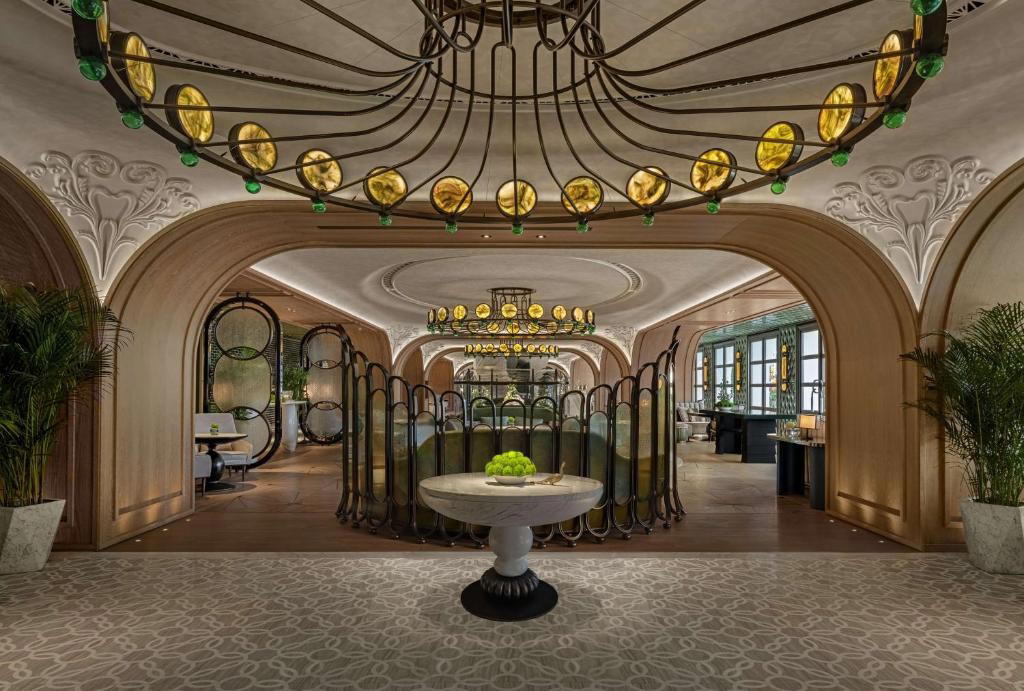


Michelin Plate · Black Pearl 1 Diamond · The Best Chef One Knife
Our verdict
Xia occupies a west-facing room above Wuyuan Bay in Xiamen's Siming District, where Chef Kang Yang runs a menu split between Cantonese technique and Minnan regional tradition. The kitchen has held a Michelin Plate in both 2024 and 2025 and earned a Black Pearl 1 Diamond in 2025, placing it among the city's most decorated fine-dining addresses. It is a credible option for anyone tracking how southern Chinese culinary traditions intersect on one plate.

Pearl is the En Primeur Club membership app, where members save venues, book tables and use the concierge.
The menu
What to order
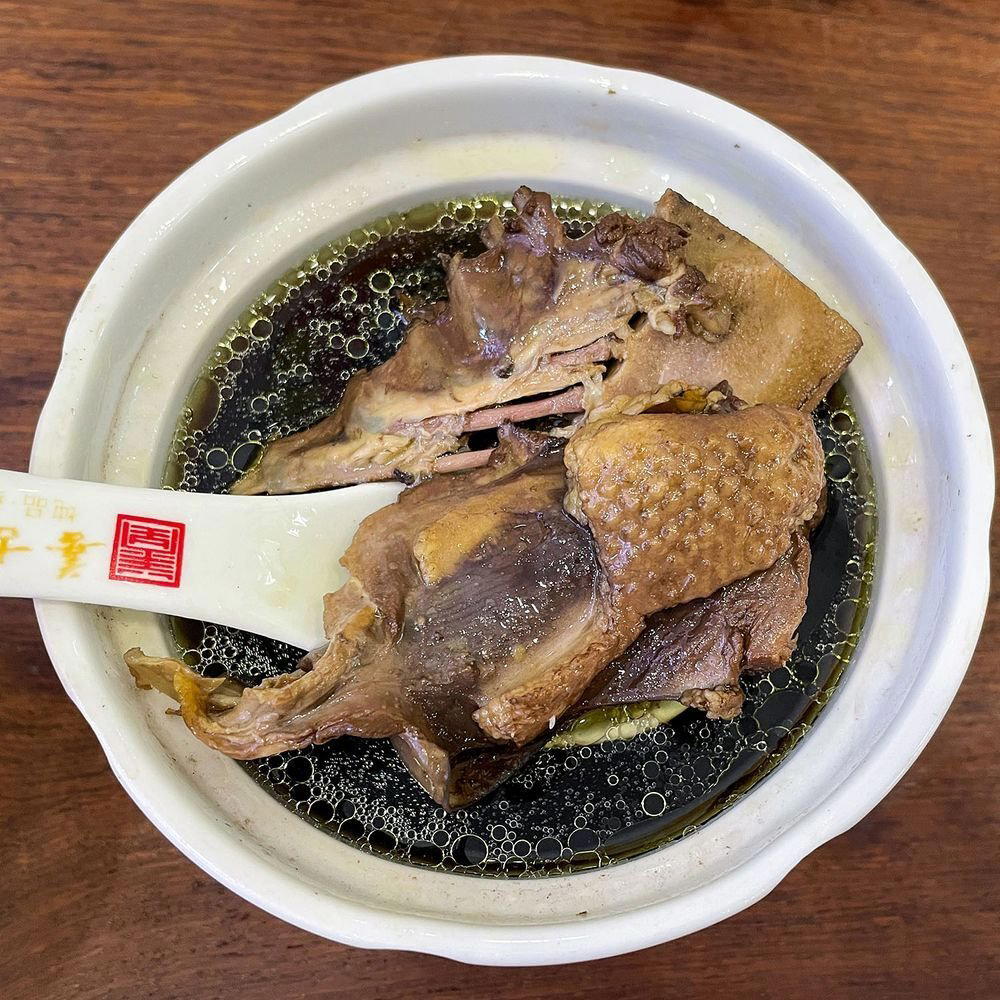
- Fruitwood Roasted Black Golden Crispy Duck
- Neptune Lobster Soup Explosion Rice
- Huaiyang Pagoda Meat
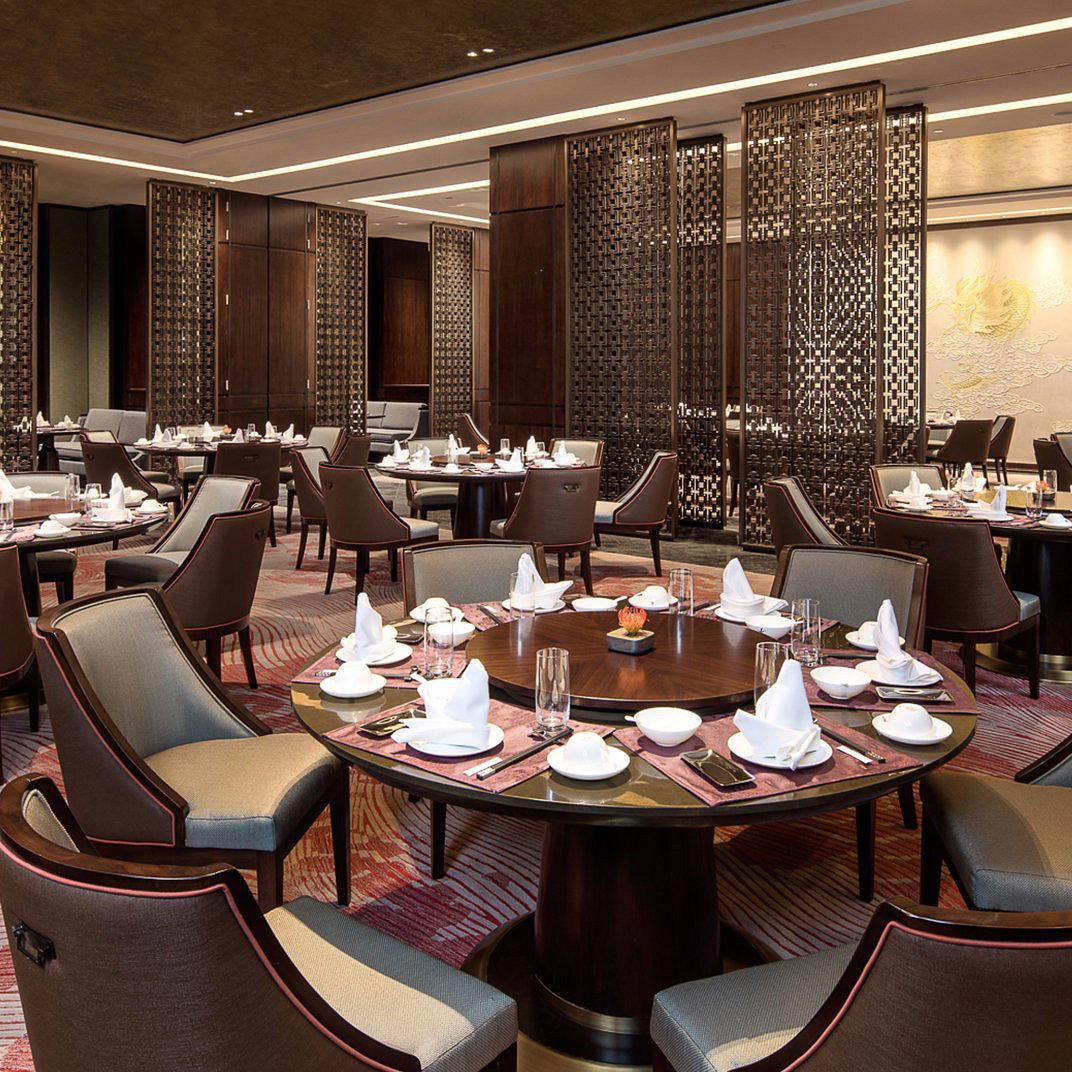
Where Wuyuan Bay Frames the Table
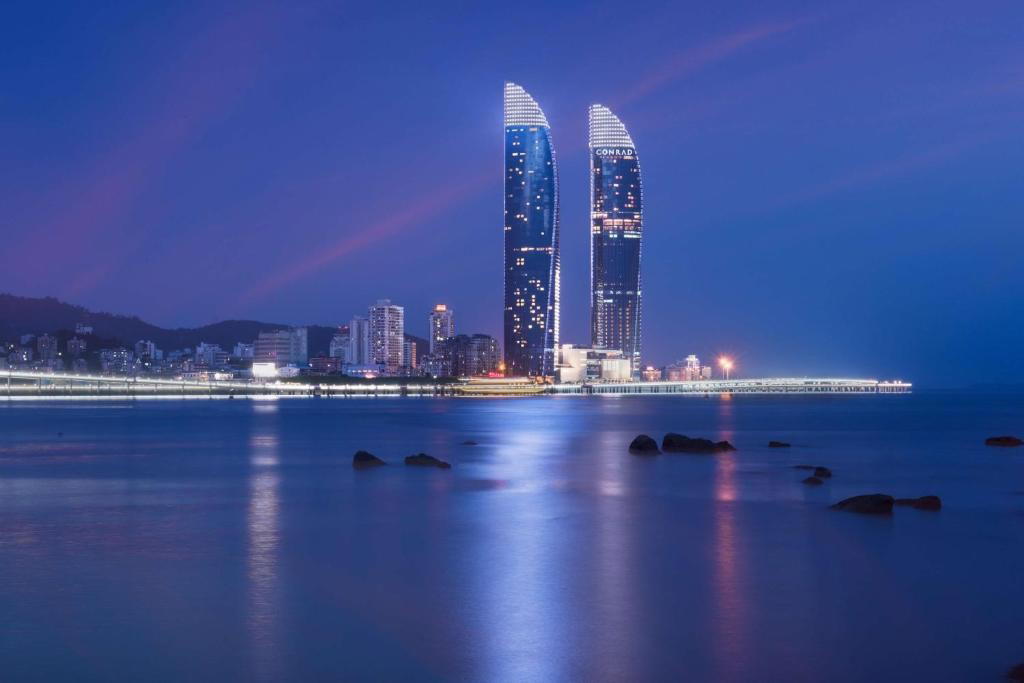
There is a particular quality to the light over Wuyuan Bay in the late afternoon, when the water shifts from grey-green to amber and the Xiamen skyline catches the last hour before dusk. Xia, on the upper floors of a building along Douxi Road in the Hexiang West commercial zone of Siming District, faces west across the bay. The dining room capitalises on that orientation, and the sunset view has become part of the restaurant's identity in the same way that a particular wine list or a tasting menu format might define another room elsewhere in the city.
The setting matters here because it contextualises the register the kitchen is aiming for. This is not a neighbourhood Minnan canteen or a casual Cantonese roast house. It occupies the upper tier of Xiamen's fine-dining range, a bracket that has grown more defined over the past decade as the city's food scene matured around its coastal identity and its position at the intersection of two distinct southern Chinese culinary traditions.
Two Southern Traditions, One Menu
Cantonese cooking and Minnan cooking share a coastline and a preference for fresh seafood, but they are not the same thing. Cantonese technique, developed in and around Guangdong province and refined across generations in Hong Kong and Macau, prizes clarity of flavour, precise steaming, and minimal interference with quality ingredients. You see the tradition at its most formal in rooms like Forum in Hong Kong or Le Palais in Taipei, and in mainland China at addresses such as Imperial Treasure Fine Chinese Cuisine in Guangzhou.
Minnan cooking, the food of southern Fujian and the Hokkien diaspora, runs differently. It leans toward sweetness in savoury applications, makes regular use of five-spice and red fermented tofu, and treats seafood with a different set of vernacular preparations. Peanuts appear throughout, in soups, sauces, and desserts. The tradition is less represented in international fine-dining conversations, which makes the Xiamen scene an instructive place to watch it being taken seriously at a high technical level. Restaurants like Hokklo and Yanyu on Jiahe Road approach Minnan from different angles, and 1927 Dong Yuan Si Chu traces the local tradition through a historical lens.
Xia's menu is structured as an even split between the two traditions. In practice, that means a kitchen operating across two distinct technical registers within the same service, a more demanding proposition than it might appear on paper. The Cantonese half requires restraint and ingredient-forward cooking. The Minnan half requires fluency with a different flavour grammar, one built on local pantry staples and regional preparations that carry strong associations for Xiamen diners who grew up eating them.
Chef Kang Yang and the Jiangsu Perspective
Chef Kang Yang has been running the kitchen at Xia since 2018. He is from Jiangsu, a province whose culinary tradition sits in the Yangtze River Delta rather than on the southern coast. That geographic distance from both Cantonese and Minnan cooking is relevant context, not as a biographical curiosity, but because it positions the kitchen's approach to these traditions as one of studied adoption rather than inherited instinct. When a chef from outside a culinary tradition takes it seriously enough to earn recognition within it, the resulting cooking often has a particular quality of deliberateness that locals and critics notice. That quality is visible in how the Michelin Guide and the Black Pearl list have engaged with this address.
The awards record is worth reading carefully. A Michelin Plate in 2024 and again in 2025, plus a Black Pearl 1 Diamond in 2025, places Xia in consistent recognition across two of the food industry's most referenced rating systems in China. The Black Pearl list, operated by Meituan, has become a meaningful parallel signal to Michelin for Chinese fine dining, and a 1 Diamond rating at the 2025 edition reflects a level of kitchen consistency that goes beyond a single strong performance. For comparison context across other high-performing Chinese kitchens in this tier, see Xin Rong Ji in Beijing, 102 House in Shanghai, Ru Yuan in Hangzhou, Xin Rong Ji in Chengdu, and Chef Tam's Seasons in Macau.
The Peanut Soup as a Case Study
Among the dishes documented in the awards record, the chilled peanut sweet soup stands out as an instructive example of how the kitchen handles Minnan material. The Fujian peanut soup tradition runs deep, particularly in Quanzhou, where the dish is a street staple served hot with tang yuan. The Xiamen version found in casual settings tends to be thick, sweet, and served warm. Xia's interpretation uses a velvety peanut custard, a preparation that shifts the dish's texture register, and places it over algae, introducing a marine element that is both locally resonant and structurally surprising. The dish remains recognisably connected to its source material while operating at a different technical level.
This approach to regional classics, refining rather than abandoning the vernacular, is characteristic of how the better fine-dining rooms in Fujian are handling local tradition right now. The question of how much transformation is appropriate before a dish loses its cultural anchor is one that kitchens across the region are answering differently. Xia's chilled peanut sweet soup suggests an answer closer to refinement than reinvention. For a different take on how Fujian's culinary traditions get treated at the table, A Zhong Shi Fang and Fleurs et Festin, which approaches the Chaozhou tradition adjacent to Minnan cooking, offer useful points of comparison.
Xia in Xiamen's Price Tier
Xia sits at the ¥¥¥ price point, which in Xiamen's current dining range places it above casual seafood houses and neighbourhood canteens but within the tier that includes the city's serious tasting-menu and à la carte fine-dining rooms. The Hexiang West commercial zone has developed into one of the denser concentrations of mid-to-upper dining in Siming District, which means the restaurant competes for attention with a range of format types. Within the ¥¥¥ bracket specifically, the combination of dual-tradition cooking, consistent award recognition, and the Wuyuan Bay view gives Xia a distinct competitive position.
The price tier also frames the audience this room is addressing. At ¥¥¥, a meal at Xia is a considered occasion rather than a daily habit, and the kitchen's split menu structure reflects that. Diners are expected to engage with both traditions across the course of a meal, which requires a certain willingness to move between flavour registers and culinary contexts. That is not a criticism; it is a description of what the room asks of the table.
Planning a Visit
Xia is at 156 Douxi Road in the Hexiang West commercial zone of Siming District, Xiamen. The address sits within reach of central Xiamen's main transport corridors. The west-facing orientation makes an evening reservation the most considered timing, aligning the meal with the bay views the room is designed around. The ¥¥¥ price range places the meal in the bracket where reservations are advisable, particularly for weekend evenings when the combination of the view and the occasion-dining register draws consistent demand. For a broader picture of where Xia sits among Xiamen's dining options, the full Xiamen restaurants guide maps the city's range. The Xiamen hotels guide, bars guide, wineries guide, and experiences guide cover the surrounding city in comparable depth.
What Should I Eat at Xia?
The documented standout is the chilled peanut sweet soup, which recasts a Fujian regional classic through Cantonese-influenced technique: a velvety peanut custard served over algae, a combination that anchors the dish in local tradition while working at a fine-dining register. The menu's equal split between Cantonese and Minnan preparations means the most coherent experience comes from ordering across both halves rather than concentrating on one. Chef Kang Yang, who has led the kitchen since 2018, has built a program that the Michelin Guide recognised with a Plate in both 2024 and 2025, and the Black Pearl list rated at 1 Diamond in 2025. Those signals point to consistent kitchen performance rather than a single standout dish, so the broader menu, especially preparations that combine coastal Fujian ingredients with Cantonese restraint, represents the most reliable guide to what this kitchen does well.
Frequently asked questions
Is Xia Michelin-listed?
Xia has received recognition including: Since 2018, Chef Yang hailing from Jiangsu has been helming the kitchen with a menu that is half Cantonese and half Minnan. Chilled peanut sweet soup is a modified version of the Fujian classic, with a velvety peanut custard over a bed of t….
What part of town is Xia in?
Xia is located at 156 Douxi Rd, 禾祥西商圈 Siming District, Xiamen, Fujian, China, 361003, Xiamen.
What should I eat at Xia?
The chilled peanut sweet soup is the kitchen's most documented dish: a velvety peanut custard set over algae, reworking a Fujian regional classic through Cantonese technique. Chef Kang Yang's menu splits evenly between Cantonese and Minnan cooking, so expect seafood preparations drawn from both traditions. The Black Pearl 1 Diamond and Michelin Plate recognitions in 2025 signal that the kitchen's approach to these two southern styles has earned broader critical notice.
Is Xia focused on a specific cuisine style?
Is Xia more mid-range or high-end?
Pricing at Xia is listed as ¥¥¥.
Who is the chef at Xia?
The chef associated with Xia is Kang Yang.
Cuisine Context
| Venue | Cuisine | Price | Awards |
|---|---|---|---|
| XiaThis venue (the venue you are viewing) | Modern Fujian-Huaiyang Fusion | $100–150 | Michelin Plate · Black Pearl 1 Diamond |
| Bai Jia Chun Hao De Lai Jiang Mu Ya (Zhongxing Road) | Traditional Fujian Ginger Duck | Not listed | Michelin Bib Gourmand |
| Chic 1699 | Modern Fujian Minnan Seafood | $30–50 | Michelin Bib Gourmand · Black Pearl 1 Diamond |
| Dai Tai | Yunnanese Dai Ethnic Home-Style | $20–30 | Michelin Bib Gourmand |
| Fu Yu Da Tong Ya Rou Zhou | Traditional Chinese Duck Congee | $1–10 | Michelin Bib Gourmand |
| Hao Shi Lai | Traditional Minnan Seafood | $10–20 | Michelin Bib Gourmand |
Recognition history
Dated appearances from independent guides and award organizations, with the underlying list record or original source where available.
Michelin Plate
Michelin
Black Pearl 1 Diamond
Black Pearl
The Best Chef One Knife
The Best Chef
Full recognition history (6 entries)
Black Pearl 1 Diamond
Black Pearl
Michelin Plate
Michelin
Michelin Plate
Michelin