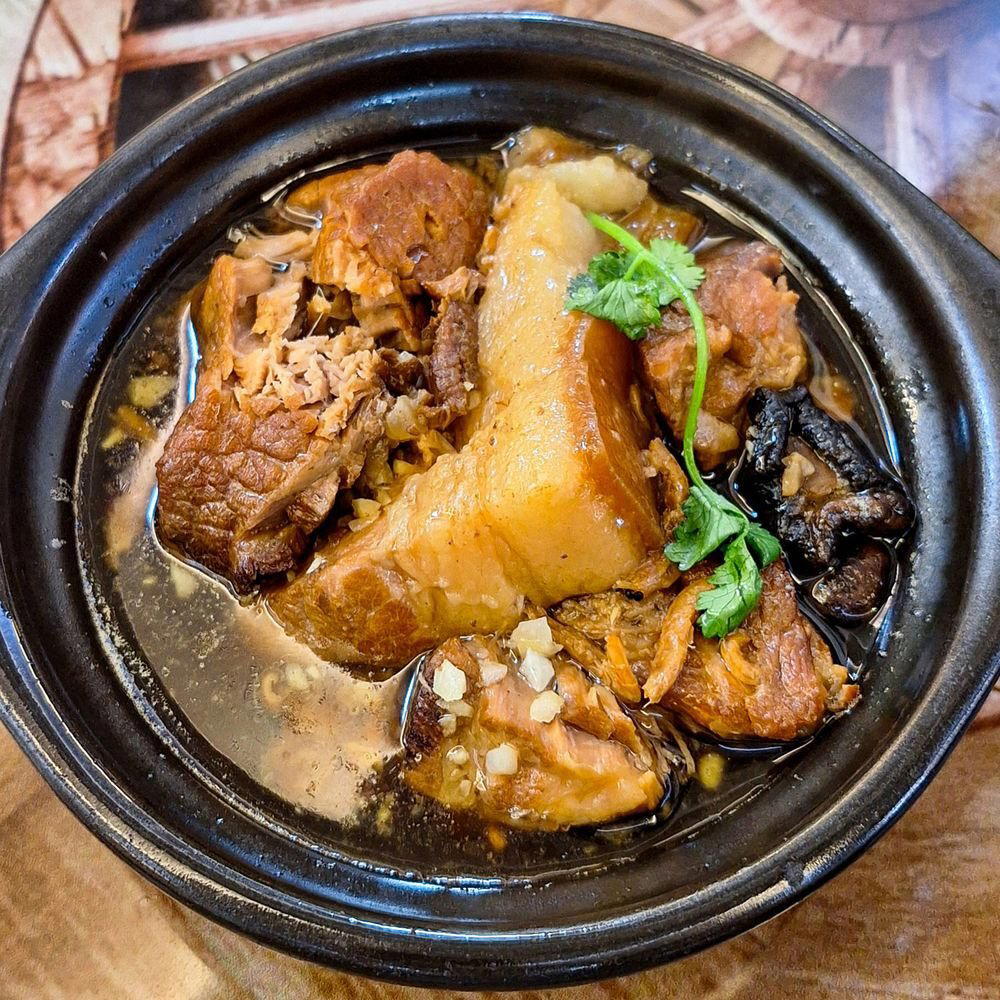
On Zhongshan Road, Xiamen's most-walked commercial artery, 1980 Shaorouzong anchors itself in the braised pork and glutinous rice tradition that runs through Hokkien food culture. The name signals both a year and a lineage, positioning the kitchen inside a decades-long conversation about how Southern Fujian street food translates into a sit-down format. It is a reference point for understanding how Xiamen handles its own culinary memory.
 Discover on Pearl
Pearl is the En Primeur Club membership app — saves, bookings, and concierge access live there. Same editors, same standards.
- Address
- 353 Zhongshan Rd, Siming District, Xiamen, Fujian, China, 361001
- Phone
- +86 592 203 2869
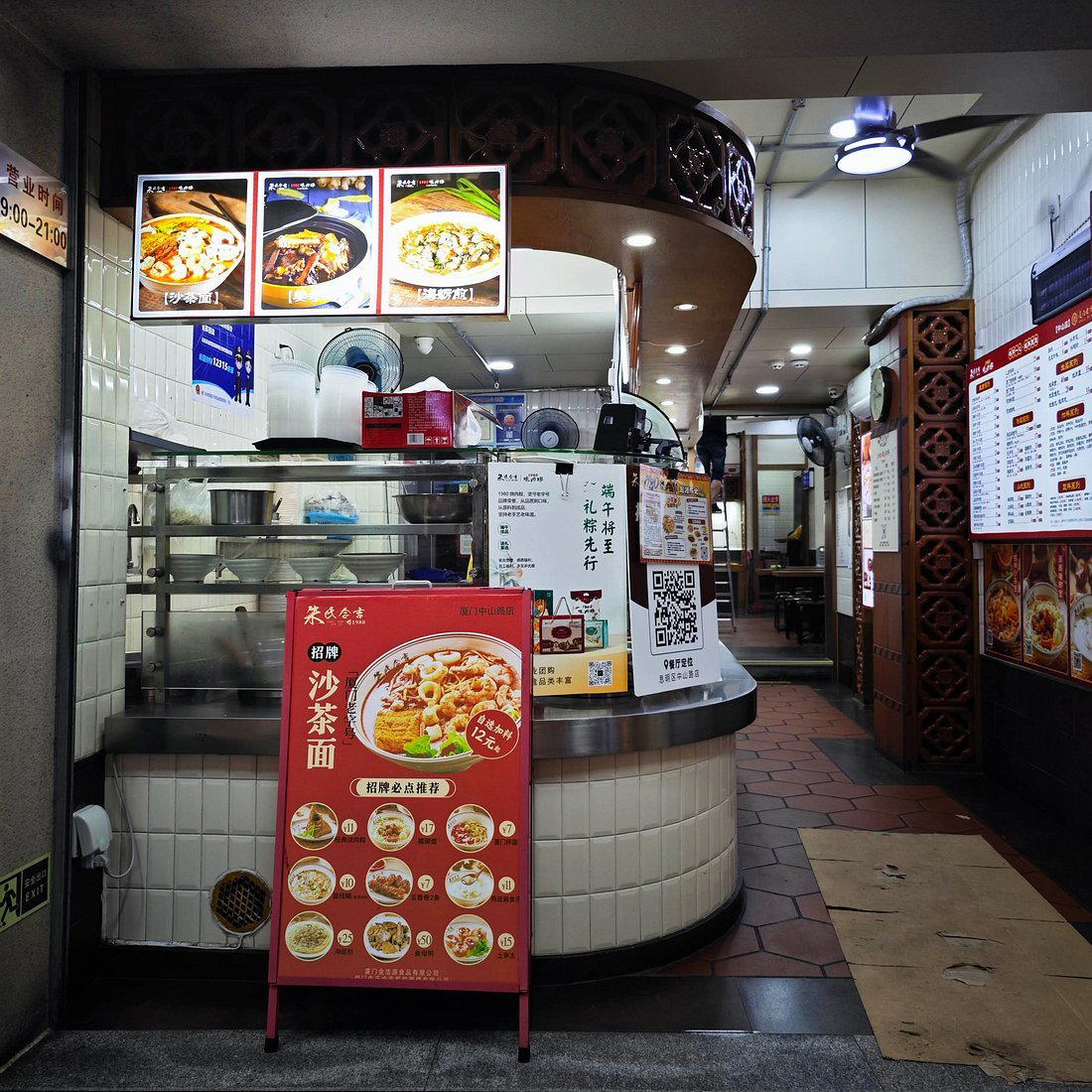
Zhongshan Road and the Logic of a Named Year
1980 Shaorouzong is a restaurant in Xiamen, Fujian, serving Xiamen Roasted Pork Zongzi and Satay Noodles. It is Xiamen's central pedestrian artery, a stretch that handles tourist foot traffic, local daily commerce, and several decades of accumulated food stalls and sit-down restaurants with equal indifference. Choosing to open here, at number 353, places 1980 Shaorouzong inside a competitive row where the audience is self-selecting and the format must justify itself quickly. A number in a restaurant name in this part of China almost always signals an origin claim, a founding year, or a deliberate appeal to nostalgia. Here, 1980 functions as all three simultaneously, anchoring the kitchen's identity in a period before Xiamen's coastal economy transformed the city and, with it, its food.
That framing matters because Hokkien food, the Southern Fujian tradition that feeds into Xiamen's culinary identity, has a complicated relationship with preservation. Much of it dispersed through migration across Southeast Asia, where iterations in Penang, Singapore, and Taiwan evolved separately from the mainland source. What remained in Xiamen faced decades of disruption before reasserting itself in the restaurant economy. Places like Hokklo and Yanyu (Jiahe Road) represent one tier of this recovery. 1980 Shaorouzong operates at a different register, closer to the street-food vernacular that the tradition originally inhabited.
What the Menu Structure Says
The name itself is the first piece of menu architecture. Shaorouzong breaks down into its components: sharou, meaning braised pork, and zong, a character most commonly associated with zongzi, the glutinous rice parcel that serves as one of the foundational units of Southern Chinese food. The combination signals a kitchen organised around a specific set of techniques and a narrow ingredient logic rather than a broad regional survey. This is not a restaurant that attempts to represent all of Fujian. It picks a lane.
In the Hokkien tradition, braised pork, or lu rou, is applied across multiple formats: over rice, inside rice parcels, as a sauce component, as a filling. A kitchen built around shaorouzong is essentially constructing its menu around variations on a single anchoring technique applied to different base vehicles. That structural discipline is worth noting because it is exactly the opposite of how most casual regional restaurants in Chinese cities present themselves, which is usually as a survey of regional hits designed to satisfy the widest possible table. The narrower the stated focus, the clearer the kitchen's argument about what it does well.
This approach has clear parallels elsewhere in China's dining segment. A Xi Xia Mian in Xiamen operates on a similar single-product logic, building around noodles rather than braised pork rice parcels. 1927 Dong Yuan Si Chu uses a named year in comparable fashion, invoking historical continuity as a trust signal. The pattern across Xiamen's mid-tier dining suggests a market that responds to specificity over breadth, which puts 1980 Shaorouzong in reasonable company.
Zhongshan Road as Context, Not Backdrop
Street positioning shapes the dining format as much as any kitchen decision. Zhongshan Road draws a pedestrian crowd that moves between snacking and sitting, between impulse eating and planned meals. A restaurant on this strip that tries to pitch itself as a special-occasion destination is working against the street's energy. The smarter play, which the 1980 framing supports, is to position as the authoritative version of a familiar thing rather than something aspirational. Visitors to Xiamen who already know the Hokkien pork-and-rice tradition are looking for the version of it that feels grounded rather than adapted for outside tastes.
For comparison, the Fujian tradition at a higher price point appears at places like Fleurs et Festin. 1980 Shaorouzong sits several tiers below that cohort on price and ambition, and that is precisely its argument: that the braised pork zong does not need a tasting menu format to be worth making a trip for.
How to Approach a Visit
The address at 353 Zhongshan Road puts the restaurant in Siming District, accessible on foot from central accommodation in the old city. For visitors building a Xiamen food day, this stretch of Siming pairs logically with time in the surrounding lanes, where older shophouse architecture and smaller food operators give the area texture beyond the main artery.
Given the street's foot-traffic patterns, midday and early evening see the heaviest flow. Arriving at either end of those windows, earlier in the lunch period or before the dinner peak, is the standard approach for Zhongshan Road dining without a specific reservation system in place. 1980 Shaorouzong is walk-in friendly.
Xiamen's broader dining map places this kind of focused Hokkien operator within a city that has developed range across price tiers. At the premium end, properties comparable to Chef Tam's Seasons in Macau or the formal Cantonese rooms like Imperial Treasure Fine Chinese Cuisine in Guangzhou define what serious Chinese regional cooking looks like in a full-service format. 1980 Shaorouzong is not competing with that tier. It is making a different case entirely: that a specific braised pork and glutinous rice tradition, executed with fidelity to its street-food origins, is sufficient reason to seek out a table on one of Xiamen's busiest streets.
Recognition Snapshot
Comparable venues nearby, for context on price, style, and recognition.
| Venue | Cuisine | Price | Awards | Notes |
|---|---|---|---|---|
| 1980 ShaorouzongThis venue — the venue you are viewing | Xiamen Roasted Pork Zongzi and Satay Noodles | $$ | , | |
| Ludao Seafood Restaurant (鹭岛餐厅•闽南菜(鼓浪屿店)) | Minnan Seafood | $$ | , | 鼓浪屿商圈 |
| 黄则和花生汤 Huang Zehe Peanut Soup (黄则和花生汤) | Traditional Xiamen Peanut Soup and Snacks | $ | , | 思明区 |
| YANYU FUJIAN | Modern Fujian Fine Dining | $$$ | , | Siming District |
| Weiyou Xiamen Wei | Xiamen Local Specialties | $$ | , | Xinglin Bay |
| Ludao Seafood Restaurant | Fujian Seafood | $$ | , | SiMing District |
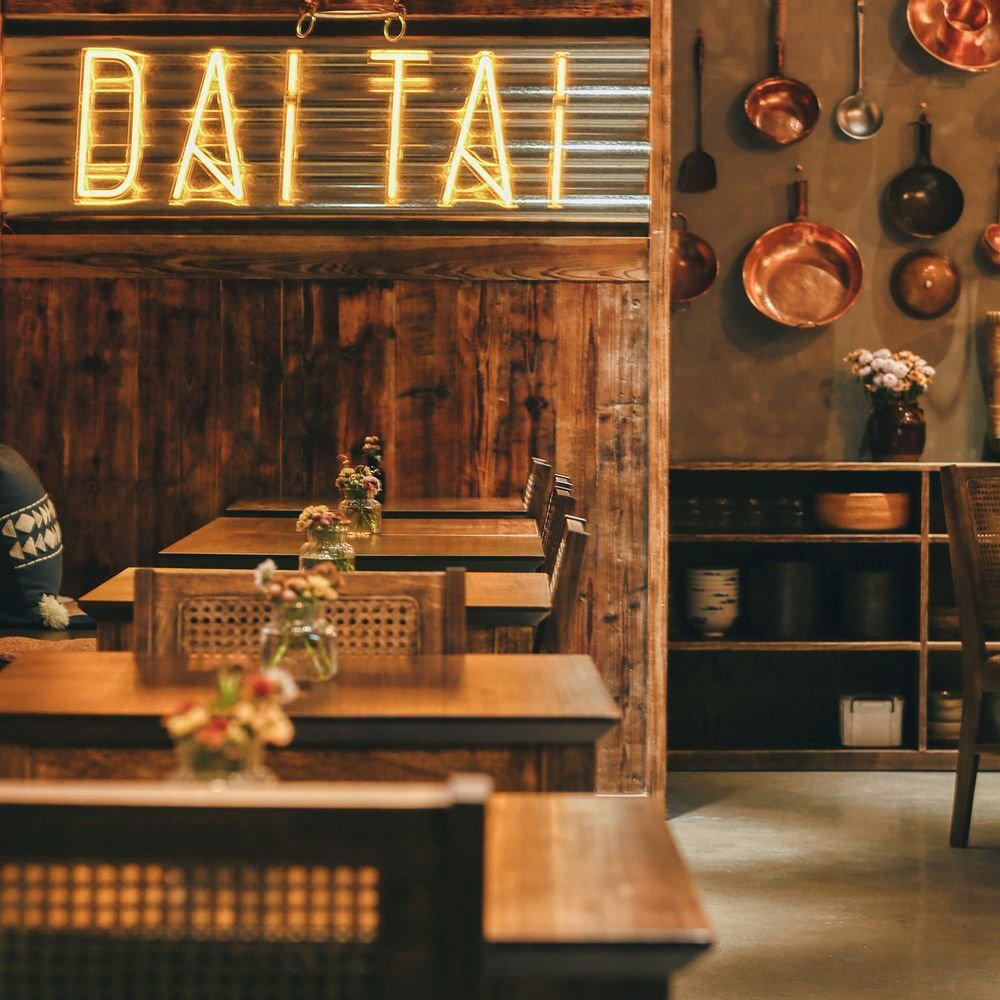
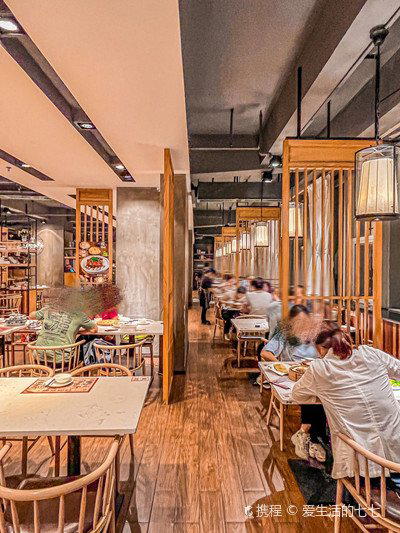
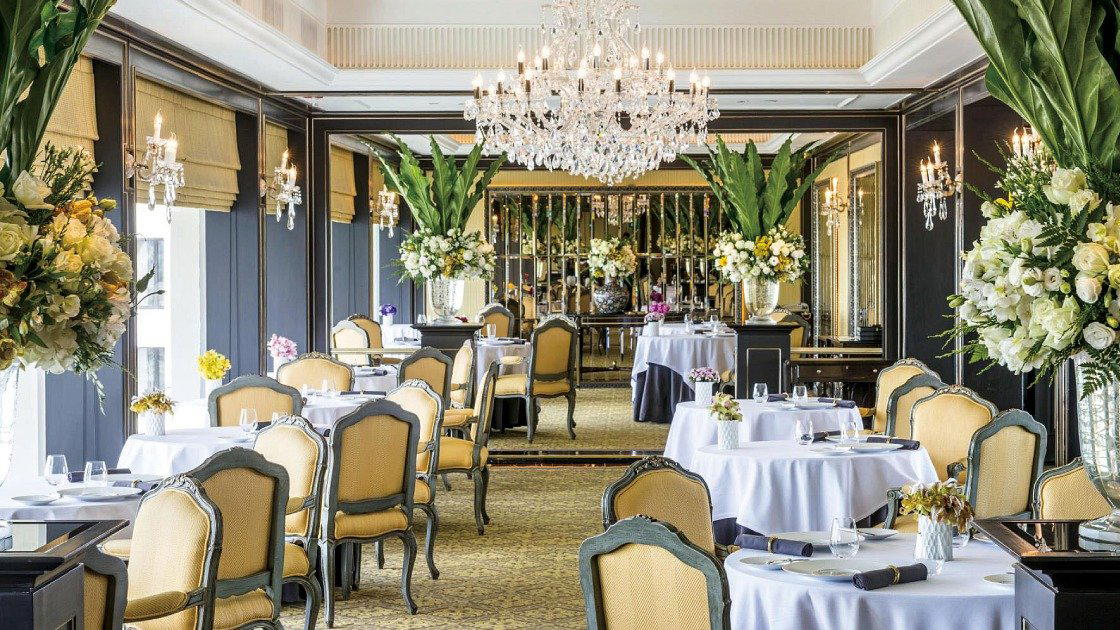
At a Glance
- Trendy
- Lively
- Casual Hangout
Lively and bustling local snack spot on a busy pedestrian street with a casual, trendy atmosphere.