
Housa Saryo sits in Nagoya’s quieter high-spend Japanese dining tier: seafood-led, reservation-only, and selected for Tabelog 100 Japanese cuisine EAST 2025. The value case is not volume or spectacle, but a compact 14-seat format, counter seating, sake and wine depth, and a price band that places dinner alongside serious kaiseki-adjacent rooms in the city.
Pearl is the En Primeur Club membership app — saves, bookings, and concierge access live there. Same editors, same standards.
- Address
- 愛知県名古屋市千種区高見2-13-14 堀清ビル 1F
- Phone
- +81527615503
- Website
- tabelog.com
 Saves & bookings on Pearl
Ikeshita is not Nagoya’s loud dining stage. The approach is residential, near the Higashiyama Subway Line, and the restaurant sits on the first floor of a modest building, not in a hotel arcade or downtown tower. That matters: in Nagoya, serious Japanese dining spend often hides in compact rooms where the cost is carried by procurement, pacing, and full-course discipline, not theatrical architecture.
Housa Saryo fits that category. Its public signals are unusually clear for a small Japanese restaurant: 14 seats, counter seating, reservation-only service, seafood and Japanese cuisine classification, and selection for Tabelog 100 Japanese cuisine EAST 2025. Dinner is listed at JPY 20,000 to JPY 29,999, with lunch at JPY 10,000 to JPY 14,999. In Nagoya, that places it above casual specialist dining and beside rooms where product quality and service rhythm must justify the bill.
Seafood-led Japanese dining where the value sits in sourcing
Nagoya’s food identity is often reduced to miso katsu, tebasaki, kishimen, and hitsumabushi. Useful entry points, but they do not explain the city’s higher-end Japanese dining. At this tier, the more relevant question is how a restaurant handles seasonal fish, course structure, and drinks. Housa Saryo is marked as particular about fish, with sake, wine, and deeper attention to both. That points to a modern Japanese pattern: not a sushi counter, izakaya, or Western tasting menu, but a seafood-focused course meal where sake and wine are part of the spend, not an afterthought.
The value proposition is clearest at lunch. A JPY 10,000 to JPY 14,999 lunch gives access to the same small-format Japanese cooking category at roughly half the dinner ceiling. Dinner competes with Nagoya’s more ambitious Japanese rooms, including Yama no I in the JPY 20,000 to JPY 29,999 bracket. That comparison separates Housa Saryo from Tonkatsu Tsuchimoto, where the appeal is tightly focused comfort-food craft at a much lower price, and from Yakiniku Hakushu Kassai, where spend sits in a meat-led format around JPY 10,000 to JPY 14,999. The question is not which format is superior, but what kind of meal the trip needs.
For travellers building a Nagoya dining itinerary, sequencing helps. A seafood-led course meal plays a different role from a casual tonkatsu lunch or late yakiniku dinner. It asks for a slower evening, cleaner palate, and willingness to let the kitchen set the structure. Readers comparing Nagoya options can cross-check the city field through Our full Nagoya restaurants guide, then use nearby category pages such as Our full Nagoya bars guide, Our full Nagoya hotels guide, Our full Nagoya experiences guide, and Our full Nagoya wineries guide to decide whether the meal anchors the night or sits within a longer stay.
A small room changes the economics of the meal
Fourteen seats is not just a comfort detail; it defines the economics. In Japanese dining, fewer seats usually mean tighter pacing, less tolerance for late changes, and a stronger link between reservations and purchasing. The restaurant’s reservation-only stance and cancellation charge from the reservation date follow that logic. It is not built for walk-in flexibility, but for planned attendance, prepared ingredients, and a course meal that runs on time.
The room also shapes who should book. Counter seating suits solo dining and fish-focused Japanese cooking because preparation is part of the format, even without performance. Private rooms are not listed, while private use is available up to 20 people, an unusual detail beside the 14-seat public count and a reminder that small restaurants in Japan often use flexible whole-room arrangements rather than Western-style private dining rooms. For a couple, solo diner, or small group comfortable with formal courses, that scale is an advantage. For travellers with severe allergies, strong perfume, sandals, shorts, or a need for broad menu substitution, it is not the right fit.
The Tabelog 100 Japanese cuisine EAST 2025 selection is a useful external marker. Tabelog’s Hyakumeiten lists are not Michelin stars; they work more like category recognition inside Japan’s user-review ecosystem. For visitors, the signal still matters. It says the room has moved beyond the long tail of good local Japanese restaurants into a more visible regional shortlist. The listed score of 3.74 reinforces that it is judged in a competitive domestic context, where scores above the mid-threes can carry real weight in high-demand categories.
How to place it inside a Nagoya itinerary
Strongest use case is a seafood-centered Japanese meal for travellers who already know the city’s casual staples and want a quieter, higher-spend counter or course experience. The price is too high for a filler reservation and too structured for a spontaneous stop between sightseeing. It works better as the main meal of the day, especially if lunch availability matches the itinerary and the lower price band matters.
Nagoya also rewards contrast. Pairing a formal Japanese lunch here with a looser evening elsewhere gives a fuller reading of the city than stacking only high-spend reservations. EP Club readers comparing broader restaurant styles may find useful contrasts in Nagoya pages such as 1022, 451, Aaron, Alan., and All Day Dining Montmartre. For perspective beyond the city, compare how specialist formats read in other markets, from -Grilled beef Sukiyaki- KAMAKURA TANUKIAN 鎌倉 たぬき庵 in Kamakura and. 鮪と炭火焼き うお炭 秋葉原店 in Tokyo to.cafe in Osaka.know in Kumamoto, (Shoku) Vietnam in Kawasaki, [Curry Senmon Ten] Maruyama Kyoju. in Sapporo, Jōdo Saké Bar in Los Angeles, and Onigiri Time in Pasadena.
The editorial read is simple: the restaurant is for diners who want Nagoya’s Japanese cuisine beyond local shorthand, and who are ready to pay for a small room, seafood emphasis, and a recognized category signal. It is not the city’s easiest meal, nor its broadest. It is a precise booking for a specific appetite: fish-led Japanese cooking with enough formality to make the price intentional.
Reputation Context
Side-by-side context: comparable cuisine and price.
| Venue | Cuisine | Price | Notes |
|---|---|---|---|
| Housa SaryoThis venue — the venue you are viewing | Seasonal Japanese Kaiseki with Uni Specialties | $$$$ | Not listed |
| ふじさわ | Modern Japanese Sushi | $$$$ | Chikusa |
| Tomi Sushi | Seasonal Sushi Omakase | $$$$ | Naka |
| Kyoto Kiccho Nagoya ten | Traditional Kyoto-style kaiseki | $$$$ | Nakamura |
| Sushi Izumu | Intimate Sushi Omakase Counter | $$$$ | Naka |
| か茂免 | Traditional Japanese Kaiseki & Fugu | $$$$ | Higashi |
Recognition history
Dated appearances from independent guides and award organizations, with the underlying list record or original source where available.
Tabelog 100 #20 · No. 20
Tabelog · Tabelog 100 - Japanese cuisine - EAST - 2025
Continue exploring
More in Nagoya
Restaurants in Nagoya
Browse all →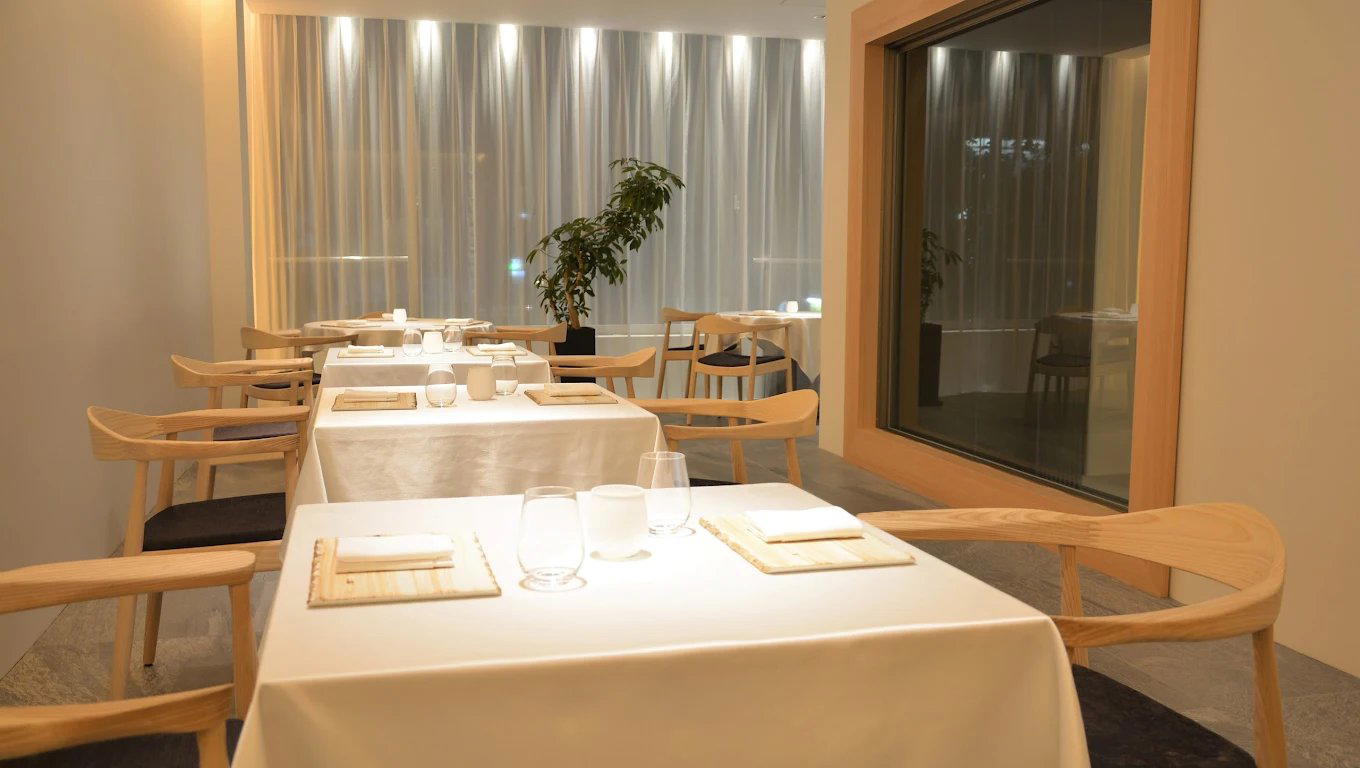
At a Glance
- Elegant
- Quiet
- Intimate
- Sophisticated
- Special Occasion
- Celebration
- Date Night
- Business Dinner
- Solo
- Group Dining
- Chefs Counter
- Standalone
- Design Destination
- Sake Program
- Extensive Wine List
- Local Sourcing
- Sustainable Seafood
An intimate, non-smoking hideaway near Ikeshita Station with only 14 spacious counter and table seats, calm lighting, and a refined modern Japanese atmosphere suited to leisurely, celebration-style meals.