Hotel Gasthof Herrmann occupies a traditional address on Ernst-Bezler-Straße in Münsingen, a small Swabian town on the Swabian Alb plateau. The property follows the Gasthof model, a format that combines lodging with a kitchen rooted in regional produce and local agricultural rhythms. For travellers moving through Baden-Württemberg beyond the well-mapped dining circuits, it represents a grounded alternative to destination restaurants further afield.
Pearl is the En Primeur Club membership app — saves, bookings, and concierge access live there. Same editors, same standards.
- Address
- Ernst-Bezler-Straße 1, 72525 Münsingen, Germany
- Phone
- +4949738118260
- Website
- hotelherrmann.de
 Saves & bookings on Pearl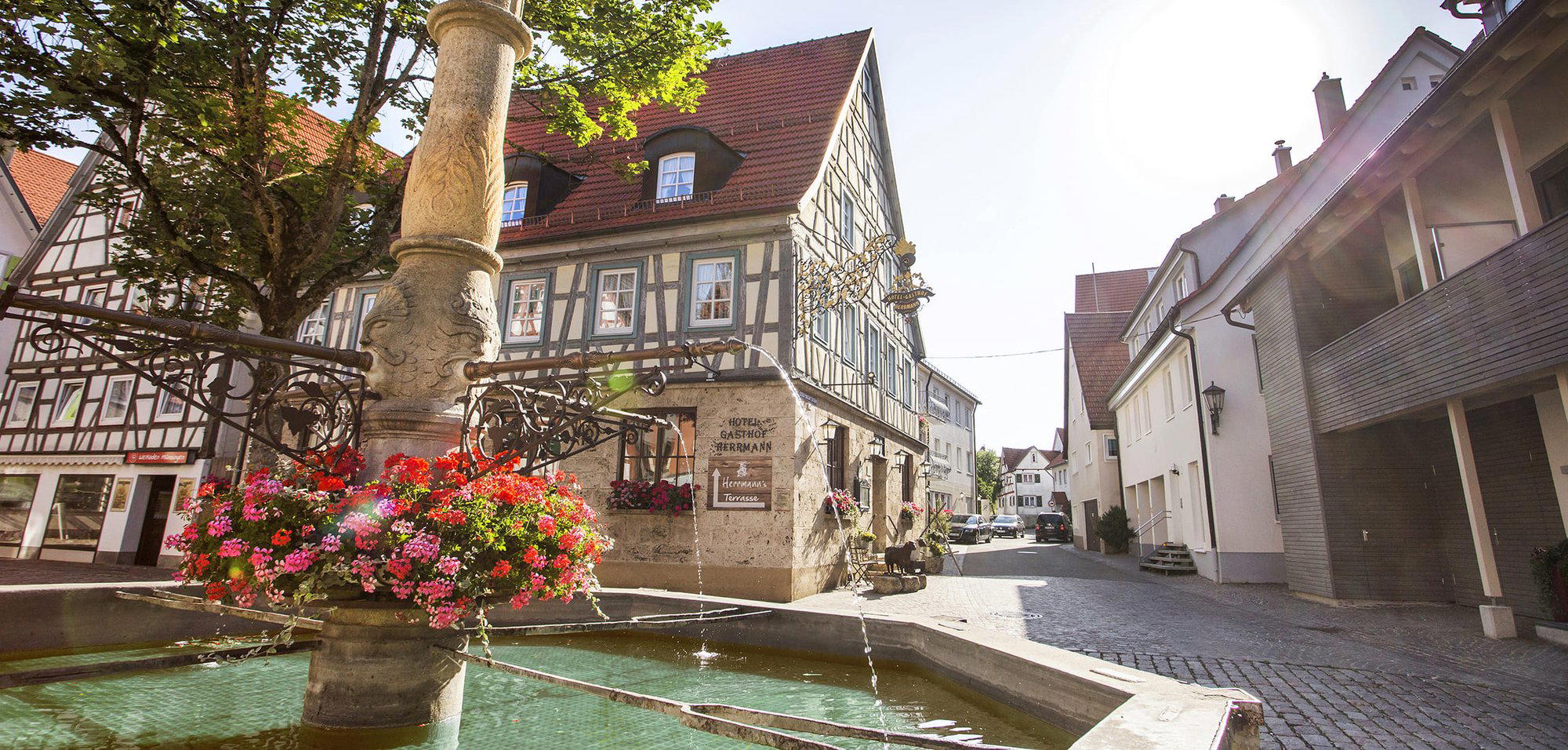
The Swabian Alb and the Gasthof Tradition
The Swabian Alb is one of Baden-Württemberg's least-travelled plateaus by international visitors, which means its food culture has developed largely on its own terms. The region sits between Stuttgart to the north and the Danube headwaters to the south, with an agricultural character shaped by thin limestone soils, juniper heaths, and short growing seasons. That environment has historically produced a cuisine defined less by abundance than by careful use: lentils from the Alb-Leisa tradition, lamb grazed on open heathland, carp and trout from cold-water streams, and the kind of root-vegetable cookery that predates any contemporary interest in locality. Gasthof properties in this part of Germany are the institutional carriers of that tradition, not as a marketing position, but as a structural reality. They source close because the regional supply chain is close. They cook what the season offers because the menu has always been tethered to what arrives from farms and smallholders within a short radius.
Hotel Gasthof Herrmann, addressed at Ernst-Bezler-Straße 1 in Münsingen, sits inside this pattern. Münsingen itself is a mid-sized Swabian town of around 14,000 people, functioning as a low-key administrative centre for the Reutlingen district. It has a modest local dining scene rather than a Michelin-starred draw for weekend traffic from Stuttgart. What it has is a working local hospitality infrastructure, the kind that serves residents and passing travellers rather than destination diners, and Gasthof Herrmann is part of that fabric. For context on Germany's top-tier dining, properties like Aqua in Wolfsburg or Schwarzwaldstube in Baiersbronn operate in an entirely different register: multi-course tasting menus, international wine lists, and dining rooms built around controlled theatre. The Gasthof model inverts most of those priorities.
What the Gasthof Format Actually Means for the Kitchen
Across southern Germany, Bavaria, Baden-Württemberg, and into Austria, the Gasthof format has a specific logic. It is not a hotel with a restaurant attached, nor a restaurant with rooms upstairs in any modern boutique sense. It is a property where the kitchen is the gravitational centre, and the rooms exist to serve guests who arrive because of the region rather than the restaurant itself. The kitchen in a well-run Gasthof typically sources from a small, stable set of local suppliers: a butcher who has supplied the same cuts for decades, a vegetable grower whose fields are within cycling distance, a dairy whose cream appears in the sauces without being announced on the menu. Ingredient sourcing in this context is not a talking point, it is infrastructure. The menu reflects what the region produces, which in the Swabian Alb means a different diet of ingredients than you encounter at a creative fine-dining kitchen in Munich or Berlin.
Compare this to the sourcing philosophy at properties like JAN in Munich or ES:SENZ in Grassau, where sourcing decisions are framed explicitly and form part of the restaurant's editorial identity. In a Gasthof setting, the same care may exist without the framing. The lentils on the plate may have come from a single producer on the Alb; the Maultaschen dough may follow a family recipe that predates any food movement. The absence of articulation does not mean the absence of intention. It means the intention is embedded in practice rather than presented as positioning.
Münsingen in the Baden-Württemberg Dining Context
Baden-Württemberg carries more Michelin stars per capita than almost any other German federal state, but the concentration is uneven. Baiersbronn in the Black Forest holds a disproportionate share, with Schwarzwaldstube (see our profile here) anchoring a small cluster of top-tier kitchens in a single valley. The Rhine corridor between Freiburg and Rust hosts properties like ammolite in Rust. The Swabian Alb, by contrast, is not a recognised fine-dining zone. That is not a criticism, it is a geographic reality that shapes what kind of hospitality makes sense in a town like Münsingen. For travellers who have covered the Black Forest circuit or spent time at table-driven destinations such as Vendôme in Bergisch Gladbach or Waldhotel Sonnora in Dreis, the Alb offers a different kind of engagement with German food culture, one grounded in regional specificity rather than international technique.
Münsingen is also the gateway to the Biosphärengebiet Schwäbische Alb, a UNESCO biosphere reserve that covers roughly 85,000 hectares of plateau, valleys, and juniper heath. The designation matters for food because it has supported the preservation of traditional breeds and crop varieties in the area, including the Linsengericht Alb-Leisa lentil, which carries protected geographical status. A kitchen in Münsingen with any connection to local supply has access to an ingredient base that many urban restaurants can only source at a distance.
Placing Gasthof Herrmann in the Broader German Hospitality Picture
Germany's premium hospitality end has grown more internationally visible in the past decade. Properties like Restaurant Haerlin in Hamburg, Schanz in Piesport, and Victor's Fine Dining by Christian Bau in Perl compete on the same reference circuit as Le Bernardin in New York or Atomix in terms of international attention. At the opposite end of the visibility curve, the Gasthof network operates largely below international radar, serving a domestic and regional audience. That positioning is structural, not accidental. It reflects a hospitality model built for utility and regional continuity rather than destination dining. Properties like Bagatelle in Trier, ATAMA by Martin Stopp in Sankt Ingbert, and AUGUST in Augsburg occupy the middle ground, city-based, destination-capable, but still rooted in regional identity. A Gasthof in Münsingen sits further along that axis, toward the local and functional end, which is precisely what makes it the right base for exploring a part of Baden-Württemberg that does not yet appear on most international food itineraries. For travellers who have exhausted the award-circuit properties and are interested in what AURA in Wirsberg or CODA Dessert Dining in Berlin represent at the creative frontier, a Gasthof stay offers a calibrating counterpoint: German food culture at its most embedded and least performed.
Planning a Stay
Hotel Gasthof Herrmann is located at Ernst-Bezler-Straße 1, 72525 Münsingen. Münsingen is reachable by regional rail from Stuttgart (Hauptbahnhof) via the Ermstalbahn or Albbahn lines, with journey times typically under two hours depending on connections. By car from Stuttgart the drive covers roughly 60 kilometres via the B28 or B465, making it a practical overnight stop for travellers moving through the Alb rather than a destination requiring a dedicated trip. Reservations are recommended.
At-a-Glance Comparison
Comparable venues nearby, for context on price, style, and recognition.
| Venue | Cuisine | Price | Awards | Notes |
|---|---|---|---|---|
| Hotel Gasthof HerrmannThis venue — the venue you are viewing | Traditional Swabian German | $$ | , | |
| Aubrac Restaurant & Terrasse | Baden Regional German | $$ | , | Stupferich |
| Gaststätte Krone | Traditional Swabian German | $$ | , | Altstadt (Old Town) |
| Restaurant Kaminstubb | Traditional German Gastropub | $$ | , | Woerth am Rhein |
| Schellenturm | Swabian German Weinstube | $$ | , | Gablenberg |
| Frankfurter Haus | Traditional German Hessian Cuisine | $$ | , | Sachsenhausen |
Continue exploring
More in Munsingen
Restaurants in Munsingen
Browse all →
Bars in Munsingen
Browse all →
Hotels in Munsingen
Browse all →
At a Glance
- Cozy
- Rustic
- Romantic
- Family
- Casual Hangout
- Special Occasion
- Hotel Restaurant
- Extensive Wine List
- Local Sourcing
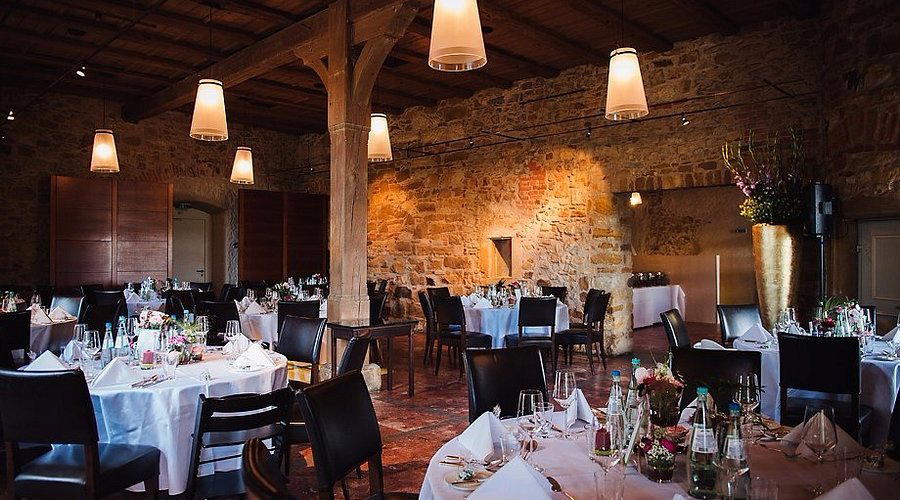
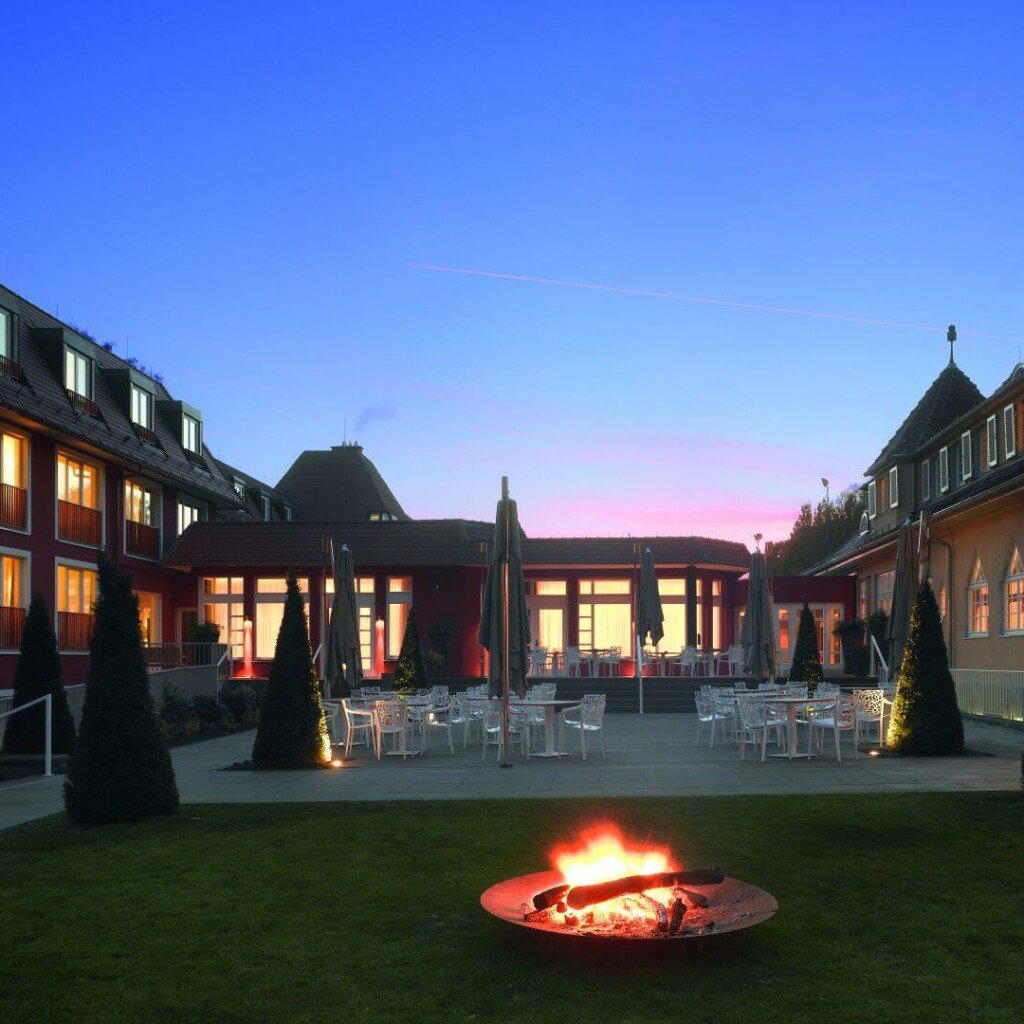
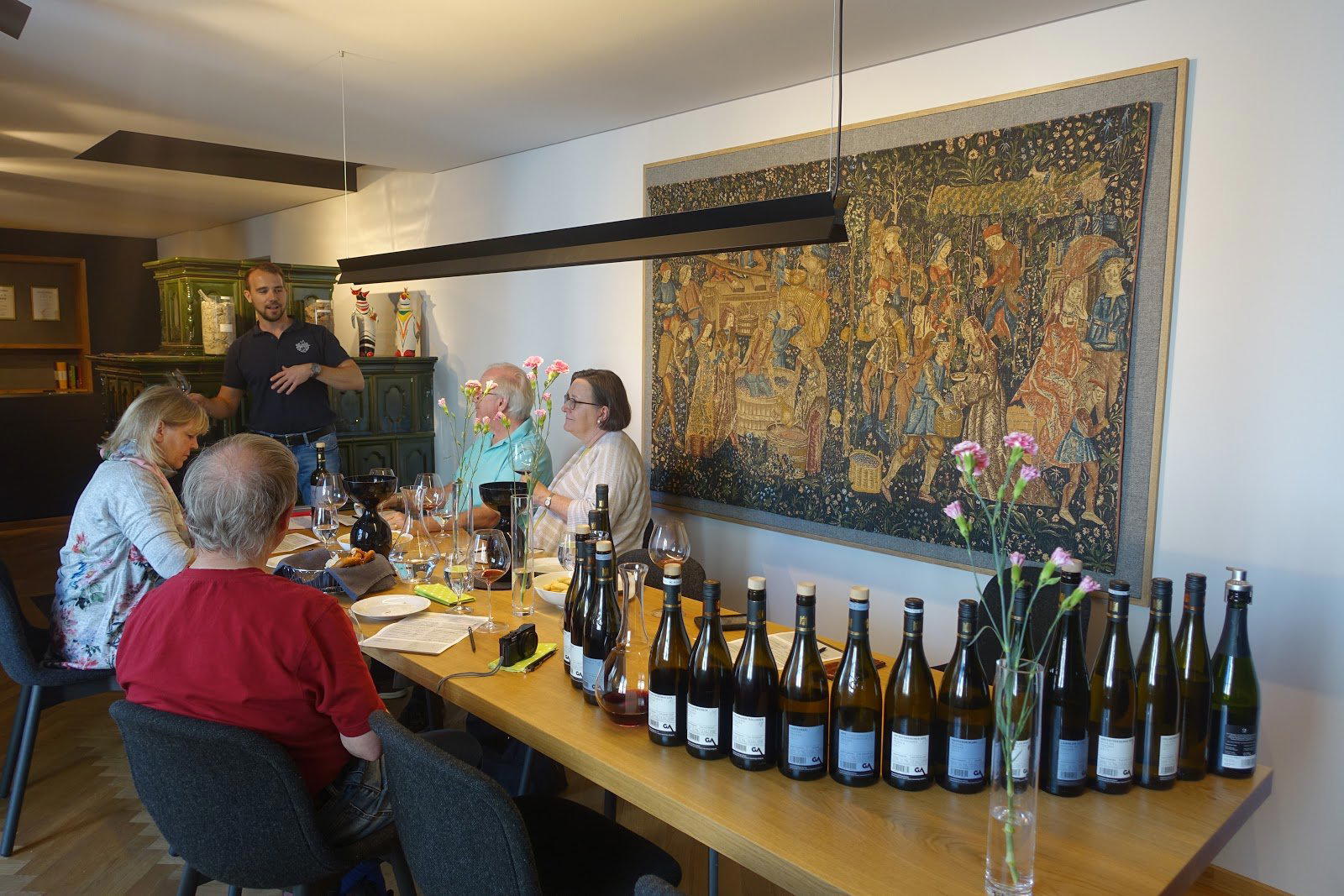
Traditional and romantic ambiance with cozy country-style decor and welcoming atmosphere.