Our verdict
Frankfurter Haus sits on Darmstädter Landstraße in Neu-Isenburg, just south of Frankfurt, occupying a position in the city's broader dining orbit that rewards those who look beyond the Bahnhofsviertel and Sachsenhausen circuits.

Pearl is the En Primeur Club membership app, where members save venues, book tables and use the concierge.
The menu
What to order
- Frankfurter Rippchen
- Knuckle of pork with sauerkraut
- Handkäse
South of the Centre, Off the Standard Circuit
The restaurants that accumulate loyal regulars in German cities are rarely the ones with the most press coverage. Frankfurt's dining reputation clusters around the Bahnhofsviertel's international kitchens and Sachsenhausen's apple wine taverns, but the southern approach through Neu-Isenburg tells a different story. Darmstädter Landstraße, running out toward the Rhein-Main periphery, is the kind of address that filters out visitors and retains the people who live and work nearby. Frankfurter Haus occupies that position on the road, and the clientele it draws reflects it: regulars who return on a schedule rather than on occasion, who know what they want before they sit down.
That dynamic, a room that functions more like a standing arrangement than a destination booking, is increasingly rare in cities where dining has tilted toward the ticketed, the tasting-menu-only, and the social-media-indexed. Against that backdrop, the address in Neu-Isenburg reads as a deliberate counterpoint, a place where the value is proximity and consistency rather than novelty.
The Geography of Loyalty
Neu-Isenburg sits immediately south of Frankfurt's city boundary, separated from Sachsenhausen by a short stretch of road rather than any meaningful cultural distance. The area has historically served Frankfurt's professional and residential overspill, and its restaurant culture reflects that: practical, neighbourhood-oriented, and less reliant on tourist traffic than establishments inside the city ring. For a venue on Darmstädter Landstraße, the catchment is the local one. Regulars are likely to be the people who live within ten minutes of the door, or who pass the address on their commute into the city.
This is the operating model that sustains a particular kind of German restaurant, one that does not depend on a Michelin star or a placement in our full Frankfurt restaurants guide to fill seats on a Tuesday. The comparison is instructive: Frankfurt's decorated dining tier, which includes internationally recognised rooms, operates on advance bookings, high per-cover spends, and a customer base that travels specifically for the meal. The neighbourhood model inverts all of that. Consistency matters more than ambition, and familiarity is the currency.
Frankfurt's Broader Fine Dining Frame
To understand where a venue like Frankfurter Haus sits, it helps to map what surrounds it at the higher end of the German dining spectrum. Germany's three-Michelin-star addresses span a wide geography: Schwarzwaldstube in Baiersbronn, Aqua in Wolfsburg, Vendôme in Bergisch Gladbach, and Victor's Fine Dining by Christian Bau in Perl represent the formal end of German gastronomy, requiring significant travel and advanced planning. Munich adds JAN to that conversation, while Berlin contributes the format-specific rigour of CODA Dessert Dining. Hamburg brings Restaurant Haerlin, and the southern wine country adds ES:SENZ in Grassau, Schanz in Piesport, and Waldhotel Sonnora in Dreis.
Frankfurt itself is a financial capital with a pragmatic relationship to dining. Business expense accounts sustain a mid-to-upper tier that moves quickly, and neighbourhood restaurants in the surrounding municipalities fill a different role: they absorb the demand that doesn't want a corporate dining experience. Within Frankfurt proper, venues like Allgaiers Restaurant, Ariston, and ALEJANDRO'S occupy different segments of that mid-to-upper market, while atm by Deli&Grape and Babam represent the city's appetite for less formal formats. Neu-Isenburg's position just outside this competitive cluster gives it a quieter operating environment, which tends to suit regulars over first-timers.
What Regulars Return For
The pattern across neighbourhood restaurants in German cities is well-established: the first-time visitor is the outlier, not the norm. Regulars at this tier of dining return because the room holds no surprises, because the staff remember them, and because the menu changes in ways that feel like an update rather than a reinvention. The loyalty is transactional in the leading sense: reliable value, reliable execution, reliable atmosphere. Internationally, the model maps onto what Lazy Bear in San Francisco or Le Bernardin in New York City represent at the formal end, but inverted: those rooms are destinations that regulars have claimed; neighbourhood restaurants like Frankfurter Haus are regular venues that visitors occasionally discover.
The address on Darmstädter Landstraße positions Frankfurter Haus at the edge of Frankfurt's commuter belt, accessible by road from the city centre and from the southern districts of the Rhein-Main area. For those approaching from central Frankfurt, the journey is short enough to make it a realistic weeknight option rather than a weekend occasion. That accessibility shapes the clientele as much as any menu decision does.
Planning a Visit
Contact details and booking availability are best confirmed through a local call or through the venue's own channels. Given the neighbourhood positioning and the regulars-first operating model common to this type of address, walk-ins during quieter service periods may be feasible, though that assumption should be tested rather than relied upon. For visitors combining a meal here with wider Frankfurt dining, the southern approach gives easy access to the city's Sachsenhausen and Niederrad districts, making it a logical stop on a broader Rhein-Main itinerary.
Frequently asked questions
What is Frankfurter Haus known for?
What's the must-try dish at Frankfurter Haus?
Is Frankfurter Haus reservation-only?
How does Frankfurter Haus compare to other restaurants in the Frankfurt area?
Comparable Venues
Comparable venues nearby, for context on price, style, and recognition.
| Venue | Cuisine | Price | Awards | Notes |
|---|---|---|---|---|
| Frankfurter HausThis venue (the venue you are viewing) | Traditional German Hessian Cuisine | $20–30 | Not listed | Not listed |
| Zum Eichkatzerl | Traditional German / Hessian | $20–30 | Not listed | Roemerberg |
| Freitagsküche | German Contemporary with Cultural Twist | $20–30 | Not listed | Goethehaus |
| Bornheimer Ratskeller | Regional German Seasonal Cuisine | $30–50 | Michelin Bib Gourmand | Heimgarten |
| Gref-Völsings Braterei | Traditional German Sausage House | $10–20 | Not listed | Im Teller |
| What's Beef | American Smash Burgers & Gourmet Fast Casual | $20–30 | Not listed | Roemerberg |
Continue exploring
More in Frankfurt
Restaurants in Frankfurt
All restaurants in Frankfurt →
Bars in Frankfurt
All bars in Frankfurt →
Hotels in Frankfurt
All hotels in Frankfurt →

Details
- Cozy
- Rustic
- Classic
- Casual Hangout
- Group Dining
- Beer Garden
- Historic Building
- A La Carte
- Vegetarian Friendly
Current opening hours
- Monday
- 11:30 AM–9:30 PM
- Tuesday
- 11:30 AM–9:30 PM
- Wednesday
- Closed
- Thursday
- 11:30 AM–9:30 PM
- Friday
- 11:30 AM–9:30 PM
- Saturday
- 11:30 AM–9:30 PM
- Sunday
- 11:30 AM–9:30 PM
Hours can change for holidays and private events. Hours as of .
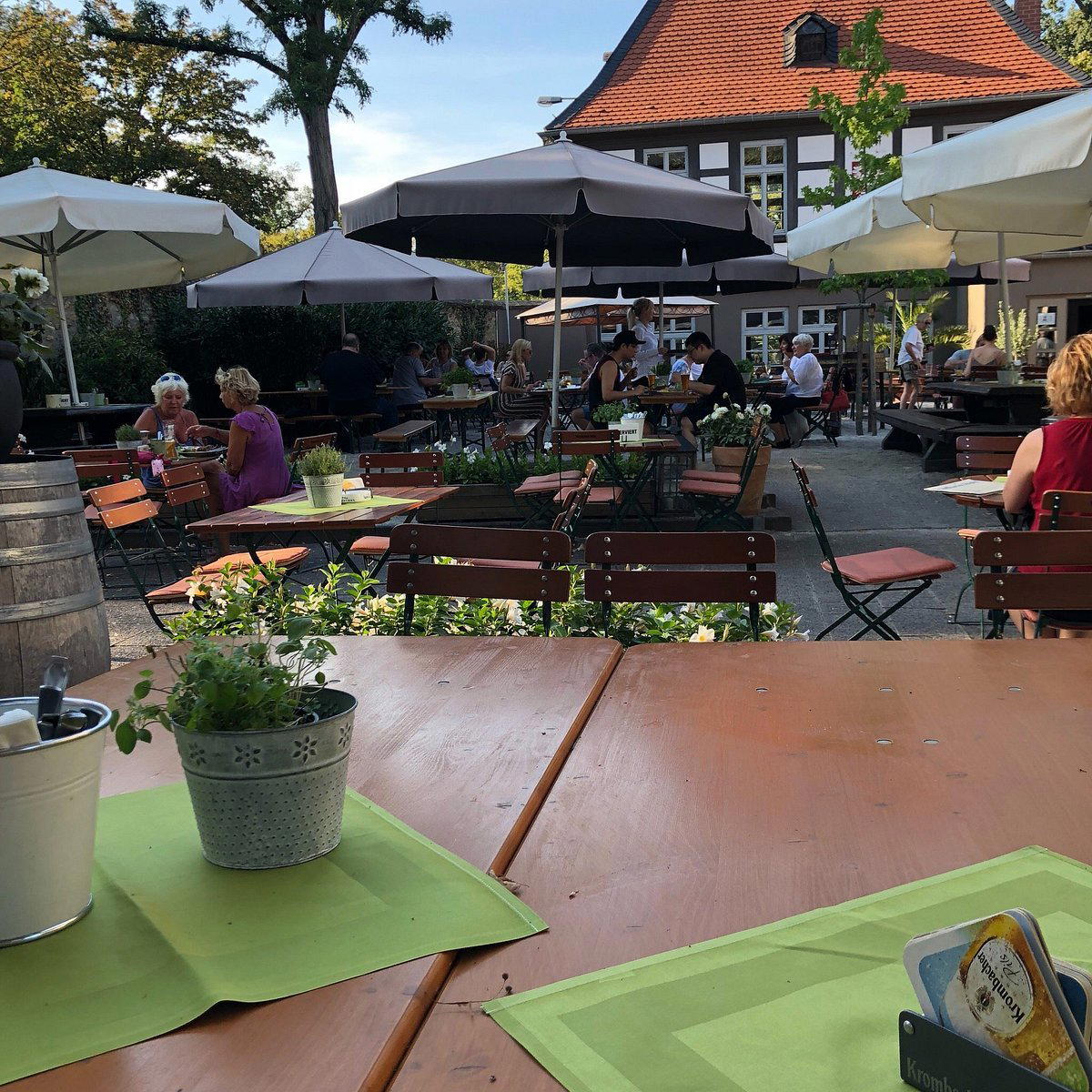
Inviting and idyllically cozy atmosphere with romantic traditional charm and lively beer garden.