Restaurant Kaminstubb
Restaurant Kaminstubb sits in Wörth am Rhein, a small Rhine-side town in Rhineland-Palatinate where the German south-west's agricultural depth meets the river's moderating influence. The name alone — Kaminstubb, or hearth room — signals a particular register: warm, rooted, and grounded in the region's produce traditions rather than chasing metropolitan spectacle.
Pearl is the En Primeur Club membership app — saves, bookings, and concierge access live there. Same editors, same standards.
- Address
- Raiffeisenstraße 3, 76744 Wörth am Rhein, Germany
- Phone
- +494972714767
- Directions
- Get directions
 Saves & bookings on Pearl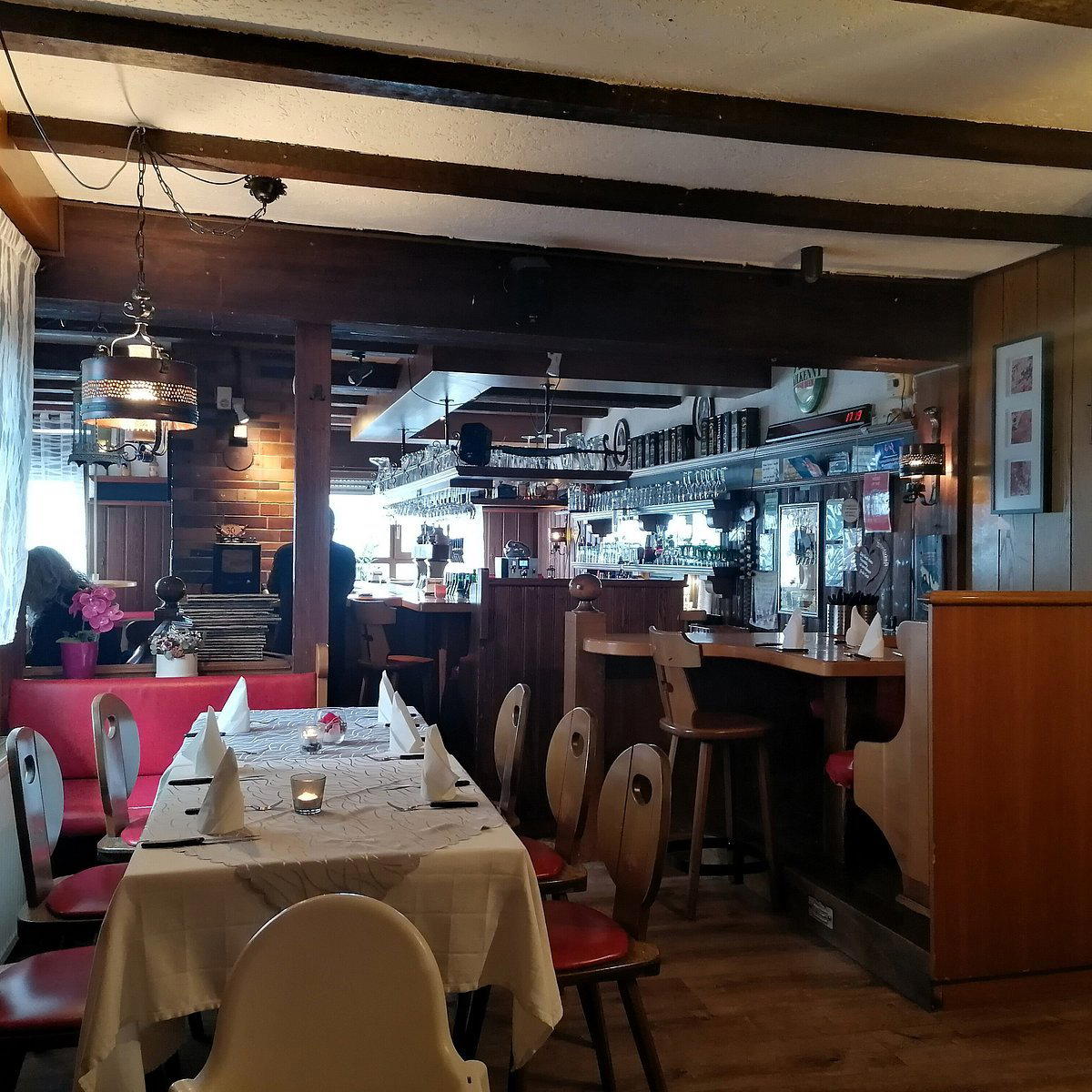
The Hearth Room Tradition in Germany's Productive South-West
In the villages and market towns that line the Upper Rhine between Karlsruhe and the Palatinate Wine Road, a specific restaurant format has persisted for generations. The Stube — the heated inner room, the room built around the hearth — functions as both a practical and cultural anchor. It is the space where local ingredients arrive from nearby farms and vineyards and are turned into something that reflects the season more than the trend. Restaurant Kaminstubb, located at Raiffeisenstraße 3 in Wörth am Rhein, operates within this tradition, and the name itself announces the register before a dish reaches the table.
Wörth am Rhein sits in Rhineland-Palatinate, a federal state that produces more wine than any other in Germany and whose agricultural output, asparagus from the Palatinate plain, lamb from the Pfälzerwald foothills, freshwater fish from Rhine tributaries, supplies restaurants across the south-west. This is the supply geography that shapes what a kitchen in this town can realistically reach for, and it is a geography with considerable depth. The same corridor feeds celebrated addresses across the region, from the Black Forest side to the Moselle Valley. See our full Worth Am Rhein restaurants guide for a broader map of what the area currently offers.
Ingredient Geography: What the Upper Rhine Corridor Provides
The editorial angle that makes a Stube-format restaurant in this particular corner of Germany worth examining is precisely its ingredient geography. Rhineland-Palatinate's Palatinate region, the Pfalz, is Germany's largest wine-growing area by area and one of its most agriculturally varied. The Rhine's moderating influence extends the growing season, which in practical kitchen terms means an extended window for stone fruit, early brassicas, and late-harvest root vegetables. Kitchens working close to this supply base can time their menus to the actual harvest rather than to a fixed printed card.
This sourcing proximity matters more in the current German restaurant conversation than it did a decade ago. The country's mid-tier and upper-mid-tier restaurants, those operating between the everyday Gasthaus and the full fine-dining tier represented by addresses like Schwarzwaldstube in Baiersbronn or Vendôme in Bergisch Gladbach, have increasingly framed their identity around regional produce specificity rather than technique alone. That shift gives a Stube-format kitchen in a productive agricultural zone a genuine editorial argument: the ingredients are not imported for prestige, they are sourced because the region grows them well.
For comparison, the creative fine-dining tier in Germany, represented by places such as Aqua in Wolfsburg or CODA Dessert Dining in Berlin, operates with a different sourcing logic, often drawing on international supply chains and laboratory-adjacent technique. The Stube format sits at the opposite end of that axis: it answers to the land immediately around it, and the room itself, warm, low-ceilinged, fireplace-anchored, signals that philosophy before the menu does.
The Rhine-Side Setting and What It Signals
Wörth am Rhein is not a destination town in the way that Baiersbronn or the Moselle Valley's wine villages function as deliberate detours on a culinary itinerary. It is a working Rhine-side settlement in the southernmost reach of Rhineland-Palatinate, bordered by the French region of Alsace to the west and Baden-Württemberg to the east. That cross-border geography is not incidental: Alsatian culinary traditions, the emphasis on charcuterie, freshwater fish, and wine-forward cooking, have long filtered across the Rhine into the Pfalz kitchen. A restaurant named for its hearth room in this location inherits a cooking lineage that is neither purely German nor Alsatian but sits productively between the two.
This is the same corridor that supplies ammolite in Rust and informs the produce logic at addresses further north like Bagatelle in Trier. The Rhine Valley's agricultural and viticultural depth means that kitchens in this region are rarely short of high-quality raw material; the question is always what they do with it and how consistently they do it.
Placing Kaminstubb in the Regional Conversation
Germany's restaurant scene beyond the major urban centres, Berlin, Munich, Hamburg, tends to cluster in two modes: the Michelin-tracked destination restaurant, often attached to a hotel or wine estate, and the deeply local Gasthaus or Stube format that serves a regular community rather than a travelling one. Addresses like Schanz in Piesport or Waldhotel Sonnora in Dreis occupy the first mode: they draw from the region's produce but operate with a formal, destination-facing structure. Restaurant Kaminstubb's name and format suggest the second mode, a room defined by regulars, by seasonal cooking, and by proximity to its supply base rather than by tasting-menu architecture.
That distinction carries implications for the reader deciding whether to make the trip. The Stube format rewards a different kind of attention than a destination fine-dining address does. The signal is not in the awards line or the chef pedigree but in the consistency of the seasonal offering and the room's relationship to the community around it. For readers tracking the broader German dining scene, comparable format logic plays out in places like ATAMA by Martin Stopp in Sankt Ingbert or ES:SENZ in Grassau, both of which operate in provincial German settings while maintaining high-level cooking standards.
Planning Your Visit
Wörth am Rhein is reachable from Karlsruhe in under 30 minutes by regional rail, and the town is a practical stopping point for anyone moving between the Black Forest region and the Palatinate Wine Road. The restaurant's address on Raiffeisenstraße places it within the town centre. As with most Stube-format restaurants in smaller German towns, visiting on a weekday reduces the likelihood of a full room. Because specific booking details, hours, and current pricing are not publicly confirmed for Restaurant Kaminstubb, contacting the restaurant directly before visiting is the practical approach. The format, a hearth room in a Rhine-side town, suggests a room that fills with local regulars on weekend evenings, which means advance contact is sensible regardless of how far you are travelling.
How Restaurant Kaminstubb Worth Am Rhein compares with similar nearby venues.
| Venue | Cuisine | Price |
|---|---|---|
| EigenArt | International | €€€ |
| Stilbruch | Contemporary | €€€ |
| Bistro Margarete | Regional Cuisine | €€ |
| sein | Modern Cuisine | €€€€ |
Continue exploring
More in Worth Am Rhein
Restaurants in Worth Am Rhein
Browse all →
Bars in Worth Am Rhein
Browse all →

Hotels in Worth Am Rhein
Browse all →

At a Glance
- Rustic
- Cozy
- Casual Hangout
Current opening hours
- Monday
- 5 PM–12 AM
- Tuesday
- Closed
- Wednesday
- Closed
- Thursday
- 5 PM–12 AM
- Friday
- 5 PM–12 AM
- Saturday
- 5 PM–12 AM
- Sunday
- 5 PM–12 AM
Hours can change for holidays and private events. Last verified .
Anachronistic mixture of village pub and rustic restaurant.