

Michelin Bib Gourmand · Tabelog 100 #22
Our verdict
A Michelin Bib Gourmand recipient in Yoyogi Uehara, Hibino Chukashokudo draws on Sichuan and Cantonese traditions to produce set meals and shareable plates in a wood-lined room built around the rhythm of daily neighbourhood life. The daytime format runs to mapo tofu and boiled chicken sets; evenings open into à la carte.

Pearl is the En Primeur Club membership app, where members save venues, book tables and use the concierge.
The menu
What to order
- Whole crispy chicken
- Obanzai set meal
- Sweet and spicy stir-fried oysters
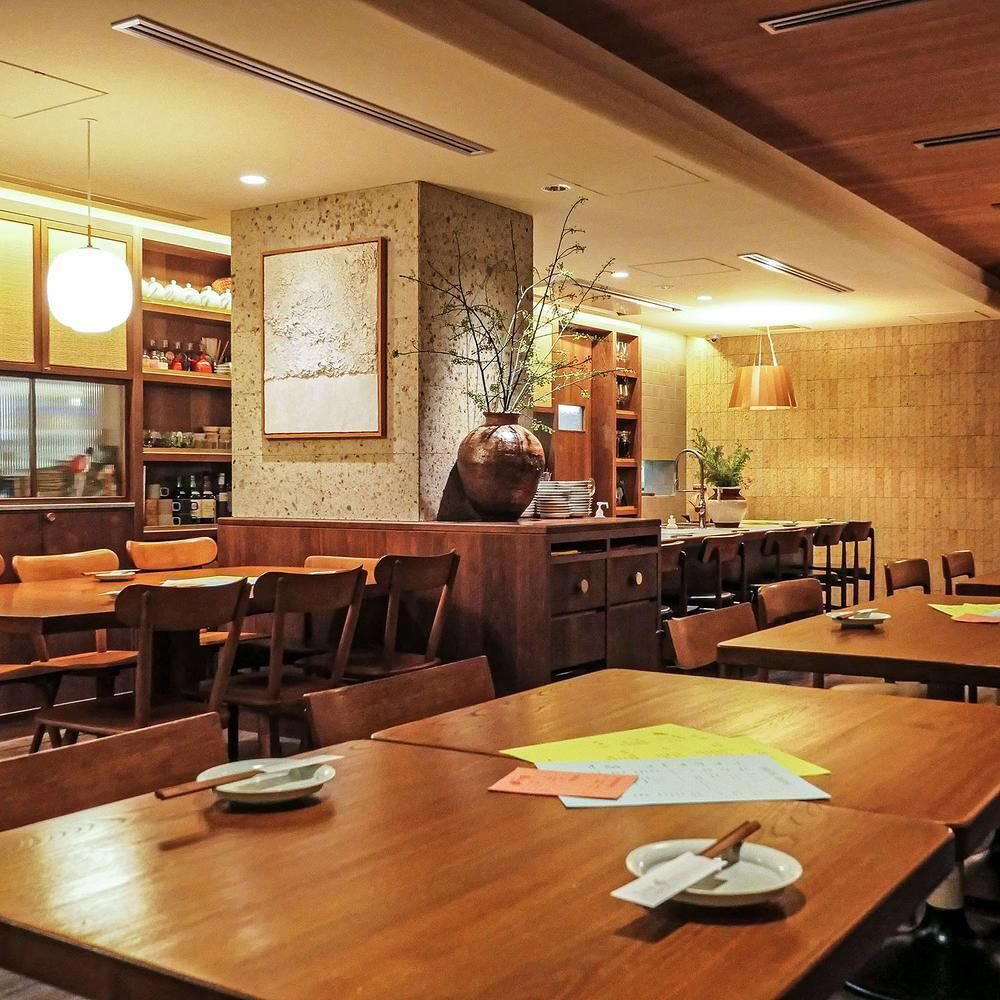
Wood, Warmth, and the Architecture of a Neighbourhood Chinese Restaurant
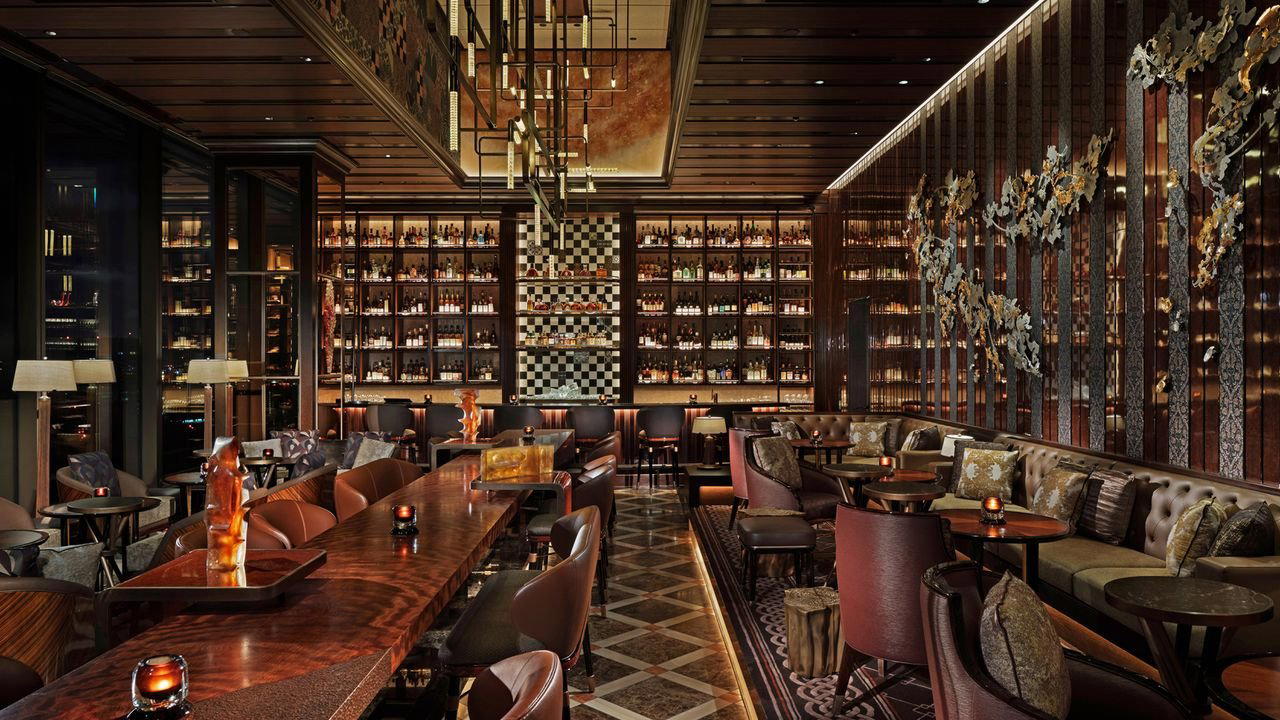
In Tokyo's residential dining scene, the gap between a neighbourhood canteen and a destination restaurant is rarely as narrow as it is in Yoyogi Uehara. The area, tucked between Shinjuku and the quieter residential sprawl of Shibuya-ku, has developed a dining character that skews local and deliberate: small rooms, daily menus, and regulars who treat their preferred tables as extensions of their own kitchens. Hibino Chukashokudo sits precisely inside that mode. The interior is built from wood, warm, present, unpretentious, and the concept it frames is togetherness: not the togetherness of a celebratory banquet, but the quieter kind that comes from a well-constructed lunch shared between two people in a room that feels like it belongs to the street outside.
That physical environment matters because it sets the register for everything that follows. This is not a room asking you to dress up or adjust your posture. It is a room asking you to eat, talk, and return.
Sichuan and Cantonese, Reframed for a Japanese Neighbourhood Context
Contemporary Chinese restaurants in Tokyo occupy a wide band. At one end sit multi-room operations in Ginza and Shinjuku serving Cantonese banquet formats to corporate tables; at the other, the tight izakaya-adjacent spots that draw on Chinese technique with little formal allegiance to any regional tradition. Hibino Chukashokudo occupies a more deliberate middle position, grounding its menu in two of China's most codified culinary traditions: Sichuan and Cantonese. That dual foundation is a specific editorial choice, not an accident of geography or supply chain.
Sichuan cooking is defined by the mala profile, the numbing heat of Sichuan peppercorn layered against dried chilli, and by a willingness to build complex, deeply seasoned sauces around relatively simple proteins. Cantonese technique moves in the opposite direction: it prizes clarity, freshness, and the discipline of not interfering. Mapo tofu, one of the daytime set meals here, is a Sichuan classic that depends on precisely that tension: silken tofu meeting a fermented black bean and chilli sauce that has more structural layers than its simplicity suggests. Boiled chicken, another set-meal staple, is a Cantonese preparation where the quality of the poaching liquid and the control of residual heat in the protein do the work that seasoning cannot. Both dishes are technically demanding in ways invisible to the casual diner, which is part of what makes them reliable reference points for what a kitchen can actually do.
The evening shift at Hibino Chukashokudo moves to à la carte, a format that allows the kitchen to extend the same logic into smaller, individual plates. The guiding idea is the side dish, not a supporting act to a main course, but a series of self-contained preparations that allow a table to move across flavour profiles in a single sitting. A whole crispy chicken is positioned as a sharing centrepiece, a format that makes most sense at a table of three or four and speaks to the communal logic that runs through the room's design.
This model, where daytime structure and evening flexibility serve different visiting occasions, has become a credible format in Tokyo's mid-tier Chinese dining segment. It functions as a neighbourhood restaurant in the true sense: calibrated to the rhythms of the people who live nearby rather than to tourists arriving with a specific dish in mind. For a comparison in how Chinese cuisine operates at higher price points and more formal structures in Tokyo, Chugoku Hanten Fureika and Chugoku Hanten Kohakukyu (Amber Palace) represent a different register of the same category. Ippei Hanten and Koshikiryori Koki offer further reference points on Tokyo's broader Chinese and Chinese-adjacent table.
The Bib Gourmand Bracket and What It Signals Here
Michelin's Bib Gourmand designation, awarded to Hibino Chukashokudo in 2024, is the Guide's marker for restaurants offering quality above the mean at prices below the starred tier. In Tokyo, a city where the Michelin footprint runs deeper than in any other on earth, the Bib Gourmand list is competitive. It does not confer the same booking pressure as a starred room, but it places a restaurant inside a peer group that has been evaluated against the same technical and consistency criteria as those above it on the scale.
For a mid-range Chinese restaurant operating at a ¥¥ price point in a residential neighbourhood, the 2024 Bib Gourmand is meaningful positioning. It confirms the kitchen's technical reliability and places the room in a category that Tokyo's attentive local diner already understands: not a budget option, not a destination for special occasions, but a consistently sound place to eat on a Tuesday or a Saturday with equal confidence.
The broader Tokyo dining scene at higher price tiers can be explored through venues like itsuka, which represents the city's more refined end of the spectrum. For Japan-wide context, HAJIME in Osaka, Gion Sasaki in Kyoto, akordu in Nara, Goh in Fukuoka, 1000 in Yokohama, and 6 in Okinawa map the range of what serious kitchens are doing across the country. Internationally, the reinterpretation of Chinese culinary tradition in Western cities has produced significant work: Restaurant Tim Raue in Berlin and Mister Jiu's in San Francisco each approach the same source material through a different cultural lens.
Planning Your Visit
Location: 1 Chome-33-11 Uehara, Shibuya, Tokyo 151-0064. Yoyogi Uehara Station (Odakyu Line, Tokyo Metro Chiyoda Line) is the practical access point for this address. Budget: ¥¥, positioning this comfortably below Tokyo's mid-to-upper restaurant tiers; accessible for lunch sets and evening à la carte without significant pre-planning on spend. Reservations: Format: Set meals at lunch (mapo tofu, boiled chicken and similar); à la carte in the evening with small-plate and sharing formats. Recognition:
For further Tokyo planning, consult our full Tokyo restaurants guide, our full Tokyo hotels guide, our full Tokyo bars guide, our full Tokyo wineries guide, and our full Tokyo experiences guide.
Frequently asked questions
What price level is Hibino Chukashokudo?
Pricing at Hibino Chukashokudo is listed as ¥¥.
Do I need a reservation for Hibino Chukashokudo?
No booking contact is publicly listed for Hibino Chukashokudo, and the neighbourhood canteen format in Yoyogi Uehara suggests walk-in is a reasonable option for daytime set meals. The Michelin Bib Gourmand recognition since 2024 has raised its profile, so arriving at off-peak hours gives you a better chance at the counter during busier evening service.
Fast Comparison
A quick snapshot of similar venues for side-by-side context.
| Venue | Cuisine | Price | Awards | Notes |
|---|---|---|---|---|
| Hibino ChukashokudoThis venue (the venue you are viewing) | Japanese-Chinese Fusion | $20–30 | Michelin Bib Gourmand · Tabelog 100 #22 | Not listed |
| Harutaka | Edo-Style Omakase Sushi | $200–300 | 3 Michelin Stars · World's 50 Best #76 | Sushi |
| RyuGin | Modern Kaiseki | $500+ | 3 Michelin Stars · World's 50 Best #41 | Kaiseki, Japanese |
| L'Effervescence | Modern French with Japanese Influences | $200–300 | 3 Michelin Stars · World's 50 Best #69 | French |
| HOMMAGE | Modern French with Japanese Influences | $150–200 | 2 Michelin Stars · World's 50 Best #78 | Innovtive French, French |
| MAZ | Innovative Peruvian-Japanese Fusion | $150–200 | 2 Michelin Stars · World's 50 Best #28 | Innovative |
Recognition history
Dated appearances from independent guides and award organizations, with the underlying list record or original source where available.
Michelin Bib Gourmand
Michelin
Tabelog 100 #22 · No. 22
Tabelog · Tabelog 100 - Chinese cuisine - TOKYO - 2026
Full recognition history (3 entries)
Michelin Bib Gourmand
Michelin
Continue exploring
More in Tokyo
Restaurants in Tokyo
All restaurants in Tokyo →



Bars in Tokyo
All bars in Tokyo →



Details
- Cozy
- Casual Hangout
- Sake Program
- A La Carte
- Small Plates
- Set Menu
Current opening hours
- Monday
- Closed
- Tuesday
- 11 AM–3 PM, 5–10:30 PM
- Wednesday
- 11 AM–3 PM, 5–10:30 PM
- Thursday
- 11 AM–3 PM, 5–10:30 PM
- Friday
- 11 AM–3 PM, 5–10:30 PM
- Saturday
- 11 AM–3 PM, 5–10:30 PM
- Sunday
- 11 AM–3 PM, 5–10:30 PM
Hours can change for holidays and private events. Hours as of .
Cozy and polished atmosphere in a modern wood-warmed space with casual chic interior.