Hélène Darroze à Villa La Coste

Hélène Darroze à Villa La Coste holds a Michelin star (2025) for produce-driven modern cuisine set within Château La Coste's art and wine estate north of Aix-en-Provence. The menu is built around named Provençal growers, with dishes identified by their producer rather than the ingredient, placing sourcing at the centre of the dining proposition. Priced at €€€€, it sits at the upper tier of the Le Puy-Sainte-Réparade restaurant scene.
 Discover on Pearl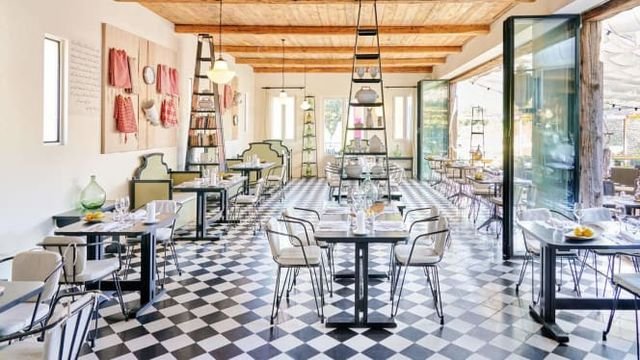
Where the Plate Begins in the Field
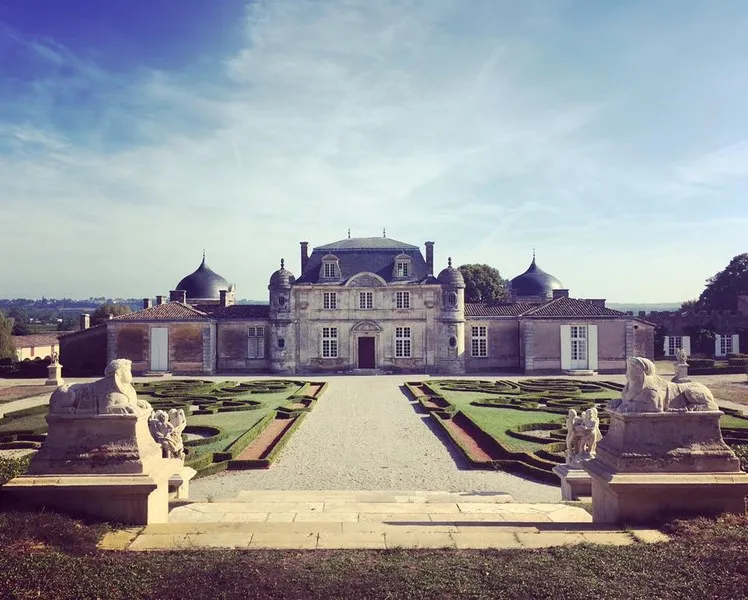
The approach to Château La Coste sets the register before you reach the table. Sculpture trails by Alexander Calder and Louise Bourgeois line paths through the vines; the winery buildings were designed by Tadao Ando. By the time you arrive at the restaurant, you have already been primed to read the property as a considered total work, and the kitchen at Hélène Darroze à Villa La Coste asks to be understood in the same terms. The Michelin star awarded in 2025 ratifies something the format has argued from the start: that a dining room anchored to named producers and Provençal agriculture belongs in a different category from a hotel restaurant that happens to use local ingredients.
The Lubéron and the plains north of Aix-en-Provence produce at a level that few French regions can match for sheer variety across the growing calendar. Tomatoes, aubergines, and stone fruit from small-scale growers define the summer menu here; root vegetables and brassicas carry the colder months. What distinguishes this kitchen's approach from the broader farm-to-table language that has become standard across the region is specificity of attribution. Carrots arrive from Bruno Cayron. Cherries come from Florent Lazare. Each dish on the menu is named after its producer, not the ingredient itself. That inversion, grower before product, is a structural editorial decision about where value sits in the supply chain, and it shapes how you read every plate.
The Sourcing Architecture
Producer-named menus are not new in France. Michel Bras at Bras in Laguiole spent decades mapping the Aubrac plateau onto his plates, and Mirazur in Menton under Mauro Colagreco has pushed moon-calendar agriculture into the mainstream conversation at the three-star level. What Hélène Darroze has done at La Coste is translate that sourcing discipline into a warmer, more accessible register. The kitchen under chef Ralph Knebel does not ask you to eat ideology. It asks you to notice that the aubergine tastes like aubergine grown by someone who knows the soil, and that this distinction is worth understanding before you leave the table.
That approach places this restaurant in a specific niche within the southern French dining tier. At the same price level, Francis Mallmann au Château La Coste on the same estate takes a radically different position: open fire, Argentine technique, animal protein at the centre. Across the valley, La Table de l'Orangerie at Château de Fonscolombe holds its own Michelin star through a Provençal French lens that is more classically anchored. Hélène Darroze's kitchen occupies the ground between: modern in technique, Provençal in raw material, with southwest French signatures threaded through to acknowledge the chef's own roots.
Produce-Driven Does Not Mean Meatless
Vegetables and fruit are the spine of the menu, but the kitchen does not commit to a vegetable-only format. Hélène Darroze's wider body of work, which extends to her three-Michelin-starred restaurant at The Connaught in London and her Paris address, has always balanced regional produce against classical French structure. At La Coste, that balance tilts firmly toward Provence, with fruit and vegetables occupying the leading billing on most dishes. The Gamberoni in tandoori spices, one of the signature preparations carried over from her broader repertoire, shows how the kitchen integrates non-local references without losing coherence. The tandoori register reads as global technique applied to a Mediterranean crustacean, which is a different proposition from localism for its own sake.
The Darroze Armagnac baba is the clearest signal that this is not a kitchen that erases the chef's identity in favour of pure terroir expression. Armagnac is Darroze family territory in every sense: the family operates a celebrated Armagnac négociant house in the Landes, and the baba is a marker of that lineage. It functions as context, telling you that the Provençal produce-focus is a choice made by a chef with deep roots elsewhere, not an accident of geography.
The Estate as Frame
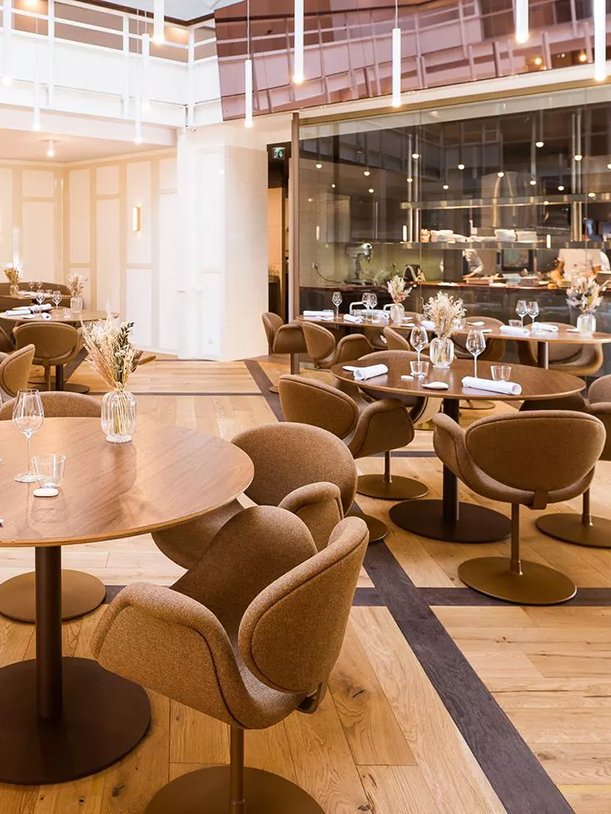
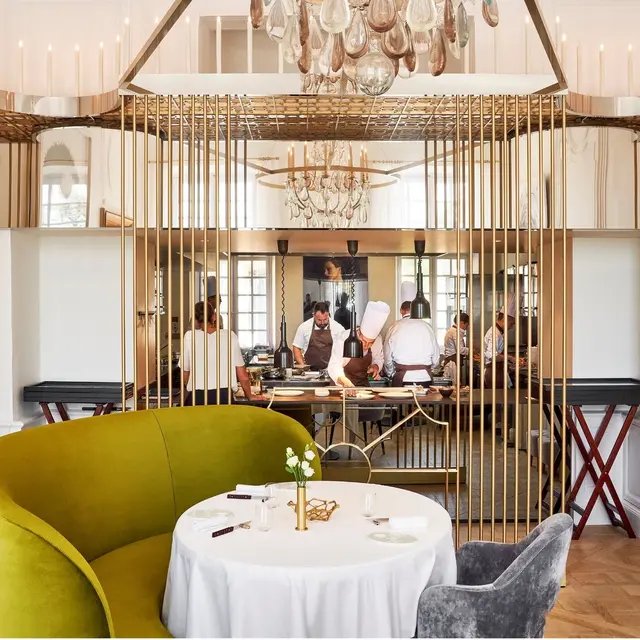
Château La Coste operates as an arts and wine estate with ambitions that run well beyond a single restaurant. The property holds a hotel, multiple dining formats, the Mallmann grill, a winery, and one of the more serious contemporary art collections assembled in rural France. Dining at Hélène Darroze's table is therefore one element within a larger programme. Guests arriving for lunch or dinner move through a space where the visual and architectural quality has been maintained at a level consistent with the food. That continuity matters: it is why the Michelin recognition reads as coherent rather than surprising. The restaurant's 4.4 rating across 227 Google reviews suggests a broad audience engaging with the experience, not only specialist food travellers.
For context on what this tier of Provence dining looks like at the starred level, the comparison points worth tracking include Auberge de l'Ill in Illhaeusern, which has maintained multi-star standing through a radically different, more classical Alsatian model, and Flocons de Sel in Megève, which pursues a comparable alpine-produce discipline at three stars. The La Coste kitchen operates at one star with a format that, in its producer-attribution rigour, would not look out of place at a higher level of recognition.
Planning a Visit
Le Puy-Sainte-Réparade sits roughly 25 kilometres north of Aix-en-Provence. The estate is accessible by car from Aix in under thirty minutes, and most visitors arriving by air use Marseille Provence Airport, approximately 45 kilometres from the property. Given the €€€€ price tier and the estate's international profile, advance booking is advisable, particularly across the summer months when the Provence season peaks and the art estate draws significant visitor numbers. The restaurant's Michelin recognition since 2025 has sharpened demand further. For guests combining dinner with broader estate activity, the La Coste hotel provides on-site accommodation, making it possible to build a full stay around both the art programme and the dining. See our full Le Puy-Sainte-Réparade hotels guide for accommodation context across the wider area.
Visitors who want to map the full dining range in the village and surrounding area before committing to one booking can use our Le Puy-Sainte-Réparade restaurants guide for a structured comparison. For those spending time in the estate's wine programme, our Le Puy-Sainte-Réparade wineries guide provides additional context. The Le Puy-Sainte-Réparade bars guide and experiences guide round out the picture for multi-day itineraries.
At a step down in price, Le Temps Suspendu at Château de Fonscolombe offers modern cuisine at €€€, and La Petite Verrière operates at the €€ level for those building a longer trip across multiple meals without sustaining the top-tier price point at every sitting.
For broader reference on where produce-driven modern cuisine sits within French fine dining as a tradition, the Troisgros family's approach at Troisgros - Le Bois sans Feuilles in Ouches and the garden-to-table rigour of Mirazur in Menton are the most useful comparison points. At the other end of the register, the classical French architecture of Paul Bocuse - L'Auberge du Pont de Collonges illustrates how different the premises of produce-first cooking actually are from the tradition it has grown alongside. For modern cuisine operating through a comparable technical precision at the international level, Alléno Paris au Pavillon Ledoyen and Frantzén in Stockholm represent the wider peer conversation; FZN by Björn Frantzén in Dubai shows how the same culinary vocabulary travels across radically different contexts.
What Regulars Order
The dishes that anchor repeat visits at Hélène Darroze à Villa La Coste are not the most technically complex preparations on the menu. They are the ones that most directly argue the sourcing thesis: the producer-named vegetable courses that shift with the growing season, and the two signature preparations that travel with the chef across addresses. The Gamberoni in tandoori spices represents the kitchen's willingness to apply global technique to premium Mediterranean ingredients, and it performs reliably as a marker of the restaurant's wider range. The Darroze Armagnac baba is ordered as much for what it signifies about the chef's biography as for the dish itself, which is the kind of loyalty a signature preparation earns when it genuinely earns its place on the menu. Both dishes are built on the awards record and producer relationships that give the menu its credibility; neither would land the same way on a list without that infrastructure behind it.
Price Lens
A compact peer snapshot based on similar venues we track.
| Venue | Price | Awards | Notes |
|---|---|---|---|
| Hélène Darroze à Villa La Coste | €€€€ | Michelin 1 Star | This venue |
| La Table de l'Orangerie - Château de Fonscolombe | €€€€ | Michelin 1 Star | Provencal French, €€€€ |
| La Petite Verrière | €€ | Modern Cuisine, €€ | |
| Francis Mallmann au Château La Coste | €€€€ | Meats and Grills, €€€€ | |
| Le Temps Suspendu - Château de Fonscolombe | €€€ | Modern Cuisine, €€€ |
Continue exploring
More in Le Puy-Sainte-Réparade
Restaurants in Le Puy-Sainte-Réparade
Browse all →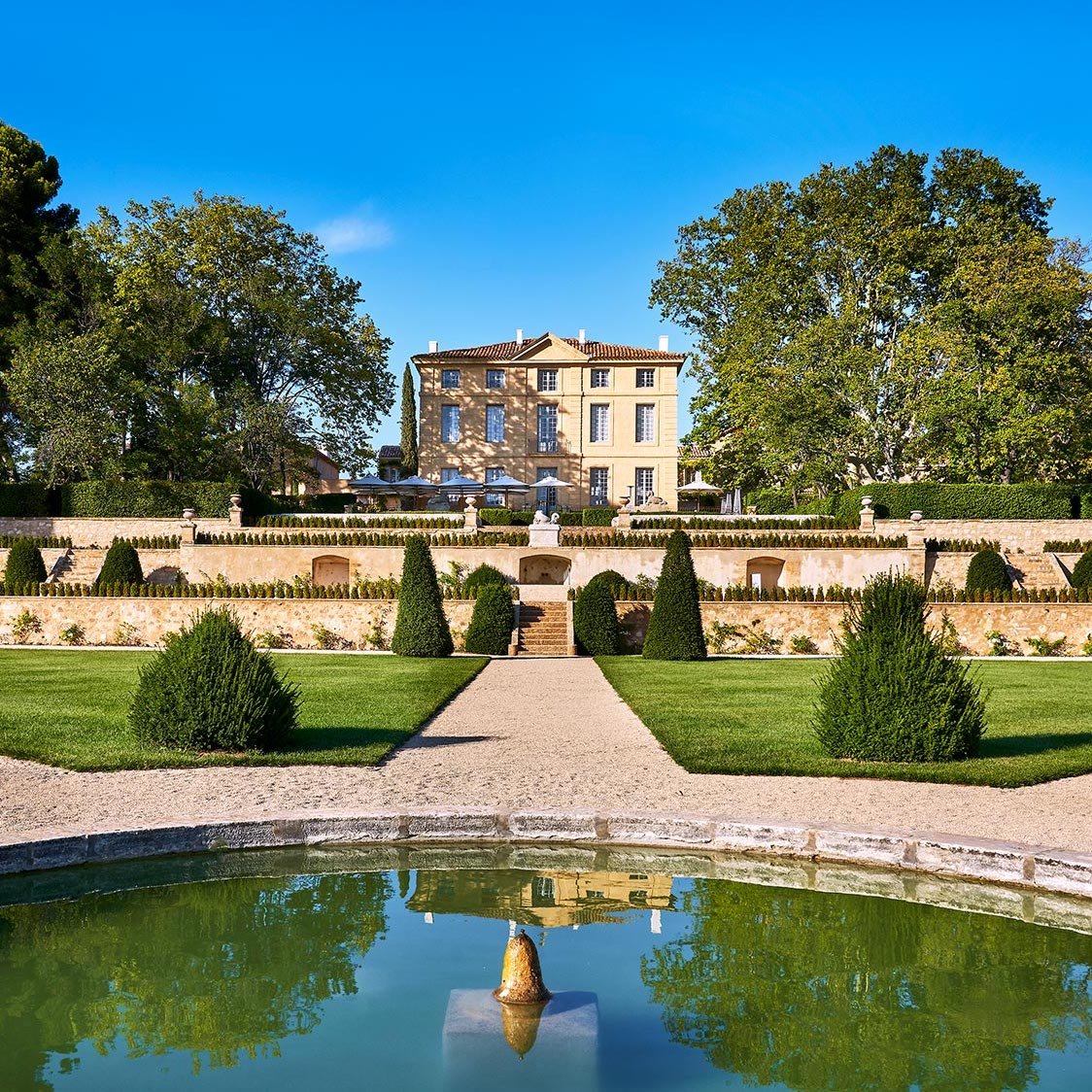
Bars in Le Puy-Sainte-Réparade
Browse all →
Hotels in Le Puy-Sainte-Réparade
Browse all →
Wineries in Le Puy-Sainte-Réparade
Browse all →
At a Glance
- Elegant
- Sophisticated
- Scenic
- Intimate
- Special Occasion
- Date Night
- Hotel Restaurant
- Garden
- Terrace
- Panoramic View
- Extensive Wine List
- Sommelier Led
- Local Sourcing
- Vineyard
- Garden
- Mountain
Refined and serene with professional yet relaxed service, stunning views, and a warm, contemporary atmosphere.