


Michelin Plate · Wine Spectator Award of Excellence
Our verdict
On First Avenue in the East Village, HAGS runs two tasting menus, one vegan, one omnivore, sourced partly through a network of local queer farmers and priced sensibly against New York's top-tier contemporary tier. The kitchen's seasonal focus earned it a place on the Opinionated About Dining Top Restaurants in North America list for 2025. On Sundays, a pay-what-you-want format opens the room to a broader cross-section of the city.

Pearl is the En Primeur Club membership app, where members save venues, book tables and use the concierge.
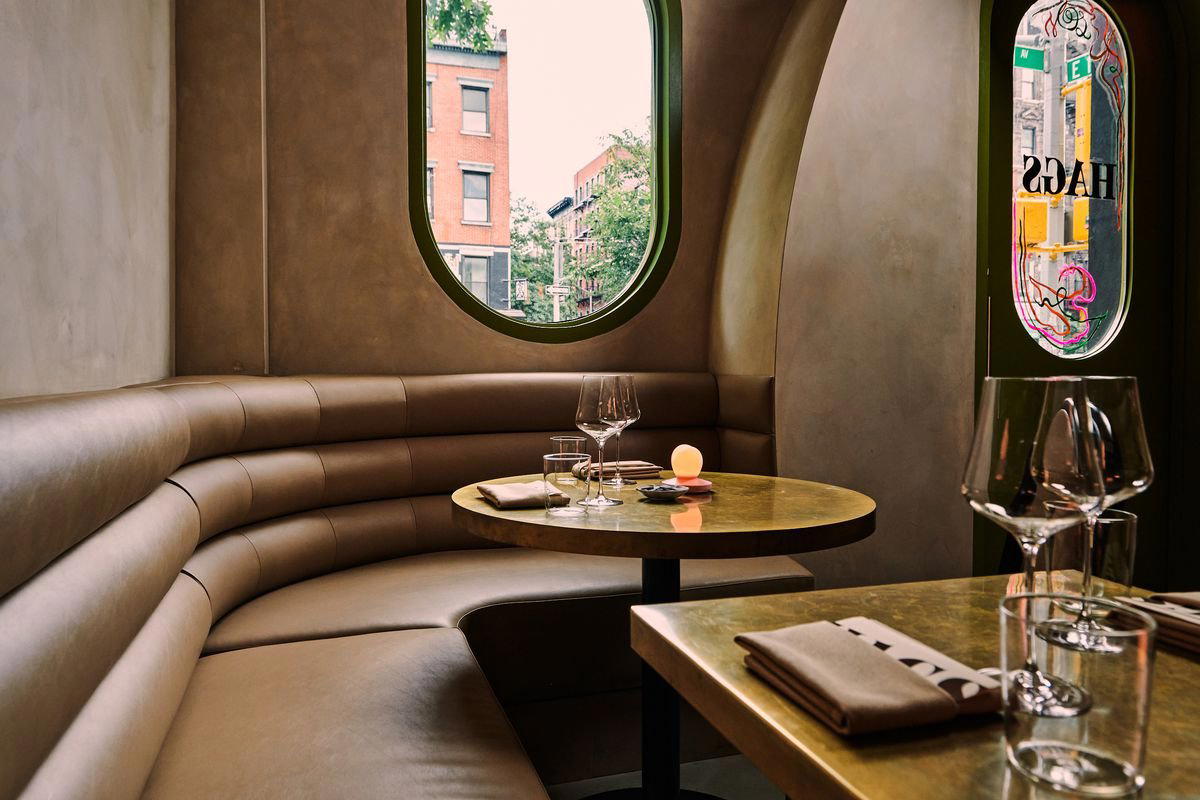
Where Ethical Sourcing Meets Tasting Menu Discipline in the East Village
New York's contemporary tasting menu circuit has long operated on a familiar axis: European classical training, high ingredient costs passed directly to the diner, and a certain studied remove from the communities surrounding the restaurant. The East Village has never fit that model comfortably, and HAGS, operating out of a petite dining room at 163 First Avenue, represents a deliberate break from it. Opened by co-owners Chef Telly Justice and Camille Lindsley, the restaurant has built its reputation not on spectacle or scarcity, but on a sourcing philosophy that connects the kitchen to a network of local queer farmers and a transparency ethos that extends to publishing recipes online.
That transparency is worth pausing on. In a city where many high-end kitchens treat their techniques as proprietary, sharing recipes is a form of institutional openness that sits closer to the cooperative food movement than to the competitive fine-dining tier. It signals something about how the room is meant to function: as a participant in a broader food culture, not a gatekeeper of it. The Opinionated About Dining Leading Restaurants in North America recognition for 2025 confirms that this approach has landed with the critics who track the country's most serious cooking.
Two Menus, One Kitchen Argument
The format at HAGS is structured around a choice between two contemporary tasting menus: one vegan, one omnivore. This is not a common architecture at the $$$$ price point in New York, where most kitchens offer a single menu with optional substitutions at leading. Venues like Alinea in Chicago and The French Laundry in Napa have historically been built around a single tasting format with limited deviation. Running two fully realized menus in parallel requires a different kind of kitchen discipline, one where the vegan menu is not a compromise but an argument in its own right.
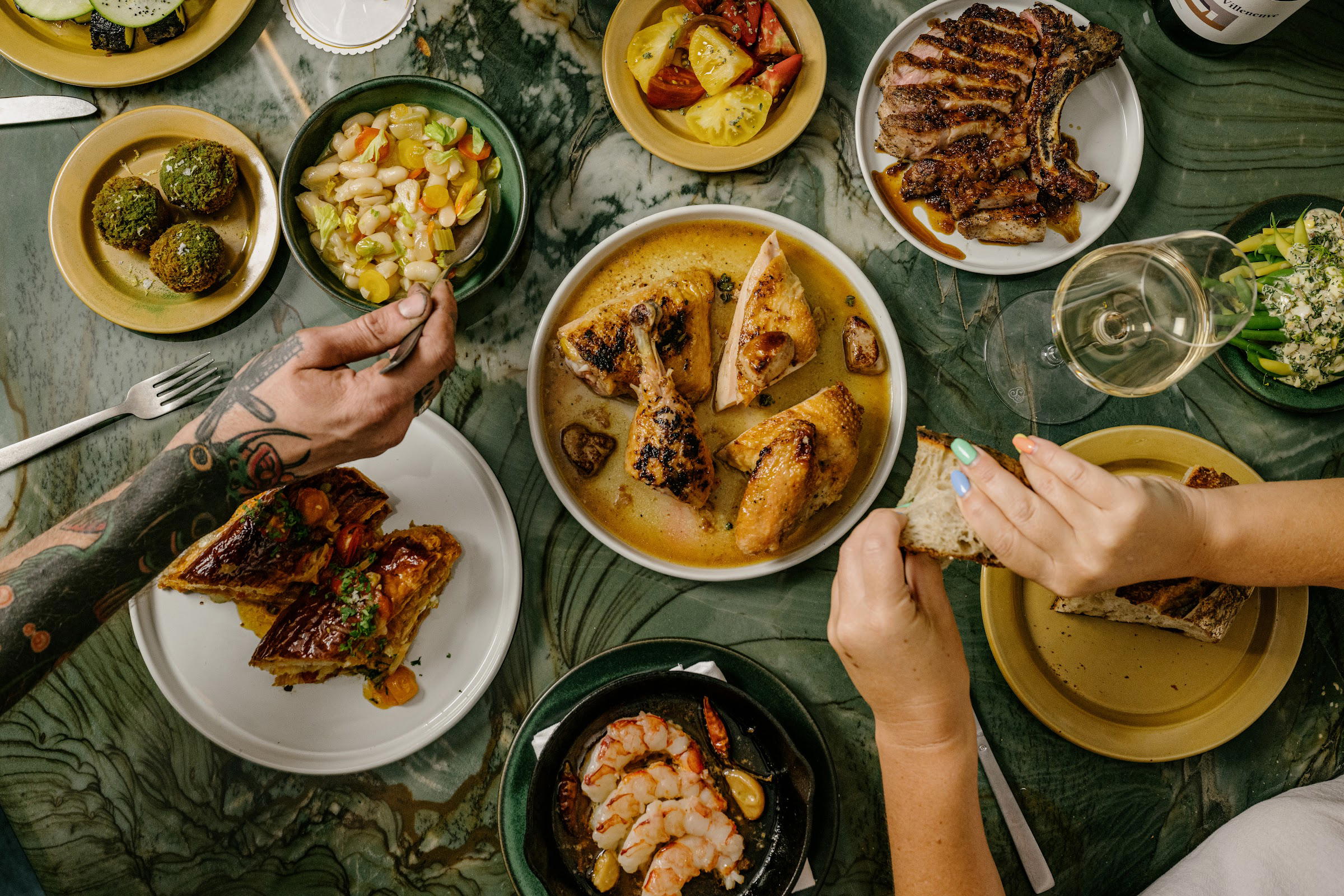
The seasonal produce sourcing is where that argument becomes most legible. A dish featuring heirloom purple Cherokee tomatoes topped with a fava bean emulsion and garnished with sesame-studded seared gooseberries is not a concession to dietary restriction, it is a demonstration of what happens when a kitchen commits to produce as its primary material rather than protein. Chewy corn ice cream dotted with currant jam, served as a dessert course, applies the same logic: unexpected textures and combinations that emerge from letting the season dictate direction rather than working backwards from a concept. These are dishes sourced from the venue's published awards description and represent the kitchen's documented seasonal output.
For diners who eat meat but are curious about the vegan menu, HAGS actively encourages trying it for an evening. That recommendation, built into the restaurant's own framing, says something about the confidence the kitchen has in the plant-based menu as a standalone experience rather than a secondary option.
Sustainability as Structure, Not Signage
The ethical sourcing model at HAGS functions differently from the sustainability branding common in New York's higher-end dining tier. Many restaurants at the $$$$ price point gesture toward local or responsible sourcing as a marketing layer, a line on the menu or a farm name listed without further context. The direct relationship with queer farmers is a structural commitment that shapes what the kitchen can cook and when, because seasonal availability from smaller producers is less predictable and more varied than supply from large distributors. That constraint is generative rather than limiting: it is the same logic that drives farm-to-table programs at places like Single Thread Farm in Healdsburg, where the growing calendar sets the menu calendar.
The decision to make recipes publicly available reinforces this. Waste reduction in fine dining is often discussed in terms of whole-animal butchery or composting programs. HAGS extends the concept to knowledge: if a dish works, others can make it. It is an unusual position for a restaurant operating at this price tier, and it distinguishes HAGS from the closed-kitchen model that dominates New York's contemporary fine dining scene, including the French-inflected programs at César and the produce-forward contemporary approach taken by Acru.
The Sunday Format and What It Says About Pricing Philosophy
Pay-what-you-want Sunday menu, offered on a first-come, first-served basis, is the most legible expression of HAGS's position on access. At $$$$ restaurants across New York, from the Korean-inflected contemporary programs at YingTao to the wine-forward room at Barawine, the price tier functions as a filter. The Sunday format at HAGS inverts that filter once a week, replacing the reservation and deposit system with a queue and an honor-based payment model. It is a rare structural gesture in a dining market where even mid-range restaurants now require credit card holds.
This positions HAGS in a small cohort of American fine dining restaurants that have built community access into their operating model rather than treating it as a separate charitable program. The comparison to Lazy Bear in San Francisco is instructive: both operate tasting menus with a strong community orientation, though Lazy Bear's supper-club origins and HAGS's pay-what-you-want Sundays represent different mechanisms for achieving a similar end.
East Village Context and Peer Positioning
The East Village has historically been New York's most tolerant neighborhood for restaurants that operate outside the mainstream fine dining model, whether by format, price structure, or the politics implicit in their sourcing. That context matters for understanding HAGS. On First Avenue, HAGS sits in a neighborhood that has absorbed everything from pioneering natural wine bars to no-reservation ramen counters, and its positioning feels coherent rather than contrarian.
For readers tracking contemporary tasting menus across North America, HAGS belongs in the same conversation as Alo in Toronto and Providence in Los Angeles, kitchens where a distinct sourcing or format philosophy drives the cooking rather than decoration it. See Bridges for a contrasting East Village approach, and consult our full New York City restaurants guide for broader context on how HAGS fits into the city's contemporary dining tier.
Planning Your Visit
HAGS is at 163 First Avenue in the East Village, accessible by subway on the L train at First Avenue or the 6 train at Astor Place. The restaurant operates a $$$$ price point on its weekday tasting menus, with Sunday pay-what-you-want seating available on a walk-in, first-come basis. For diners building a broader New York itinerary, our New York City hotels guide, bars guide, wineries guide, and experiences guide cover the full range of the city's hospitality scene. For a reference point on how ethical sourcing plays out at the regional level elsewhere in the country, Emeril's in New Orleans and Jungsik in Seoul illustrate how different cultural contexts shape similar commitments to place and ingredient.
Frequently asked questions
Where is HAGS located?
HAGS is located at 163 1st Ave, New York, NY 10003, New York City.
Does HAGS have a Michelin star or similar recognition?
HAGS has received recognition including: Co-owners Chef Telly Justice and Camille Lindsley welcome all at this petite restaurant where much of the produce is sourced by local queer farmers and even the recipes are shared online to encourage openness. Diners may select from two con….
What's the must-try dish at HAGS?
The vegan tasting menu is where the kitchen's seasonal focus is clearest. Documented dishes include heirloom purple Cherokee tomatoes with fava bean emulsion and sesame-studded seared gooseberries, and a chewy corn ice cream finished with currant jam, specific, produce-driven combinations that reflect sourcing from local queer farmers rather than pantry defaults.
How much does it cost to eat at HAGS?
Pricing at HAGS is listed as $$$$.
Is HAGS reservation-only?
The weekday tasting menus operate through advance reservations at the $$$$ price tier. Sundays are a different format: HAGS runs a pay-what-you-want menu on a first-come, first-served basis, which opens access to the kitchen without a booking.
What has HAGS built its reputation on?
HAGS holds a 2025 Opinionated About Dining Top Restaurants in North America recognition, a peer-voted list weighted toward industry insiders. Its standing comes from the combination of a structurally accessible pricing model, produce sourced from local queer farmers, and two parallel tasting menus that treat vegan cooking as an equal architecture rather than an afterthought.
Style and Standing
Comparable options at a glance, pulled from our tracked venues.
| Venue | Cuisine | Price | Awards | Notes |
|---|---|---|---|---|
| HAGSThis venue (the venue you are viewing) | Contemporary Queer Fine Dining | $150–200 | Michelin Plate · Wine Spectator Award of Excellence | Not listed |
| Le Bernardin | French Seafood Fine Dining | $300–500 | 3 Michelin Stars · World's 50 Best #13 | French, Seafood |
| Atomix | Modern Korean Tasting Menu | $300–500 | 2 Michelin Stars · World's 50 Best #7 | Modern Korean, Korean |
| Masa | Seasonal Hokkaido Tempura Omakase | $150–200 | Tabelog 100 #34 | Sushi, Japanese |
| Per Se | French Fine Dining Tasting Menu | $300–500 | 3 Michelin Stars · World's 50 Best #40 | French, Contemporary |
| Eleven Madison Park | Contemporary Plant-Based Fine Dining | $300–500 | 3 Michelin Stars · World's 50 Best #4 | French, Vegan |
Recognition history
Dated appearances from independent guides and award organizations, with the underlying list record or original source where available.
Michelin Plate
Michelin
Opinionated About Dining Top Restaurants in North America Recommended
Opinionated About Dining
Wine Spectator Award of Excellence
Wine Spectator
Full recognition history (4 entries)
Opinionated About Dining Top Restaurants in North America
Opinionated About Dining
Continue exploring
More in New York City
Restaurants in New York City
All restaurants in New York City →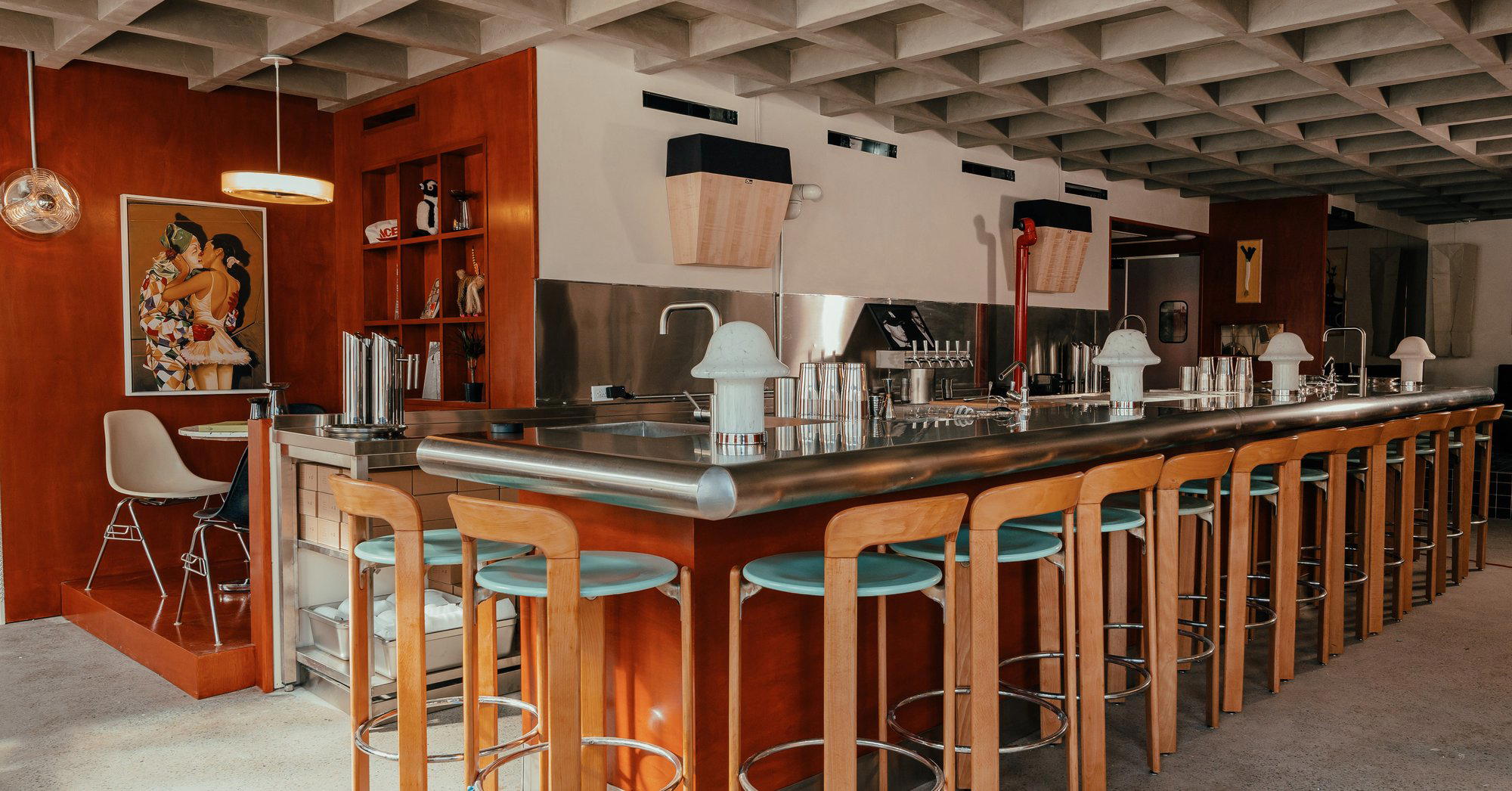
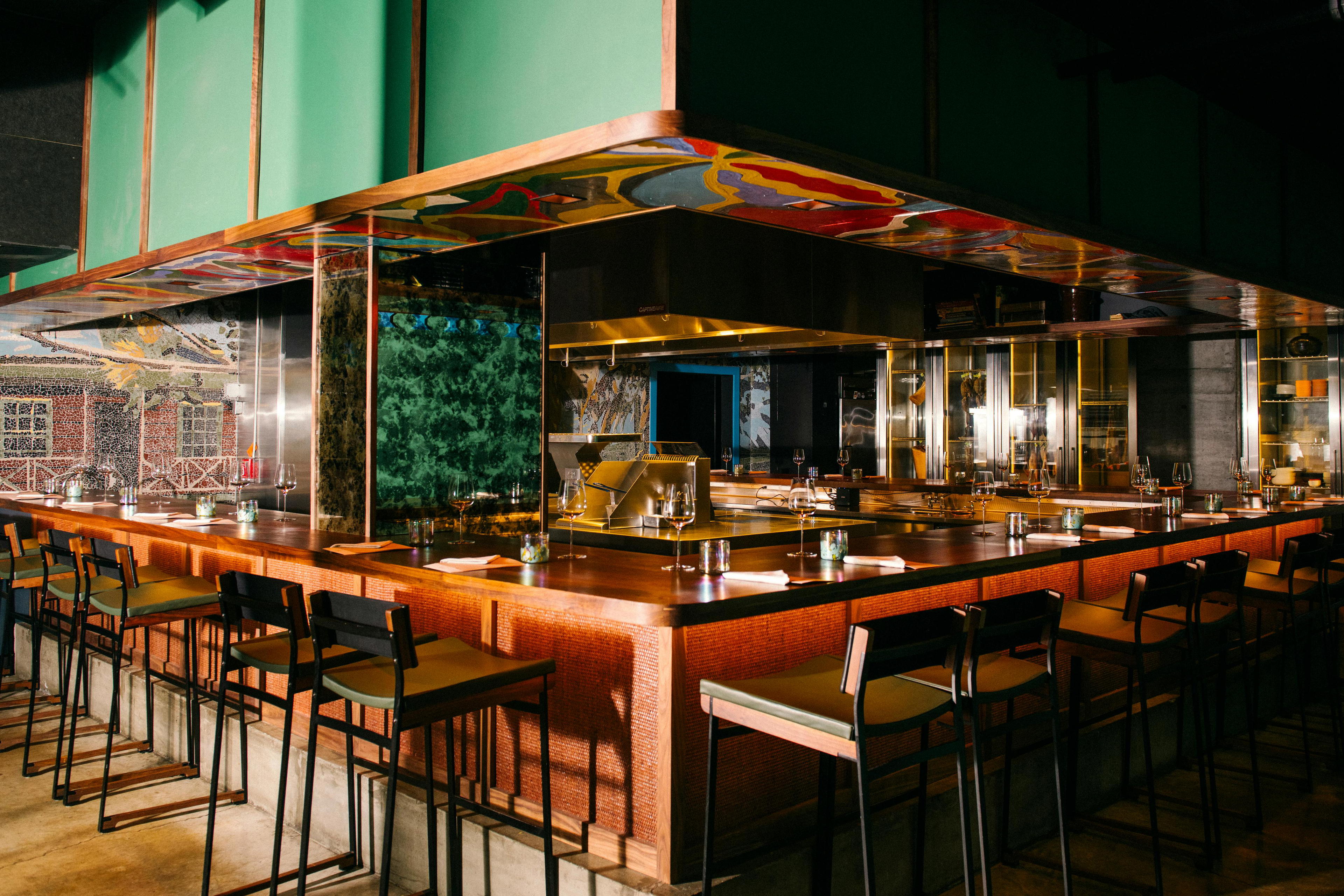
Bars in New York City
All bars in New York City →







HAGS
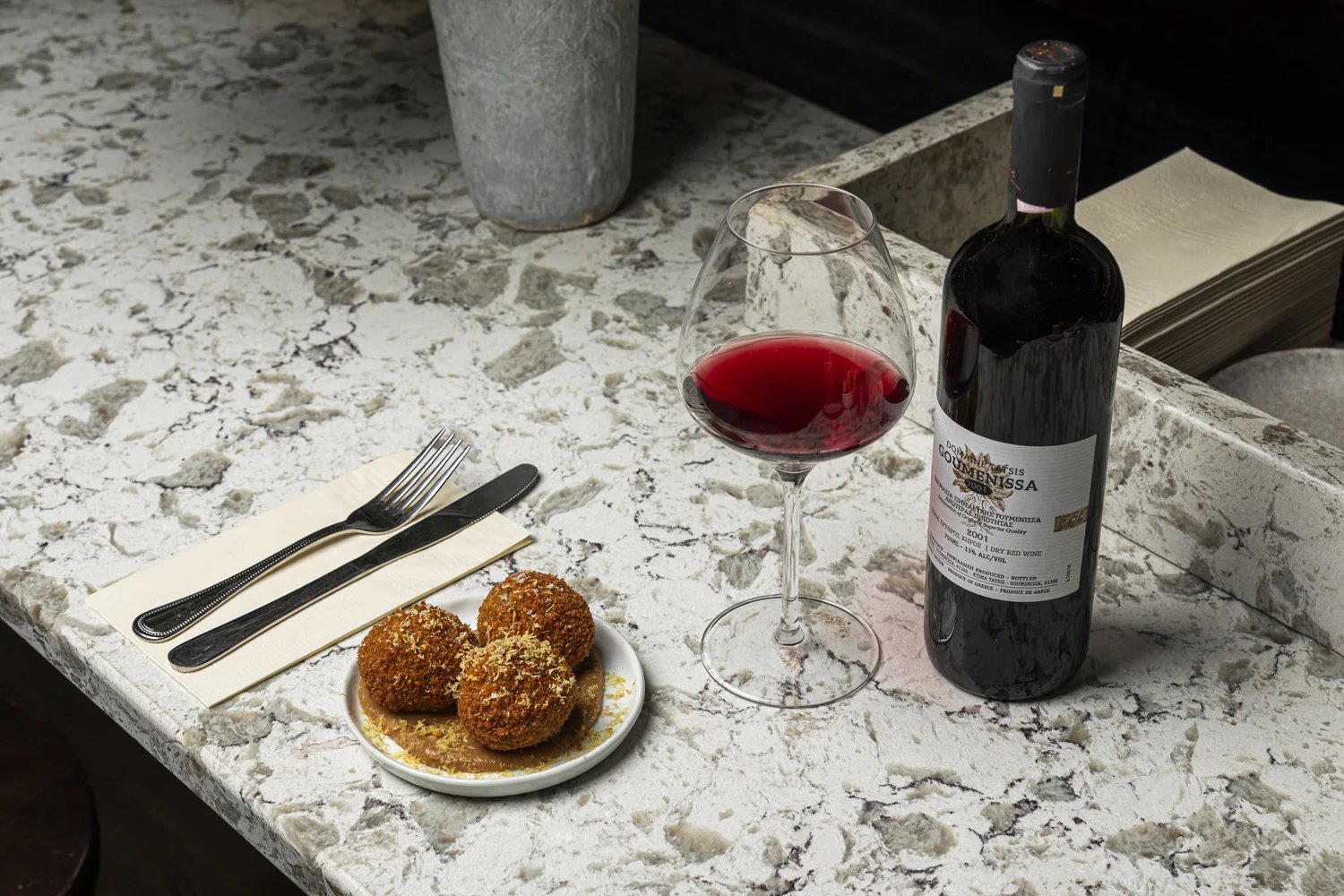
The wine
HAGS holds the Wine Spectator Award of Excellence, which Wine Spectator gives to lists of usually 90 or more selections.
- Wine Spectator
- Wine Spectator Award of Excellence
- Extensive wine list
Details
- Intimate
- Modern
- Cozy
- Trendy
- Whimsical
- Date Night
- Special Occasion
- Open Kitchen
- Extensive Wine List
- Local Sourcing
- Farm To Table
- Tasting Menu
- Vegan Options
- Vegetarian Friendly
Current opening hours
- Monday
- Closed
- Tuesday
- Closed
- Wednesday
- 6–10 PM
- Thursday
- 6–10 PM
- Friday
- 6–10 PM
- Saturday
- 6–10 PM
- Sunday
- 11 AM–2:30 PM
Hours can change for holidays and private events. Hours as of .
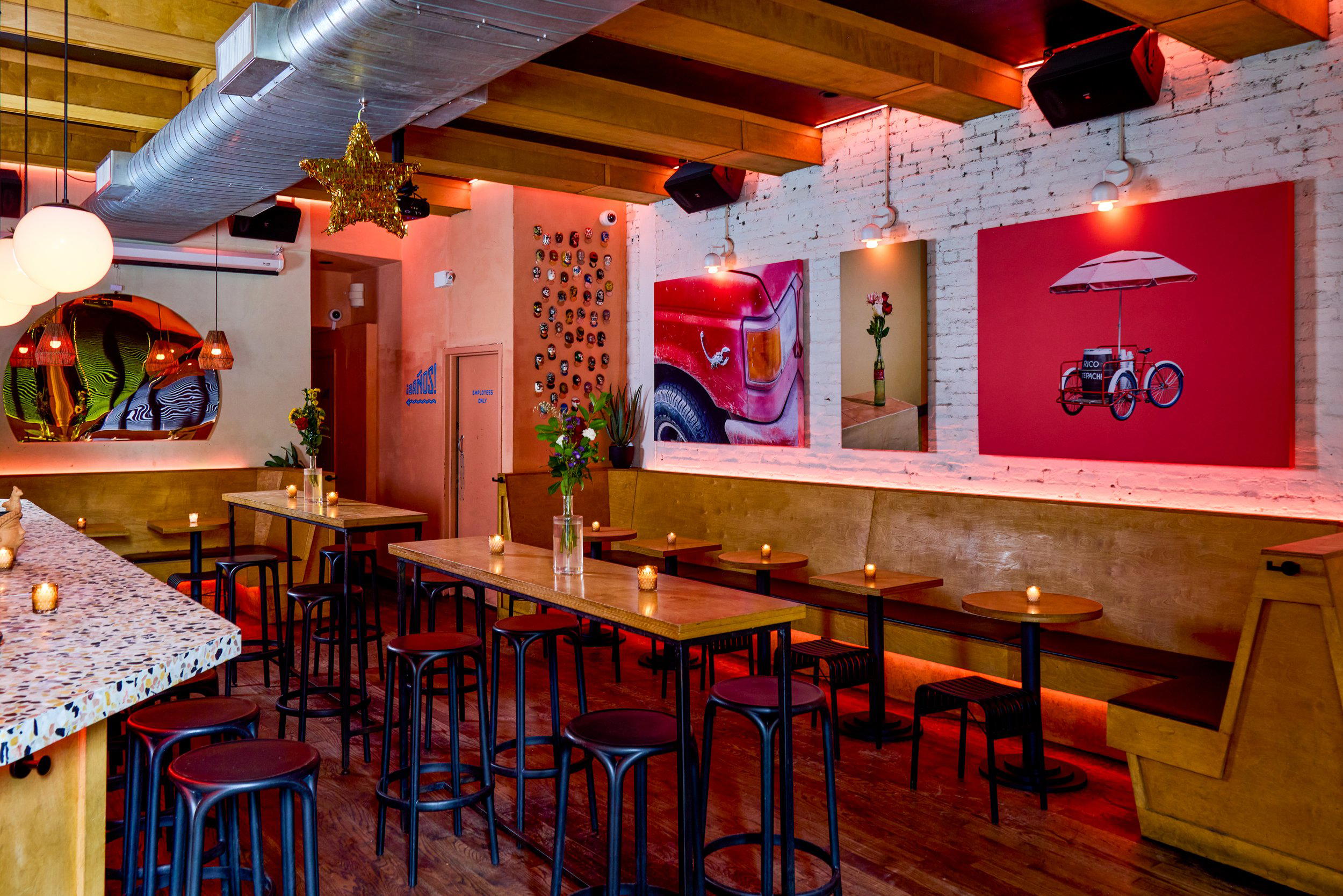
Intimate 18-20 seat space with warm modern atmosphere, heart-shaped lights, pronoun pins, and friendly interactive service.