Habibi Köln on Zülpicher Strasse sits in the middle of Cologne's student-dense Kwartier Latäng, where casual Middle Eastern hospitality has long found a receptive audience. The address puts it within walking distance of the Zülpicher Platz bar corridor, making it a natural stop before or after the neighbourhood's livelier evening scene. Expect the direct warmth that defines the better end of Cologne's informal dining offer.
Pearl is the En Primeur Club membership app — saves, bookings, and concierge access live there. Same editors, same standards.
- Address
- Zülpicher Str. 28, 50674 Köln, Germany
- Phone
- +49 221 2717141
- Website
- habibi-koeln.de
- Directions
- Get directions
 Saves & bookings on Pearl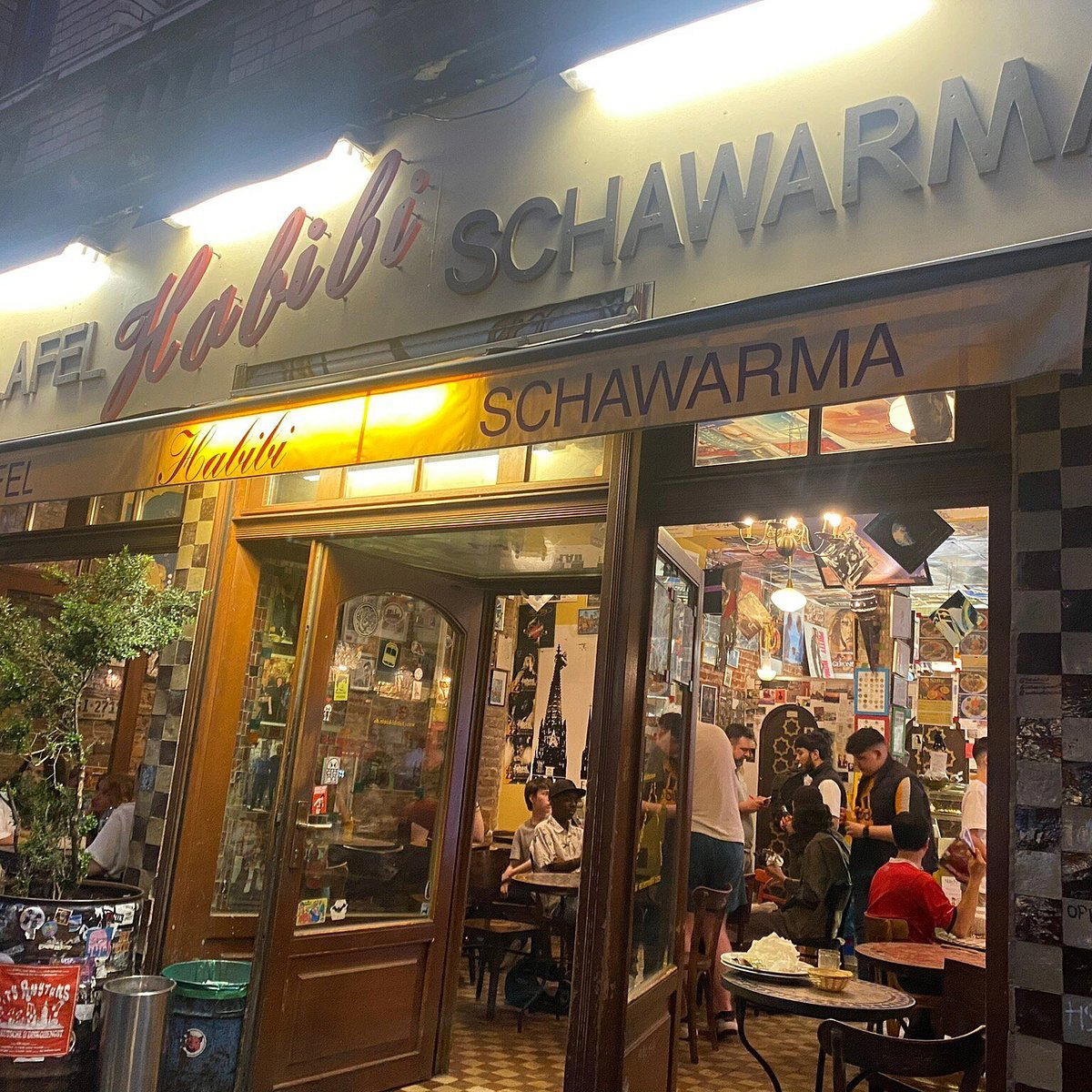
Where Zülpicher Strasse Feeds Its People
Cologne's Kwartier Latäng, the stretch of bars, cafés, and restaurants radiating from Zülpicher Platz, operates on a different register than the fine-dining rooms clustered near the Rheinauhafen or the precise modern kitchens of Ox & Klee and La Cuisine Rademacher. This is a neighbourhood built for students, locals, and the kind of easy sociability that doesn't require a reservation three weeks out. Zülpicher Strasse itself is a dense, pedestrian-scaled strip where the cooking that travels, Lebanese, Turkish, Egyptian, pan-Arabic, has taken firm root over decades, sustained by a customer base that measures value in portions and warmth rather than tasting-menu progression.
Habibi Köln, at Zülpicher Str. 28, occupies that context. The name, Arabic for "my darling" or "my dear", signals a register of hospitality that has become shorthand in German cities for relaxed Middle Eastern eating. In Cologne specifically, that register means something: the city's Arabic-speaking communities, present since the labour migration waves of the 1960s and 1970s, have left a lasting impression on the informal dining culture of districts like this one, and the leading kitchens in the category are shaped by that continuity rather than by trend-driven imports.
Middle Eastern Cooking in a German City: The Local-Global Intersection
The more instructive way to read a restaurant like Habibi Köln is through the lens of what happens when a regional culinary tradition, in this case, the broader Levantine and Arab kitchen, is sustained and adapted within a specific European urban setting over a long period. This is not fusion in the contemporary marketing sense. It is the gradual calibration of spice levels, bread textures, and serving rhythms to a local audience that has grown familiar with the cooking on its own terms.
Germany's Arabic-food scene sits in a different position than equivalent scenes in London or Paris. Berlin's Sonnenallee corridor, Frankfurt's Sachsenhausen falafel strip, and Cologne's own Ehrenfeld pockets each reflect distinct community compositions and different historical moments of arrival. In Cologne, the intersection of university-district economics and longstanding community presence has produced a category of restaurant that is neither self-consciously "authentic" in the curatorial sense nor diluted for a nervous majority palate. The cooking that survives in Kwartier Latäng tends to be direct: flatbreads with enough char to matter, mezze assembled with actual technique, meat cooked at temperatures that produce results rather than just safe internal readings.
Comparing this category to the more technically ambitious end of Cologne's restaurant offer, places like La Société or Le Moissonnier Bistro, is less useful than comparing it to the informal tier of German dining that it operates alongside. The relevant comparable set is not Michelin-tracked; it is the mass of casual addresses where a city decides, plate by plate and year by year, what it actually wants to eat on a Tuesday night. Even as places like maiBeck have shown that the gap between casual and considered can close quickly when the kitchen takes the format seriously.
Reading the Address and What It Means for Timing
Zülpicher Str. 28 is on the southern stretch of the strip, close enough to the Zülpicher Platz U-Bahn station to function as both a pre-evening destination and a late stop after the neighbourhood's bar scene has peaked. The area's foot traffic follows a predictable arc: quieter through early afternoon, building from around 18:00, and consistently busy on Thursday through Saturday evenings when the student population is most active. The practical implication is that mid-week visits, particularly at lunch or in the early evening window, can be calmer.
For visitors building a broader Cologne itinerary, the Kwartier Latäng represents a distinct character within the city's dining geography, different from the Altstadt's beer-and-schnitzel economy and different again from the Rheinauhafen's design-led restaurant cluster. Arriving at the neighbourhood via Zülpicher Platz U-Bahn (lines 3, 4, 16, 18) takes roughly ten minutes from Cologne Central Station. Those combining this area with fine-dining explorations elsewhere in Germany will find useful contrast; the distance between Kwartier Latäng's informal warmth and the rigour of, say, Schwarzwaldstube in Baiersbronn or Aqua in Wolfsburg is instructive rather than hierarchical.
Germany's broader fine-dining circuit, which includes addresses like JAN in Munich, Vendôme in Bergisch Gladbach, CODA Dessert Dining in Berlin, Victor's Fine Dining by christian bau in Perl, ES:SENZ in Grassau, Schanz in Piesport, Waldhotel Sonnora in Dreis, and Restaurant Haerlin in Hamburg, operates at a different altitude, and the comparison only illuminates how much of a city's actual dining life happens in the informal register. The same is true internationally: the gap between a Cologne neighbourhood spot and Le Bernardin in New York City or Lazy Bear in San Francisco is structural.
Planning a Visit
Habibi Köln is an address that rewards low-key approaches: arrive without elaborate expectations, order broadly across whatever mezze and main categories are available that day, and let the neighbourhood context do some of the interpretive work. The Zülpicher Strasse strip works best when treated as a zone rather than a single destination, so building in time to walk the street before or after eating gives a clearer sense of why this neighbourhood has sustained its informal dining identity for so long.
Same-City Peers
Comparable venues nearby, for context on price, style, and recognition.
| Venue | Cuisine | Price | Notes |
|---|---|---|---|
| Habibi KölnThis venue — the venue you are viewing | Lebanese Falafel & Shawarma | $ | Not listed |
| Nish Nush | Israeli-Levantine Street Food | $$ | Neustadt/Nord |
| Beirut | Authentic Lebanese | $$ | Altstadt/Nord |
| Bethlehem | Lebanese & Middle Eastern | $$ | Neuehrenfeld |
| Anya Imbiss | Iraqi Street Food | $ | Altstadt/Nord |
| Adana Et Restaurant | Turkish Grill | $ | Neustadt/Nord |
Continue exploring
More in Cologne
Restaurants in Cologne
Browse all →
Bars in Cologne
Browse all →
Hotels in Cologne
Browse all →

At a Glance
- Lively
- Cozy
- Casual Hangout
- Late Night
- Standalone
Current opening hours
- Monday
- 11 AM–1 AM
- Tuesday
- 11 AM–1 AM
- Wednesday
- 11 AM–1 AM
- Thursday
- 11 AM–1 AM
- Friday
- 11 AM–3 AM
- Saturday
- 11 AM–3 AM
- Sunday
- 11 AM–1 AM
Hours can change for holidays and private events. Last verified .
Lively no-frills atmosphere bustling with student chatter, vintage movie posters on walls, and background music.