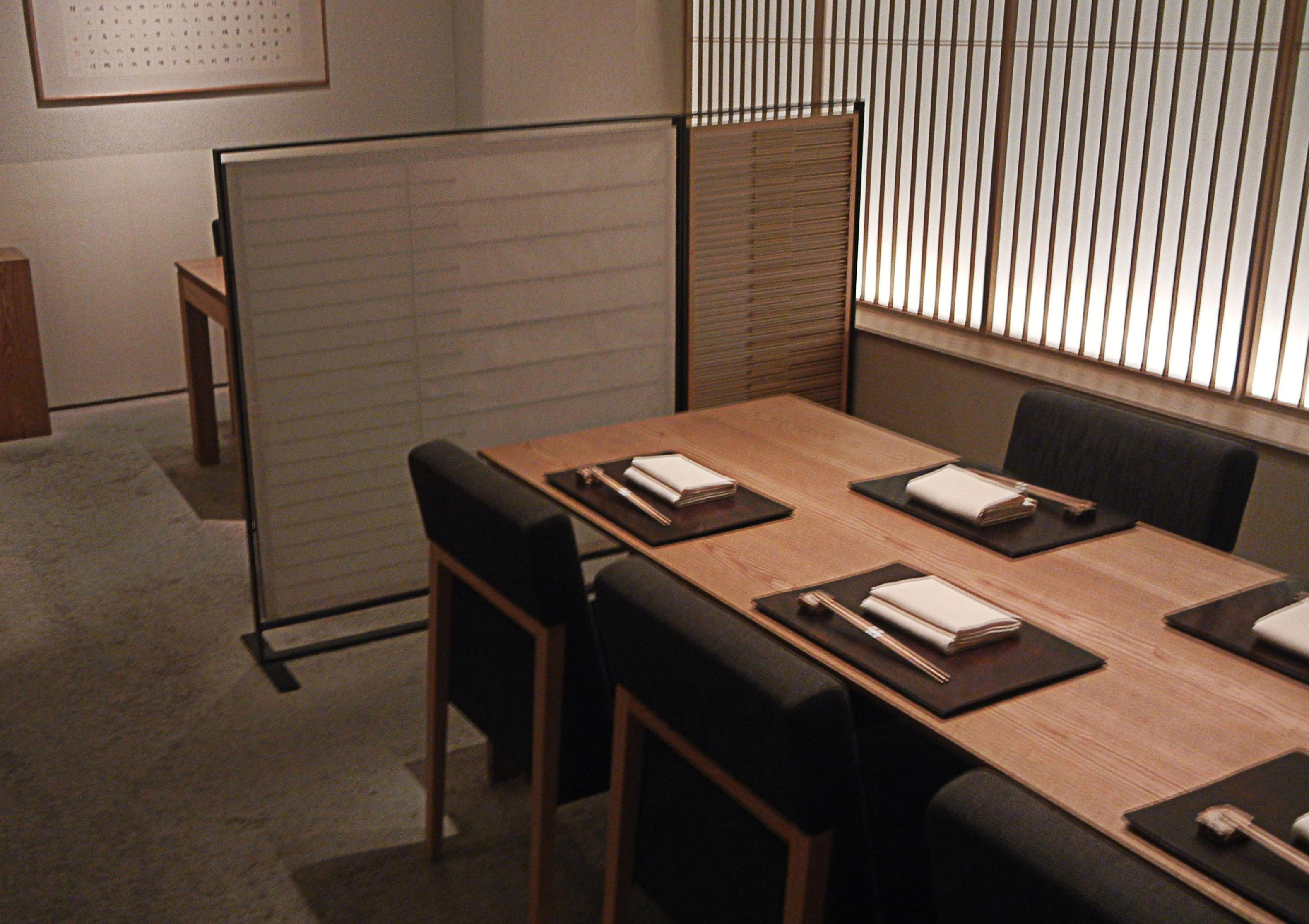
Tabelog 100 #78
Our verdict
Gyuzo sits in Nerima City, a residential ward of Tokyo that sees few destination diners from outside the neighbourhood. That address alone signals something about how the restaurant operates: rooted in local custom, shaped by the dining habits of the people who live nearby rather than the expectations of tourists or award-circuit visitors. For travellers willing to leave central Tokyo, it offers a genuinely local frame of reference.

Pearl is the En Primeur Club membership app, where members save venues, book tables and use the concierge.
Beyond the Yamanote Line: Dining in Residential Tokyo
Most serious eating in Tokyo happens within a compact circuit: Ginza, Shinjuku, Minami-Aoyama, Roppongi. The restaurants that draw international attention Harutaka in Ginza, L'Effervescence in Nishi-Azabu, RyuGin and Sézanne in the central wards, cluster inside that inner ring. Nerima City sits north-west of that circuit, beyond the Yamanote Line's loop, in the kind of residential Tokyo that most visitors never encounter. Gyuzo's address in Nukui, Nerima, places it firmly in that other city: quiet streets, local shopfronts, a pace determined by the people who actually live there rather than by the rhythms of hospitality districts. That geographical fact shapes everything about the experience.
What the Neighbourhood Tells You Before You Arrive
Nerima is not a dining destination in the way Nishi-Shinjuku or Ebisu are. It is one of Tokyo's larger residential wards by population, a place of family apartments, neighbourhood shotengai shopping streets, and commuter exits rather than curated restaurant rows. For a restaurant to operate here and draw visitors from outside the ward, it has to offer something that local regulars value consistently and that travelling diners find worth the additional transit effort. That dynamic, serving a local base first, destination visitors second, tends to produce a different kind of restaurant than the venues that position against the Michelin circuit from day one.
The contrast with the central Tokyo dining tier is instructive. Restaurants like Crony in Minami-Aoyama operate in neighbourhoods where the address itself is part of the proposition. Nerima carries no such ambient prestige. A restaurant here earns its reputation through the quality of the food and the habit of its regulars, not through proximity to design hotels or high-end retail.
Gyuzo in Context: The Residential Dining Pattern
Across Japan, some of the most interesting eating happens at this remove from the media-facing dining circuits. Gion Sasaki in Kyoto occupies a quieter part of Gion than its reputation might suggest. akordu in Nara operates in a city that most international travellers treat as a half-day side trip rather than a dining destination. Goh in Fukuoka draws from a regional dining culture that functions largely on its own terms. What connects these places is that their surrounding geography demands a different kind of commitment from visitors, and that commitment tends to filter in a particular type of guest: one who has done the research, sought out the specific address, and arrived with some sense of what local eating in Japan actually looks like when it is not performing for an international audience.
Gyuzo belongs to that pattern. The Nukui address in Nerima is specific enough that visiting it requires intention. You take the Seibu Ikebukuro Line or approach from Nerima Station on the Toei Oedo Line, walk through streets that carry none of the visual cues of a restaurant district, and arrive somewhere that feels embedded in its neighbourhood rather than presented to outsiders. That embeddedness is the point.
Planning a Visit: The Practical Reality of an Out-of-Centre Address
For visitors staying in central Tokyo, Shinjuku, Shibuya, Marunouchi, Nerima is a 30-to-40-minute transit journey depending on the starting point and line. The Seibu Ikebukuro Line connects Ikebukuro to Nerima City efficiently, and Nukui is accessible from multiple branch points on that network. The journey is direct by Tokyo transit standards, but it requires treating the meal as its own destination rather than a stop on a wider itinerary.
Because Gyuzo's current booking method, hours, and pricing are not published in standard English-language channels, the most reliable approach is to enquire through a local concierge service or a hotel concierge with Japanese-language capability. This is not unusual for neighbourhood-embedded Tokyo restaurants that operate primarily for a Japanese-speaking local clientele. The absence of an English booking interface is itself informative: this is not a restaurant that has optimised for international tourism, which tends to mean it has optimised for something else.
For broader context on what the Tokyo dining scene looks like across price tiers and neighbourhood types, our full Tokyo restaurants guide covers the range from central-ward fine dining to neighbourhood specialists across multiple wards.
The Wider Japan Comparison
Japan's restaurant culture rewards the kind of geographic curiosity that takes visitors outside the obvious coordinates. HAJIME in Osaka demonstrates how a restaurant in a non-capital city can achieve international recognition on its own terms. Smaller-city equivalents, restaurants in Nanao, Sapporo, and Takashima, operate within regional dining cultures that have their own logic and hierarchy, independent of Tokyo's. Even within Tokyo, the geography of where a restaurant chooses to operate carries meaning. The outer wards, Nerima, Adachi, Katsushika, contain restaurants that serve their communities without seeking the kind of visibility that centrally located venues often require to sustain premium pricing.
That context matters when thinking about what Gyuzo represents. It is not a restaurant that has opted out of quality in favour of locality. It is a restaurant that has opted into a particular kind of relationship with its neighbourhood, one where the dining room regulars and the surrounding streets are the primary reference points. Visitors who come from outside that neighbourhood enter as guests of that local ecosystem, not as the primary audience for whom the experience has been designed.
Comparable dynamics appear in other Japanese cities. Restaurants in Nishikawa Machi and Birdland in Sakai both operate in contexts where the local dining community is the foundation rather than the supplement. Bistro Ange in Toyohashi applies a similar model to French cooking in a mid-sized regional city. The pattern is consistent: some of the most considered eating in Japan happens at an address that carries no immediate ambient status, and Gyuzo's Nerima location places it within that tradition.
For travellers accustomed to international fine dining in cities like New York, where venues such as Le Bernardin and Atomix operate in centrally accessible, highly legible neighbourhoods, the experience of finding a restaurant in residential Nerima requires a different kind of navigation. The reward is access to a dining context that operates outside the feedback loops of tourism and award-season visibility, a table that reflects where it actually is rather than where it might prefer to be perceived.
Frequently asked questions
Where is Gyuzo located?
Gyuzo is located at 3 Chome-10-2 Nukui, Nerima City, Tokyo 176-0021, Japan, Tokyo.
How far is Gyuzo from central Tokyo, and which train line serves Nukui?
Gyuzo is located in Nukui, Nerima City, a residential ward that sits 30 to 40 minutes from hubs such as Shinjuku or Shibuya depending on route and connections. The Seibu Ikebukuro Line serves the Nukui area directly, making it accessible without a transfer for riders coming from Ikebukuro. That journey time places Gyuzo firmly in the category of restaurants that reward deliberate planning rather than spontaneous detours.
What should I order at Gyuzo?
The venue's name and Nerima address offer the clearest orientation: Japanese restaurants in residential wards at this remove from central Tokyo typically specialise in a focused format rather than broad menus. That kind of direct conversation tends to define the neighbourhood dining experience in wards like Nerima.
Do I need a reservation for Gyuzo?
No booking contact or online reservation system is currently documented for Gyuzo at 3 Chome-10-2 Nukui, Nerima City. For a residential-ward restaurant in Tokyo, walk-in availability varies sharply depending on the night and the size of the room. Visiting earlier in an evening service or on a weeknight typically improves the odds at smaller neighbourhood venues of this type.
What do critics highlight about Gyuzo?
That absence is not unusual for residential-ward restaurants in Tokyo: many of the city's most seriously regarded local spots operate without Michelin entries or press profiles, drawing their trade from repeat neighbourhood custom rather than media attention.
Is Gyuzo allergy-friendly?
No menu data or allergen information is documented for Gyuzo at its Nerima City address. In Japan, dietary requirements are most reliably communicated directly to the venue before arrival; for a neighbourhood restaurant operating outside the central Tokyo circuit, a visit in person or a phone inquiry ahead of time is the practical approach.
What It’s Closest To
Comparable venues nearby, for context on price, style, and recognition.
| Venue | Cuisine | Price | Awards | Notes |
|---|---|---|---|---|
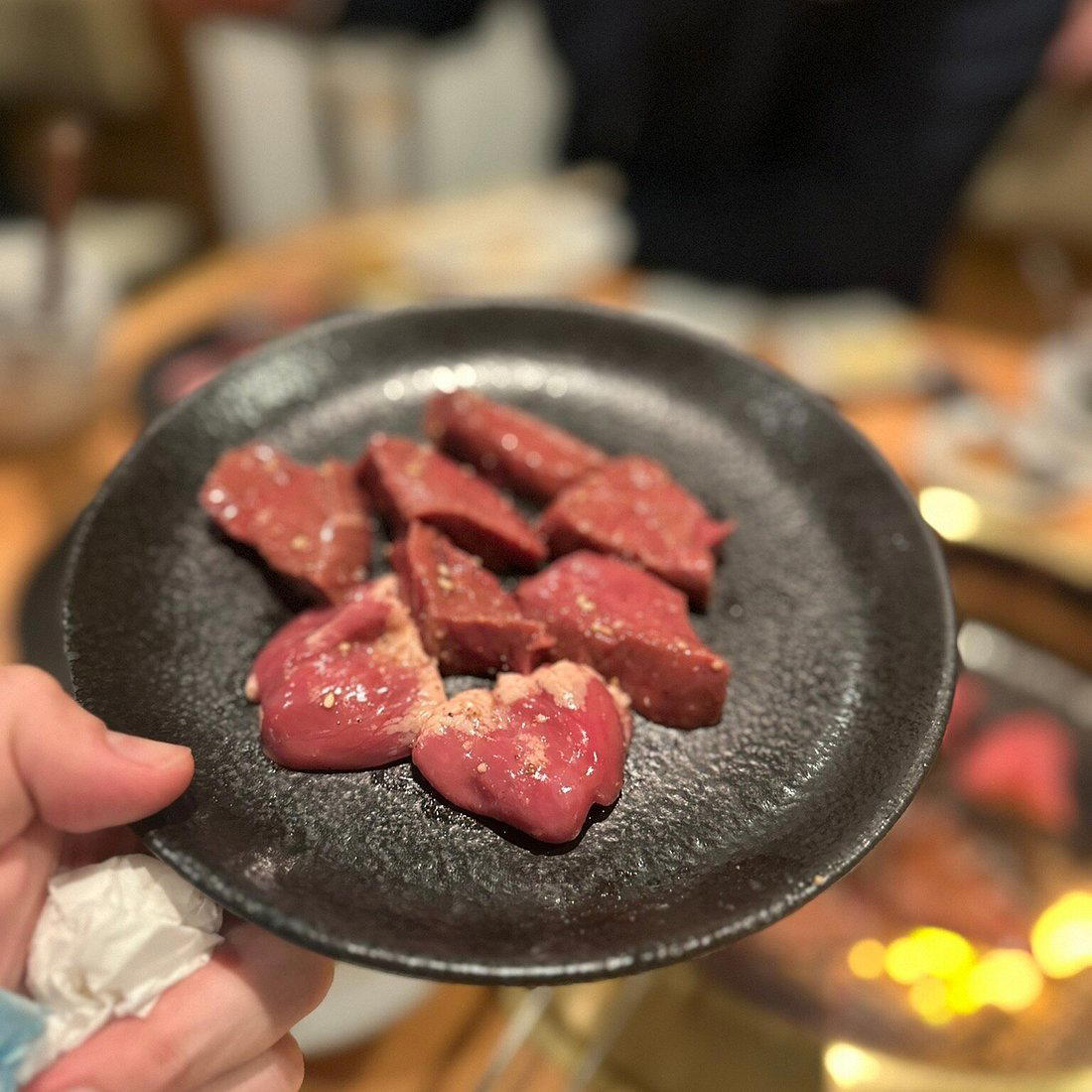
| GyuzoThis venue (the venue you are viewing) | Yakiniku (Japanese BBQ) with Horumon | $30–50 | Tabelog 100 #78 | Not listed |
| Takano Fruit Parlour | Japanese Fruit Parlor | $30–50 | Not listed | Shinjuku |
| はなぶさ 麻布十番店 | Kansai-Style Charcoal-Grilled Unagi | $50–100 | Not listed | Azabu-Juban |
| Shoto Ran Kan | Refined Japanese Izakaya | $50–100 | Tabelog 100 #45 | Shibuya |
| Tsukada shabu shabu | Premium Shabu-Shabu & Sukiyaki | $50–100 | Not listed | Shibuya |
| 香下 | Modern Japanese Kaiseki | Not listed | Michelin Plate | Chiyoda |
Recognition history
Dated appearances from independent guides and award organizations, with the underlying list record or original source where available.
Tabelog 100 #78 · No. 78
Tabelog · Tabelog 100 - Yakiniku - TOKYO - 2025