Großebenhütte
Großebenhütte sits in the forested hills of Hirschegg Pack, a village in Styria's Pack saddle region where the cooking tradition draws directly from what the surrounding landscape provides. As one of Austria's rural dining addresses worth the deliberate detour, it belongs to a broader pattern of Styrian hospitality rooted in altitude, seasonality, and proximity to source. Visitors travelling from Graz or Köflach should plan their visit with the seasons in mind.
Pearl is the En Primeur Club membership app — saves, bookings, and concierge access live there. Same editors, same standards.
- Address
- Hirschegg 252, 8584 Hirschegg, Austria
- Phone
- +436641364551
- Website
- https
- Directions
- Get directions
 Saves & bookings on Pearl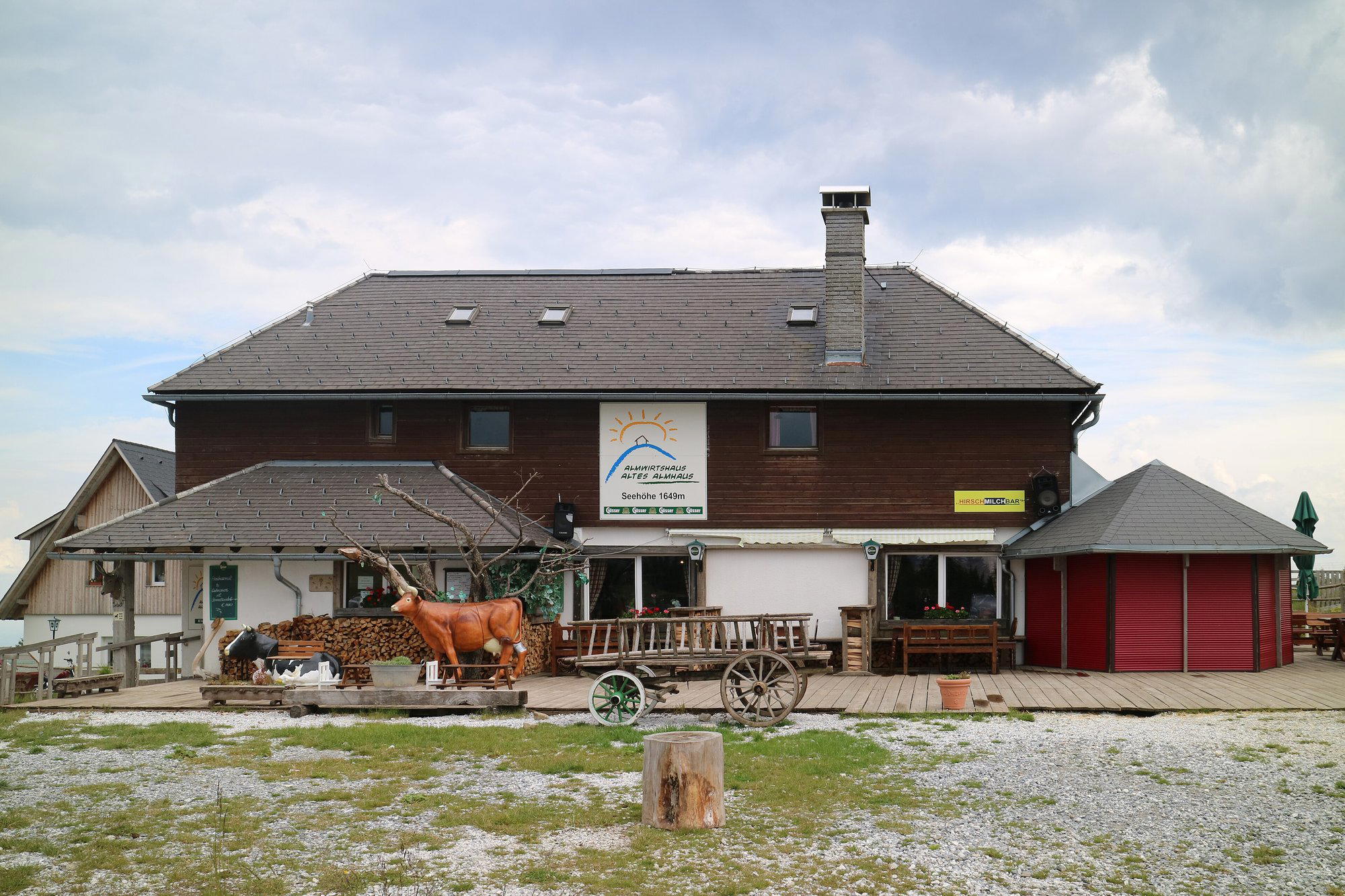
Where the Forest Ends and the Table Begins
Arriving at Hirschegg Pack from the south, the road climbs through dense spruce and beech before the village opens out onto a ridge with views across the Styrian–Carinthian border range. This is a region defined by altitude and agricultural proximity. The Pack saddle sits at roughly 1,000 metres, and the settlements along it, Hirschegg foremost among them, have developed a hospitality character shaped more by altitude and agricultural proximity than by tourism infrastructure. Großebenhütte, at address 252 on the village's main route, occupies that specific niche: a house in the hills where the physical surroundings are not backdrop but supply chain.
That framing matters. In Austria's rural dining tradition, particularly credible kitchens at this altitude tend to operate on what might be called a proximity principle: the shorter the distance between source and plate, the more the cooking can afford to be direct in technique while remaining complex in flavour. The Styrian highlands have supported this model for generations, producing game from managed forests, dairy from upland farms, and foraged material from the surrounding beech and mixed woodland. Its address places it squarely within a region where that cooking logic is the baseline expectation.
The Styrian Sourcing Tradition and Where Großebenhütte Fits
Styrian cooking has a different register from the alpine-baroque of Salzburg or the refined metropolitan approach you find at Steirereck im Stadtpark in Vienna. It is earthier, more anchored in the agrarian, pumpkin seed oil from the Südsteiermark, freshwater fish from clean upland streams, game that tracks the hunting calendar rather than the tourist one. The highlands of Pack extend that tradition into territory where the ingredients are shaped by colder winters and shorter growing seasons than the wine regions to the south.
Restaurants in this tier of Austrian rural dining occupy a competitive space defined by peer houses that have formalised the sourcing argument. Döllerer in Golling an der Salzach built its reputation partly on alpine ingredient provenance, earning Michelin recognition for a kitchen that treats elevation as a flavour variable. Obauer in Werfen has operated for decades on a similar premise: that remote Austrian addresses can sustain serious cooking when the supply relationship with the surrounding region is genuine rather than decorative. Kräuterreich by Vitus Winkler in Sankt Veit im Pongau extends that logic specifically into herb-led ingredient work, where the kitchen's garden functions as its most important supplier.
These comparisons illustrate the broader pattern against which a Styrian highland venue should be read. In this region, sourcing is the floor. The question is what a kitchen builds on top of that.
The Regional Context: Dining in Hirschegg Pack
Hirschegg Pack sits within the Weststeiermark district, a part of Styria that receives far less dining coverage than the Südsteiermark wine corridor or the Graz urban scene. That relative obscurity is partly logistical: the Pack saddle is accessible from Graz in under an hour by car, but there is no rail connection, and the route through Köflach is not one that visitors pass through by accident. The village's hospitality offer is concentrated and local-facing, which shapes the dining atmosphere in ways that more tourist-oriented alpine addresses do not replicate.
For comparison, Artis in Graz represents the urban Styrian dining register, a city address with broader ingredient access and a cosmopolitan audience. Großebenhütte operates at the other end of that axis: an address where the audience is largely local and regional, the ingredient base is what the surrounding hills provide, and the atmosphere is defined by the building's relationship to its site rather than by any deliberate design programme.
Austria's stronger-signal rural dining addresses in the western alpine zones, among them Gourmetrestaurant Tannenhof in Sankt Anton am Arlberg, Griggeler Stuba in Lech, and Stüva in Ischgl, operate with the infrastructure of ski tourism behind them. Großebenhütte's Styrian context is quieter, less commercially formatted, and more dependent on the pull of the place itself rather than the pull of the resort.
What the Sourcing Logic Implies
At this altitude and in this region, one reliable guide to what will be on the table is the calendar rather than any fixed menu. Styrian highland kitchens are seasonal in a literal sense: autumn brings game and mushrooms; winter contracts the offer toward stored and preserved goods; spring opens with the first wild herbs and early dairy; summer is one ingredient-abundant period.
Other Austrian kitchens that have formalised this seasonal sensitivity include Landhaus Bacher in Mautern an der Donau, where the cooking has maintained a strong regional-ingredient logic across decades of operation, and Taubenkobel in Schützen am Gebirge, where the Burgenland terroir shapes both the kitchen and the cellar. At the format level, Atelier Fischer in Sankt Gilgen and Ois in Neufelden offer reference points for how smaller Austrian venues with limited public documentation can still carry credible culinary reputations within their immediate regions.
Visitors whose appetite for ingredient-led Austrian cooking extends to international reference points might note that the farm-to-table argument at high altitude is not uniquely Austrian. At the other end of the ambition scale, Le Bernardin in New York City has built a comparable sourcing discipline around seafood provenance, while Atomix in New York City demonstrates how ingredient narrative can be structured as an explicit part of the dining experience itself. The comparison is useful for framing what sourcing-led cooking can achieve when formalised, and for understanding that in Styrian highland addresses, the same logic often operates without the formal apparatus.
Planning Your Visit
Großebenhütte is located at Hirschegg 252, in Hirschegg Pack, Styria. The village is most reliably reached by car from Graz via the B70 through Köflach, a route of roughly 50 kilometres. Because operational details including hours, booking method, and current format are not confirmed, contacting the venue directly before travelling is the practical first step. Styrian highland addresses in this category often use informal booking processes, and capacity is typically limited. Visiting in autumn, when the game season and the mushroom calendar align, is consistent with what the surrounding region produces at its most abundant. Regional travellers who have already visited Ikarus in Salzburg or Restaurant 141 by Joachim Jaud in Mieming will find Großebenhütte's register considerably less formal but no less rooted in place. Similarly, Schwarzer Adler in Hall in Tirol offers a useful point of comparison for historic Tyrolean inn formats operating in a modern context.
In Context: Similar Options
Comparable venues nearby, for context on price, style, and recognition.
| Venue | Cuisine | Price | Notes |
|---|---|---|---|
| GroßebenhütteThis venue — the venue you are viewing | Austrian Mountain Hut Fare | $$ | Not listed |
| Sudhaus | Styrian Brewery Restaurant | $$ | Straßgang |
| Das Herrenhaus | Traditional Austrian & European | $$ | Strassburg |
| Waldhäuslalm | Traditional Styrian Alpine | $$ | Rohrmoos-Untertal |
| Bratlalm | Traditional Austrian Almheuriger | $$ | Wenigzell |
| Knoll Lift-Stüberl | Traditional Austrian | $$ | Ramsau am Dachstein |
Continue exploring
More in Hirschegg Pack
Restaurants in Hirschegg Pack
Browse all →
Bars in Hirschegg Pack
Browse all →

At a Glance
- Rustic
- Cozy
- Scenic
- Casual Hangout
- Historic Building
- Local Sourcing
- Mountain
Cozy rustic mountain atmosphere with scenic surroundings.