Greenpoint Fish & Lobster Co.
Greenpoint Fish & Lobster Co. on Nassau Avenue sits at the intersection of Brooklyn's working waterfront history and the borough's current appetite for honest, sourcing-focused seafood. The format — casual counter service, market-fresh selection — positions it squarely in the neighbourhood-fishmonger-meets-raw-bar tier that has defined Greenpoint's culinary identity over the past decade.
Pearl is the En Primeur Club membership app — saves, bookings, and concierge access live there. Same editors, same standards.
- Address
- 114 Nassau Ave, Brooklyn, NY 11222
- Phone
- +17183131913
- Website
- greenpointfish.com
- Directions
- Get directions
 Saves & bookings on Pearl
Nassau Avenue and the Seafood Counter That Defines a Block
Greenpoint has spent the better part of two decades shedding its reputation as a purely residential, post-industrial pocket of North Brooklyn. The neighbourhood sits between the East River waterfront and the commercial spine of Manhattan Avenue, and its dining identity has calcified around a particular sensibility: direct sourcing, unpretentious formats, and a distrust of spectacle. Greenpoint Fish & Lobster Co. at 114 Nassau Avenue, arrived into that context and became a fixed point in it. The address is a few blocks from the G train's Nassau Avenue stop, which places it in the densest part of the neighbourhood's foot-traffic corridor — close enough to attract walk-in trade, far enough from the Bedford Avenue tourist circuit to stay genuinely local in character.
This is not the tier of New York seafood occupied by Le Bernardin, where a four-course tasting commands $$$$ pricing and the kitchen operates under decades of Michelin recognition. Greenpoint Fish & Lobster operates in a different register entirely — one where the quality signal comes through the sourcing chain and the transparency of a working fish counter rather than through tasting-menu ceremony.
Brooklyn's Seafood Counter Tradition, Placed in Context
The neighbourhood fish market with an attached eat-in counter is one of New York's older dining formats, predating the contemporary fast-casual movement by generations. What changed over the past fifteen years is the sourcing language: operators at this tier now compete on provenance details, day-boat relationships, and sustainable certification in ways that were previously the exclusive domain of fine-dining kitchens. Greenpoint Fish & Lobster belongs to a cohort of Brooklyn operators who absorbed that vocabulary and applied it to an accessible, counter-service format.
That positioning matters when reading the venue against broader New York seafood options. The city's top-tier fish restaurants, including Le Bernardin and, in the contemporary Korean register, Atomix and Jungsik New York, function as destination dining. Greenpoint Fish & Lobster functions as neighbourhood infrastructure. The distinction is not a hierarchy of quality so much as a difference in intent and format discipline.
Across the United States, the most interesting iterations of this format have emerged in cities where a fishing or port history gives the sourcing story credibility. In New York, the East River and Lower Bay context provides that backdrop, even if the city's contemporary fish supply chain runs primarily through the Hunts Point market and direct wholesale relationships rather than artisanal dock landings. Operators like Greenpoint Fish & Lobster represent the retail end of that supply chain made legible and appealing to a dining public that increasingly wants to see the provenance chain, not just the plate.
What the Nassau Avenue Location Produces
Counter-service seafood in Brooklyn occupies a different social role than its Manhattan equivalents. In a neighbourhood with a high proportion of long-term residents, tradespeople, and young families alongside a newer creative-class cohort, a fish counter functions as a crossover venue in a way that a formal dining room rarely can. The format at Greenpoint Fish & Lobster, market display, order at the counter, eat in or take away, permits a range of transaction types that a tasting-menu restaurant cannot accommodate. A quick lunch, a whole fish to cook at home, a raw bar stop before dinner elsewhere: the venue absorbs all of these without friction.
That flexibility is an editorial point about neighbourhood seafood venues more broadly. The formats that survive longest in working Brooklyn neighbourhoods tend to be the ones that serve multiple roles simultaneously. Compare this to the specialist tasting-format venues in other American cities, Alinea in Chicago, Lazy Bear in San Francisco, Single Thread Farm in Healdsburg, where a single format is executed at the highest possible pitch. The neighbourhood fish market model operates on the opposite logic: maximum format flexibility at a consistent quality floor.
The proximity to Greenpoint's waterfront history also matters. The neighbourhood was a centre of industrial shipbuilding and oil refining through the nineteenth and early twentieth centuries. That working waterfront context is now largely gone, replaced by residential conversions and park space, but it gives Greenpoint a residual connection to maritime industry that Nassau Avenue operators have absorbed into their identity, consciously or not.
The sourcing-focused, counter-service seafood format appears in most major American coastal cities, but few are as tightly connected to their neighbourhood fabric as Brooklyn's examples. Providence in Los Angeles and Blue Hill at Stone Barns in Tarrytown approach sourcing from the fine-dining end of the spectrum. Addison in San Diego and The Inn at Little Washington operate in destination-property formats that remove them from the neighbourhood-utility model entirely. Internationally, the comparison points are European fish markets with attached counters, in Lisbon, Porto, and the Basque coast, where the fishmonger-restaurant hybrid has centuries of precedent.
Within New York, the tier directly adjacent to Greenpoint Fish & Lobster includes the city's other borough-based fish counters and the better oyster bars. What distinguishes Nassau Avenue from a tourist-facing raw bar is the functional duality of the retail fish market alongside the eat-in component. For a fuller orientation to New York's dining spread, from this neighbourhood tier up through the city's Michelin-starred rooms, see our full New York City restaurants guide.
Planning Your Visit
Nassau Avenue is a three-minute walk from the G train's Nassau Avenue station, placing the venue within easy reach from most of North Brooklyn and a direct G train ride from Lower Manhattan. The Greenpoint neighbourhood on weekday afternoons runs quieter than its weekend iteration; anyone hoping to avoid the Saturday and Sunday afternoon crowd that Nassau Avenue attracts should aim for a weekday visit. Seasonal timing has a direct bearing on what a fish counter like this can offer: late spring through early autumn tends to produce the widest range of local and regional shellfish, while winter months narrow the live shellfish selection but often sharpen the cooked and smoked preparations.
How Greenpoint Fish & Lobster Compares: A Quick Reference
| Venue | Format | Price Tier | Booking Required |
|---|---|---|---|
| Greenpoint Fish & Lobster Co. | Counter service / fish market | $-$$ | No |
| Le Bernardin | Formal tasting / à la carte | $$$$ | Yes, weeks ahead |
| Masa | Omakase counter | $$$$+ | Yes, months ahead |
| Atomix | Tasting menu | $$$$ | Yes, weeks ahead |
How Greenpoint Fish & Lobster Co. compares with similar nearby venues.
| Venue | Cuisine |
|---|---|
| Falansai | Mexican–Vietnamese |
| Falansai | Vietnamese (French and Chaozhou influences; Vietnamese-Mexican elements) |
| Frankel’s | Jewish Delicatessen |
Continue exploring
More in New York City
Restaurants in New York City
Browse all →


Bars in New York City
Browse all →
Hotels in New York City
Browse all →






At a Glance
- Casual
- Cozy
- Trendy
- Casual Hangout
- Date Night
- Open Kitchen
- Sustainable Seafood
- Local Sourcing
Current opening hours
- Monday
- 12–9 PM
- Tuesday
- 12–9 PM
- Wednesday
- 12–9 PM
- Thursday
- 12–9 PM
- Friday
- 12–10 PM
- Saturday
- 12–10 PM
- Sunday
- 12–9 PM
Hours can change for holidays and private events. Last verified .
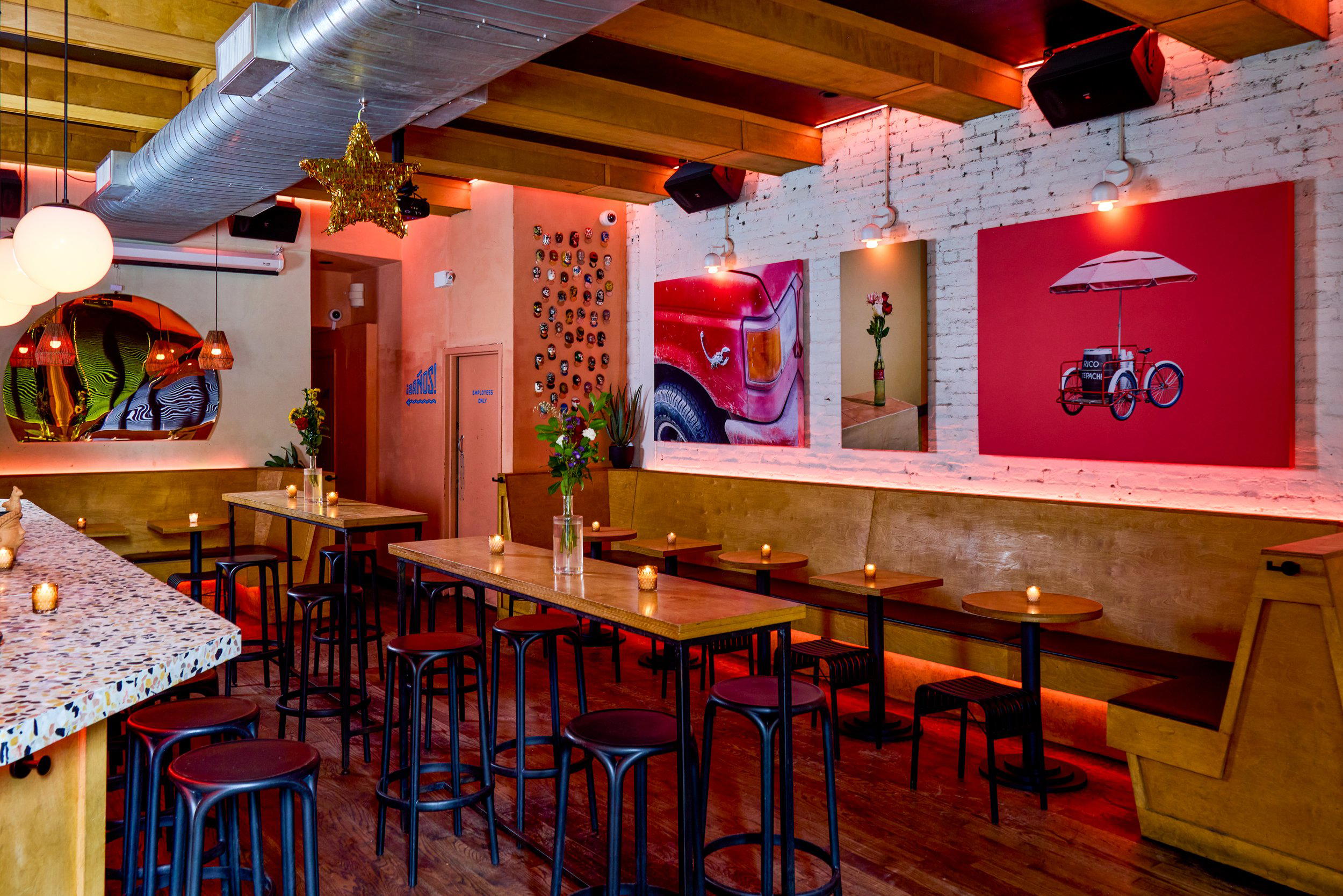
Casual and friendly atmosphere with white brick walls, open kitchen, and chill vibes around the small raw bar and tables.
Know Before You Go
- Getting there
- 114 Nassau Ave, Brooklyn, NY 11222