Green Lovers occupies a compact address in Hamburg's Altstadt, at Kleine Johannisstraße 8, placing it within reach of the city's broader fine-dining corridor. A reservation inquiry is the most reliable first step.
Pearl is the En Primeur Club membership app — saves, bookings, and concierge access live there. Same editors, same standards.
- Address
- Kleine Johannisstraße 8, 20457 Hamburg, Germany
- Phone
- +494066871133
- Website
- speisekartenweb.de
- Directions
- Get directions
 Saves & bookings on Pearl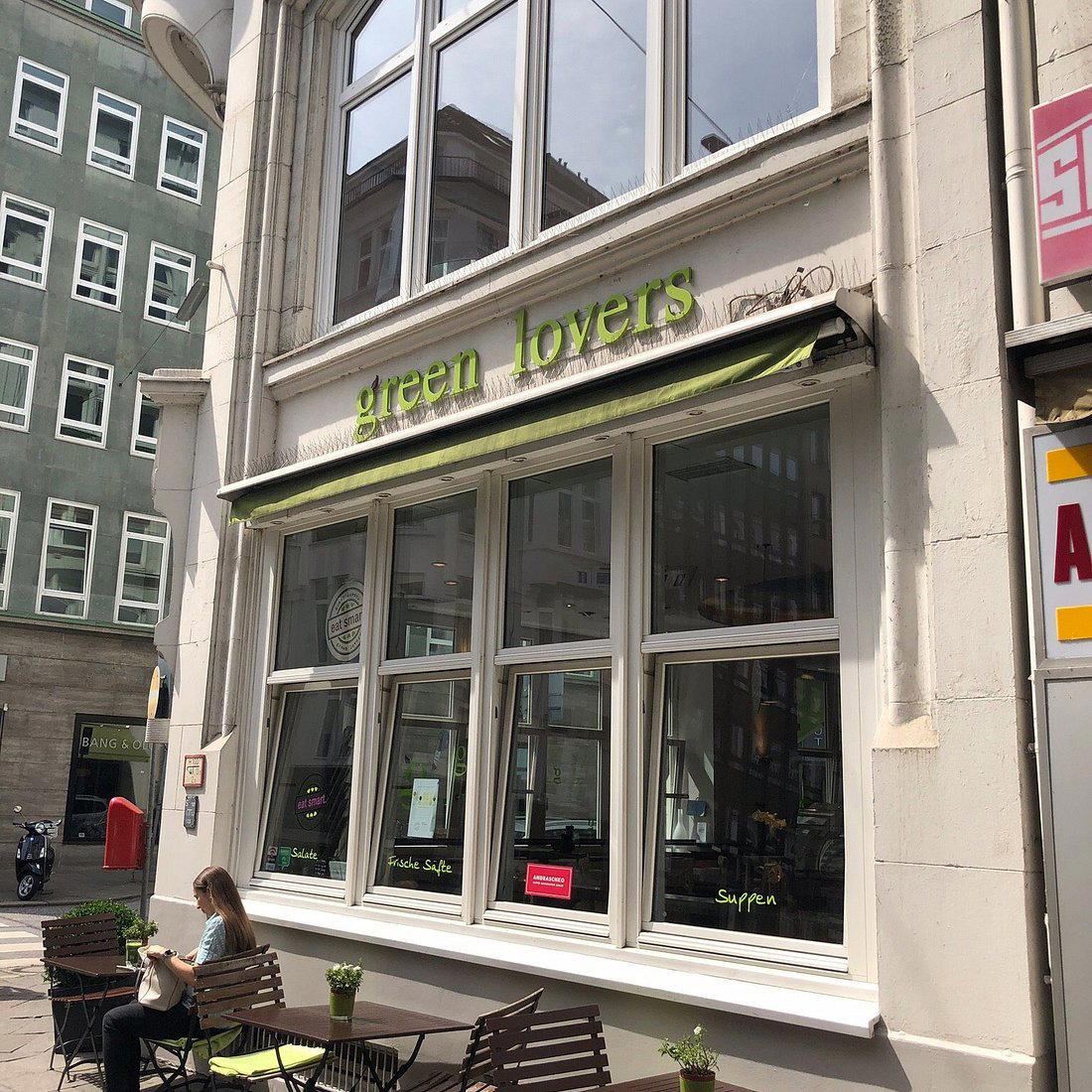
Hamburg's Altstadt Dining Shift and Where Green Lovers Sits
Hamburg's restaurant scene has undergone a significant redistribution over the past decade. The HafenCity waterfront and the Elbphilharmonie district absorbed much of the city's high-profile restaurant investment, drawing venues like The Table Kevin Fehling and bianc into proximity with Hamburg's architectural showpiece. Meanwhile, the Altstadt, the city's historic core, retained a different character: denser, older, less designed for spectacle, and consequently less written about in international food media. Kleine Johannisstraße 8 sits squarely inside that older fabric, a short walk from the Rathaus and the canal-lined Alsterfleet. What that address signals, historically, is a venue that earns its clientele through word of mouth rather than location theatre.
Green Lovers operates in this context. The public record on the venue is thin, which itself tells a story about a certain category of Hamburg dining: places that do not publicise aggressively, that do not maintain prominent web presences, and that consequently fall outside the standard international discovery pipeline. This is not unusual in Germany's second-largest city, where a meaningful number of restaurants operate almost entirely for a local audience, indifferent to the rating cycles that drive coverage elsewhere.
The Evolution Pattern: How Altstadt Venues Reinvent Without Relocating
The editorial angle that matters most for Green Lovers is not what it is at any fixed moment, but how venues in its position tend to change over time. Across Hamburg's Altstadt and Neustadt, a recurring pattern has emerged: small restaurants that opened in the 2010s under one culinary identity, typically European bistro or café formats, have progressively shifted toward more defined, often plant-forward positions as Hamburg's dining public became more sophisticated about ingredient sourcing and dietary specificity.
The name Green Lovers is not incidental. In a city where plant-based and vegetable-forward dining has moved from a niche designation to a competitive category, a venue carrying that name is almost certainly responding to, or anticipating, demand that did not exist in the same form a decade ago. Hamburg's green-dining tier now includes everything from casual lunch spots to evening tasting formats, and the competitive set is more crowded than it was even five years ago. The question for any venue in this category is where it sits on the formality spectrum and how clearly it has differentiated its offering from the generic.
Germany's broader fine-dining conversation tends to concentrate around Michelin corridors: Aqua in Wolfsburg, Schwarzwaldstube in Baiersbronn, Vendôme in Bergisch Gladbach, and Victor's Fine Dining by Christian Bau in Perl. Hamburg itself contributes to that conversation through venues like Restaurant Haerlin and 100/200 Kitchen. Green Lovers does not appear in that tier, which means it is operating in the mid-market or specialist niche below, where reinvention tends to be driven by owner conviction rather than award-cycle pressure.
The Vegetable-Forward Shift in Hamburg's Mid-Market
Hamburg has been slower than Berlin to develop a high-profile plant-based fine-dining identity. Berlin's CODA Dessert Dining demonstrated that experimental formats around non-traditional ingredients can attract serious critical attention. In Hamburg, that same ambition has been more diffuse, spread across a larger number of smaller venues without a single venue anchoring the category at the leading end.
What has changed in Hamburg is consumer literacy. The city's proximity to Schleswig-Holstein's agricultural regions means that seasonal, locally sourced produce has long been available to restaurants willing to build supplier relationships. The shift is less about ingredient access and more about how kitchens are framing those ingredients: less as garnish and accompaniment, more as the structural logic of the menu. Venues that made this shift convincingly, rather than reactively, have generally held their audiences. Those that adopted plant-forward language without reformulating their actual kitchen approach have tended to blur into the background.
Green Lovers, based on its name and address alone, is positioned to be part of the former group. The Altstadt's foot traffic includes a significant share of office workers and professionals from the nearby financial and legal district, a demographic that in Hamburg, as in Frankfurt and Munich, has driven sustained demand for lunch and early-evening formats that are lighter, faster, and more vegetable-centric than the classic German restaurant model. Venues like Lakeside and JAN in Munich have shown that the mid-to-upper market can sustain serious food programs without Michelin framing, provided the kitchen has a clear point of view. The same logic applies here.
For context on how German restaurants outside major award circuits maintain relevance, venues such as Schanz in Piesport, Bagatelle in Trier, ES:SENZ in Grassau, and Waldhotel Sonnora in Dreis each demonstrate that regional positioning and culinary consistency can sustain a loyal audience independently of national press cycles. Green Lovers, operating in a denser urban context, has additional advantages in foot traffic and repeat business that those regional venues do not.
Internationally, the vegetable-forward fine-dining conversation has been shaped by venues operating at a very different scale, from Le Bernardin in New York City to Atomix in New York City, both of which demonstrate how disciplined focus on a specific culinary philosophy can define a venue's entire competitive identity. Hamburg's version of that focus is less dramatic but no less deliberate in the venues that have committed to it.
For a full picture of where Green Lovers fits within Hamburg's wider dining structure, the EP Club Hamburg restaurants guide maps the city's restaurant tiers across neighbourhood and format.
Know Before You Go
- Address: Kleine Johannisstraße 8, 20457 Hamburg, Germany
- Neighbourhood: Altstadt, central Hamburg, near the Rathaus and Alsterfleet
- Hours: Not published; confirm before visiting
- Getting there: U-Bahn Rathaus (U3) is the closest station, approximately five minutes on foot from Kleine Johannisstraße
Continue exploring
More in Hamburg
Restaurants in Hamburg
Browse all →
Bars in Hamburg
Browse all →

Hotels in Hamburg
Browse all →
Wineries in Hamburg
Browse all →
At a Glance
- Modern
- Trendy
- Casual
- Casual Hangout
- Solo
- Group Dining
- Open Kitchen
- Zero Proof
- Farm To Table
- Organic
Current opening hours
- Monday
- 11 AM–7 PM
- Tuesday
- 11 AM–7 PM
- Wednesday
- 11 AM–7 PM
- Thursday
- 11 AM–7 PM
- Friday
- 11 AM–7 PM
- Saturday
- Closed
- Sunday
- Closed
Hours can change for holidays and private events. Last verified .
Bright, casual bistro atmosphere with quick service; designed for efficient lunch service with a focus on fresh, healthy food preparation.
Know Before You Go
- Getting there
- Kleine Johannisstraße 8, 20457 Hamburg, Germany