Gramm occupies a corner of Rue de Flandre in Brussels' Saint-Géry quarter, a neighbourhood that has spent the last decade consolidating its identity as the city's most serious dining corridor. The address places it among a cluster of restaurants that treat the meal as a structured event rather than a casual drop-in, where pacing and sequence matter as much as what arrives on the plate.
Pearl is the En Primeur Club membership app — saves, bookings, and concierge access live there. Same editors, same standards.
- Address
- Rue de Flandre 86, 1000 Bruxelles, Belgium
- Phone
- +32495101822
- Website
- grammrestaurant.be
- Directions
- Get directions
 Saves & bookings on Pearl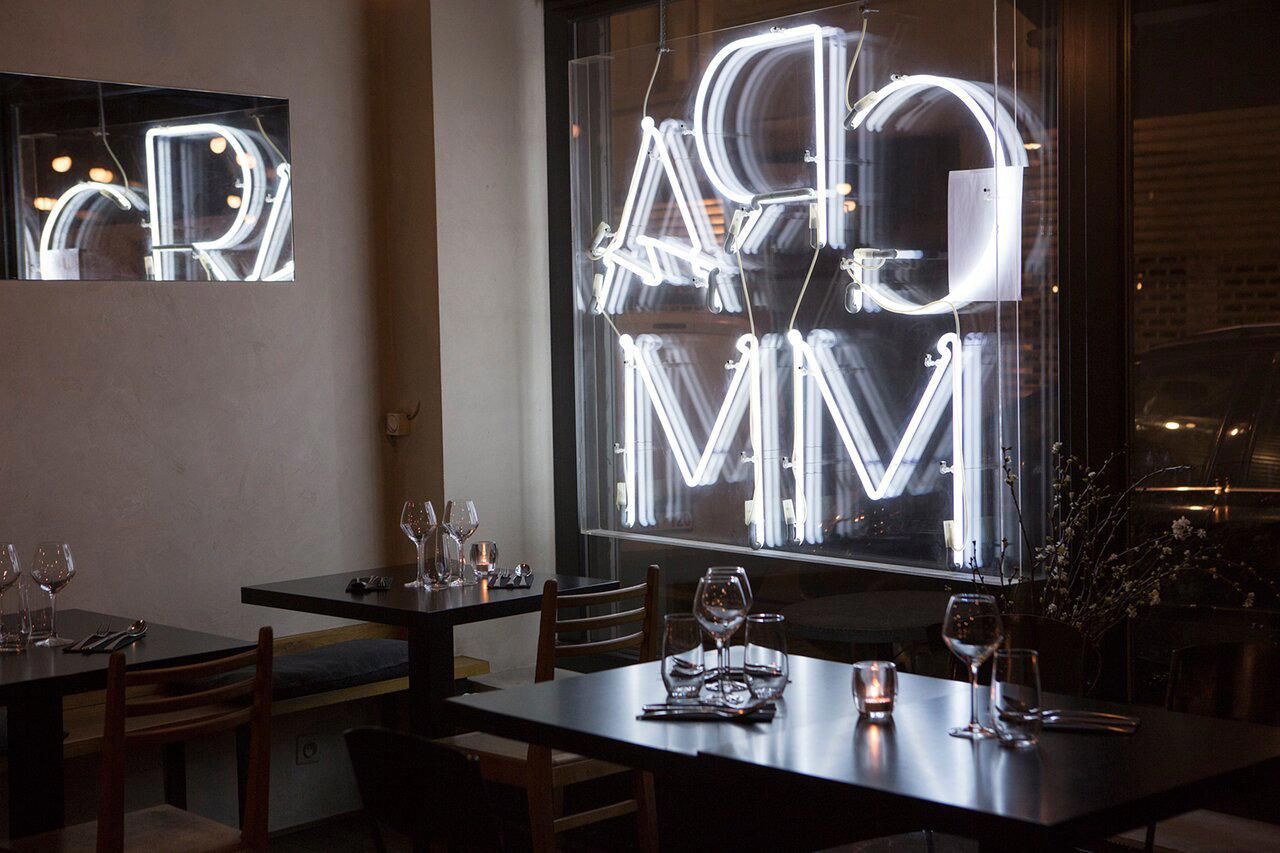
Rue de Flandre and the Ritual of the Considered Meal
Saint-Géry has a particular quality in the early evening: the canal-side streets empty of daytime foot traffic, the brasseries fill first, and the quieter, more deliberate rooms behind unmarked or understated facades begin to fill second. Gramm, on Rue de Flandre 86, belongs to that second wave. The address itself signals something: this stretch of Flandre sits between the Grand Place tourist radius and the more residential rhythm of Molenbeek, which means the clientele arriving here has made a choice rather than a convenience stop. That self-selection shapes the room's atmosphere before a single dish is served.
Brussels dining has split, over the past decade, into two broadly legible tiers. The first is the grand institution tier: rooms like Comme chez Soi, with its Art Nouveau interior and French-Belgian classicism at the leading price point, or La Villa Lorraine by Yves Mattagne, where modern technique meets a long institutional pedigree. The second tier is newer, less decorated, and more interested in the logic of the meal than its ceremony: places like Barge with its organic sourcing discipline, or Eliane with its creative positioning. Gramm occupies a point on this map, and its Rue de Flandre address puts it within walking distance of both registers without fully committing to either.
The Architecture of a Meal at Gramm
What distinguishes the better rooms in Brussels' mid-to-upper tier is not ingredients or technique in isolation, but the sequencing of the meal: the degree to which a kitchen has thought about how one course sets up the next, how the pace of service creates or destroys the experience of eating as a sustained event rather than a series of individual transactions. This is the tradition that runs through Belgian fine dining from its Flemish heartland out to Brussels, and it is what separates a restaurant visit from a dining ritual.
Belgium's serious kitchens have long operated with a European cross-referencing that draws from French classical training, Dutch ingredient culture in the north, and increasingly from the naturalist movements that have reshaped Scandinavian and Spanish cooking over the past fifteen years. The result, at its finest, is a cuisine that does not announce itself loudly but accumulates over the course of a meal. Places like Hof van Cleve in Kruishoutem, Boury in Roeselare, and Zilte in Antwerp represent the Flemish end of this tradition at its most technically developed. Brussels sits slightly differently: it has the cosmopolitan traffic and the diplomatic dining culture that creates demand for polish and consistency rather than experiment, which tends to produce rooms more attentive to service rhythm than to radical kitchen departures.
Gramm fits within this context. That is a precise position to occupy, and it implies a kitchen that relies on repeat visits and word-of-mouth rather than a Michelin citation to fill covers.
What the Room Expects of You
The etiquette of the considered Brussels meal is relatively consistent across this category: arrive at the reserved time, accept the pace set by the kitchen rather than imposing your own, and treat the menu structure as a proposition rather than a menu to be negotiated. This is not the brasserie tradition, where the table is yours for the afternoon and the kitchen accommodates every variation. The better rooms in this bracket run with smaller teams and tighter margins, which means the sequencing of the meal is pre-engineered in a way that requires some cooperation from the table.
For comparison, the coastal Flemish tradition, represented by addresses like Bartholomeus in Heist and Willem Hiele in Oudenburg, tends toward an even more immersive format, sometimes extending to four or five hours with full tasting sequences. The Brussels equivalent is generally more compressed and urban in its rhythm, shaped by a clientele that has meetings before and after. Gramm, given its location and positioning, likely operates in that more urban register: purposeful rather than leisurely, but structured enough to reward attention.
Brussels in the Belgian Dining Context
The broader Belgian fine dining scene has a density that surprises visitors accustomed to thinking of it as a country with one or two notable tables. Beyond Brussels, addresses like Castor in Beveren, De Jonkman in Sint-Kruis, L'air du temps in Liernu, La Durée in Izegem, and d'Eugénie à Emilie in Baudour collectively demonstrate a country-wide seriousness about the table that extends well beyond the capital. Brussels benefits from this national culture even as it operates with its own distinct pressures: the EU institutional crowd, the tourist flow through the centre, and the genuinely cosmopolitan restaurant-going population that lives in the inner communes.
For readers coming from markets like New York, where the reference points for technical ambition might be places like Le Bernardin or Atomix, the Brussels upper-mid tier operates at a different scale but with a comparable seriousness of purpose. The price points are generally lower, the rooms smaller, and the chef-to-cover ratio often more favourable. What you trade is some of the theatrical production value; what you gain is proximity to the kitchen's actual decisions. You can find a full picture of where Gramm sits relative to the wider capital in our full Brussels restaurants guide, which maps the city's dining scene by neighbourhood and price tier.
The restaurants most directly comparable in Brussels itself include Bozar Restaurant, which operates in the Belgian fine dining register with an arts-institution context, and the more creative positioning of Eliane. Gramm occupies a quieter, less institutionally affiliated position than either, which is a choice that has its own logic in a city where the grand rooms are well known and the less-announced tables require more effort to find.
Planning Your Visit
Rue de Flandre 86 is in the centre of Brussels, within easy reach of the Sainte-Catherine metro station and a ten-minute walk from the Grand Place. The Saint-Géry and Sainte-Catherine quarter rewards an evening built around the area: the canal-side bars and the covered market building provide a natural start or end to the meal. Because Gramm's booking window, hours, and format are not publicly confirmed through available data, the most reliable approach is to check directly with the restaurant for current availability. In Brussels' upper-mid dining tier, reservation lead times of one to three weeks are standard for weekend covers, with weekday tables sometimes available on shorter notice.
How Gramm Brussels compares with similar nearby venues.
| Venue | Cuisine | Price |
|---|---|---|
| Strofilia | Greek | €€ |
| Selecto | Modern French | €€ |
| Henri | Modern French | €€€ |
| Kline | Modern Cuisine | €€ |
Continue exploring
More in Brussels
Restaurants in Brussels
Browse all →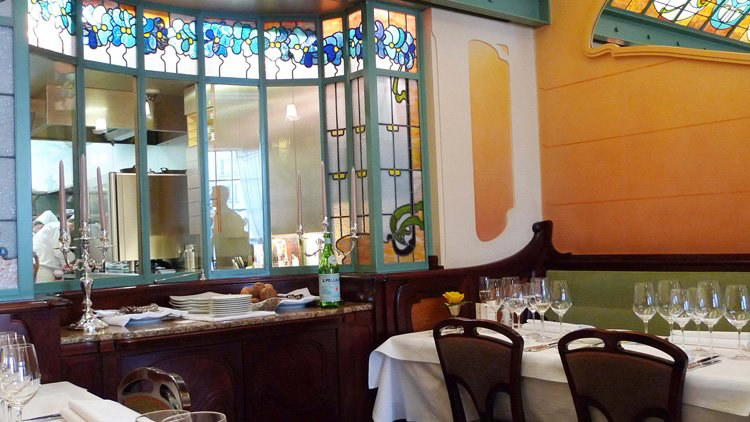
Bars in Brussels
Browse all →
Hotels in Brussels
Browse all →
Wineries in Brussels
Browse all →
At a Glance
- Intimate
- Modern
- Elegant
- Trendy
- Date Night
- Special Occasion
- Open Kitchen
- Natural Wine
- Local Sourcing
- Organic
Current opening hours
- Monday
- Closed
- Tuesday
- 7–10 PM
- Wednesday
- 7–10 PM
- Thursday
- 7–10 PM
- Friday
- 7–10 PM
- Saturday
- 7–10 PM
- Sunday
- Closed
Hours can change for holidays and private events. Last verified .
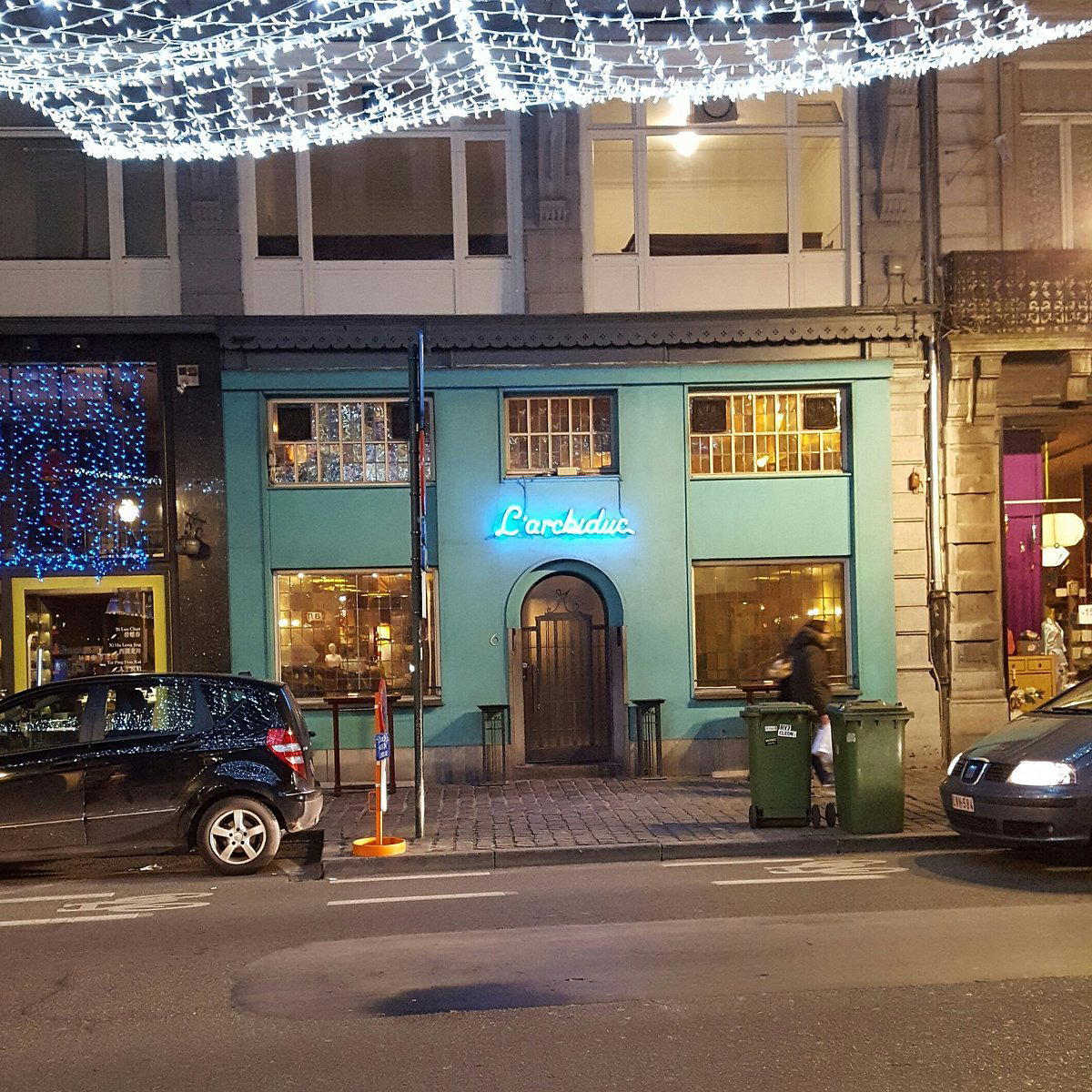
Intimistisch decor with neon sign lighting, creating an intimate and sophisticated atmosphere.
Know Before You Go
- Getting there
- Rue de Flandre 86, 1000 Bruxelles, Belgium