
Nagoya’s Sakae ramen scene rewards compact counters, quick turnover, and bowls with enough force to compete with the city’s heavier local food traditions. Gokubuto Dakuryu Ramen La Keiko Honten sits in that lane: an eight-seat counter, Tabelog 100 Ramen AICHI 2025 selection, and a sub-¥1,000 price band that keeps the experience closer to street-level appetite than destination tasting-menu theatre.
Pearl is the En Primeur Club membership app — saves, bookings, and concierge access live there. Same editors, same standards.
- Address
- 3 Chome-3-1 Sakae, Naka Ward, Nagoya, Aichi 460-0008, Japan
- Phone
- +81 52-265-6890
- Website
- tabelog.com
 Saves & bookings on Pearl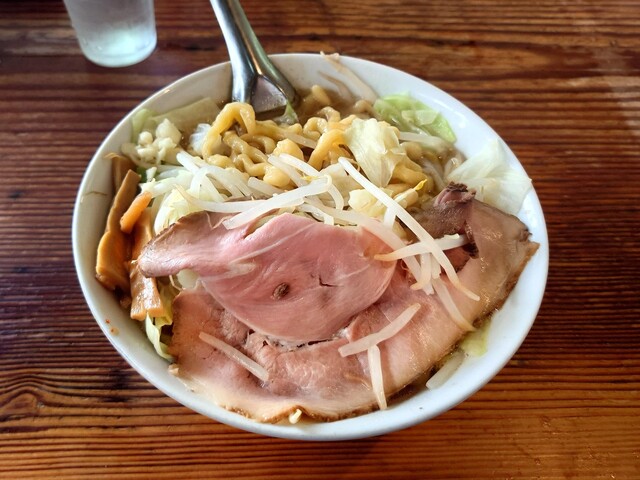
In Sakae, ramen is not a hushed performance. The better rooms feel compressed: counter seats, steam, ticket-machine pace, and a clientele that understands the transaction before sitting down. Gokubuto Dakuryu Ramen La Keiko Honten belongs to that Nagoya grammar. Its scale is part of the point, with only eight counter seats, no private-room buffer, and a ramen format that reads as immediate rather than ceremonial.
The useful way to read this address is against Nagoya’s broader dining split. The city can do polished beef, sushi, and modern Japanese at higher spend, but ramen remains one of its clearest measures of daily taste. In Sakae, that means shops built for focus rather than lingering. The Tabelog 100 Ramen AICHI 2025 selection places this counter inside Aichi’s recognized ramen tier, while the listed Tabelog score of 3.62 gives a more grounded signal: this is a specialist shop with local traction, not a luxury room borrowing ramen’s informality for effect.
Thick ramen culture in a city built for stronger flavors
Nagoya’s appetite has long favored intensity. Miso katsu, tebasaki, kishimen, and hitsumabushi all speak to a city comfortable with concentrated seasoning and clear identity. Ramen here does not need to mimic Tokyo’s refinement or Hakata’s narrow tonkotsu discipline to be taken seriously. Aichi’s ramen field is broader, and the better counters often work through weight, texture, and regional confidence rather than minimalism.
The name gives the conceptual cue: gokubuto points toward thick noodles, while dakuryu suggests a dense, turbulent style rather than a delicate broth category. That matters because ramen vocabulary in Japan often signals expectation before the bowl arrives. At this level, the question is not whether the room has luxury markers. It is whether the shop has a coherent idea and enough discipline to survive comparison within a crowded prefectural category. Tabelog’s 2025 Aichi ramen selection is the key external marker here.
That makes the experience closer to a wine bar with a narrow cellar than a restaurant with a broad list. The curation is not about range; it is about committing to a house direction and making every seat face it directly. For travelers who think in sommelier terms, the analogue is a list that refuses to cover every region and instead goes deep on one expression. Ramen shops at this scale live or fail by that same kind of compression.
The counter is the format, not a design gesture
Eight seats changes the terms of a meal. It removes the soft middle ground between restaurant and quick-service shop, and it makes timing part of the experience without needing theatrics. The counter format also strips away the distractions that often inflate restaurant writing: no lounge sequence, no room hierarchy, no ceremony around service. The focus turns to the bowl, the queue rhythm, and the practical etiquette of eating efficiently.
For comparison inside Nagoya, Men Dokoro Guriko Nagoya Sakae sits in a similar low-price ramen bracket, while Alan. and takumi operate in much higher dining bands. That spread explains why ramen remains such a useful category for travelers: it can deliver a serious local food experience without requiring the spending logic of the city’s polished evening restaurants. The distinction is not lesser versus greater; it is purpose. A compact ramen counter answers a different question than a reservation-led dinner room.
Gokubuto Dakuryu Ramen La Keiko Honten also sits within a non-smoking format and lists take-out service, two details that matter more than they first appear. Ramen shops can be physically intense rooms, and smoke-free service makes the counter feel more accessible for visitors moving between meals, trains, and late city plans. Take-out, where offered, signals a kitchen used to speed and repeat demand, though the strongest case for a shop like this remains the counter itself.
How to place it in a Nagoya eating itinerary
This is not the meal to schedule as a long, wine-paired evening. It works better as a sharp Sakae stop: before a bar, after shopping, or between more formal meals when the point is to understand Nagoya through appetite rather than ceremony. The sub-¥1,000 listed price band also changes the calculus. In a city where premium restaurants can climb quickly, a recognized ramen counter at this level offers a different kind of editorial value: high local specificity without luxury pricing.
Travelers building a broader city plan should treat it as one node in Nagoya’s dining map rather than as a standalone pilgrimage. For wider context, start with Our full Nagoya restaurants guide, then compare nearby and citywide dining choices such as 1022, 451, Aaron, Alan., and All Day Dining Montmartre. For the rest of the trip architecture, Our full Nagoya hotels guide, Our full Nagoya bars guide, Our full Nagoya wineries guide, and Our full Nagoya experiences guide help separate meal planning from lodging, drinking, and cultural time.
Japan’s everyday specialist food culture also makes more sense when seen beyond a single city. Useful contrasts include -Grilled beef Sukiyaki- KAMAKURA TANUKIAN 鎌倉 たぬき庵 in Kamakura. 鮪と炭火焼き うお炭 秋葉原店 in Tokyo.cafe in Osaka.know in Kumamoto, (Shoku) Vietnam in Kawasaki, and [Curry Senmon Ten] Maruyama Kyoju. in Sapporo. For Japanese drinking and casual-food references outside Japan, Jōdo Saké Bar in Los Angeles and Onigiri Time in Pasadena show how tightly focused formats travel when the idea is clear.
The editorial case is simple: Nagoya’s serious food culture is not confined to expensive counters. Here, recognition, narrow format, and price all point in the same direction. The appeal lies in a shop that compresses its argument into a few seats and a forceful ramen identity, leaving little room for decorative distraction.
Cuisine and Awards Snapshot
Comparable venues side-by-side for orientation.
| Venue | Cuisine | Price | Notes |
|---|---|---|---|
| Gokubuto Dakuryu Ramen La Keiko HontenThis venue — the venue you are viewing | Thick Rich Ramen Shop | $ | Not listed |
| Ramen Dai Nagoya ten | Jiro-style Ramen Shop | $ | Naka |
| Naruto Ya | Ramen & Tsukemen Shop | $ | Naka |
| Yanagibashi Wa nico | Niboshi-focused Ramen Shop with Morning Ramen | $ | Nakamura |
| Tsubameya Dainagoya birudingu ten | Traditional Japanese wagashi & dorayaki shop | $ | Nakamura |
| Nakamura So | Traditional Takayama ramen (chuka soba) | $ | Naka |
Recognition history
Dated appearances from independent guides and award organizations, with the underlying list record or original source where available.
Tabelog 100 #70 · No. 70
Tabelog · Tabelog 100 - Ramen - AICHI - 2025
Continue exploring
More in Nagoya
Restaurants in Nagoya
Browse all →
At a Glance
- Lively
- Casual
- Cozy
- Solo
- Late Night
- Casual Hangout
- Group Dining
- After Work
- Standalone
Current opening hours
- Monday
- 11 AM–1 AM
- Tuesday
- 11 AM–1 AM
- Wednesday
- 11 AM–1 AM
- Thursday
- 11 AM–1 AM
- Friday
- 11 AM–1 AM
- Saturday
- 11 AM–1 AM
- Sunday
- 11 AM–1 AM
Hours can change for holidays and private events. Last verified .
Compact, counter‑focused ramen shop with a bustling, casual atmosphere that stays lively late into the night, more functional than decorative.