
Michelin Plate
Our verdict
In its third generation of family ownership, Go La is one of Phuket's most enduring Hokkien-style noodle addresses, holding consecutive Michelin Plate recognition in 2024 and 2025. The operation centres on a single, elemental discipline: wok-fried yellow noodles over charcoal, with the option of an extra egg for a richer, creamier result. At the ฿ price tier, it represents Phuket's street-food heritage at its most direct.

Pearl is the En Primeur Club membership app, where members save venues, book tables and use the concierge.
Charcoal, Wok, and the Architecture of a Hawker Counter
Approach Kra Road in Tambon Talat Yai and the sensory register shifts before you reach the entrance. Charcoal smoke rises at an angle that tells you the wok is already hot. The sound follows: the particular percussive rhythm of a wok against a high-BTU burner, a cadence that belongs specifically to Hokkien-style noodle cooking and is not easily replicated on a gas flat-leading. Go La, at number 11, sits within Phuket's old-town commercial core, where shophouse frontages have housed family food operations for generations. The physical container here is not a dining room in any conventional sense. It is a working station made semi-public: the cooking infrastructure faces outward, and the eating area is arranged around it rather than apart from it. That geometry is characteristic of hawker operations across southern Thailand and the broader Hokkien diaspora belt, and Go La maintains it without contrivance.
What Three Generations of Ownership Means for a Dish
Hokkien noodle cooking arrived in Phuket through the Chinese immigrant communities that shaped the island's commercial districts from the nineteenth century onward. The Hokkien dialect group, originating in Fujian province, carried specific culinary forms with them, among them a technique for frying thick yellow wheat noodles in rendered lard or oil over intense heat, incorporating egg, and building a sauce from dark soy and stock. In Phuket, that template absorbed local ingredient pressures and palate preferences, producing a regional variant distinct from the versions found in Penang or Kuala Lumpur. Go La sits in its third generation of family ownership, which means the current execution draws on accumulated refinements across roughly six to eight decades of repetition. That continuity is not a sentimental point; it is a technical one. Muscle memory at the wok, calibration of charcoal temperature, and knowledge of the precise moment to break the egg into the noodle mass are skills that degrade and rebuild differently across institutional versus family transmission. At Go La, they have stayed in the family.
The Michelin Plate in Context
Go La has held the Michelin Plate in both 2024 and 2025, placing it within the tier of Phuket addresses that Michelin inspectors judge worth a special stop, below the starred category but above the general recommendation pool. Phuket's Michelin-recognised food scene spans a wide price range. At the opposite end of the spectrum, PRU holds a full Michelin star for its modern Thai tasting format at the ฿฿฿฿ tier. Go La earns its Plate recognition at ฿, which is a different kind of validation: it signals that technical rigour at high heat with minimal ingredients can meet the same inspection threshold as elaborately composed tasting menus. That is what the Plate category is designed to capture, and Go La fits cleanly within it. For broader reference on how Phuket's food addresses distribute across formats and prices, the EP Club Phuket restaurants guide maps the full range.
The Dish and Its Logic
The yellow Hokkien noodles are the operational centre of Go La. Yellow wheat noodles carry more body than rice vermicelli and absorb wok heat differently, developing a light char on the exterior while remaining supple inside when the timing is correct. The recommendation to order with an extra egg is a calibration choice: the yolk breaks into the noodle mass during the final toss, adding fat and binding the sauce to the strands more completely. This is not a garnish decision; it changes the textural outcome of the dish. The charcoal heat source is a functional factor rather than an aesthetic one. Charcoal produces a drier, more radiant heat than gas and allows wok hei, the breath-of-the-wok flavour, to develop at temperatures that a standard domestic or restaurant gas ring cannot reliably reach. It also burns slower and requires active management, which is part of what the kitchen crew is doing when you hear the sounds from the street.
Old Town Phuket and the Noodle Corridor
Kra Road sits within Phuket Town's old commercial grid, a district with one of the higher concentrations of Peranakan and southern Chinese food heritage in Thailand. Several long-running family operations hold addresses within walking distance, and the broader area rewards a morning or midday circuit rather than a single-stop visit. Loba Bang Niao represents the Peranakan-inflected side of the neighbourhood's food identity. For a different register, the flatbread tradition is well covered by Roti Chaofa and Roti Thaew Nam. A Pong Mae Sunee rounds out the street-food tier for those working through the old-town addresses systematically.
Thailand's small-eats category is well developed beyond Phuket. Sorn in Bangkok occupies the formal end of southern Thai cuisine with two Michelin stars, while AKKEE in Pak Kret and Aeeen in Chiang Mai represent the northern and central registers of informal Thai dining done with precision. Further afield, the small-eats discipline shows strong parallels in Taiwan, where A Cun Beef Soup in Tainan and A Hai Taiwanese Oden operate in a comparable single-dish, generational-ownership format. The pattern of family-held, technique-focused, low-price operations earning formal recognition is a consistent feature across the region, not a Phuket anomaly.
Planning Your Visit
Go La is located at 11 Kra Road, Tambon Talat Yai, in the Mueang Phuket district, the old-town core rather than the beach resort corridors. No booking infrastructure is indicated, which is consistent with the counter format: arrival, queue if necessary, and order. The ฿ price tier makes this one of the most accessible addresses in the city by cost. For planning beyond the food side, the EP Club Phuket hotels guide, bars guide, wineries guide, and experiences guide cover the broader visit. For cross-regional comparison on similar format operations, Angeum in Ayutthaya and Agave in Ubon Ratchathani offer different but instructive points of reference in the Thai regional dining picture. The Spa in Lamai Beach on Koh Samui represents the beach-resort end of the Gulf of Thailand dining axis for those extending their itinerary.
Frequently asked questions
Can I bring kids to Go La?
Go La is a casual hawker counter on Kra Road with ฿ pricing, making it one of the most accessible formats in Phuket for families. The menu centres on a single Hokkien noodle preparation, so there is nothing complicated to negotiate with younger eaters. The open-air wok setup and charcoal smells add atmosphere rather than formality.
What's the vibe at Go La?
Go La is a working hawker counter, not a restaurant, charcoal smoke, wok noise, and a family operation now in its third generation define the setting on Kra Road in Phuket Town's old commercial grid. Michelin Plate recognition in both 2024 and 2025 has raised its profile without changing the format. Dress and arrival expectations match the ฿ price point: come as you are, expect a queue.
What awards or recognition does Go La have?
Go La has received recognition including: In its third generation of family ownership, this is one of Phuket’s best Hokkien-style fried noodle joints. Its charm is conjured up by a concoction of special flavours, the sounds of the wok and charcoal smells. Order the yellow hokkien n….
What's the signature dish at Go La?
The yellow Hokkien noodles are the dish the stall is built around, and the basis on which Michelin awarded its Plate in 2024 and 2025. The in-kitchen guidance is to order with an extra egg, which adds a creamier texture to the wok-fried preparation. Yellow wheat noodles carry more body than rice vermicelli and hold the charcoal wok flavour differently.
What's the pricing like at Go La?
Pricing at Go La is listed as ฿.
What part of town is Go La in?
Go La is located at เลขที่ 11 Kra Rd, Tambon Talat Yai, Mueang Phuket District, Phuket 83000, Thailand, Phuket.
Same-City Peers
A small set of peers for context, based on recorded venue fields.
| Venue | Cuisine | Price | Awards | Notes |
|---|---|---|---|---|
| Go LaThis venue (the venue you are viewing) | Hokkien Fried Noodles | Not listed | Michelin Plate | Not listed |
| PRU | Modern Thai Fine Dining | $200–300 | 1 Michelin Star · Wine Spectator Award of Excellence | Thai, Modern Cuisine, ฿฿฿฿ |
| Blue Elephant | Refined Southern Thai Fine Dining | $50–100 | Michelin Plate | Thai, ฿฿฿ |
| Acqua | Modern Italian Fine Dining | $50–100 | Michelin Plate · La Liste Top Restaurants | Italian, ฿฿฿฿ |
| Baan Rim Pa Patong | Royal Thai Cuisine | Not listed | Wine Spectator Award of Excellence | Thai |
| Chuan Chim | Thai-Chinese Seafood | $10–20 | Michelin Bib Gourmand | Thai, ฿฿ |
Recognition history
Dated appearances from independent guides and award organizations, with the underlying list record or original source where available.
Michelin Plate
Michelin
Full recognition history (3 entries)
Michelin Plate
Michelin
Michelin Plate
Michelin
Go La
Featured Guides
Continue exploring
More in Phuket
Restaurants in Phuket
All restaurants in Phuket →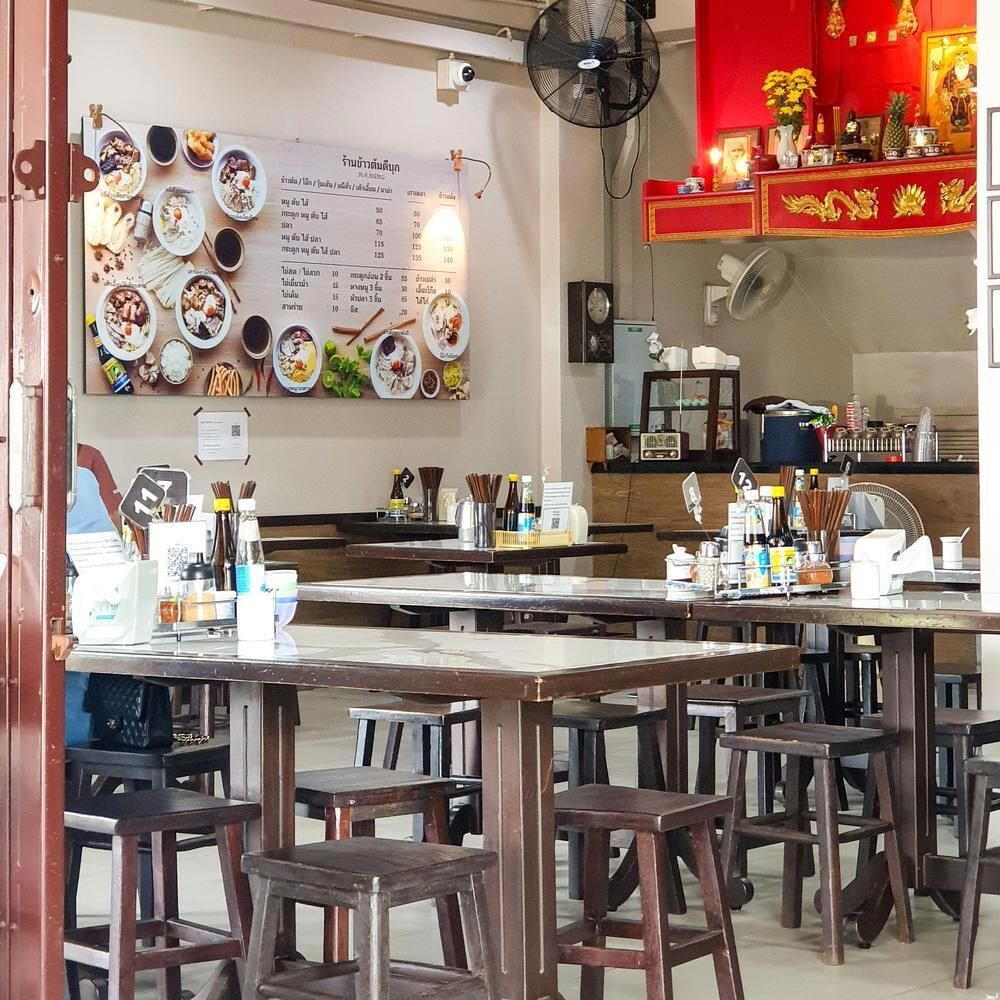
Bars in Phuket
All bars in Phuket →

Details
- Cozy
- Rustic
- Casual Hangout
- A La Carte
Current opening hours
- Monday
- Closed
- Tuesday
- 11 AM–8 PM
- Wednesday
- 11 AM–8 PM
- Thursday
- 11 AM–8 PM
- Friday
- 11 AM–8 PM
- Saturday
- 11 AM–8 PM
- Sunday
- 11 AM–8 PM
Hours can change for holidays and private events. Hours as of .
Casual small shop atmosphere filled with the sounds of the wok and charcoal aromas.