Michelin Plate
Our verdict
A Michelin Plate-recognised stall on Phuket Road, Loba Bang Niao serves loba, the Hokkien-rooted pork offal fritters that remain one of the clearest expressions of Sino-Thai street food in the city. The menu extends to bean sprout pancakes, fried spring rolls, fried tofu, pork satay, and herbal pork rib soup, all at single-baht pricing.

Pearl is the En Primeur Club membership app, where members save venues, book tables and use the concierge.
The menu
What to order
- Loba Mixed Set
- Kien with chili peanut sauce
Where Hokkien Street Food Meets Phuket's Old Town Grid
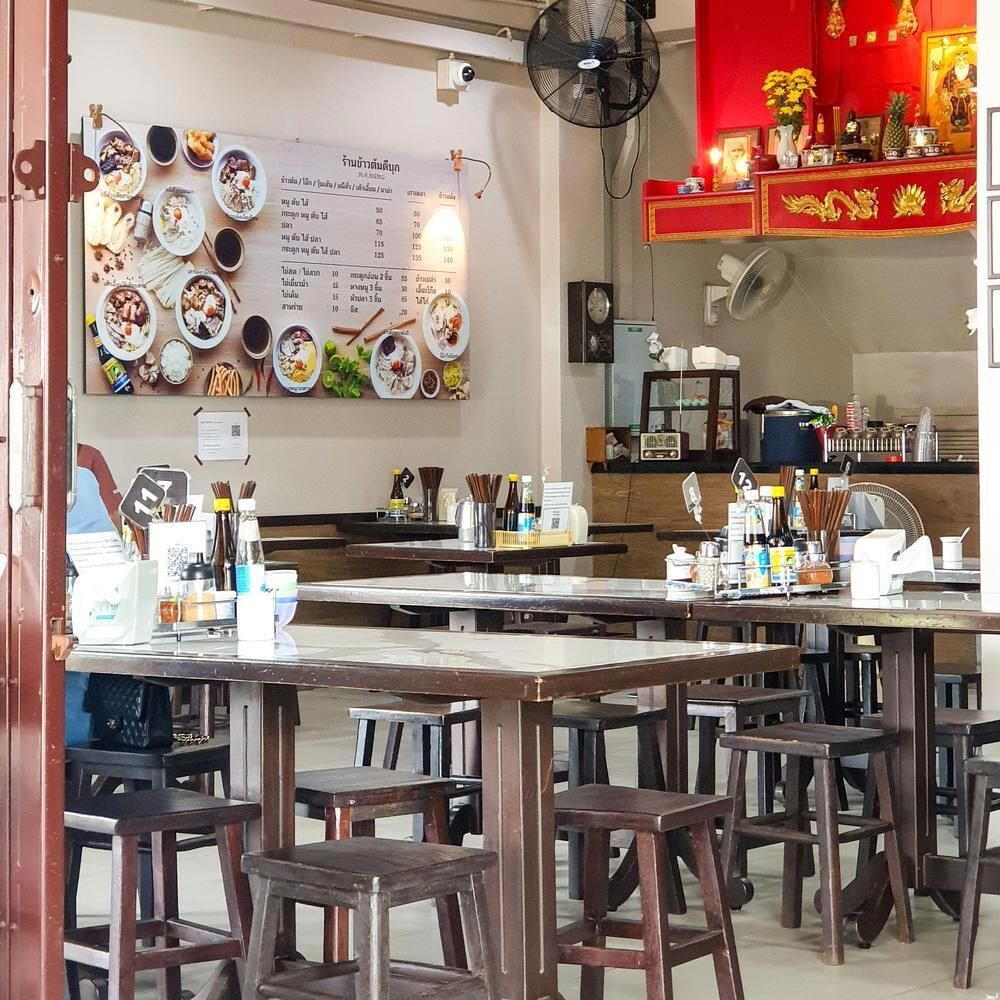
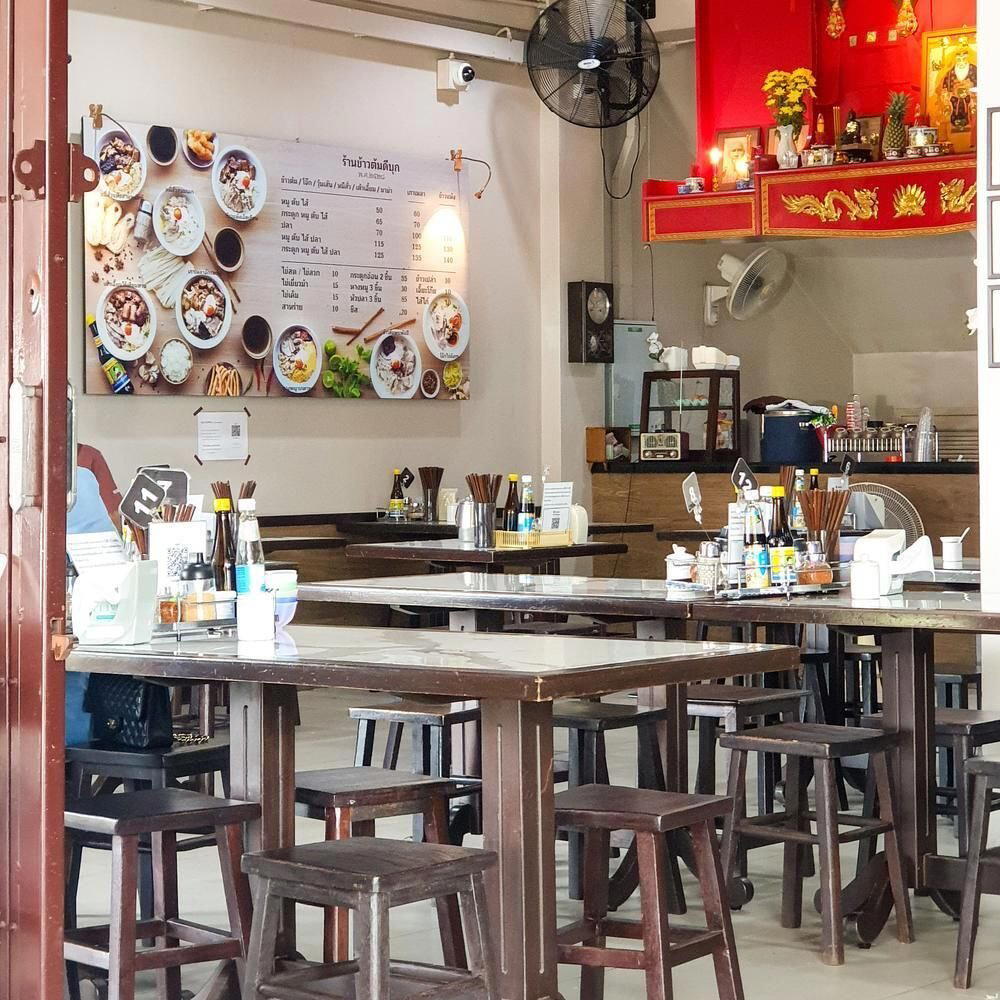
Phuket Road cuts through Talat Yai, the administrative and commercial heart of Phuket Town, where the density of Chinese shophouses is highest and the street food register shifts noticeably from the resort-facing menus of Patong or Kata. At 362 Phuket Road, a modest stall format frames the entrance to Loba Bang Niao, low stools, compact tables, and the kind of spatial logic that prioritises throughput over comfort. There is no architectural statement here. The space communicates its purpose in the way that the most durable street food formats do: through economy of form, proximity to the cooking, and the absence of anything that would slow the transaction between cook and customer.
That physical directness is worth reading as a signal. In Phuket Town, the stalls and shophouse kitchens that have held the longest tend to be the least adorned. The seating arrangement, typically low to the ground or arranged along a narrow counter facing the street, places the diner close to the preparation area, a design convention rooted in function but one that collapses the distance between the food's production and its consumption in a way that taller, partitioned dining rooms cannot replicate. Loba Bang Niao operates within that tradition.
Loba and the Hokkien Thread Running Through Phuket's Cuisine
To understand what Loba Bang Niao serves, it helps to understand what loba is and where it came from. The Hokkien community, which arrived in Phuket in significant numbers during the nineteenth-century tin-mining era, brought with it a range of preserved and cooked pork traditions that became embedded in the local food culture over generations. Loba, pork offal fritters, typically braised or fried with five-spice and soy-forward seasoning, is one of the clearest surviving examples of that culinary lineage. It is neither purely Thai nor purely Chinese but sits in the Sino-Thai register that defines the most historically layered eating in Phuket Town.
This is the context that gives Loba Bang Niao its Michelin Plate recognition, awarded in both 2024 and 2025, meaning weight. The Michelin Plate designation, used for restaurants where inspectors identify good cooking that does not yet reach star territory, has been applied here as an acknowledgment of culinary integrity in a format that has no particular incentive to modernise or perform. Comparable Michelin Plate recognition in the Phuket Town small-eats category extends to other Hokkien-inflected addresses, which speaks to how seriously the guide has treated the area's Chinese-Thai street food heritage as a category worthy of assessment. For broader context on how Michelin has engaged with Thai street food across the country, Sorn in Bangkok represents the high end of that same evaluative framework applied to Southern Thai cuisine at full-service level.
The Menu: Fritters, Pancakes, Soup
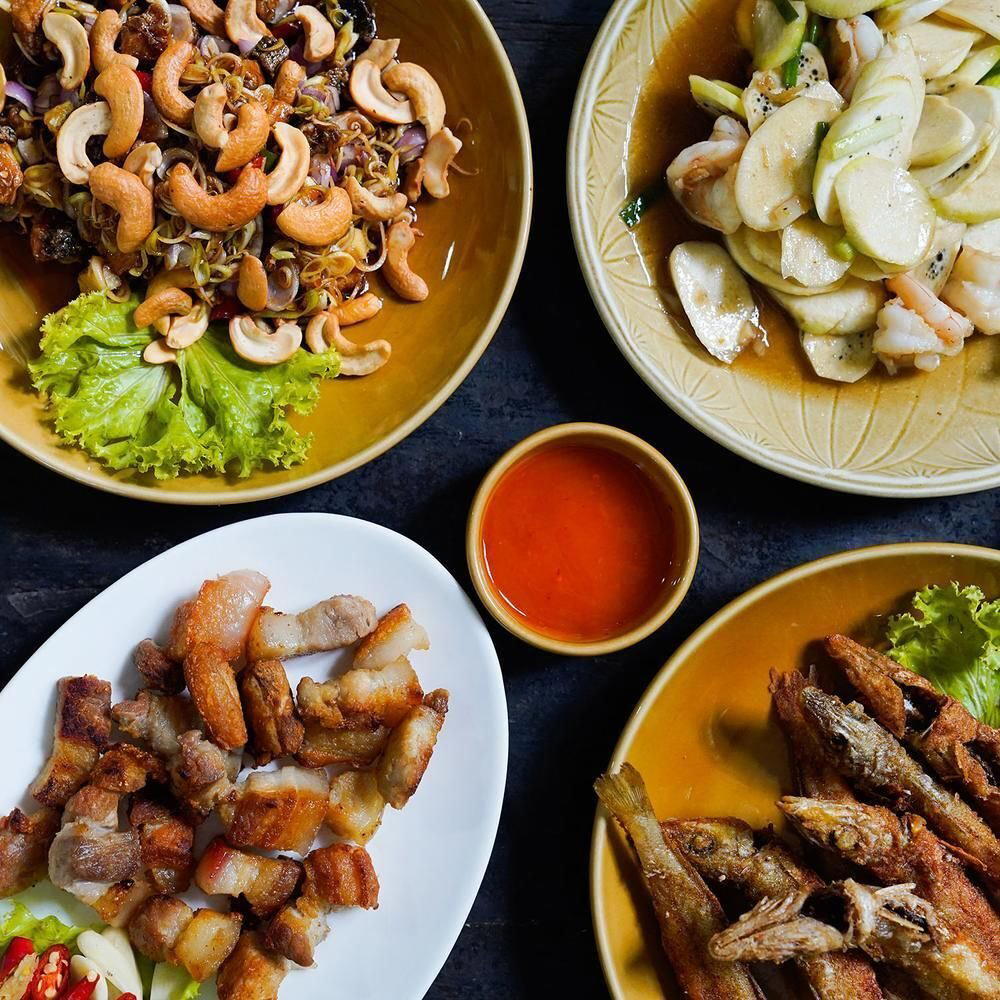
The menu at Loba Bang Niao extends beyond its namesake fritters to cover the range of light snacks that Hokkien-influenced Phuket kitchens have long produced. Bean sprout pancakes, fried spring rolls, fried tofu cubes, and pork satay sit alongside the loba itself, while herbal pork rib soup offers the one hot-broth option that shifts the register toward something more restorative. The pricing sits at the single-baht tier, consistent with other Talat Yai street food operations that have not adjusted their market positioning despite sustained recognition.
The non-greasy framing applied to items like the bean sprout pancakes and tofu cubes is worth noting because it reflects a preparation discipline that separates this style of cooking from cheaper approximations of the same format. Hokkien snack cooking at its most considered keeps fat hot enough and food dry enough that absorption is minimal, a technical point that is easy to overlook but immediately apparent in the eating. For comparison with other small-format, high-precision cooking in the Thai context, AKKEE in Pak Kret and Aeeen in Chiang Mai demonstrate how the Michelin framework has been applied to snack-scale formats elsewhere in Thailand. Meanwhile, A Cun Beef Soup in Tainan and A Hai Taiwanese Oden in Tainan illustrate how similar Hokkien-rooted small-eats traditions have been preserved and recognised in Taiwan, giving useful comparative depth to the Phuket context.
Phuket Town's Small-Eats Tier
Phuket Town's food credibility rests significantly on this tier of low-cost, high-heritage street eating. The contrast with the island's resort-facing restaurant offer is sharp: where PRU operates at the ฿฿฿฿ tier with a farm-driven modern Thai format, and operators like Blue Elephant and Acqua address the tourist fine-dining segment, the Talat Yai street food cluster works at a completely different price point and for a predominantly local audience. That separation matters because it means the cooking at places like Loba Bang Niao has not been adjusted for external palatability, the recipes remain in dialogue with the community that uses them daily.
Other small-eats addresses in the immediate vicinity follow a similar logic. Roti Chaofa and Roti Thaew Nam work the Muslim-Thai roti tradition that represents another layer of Phuket Town's multi-ethnic food history, while A Pong Mae Sunee covers the kanom a-pong coconut pancake format. Taken together, these addresses map a food zone in which distinct ethnic and culinary histories sit within a few hundred metres of each other, each operating largely on its own terms. Go La extends the Phuket Town street food picture further. For anyone planning time in the area, our full Phuket restaurants guide covers the wider range of options across price points and neighbourhoods.
Planning a Visit
Loba Bang Niao sits at 362 Phuket Rd in the Talat Yai district, within walking distance of the Old Town's main shophouse streets. The ฿ price point means a full spread of snacks across several people will remain inexpensive by any measure. Hours and a booking method are not published, and given the format, advance reservations are unlikely to be the norm, the practical approach is to arrive during morning or lunch-hour trading windows, when street food of this type is at its most active. For the full picture of what to do, stay, and drink around your time in Phuket, see our Phuket hotels guide, our Phuket bars guide, our Phuket wineries guide, and our Phuket experiences guide. For additional context on how similar regional traditions surface in other parts of Thailand, Angeum in Ayutthaya and Agave in Ubon Ratchathani demonstrate the breadth of the country's food geography beyond Bangkok and Phuket.
Frequently asked questions
What should I budget for a meal at Loba Bang Niao?
Pricing at Loba Bang Niao is listed as ฿.
What part of town is Loba Bang Niao in?
Loba Bang Niao is located at 362 Phuket Rd, Talat Yai, Mueang Phuket District, Phuket 83000, Thailand, Phuket.
What kind of recognition has Loba Bang Niao received?
Loba Bang Niao has received recognition including: This shop serving loba, a traditional snack of pork offal fritters, is testament to Hokkien influence on Phuket's cuisine. The menu also includes non-greasy bites such as bean sprout pancakes, fried spring rolls, fried tofu cubes and pork s….
What's the signature dish at Loba Bang Niao?
The namesake loba is the draw: pork offal fritters rooted in Hokkien culinary tradition, which earned the shop consecutive Michelin Plates in 2024 and 2025. The menu also covers bean sprout pancakes, fried spring rolls, fried tofu cubes, pork satay, and a herbal pork rib soup for those who prefer something lighter than the fritters.
Side-by-Side Snapshot
| Venue | Cuisine | Price | Awards | Notes |
|---|---|---|---|---|
| Loba Bang NiaoThis venue (the venue you are viewing) | Traditional Phuket Street Food - Loba (Pork Offal Fritters) | Not listed | Michelin Plate | Not listed |
| PRU | Modern Thai Fine Dining | $200–300 | 1 Michelin Star · Wine Spectator Award of Excellence | Thai, Modern Cuisine, ฿฿฿฿ |
| Blue Elephant | Refined Southern Thai Fine Dining | $50–100 | Michelin Plate | Not listed |
| Acqua | Modern Italian Fine Dining | $50–100 | Michelin Plate · La Liste Top Restaurants | Not listed |
| Baan Rim Pa Patong | Royal Thai Cuisine | Not listed | Wine Spectator Award of Excellence | Not listed |
| Chuan Chim | Thai-Chinese Seafood | $10–20 | Michelin Bib Gourmand | Not listed |
Recognition history
Dated appearances from independent guides and award organizations, with the underlying list record or original source where available.
Michelin Plate
Michelin
Full recognition history (3 entries)
Michelin Plate
Michelin
Michelin Plate
Michelin