Michelin Bib Gourmand
Our verdict
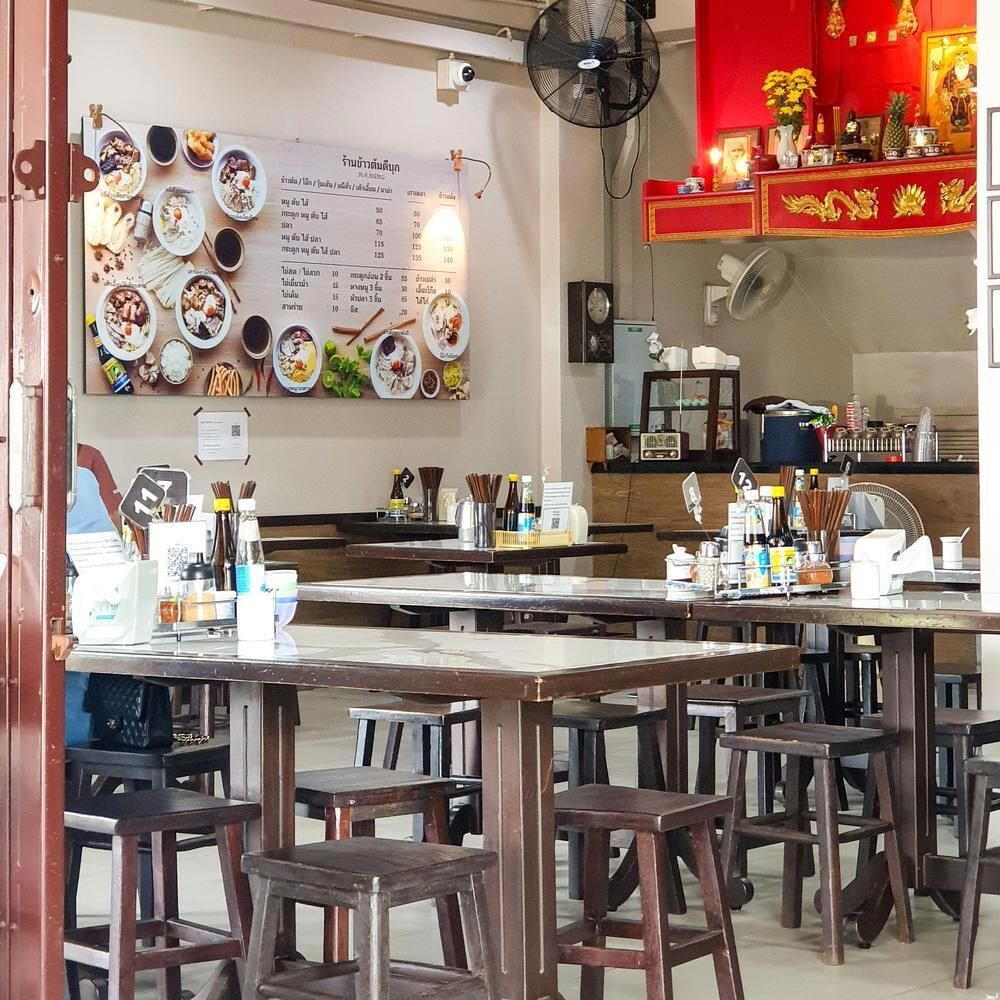
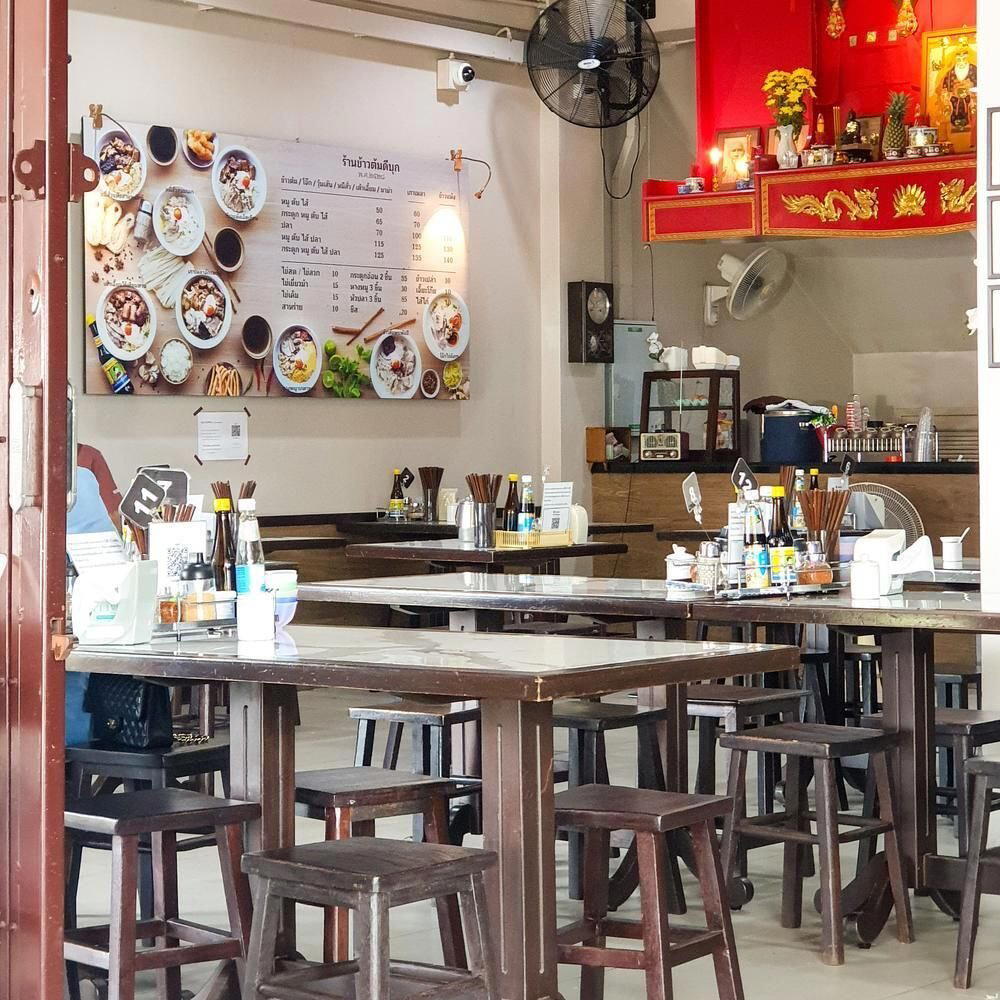
On Phangnga Road in Phuket's old town, Khao Tom Thanon Di Buk has earned consecutive Michelin Bib Gourmand recognition in 2024 and 2025 for its congee and noodle dishes rooted in the Hokkien-Thai cooking traditions that shaped the island's street food culture. It sits at the single-baht price tier, making it one of the most accessible Michelin-recognised addresses in southern Thailand.

Pearl is the En Primeur Club membership app, where members save venues, book tables and use the concierge.
The menu
What to order
- Khao Tom porridge
- Chinese brown soup
- Kaya sandwiches
Where Phuket's Hokkien-Chinese Roots Meet the Bowl
Phangnga Road runs through the heart of Phuket's Sino-Portuguese old town, past shophouses whose facades have been absorbing the humidity and soot of a century of street cooking. This is where the island's Hokkien-Chinese heritage is most legible: in the architecture, in the shopfront shrines, and in the food. Congee and noodle stalls have occupied this corridor for generations, fed by the same culinary migration that carried khao tom and kuay tiao from Fujian province through the Nanyang trade routes into southern Thailand.
The Tradition Behind the Bowl
Khao tom, or Thai rice congee, occupies a distinct place in the country's food culture that is easy for visitors to underestimate. It is not simply a breakfast dish or a recovery food, though it functions as both. In communities with strong Hokkien-Chinese ancestry, particularly across Phuket, Ranong, and Trang, it operates as a social anchor: a reason to gather late at night, after work, or in the early hours before the day begins properly. The dish demands patience in cooking and restraint in seasoning, relying on long-simmered stock and the quality of the rice rather than aggressive aromatics. That discipline is what separates a well-made khao tom from an ordinary one.
Noodle cooking in this part of Thailand carries similar weight. The Hokkien noodle tradition that arrived in Phuket centuries ago has hybridised with Thai technique, producing dishes that move between Chinese and Thai flavour registers in ways that are hard to replicate in Bangkok's central Thai cooking context. Venues like AKKEE in Pak Kret and Angeum in Phra Nakhon Si Ayutthaya point to how these regional noodle traditions each develop their own local grammar. In Phuket, that grammar is shaped by the tin-mining history, the Baba Nyonya influence, and the particular freshness of the Andaman coast's ingredients.
The Bib Gourmand and What It Signals
The Michelin Bib Gourmand designation, awarded across two consecutive years here, is specifically reserved for venues offering what Michelin's inspectors judge to be high-quality cooking at a price point accessible to most diners. At the single-baht price tier, Khao Tom Thanon Di Buk sits at the floor of Phuket's dining cost range. For context, that positions it well below the ฿฿฿฿ bracket occupied by PRU, Phuket's Michelin-starred modern Thai restaurant, and the ฿฿฿ range of Blue Elephant. Even against local Thai addresses like Baan Rim Pa Patong, this is a different tier entirely.
Within Thailand's Bib Gourmand cohort, congee and noodle addresses appear regularly, reflecting the inspectors' consistent regard for the country's street-food and market-stall tradition. Sorn in Bangkok represents the fine-dining end of Thai recognition; Di Buk operates at the opposite register, where the credibility comes from execution of a daily, repetitive craft rather than from elaborate technique or rare ingredients. The two-year streak suggests the kitchen's consistency, which in high-volume simple cooking is the hardest quality to sustain.
For comparison across the noodle and congee category more broadly, Ho Hung Kee in Hong Kong and Ding Te Le Zhou Mian Guan in Shanghai illustrate how the category earns Michelin attention across different Chinese culinary traditions. The throughline is the same: technical rigour applied to deceptively simple forms.
Phuket's Street Food Tier and Where This Sits
Phuket's recognised street food addresses operate on a different logic than the island's resort restaurants. They reward early timing, tolerance for informal seating, and some familiarity with the local food idiom.
Among the island's Michelin-listed casual addresses, Di Buk shares recognition-tier company with A Pong Mae Sunee, another old-town specialist working in a specifically Phuket street-food tradition. Both belong to a cohort of addresses that define the island's food identity more accurately than its resort dining rooms do. Phuket's culinary character is substantially Peranakan and Hokkien-Chinese in its street register, and venues like these are where that character is most concentrated.
For visitors building a broader picture of Phuket's dining across price tiers and styles, our full Phuket restaurants guide maps the range from street food to fine dining. The island's bar scene, explored in our Phuket bars guide, and its accommodation options in our Phuket hotels guide, sit alongside a broader set of recommendations in our Phuket experiences guide and our Phuket wineries guide.
Those curious about how southern Thailand's regional cooking compares across the country can look at Aeeen in Chiang Mai for the northern register or Agave in Ubon Ratchathani for the northeast. The Spa in Lamai Beach and Acqua in Phuket itself represent the island's non-Thai dining options at the upper end of the price range.
Planning Your Visit
Khao Tom Thanon Di Buk is located at 185 Phangnga Road in Phuket's old town, the Sino-Portuguese district that is walkable from most old-town accommodation and accessible by tuk-tuk or Grab from other parts of the city. No booking method is listed, consistent with the walk-in norm at this category of address. The single-baht price tier means a full meal here costs a fraction of what the island's resort restaurants charge, and the Bib Gourmand recognition provides a reliable quality signal for first-time visitors without local knowledge to draw on.
What should I eat at Khao Tom Thanon Di Buk?
The kitchen's Michelin Bib Gourmand recognition is specifically for its congee and noodle cooking, which places it within the Hokkien-Thai street food tradition of Phuket's old town. Khao tom, the Thai rice congee, is the format the venue is named after, and the style here draws on the same long-simmered, restrained approach that characterises the leading versions of the dish across southern Thailand's Hokkien-Chinese communities. Noodle dishes in this tradition tend to move between Chinese and Thai flavour profiles. The consecutive 2024 and 2025 Bib Gourmand awards from Michelin's inspectors offer the clearest external guide to what is worth ordering: the dishes that demonstrate consistent execution of those core formats.
Frequently asked questions
What style of cooking does Khao Tom Thanon Di Buk do?
What part of town is Khao Tom Thanon Di Buk in?
Khao Tom Thanon Di Buk is located at 185, 11 Phangnga Rd, Taladyai Mueang Phuket District, Phuket 83000, Thailand, Phuket.
Does Khao Tom Thanon Di Buk have a Michelin star or similar recognition?
Khao Tom Thanon Di Buk has received recognition including: Michelin Bib Gourmand (2025); Michelin Bib Gourmand (2024).
What should I eat at Khao Tom Thanon Di Buk?
The Michelin Bib Gourmand recognition, held consecutively in 2024 and 2025, is specifically tied to the congee and noodle cooking here, both of which sit within the Hokkien-Thai tradition that defines Phuket's old-town food culture. The khao tom (rice congee) is the anchor dish. At the ฿ price tier, portions are designed for ordering across several bowls rather than a single set, so a table-level spread across the noodle and congee offerings gives the fullest picture of the kitchen.
Is Khao Tom Thanon Di Buk more mid-range or high-end?
Pricing at Khao Tom Thanon Di Buk is listed as ฿.
Cuisine-First Comparison
| Venue | Cuisine | Price | Awards | Notes |
|---|---|---|---|---|
| Khao Tom Thanon Di BukThis venue (the venue you are viewing) | Thai-Chinese Rice Porridge & Noodles | $1–10 | Michelin Bib Gourmand | Not listed |
| PRU | Modern Thai Fine Dining | $200–300 | 1 Michelin Star · Wine Spectator Award of Excellence | Thai, Modern Cuisine, ฿฿฿฿ |
| Blue Elephant | Refined Southern Thai Fine Dining | $50–100 | Michelin Plate | Not listed |
| Acqua | Modern Italian Fine Dining | $50–100 | Michelin Plate · La Liste Top Restaurants | Not listed |
| Baan Rim Pa Patong | Royal Thai Cuisine | Not listed | Wine Spectator Award of Excellence | Not listed |
| Chuan Chim | Thai-Chinese Seafood | $10–20 | Michelin Bib Gourmand | Not listed |
Recognition history
Dated appearances from independent guides and award organizations, with the underlying list record or original source where available.
Michelin Bib Gourmand
Michelin
Full recognition history (2 entries)
Michelin Bib Gourmand
Michelin