Michelin Plate
Our verdict
Mook Manee distills the essence of Thailand’s coastal abundance into a refined, riverside dining experience that speaks to discerning palates. Celebrated for pristine seafood sourced daily and delicately prepared with reverence for regional recipes, the restaurant balances authenticity with nuance—bright citrus, gentle heat, and fragrant herbs layered with graceful restraint. In a serene setting that favors hushed conversation and attentive service, guests savor a procession of impeccably timed courses—crystal-clear soups, succulent river prawns, and aromatic shellfish—each dish capturing the rhythm of tide and season. The result is a quietly luxurious culinary journey that lingers like a sunset over the Chao Phraya—radiant, balanced, and unforgettable.

Pearl is the En Primeur Club membership app, where members save venues, book tables and use the concierge.
The menu
What to order
- Stir-fried clams with chilli paste
- Cheese-baked scallops
- Garlic fried glass noodles with crab
Where Rawai's Waters Come to the Table
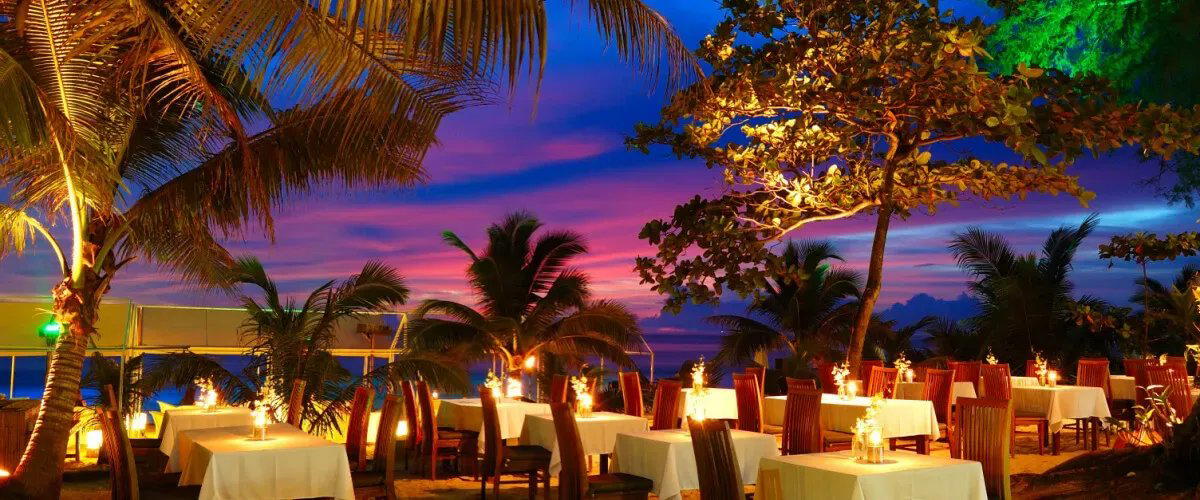
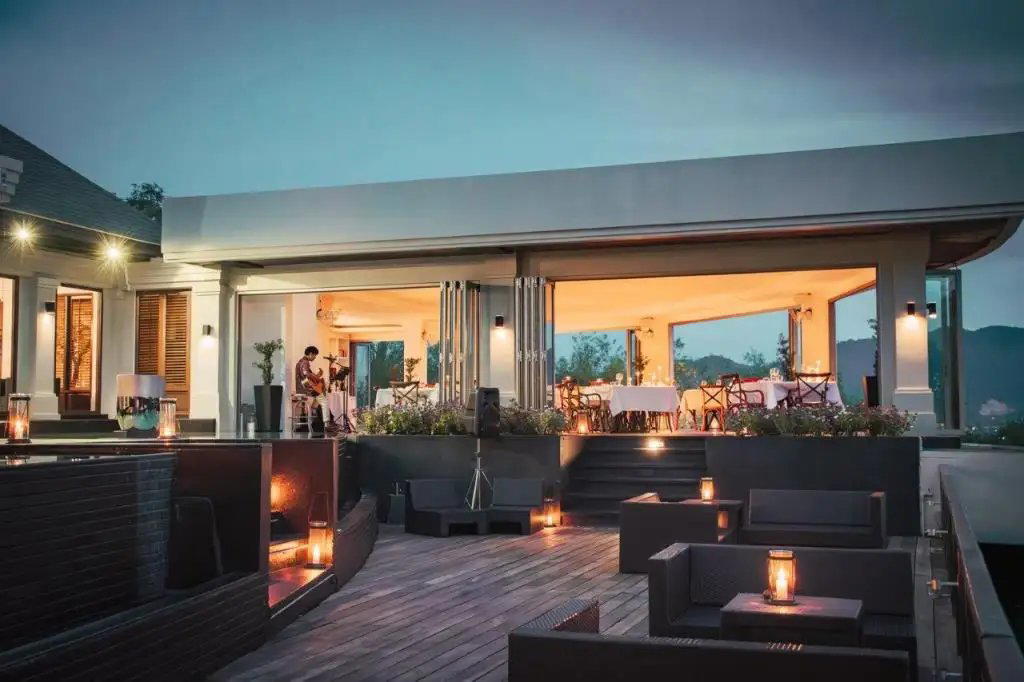
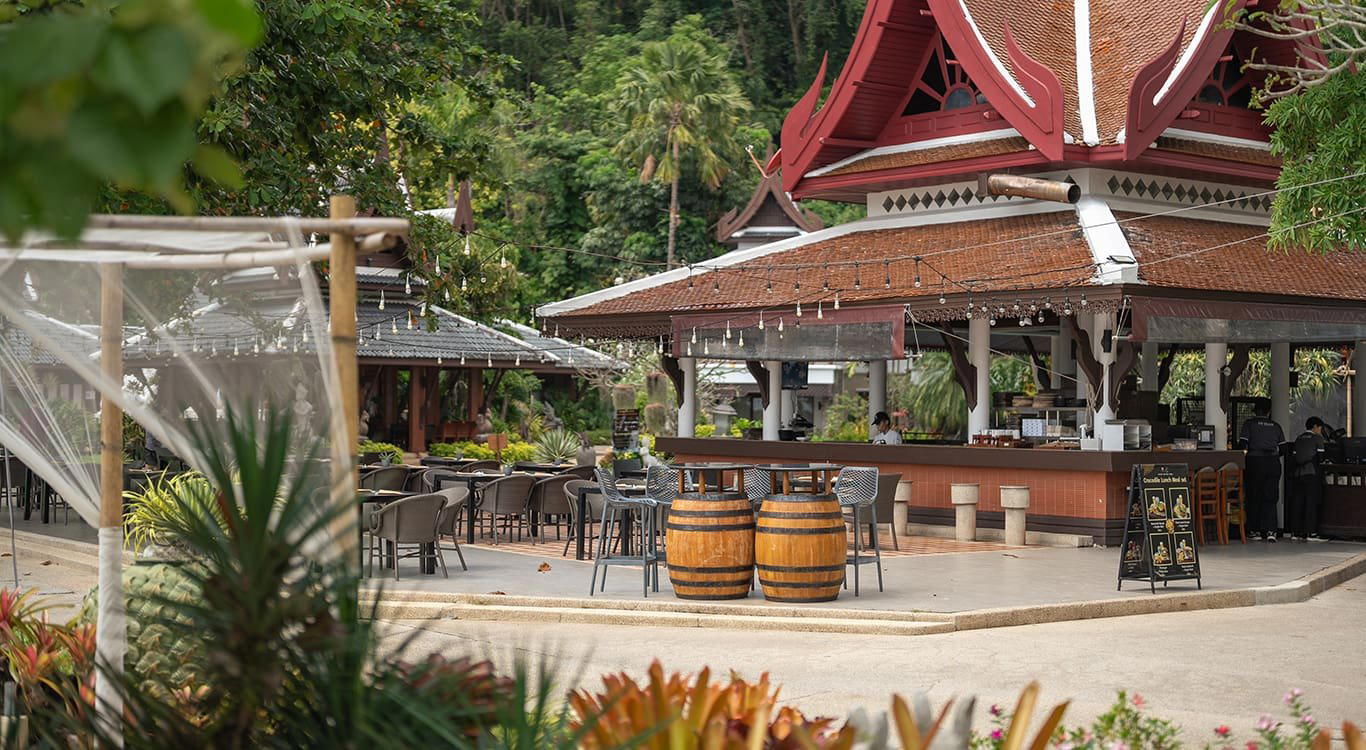
Approach Rawai in the early evening and the southern tip of Phuket reveals a different register from the resort-heavy north. The road along Wiset runs close to the shoreline, and the seafood market that operates in front of Mook Manee is already in motion before you sit down, crates of live catch, the smell of salt water and charcoal, vendors and fishing families conducting business in the same strip of pavement that feeds the restaurant's kitchen. The dining room, which accommodates up to 300, doesn't obscure this. The seats with direct sightlines to the market activity outside are the ones worth asking for, and the wooden beach terrace extends the room further toward the water.
This is the character of southern Thai seafood dining at its most direct: the supply chain is visible, the provenance is immediate, and the fish on your plate was swimming in the Andaman Sea hours before service. That context matters when reading the menu.
The Andaman Catch: What Makes These Waters Specific
The Andaman Sea, which washes the western coast of the Thai-Malay peninsula, is a warm, shallow body sheltered by island chains and fed by monsoon-driven nutrient cycles. It produces a different catch profile from the Gulf of Thailand on the east coast, the squid here tend to be larger and meatier, the crab varieties include mud crab and flower crab alongside the stone crab species more common in the gulf, and the lobster population sustains the Phuket rainbow lobster, a local variant that reaches weights of 3kg and commands premium pricing across the island's seafood restaurants.
Mook Manee holds live specimens across these categories for diners to select before cooking. That format, choosing from tanks or trays rather than ordering off a static menu, is standard practice at serious Thai seafood houses, but the range on display here is broad: squid, tiger prawns, multiple crab species, and the Phuket rainbow lobster among them. The selection at any given visit depends on what came in that day, which is the correct way to read any live-seafood operation. For comparison, Go Ang Seafood takes a similarly market-driven approach in its own Phuket setting, while Kruvit Raft (Ban Laem Hin) pitches its seafood offer with waterside positioning as part of the experience.
Among the kitchen preparations, the stir-fried clams with chilli paste is documented as a menu highlight, a dish that relies on the fragrance of Southern Thai roasted chilli paste meeting the brininess of short-cooked shellfish. Southern Thai cooking uses a heavier hand with turmeric, dried spice, and fermented shrimp paste than central Thai cooking does, and that regional identity shows in preparations like this one. The warm, humid Andaman climate and the long coastline that runs from Ranong to Satun have shaped a distinct seafood tradition that is less well-documented internationally than the central Thai canon but recognized within Thailand's food culture as a separate discipline.
Michelin Recognition in a Market-Stall Setting
Mook Manee has held a Michelin Plate in consecutive years, 2024 and 2025, placing it in the tier of Phuket restaurants that the Michelin Guide considers worth a visit, even if not yet within star range. The Plate designation, which Michelin uses to denote kitchens producing good food, is a meaningful signal in a city where the guide's Phuket coverage now spans a range from street-adjacent operations to fine-dining rooms. At the ฿฿ price bracket, Mook Manee sits well below the island's fine-dining tier, PRU (Thai, Modern Cuisine) and Acqua (Italian) both operate at ฿฿฿฿, and in the same accessible range as Chuan Chim and other mid-market Thai tables on the island.
That price-to-recognition ratio is part of what makes the southern Phuket seafood scene interesting. Michelin's Phuket selections have consistently included casual and market-adjacent restaurants alongside hotel dining rooms, and Mook Manee's continued listing reflects the guide's stated interest in finding kitchens where the quality of ingredient sourcing and cooking technique justifies inclusion regardless of format or setting. For a broader picture of how Phuket's recognized restaurants are distributed across cuisines and price points, our full Phuket restaurants guide covers the current field.
Within the Thai seafood category nationally, the Michelin-recognized tier includes restaurants at varying scales and price points. Sorn in Bangkok represents the high end of Southern Thai cuisine's critical recognition, while AKKEE in Pak Kret and Aeeen in Chiang Mai illustrate how regional Thai cooking is earning attention in different parts of the country. Internationally, the live-tank-to-table format that defines places like Mook Manee has a clear parallel in Mediterranean coastal dining: Gambero Rosso in Marina di Gioiosa Ionica and Alici Restaurant on the Amalfi Coast both work within a similar philosophy of proximity to the catch.
Rawai vs. the Rest of Phuket's Seafood Strip
Rawai's seafood identity is older and less curated than Patong or Kata's dining scenes. The area developed around fishing communities before tourism reshaped the island's north and west coasts, and the Rawai seafood market on the beach predates most of what passes for a restaurant destination elsewhere in Phuket. That history gives the southern dining corridor a different character: less design-conscious, more operationally focused on volume and freshness, with a local clientele that provides a baseline of demand independent of tourist flows.
The 300-seat capacity at Mook Manee is consistent with that tradition of high-volume operations built for families and groups. Thai seafood dining of this kind is structured differently from European tasting-menu formats or intimate omakase counters, the expectation is shared plates, multiple species prepared in multiple ways, and ordering at a volume that lets the kitchen demonstrate range. A solo visit produces a narrower picture than a table of four or six choosing across the tanks and the kitchen menu.
Planning Your Visit
Mook Manee is located at 1120 Wiset Road in Rawai, in the Mueang Phuket District, the southernmost accessible stretch of the island's west-facing coast, roughly 45 minutes from Phuket International Airport depending on traffic. The Rawai seafood strip is walkable once you're in the area, making it practical to combine a meal with time at the market. The beach terrace is worth requesting if conditions allow, particularly in the dry season between November and April when the Andaman coast is at its most settled. The monsoon months (May to October) bring heavier weather to this coast, which can affect both the catch profile and the outdoor seating.
For visitors organizing a fuller Phuket trip around food, drink, and accommodation, our full Phuket hotels guide, our full Phuket bars guide, our full Phuket experiences guide, and our full Phuket wineries guide cover the broader options. For street-level contrast after or before a seafood dinner, A Pong Mae Sunee represents the island's snack and street-food register, and Angeum in Phra Nakhon Si Ayutthaya and Agave in Ubon Ratchathani illustrate the range of regional Thai dining available beyond Phuket on a longer Thailand itinerary. The Spa in Lamai Beach offers another coastal dining reference point in the broader southern Thai islands region.
What to Order at Mook Manee
What should I order at Mook Manee?
Start with the live tanks and select based on what arrived that day, the Phuket rainbow lobster, tiger prawns, and crab are the categories the kitchen is recognized for. The stir-fried clams with chilli paste is explicitly listed as a highlight: a Southern Thai preparation that carries the roasted, fermented depth of the region's spice tradition. Order across species rather than concentrating on one, and use the kitchen's range of preparation methods, grilled, wok-fried, and steamed, to cover the catch's different textures.
Frequently asked questions
What's the pricing like at Mook Manee?
Pricing at Mook Manee is listed as ฿฿.
Does Mook Manee have a Michelin star or similar recognition?
Mook Manee has received recognition including: Located near Rawai Beach, Mook Manee stands out for its array of live seafood for diners to choose from, including squid, tiger prawns, a variety of crabs, and 3kg Phuket rainbow lobster. The restaurant holds up to 300, but the best seats o….
What should I order at Mook Manee?
The live tanks are the starting point: select from the Phuket rainbow lobster (available up to 3kg), tiger prawns, and crab based on the day's catch. The kitchen's documented standout is the stir-fried clams with chilli paste, a fragrant preparation that reflects the southern Thai cooking style the restaurant is built around. Mook Manee's two consecutive Michelin Plates (2024 and 2025) were earned in a market-adjacent setting at ฿฿ pricing, so the value is in ordering broadly across the live seafood selection rather than a fixed menu.
What should I expect cuisine-wise at Mook Manee?
Cuisine and Awards Snapshot
| Venue | Cuisine | Price | Awards | Notes |
|---|---|---|---|---|
| Mook ManeeThis venue (the venue you are viewing) | Thai Seafood | $20–30 | Michelin Plate | Not listed |
| PRU | Modern Thai Fine Dining | $200–300 | 1 Michelin Star · Wine Spectator Award of Excellence | Thai, Modern Cuisine, ฿฿฿฿ |
| Blue Elephant | Refined Southern Thai Fine Dining | $50–100 | Michelin Plate | Thai, ฿฿฿ |
| Acqua | Modern Italian Fine Dining | $50–100 | Michelin Plate · La Liste Top Restaurants | Italian, ฿฿฿฿ |
| Baan Rim Pa Patong | Royal Thai Cuisine | Not listed | Wine Spectator Award of Excellence | Thai |
| Chuan Chim | Thai-Chinese Seafood | $10–20 | Michelin Bib Gourmand | Thai, ฿฿ |
Recognition history
Dated appearances from independent guides and award organizations, with the underlying list record or original source where available.
Michelin Plate
Michelin
Full recognition history (3 entries)
Michelin Plate
Michelin
Michelin Plate
Michelin