


1 Michelin Star · Tabelog Bronze #347
Our verdict
Gion Owatari sits in Kyoto’s high-priced kaiseki tier, where counter intimacy, ingredient control and dashi work matter more than spectacle. Mahito Owatari’s eight-seat Gion room carries Michelin one-star recognition, a 2026 Tabelog Bronze Award and placement on OAD’s 2026 Japan ranking, making it a serious address for diners comparing Kyoto’s ingredient-led Japanese cuisine at the upper end.

Pearl is the En Primeur Club membership app, where members save venues, book tables and use the concierge.
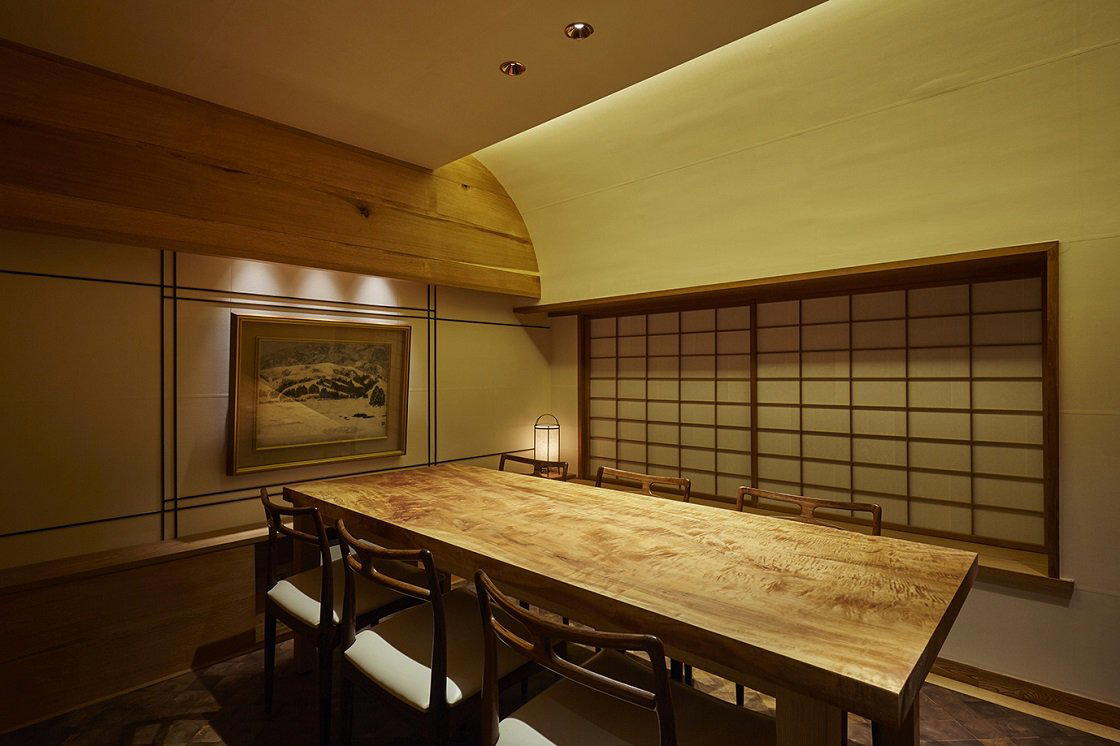
Gion at dinner has a particular compression: lantern light, narrow approaches, the low volume of a district trained to make ceremony feel ordinary. Inside the small counter format, Kyoto kaiseki becomes less about theatrical procession than about calibration. The diner is close enough to read the pace of service and the kitchen’s decisions, but the real subject is the material: stock, fish, vegetables and the season’s discipline.
That matters in Kyoto because kaiseki here is not a generic luxury category. It is a competitive language with strict grammar. The city’s serious Japanese restaurants are judged by how they handle dashi, how they pace seasonal ingredients, and how little they need to announce themselves. Gion Owatari belongs to that school, with Mahito Owatari attached to a room that has earned a Michelin one-star listing, The Tabelog Award 2026 Bronze, a 4.08 Tabelog score, and a place at number 107 on Opinionated About Dining’s 2026 Japan ranking. Those signals put it in the same conversation as Kyoto’s established kaiseki addresses rather than in the broader category of polished Japanese dining.
Dashi, fish and the quieter end of Gion kaiseki
Ingredient-forward kaiseki in Kyoto often begins before a plate looks elaborate. The base stock determines the register of the meal, and here the public description points directly to dashi made with maguro-bushi and Kyoto water. That is a telling detail. Kyoto cuisine has long leaned on water quality, preservation techniques and seasonal produce rather than heavy seasoning, and a restaurant choosing to foreground its stock is effectively telling diners where to pay attention.
The format also shapes expectations. An eight-seat counter compresses the distance between preparation and service, but it also raises the standard for restraint. In larger rooms, hospitality can carry weak pacing; at a counter, every transition is exposed. The fish emphasis and sake-wine program place the meal in a contemporary Kyoto pattern: traditional Japanese structure, precise sourcing, and drinks handled with enough seriousness to include sommelier service without turning the experience into a wine-led performance.
This is where comparisons help. Gion Maruyama, Gion Nishikawa and Gion Sasaki operate in the same Gion kaiseki orbit, where price tier, ritual and seasonal fluency are already assumed. Godan Miyazawa and Hyotei widen the frame, showing how Kyoto Japanese cuisine can move from counter intimacy to deeper institutional formality. Against that group, Gion Owatari reads as compact and ingredient-led: a room where the meal’s argument is carried by stock and product rather than decorative scale.
Why the small counter changes the stakes
Kyoto has many restaurants that look formal from the outside. The more useful distinction is not formal versus relaxed, but how much of the meal depends on direct kitchen contact. Counter kaiseki has a different rhythm from private-room service. It asks diners to engage with timing, sequence and temperature, while also accepting that conversation and movement are more controlled than in a casual restaurant. The absence of private rooms reinforces that point: this is a shared counter experience, not a secluded banquet.
The award pattern is also instructive. Tabelog Bronze in 2026, Silver in 2020 and 2021, Bronze entries across multiple recent years, and selection for Tabelog Japanese Cuisine WEST 100 in 2025, 2023 and 2021 show sustained Japanese diner recognition rather than a single flash of international attention. OAD’s 2026 Japan ranking adds another lens, useful because it captures a different audience from local review culture. Michelin one-star status provides the international shorthand, but the local recognition is the more revealing signal for Kyoto kaiseki, where repeat domestic approval carries weight.
The chef’s name belongs in that context, not as biography. Mahito Owatari anchors the room, but Kyoto’s kaiseki hierarchy is less interested in personality cult than in execution over time. A counter with this few seats has limited tolerance for inconsistency. The restaurant’s repeated Tabelog recognition suggests that regular diners see continuity in the cooking’s core values: fish, dashi, seasonal structure and the kind of service rhythm that does not need amplification.
How to place it within a Kyoto trip
For travelers building a Kyoto dining sequence, this is not the meal to schedule as an introduction to Japanese cuisine on arrival night. It is better placed after a diner has some footing in the city’s grammar: market seasonality, temple-adjacent formality, the difference between kappo and kaiseki, and the way Gion dining compresses public quiet with private intensity. A counter seat here will make more sense after seeing how Kyoto handles restraint across different formats.
It also suits a particular kind of itinerary. If the trip is built around kaiseki, pairing Gion with one broader-format traditional meal creates contrast. If the trip is broader, one serious counter meal can carry the fine-dining slot while leaving space for Kyoto’s bars, tea culture and temple-side eating. For wider planning, use Our full Kyoto restaurants guide alongside Our full Kyoto hotels guide, Our full Kyoto bars guide, Our full Kyoto wineries guide and Our full Kyoto experiences guide.
Readers comparing Japanese dining beyond Kyoto can use the contrast profitably. Ginza Kojyu, Kaiseki, Japanese in Tokyo places kaiseki in a Tokyo fine-dining frame, while Aburi Hana, Kaiseki, Japanese in Toronto shows how the format changes outside Japan. For a looser scan of Japanese and Asia-adjacent listings across the platform, there are also entries such as -Grilled beef Sukiyaki- KAMAKURA TANUKIAN 鎌倉 たぬき庵 in Kamakura. 鮪と炭火焼き うお炭 秋葉原店 in Tokyo.cafe in Osaka.know in Kumamoto, (Shoku) Vietnam in Kawasaki and [Curry Senmon Ten] Maruyama Kyoju. in Sapporo.
The editorial case is clear: Gion Owatari is for diners who want Kyoto kaiseki at close range, with the meal’s authority coming from raw materials and stock rather than spectacle. The room’s scale, counter-only feel, repeated local recognition and international award signals make it a focused choice in a city where serious Japanese dining can otherwise blur into reverent sameness.
Frequently asked questions
Would Gion Owatari be comfortable with kids?
The 8-seat counter and dinner-only format in Kyoto make it a harder fit for younger children than a larger à la carte restaurant. Gion Owatari is set up as a focused kaiseki room, not a casual family dining spot.
Is Gion Owatari formal or casual?
It leans formal: kaiseki, an 8-seat counter, and a ¥¥¥¥ price band set the tone immediately. The room is intimate rather than theatrical, but the service format in Gion is closer to a serious dinner reservation than a drop-in meal.
Is Gion Owatari focused on a specific cuisine style?
Gion Owatari serves Kaiseki, Japanese cuisine.
What's the pricing like at Gion Owatari?
Pricing at Gion Owatari is listed as ¥¥¥¥.
The Essentials
Side-by-side context: comparable cuisine and price.
| Venue | Cuisine | Price | Awards | Notes |
|---|---|---|---|---|
| Gion OwatariThis venue (the venue you are viewing) | Traditional Kaiseki | $300–500 | 1 Michelin Star · Tabelog Bronze #347 | Not listed |
| Gion Maruyama | Kyoto Kaiseki | $200–300 | 2 Michelin Stars · La Liste Top Restaurants | Kaiseki, Japanese |
| Jiki Miyazawa | Modern Kaiseki | $100–150 | 1 Michelin Star | Kaiseki, Japanese |
| Gion Nishikawa | Michelin-Starred Kaiseki | $200–300 | 2 Michelin Stars · La Liste Top Restaurants | Kaiseki, Japanese |
| Kodaiji Wakuden | Luxury Kaiseki | $300–500 | 2 Michelin Stars · La Liste Top Restaurants | Kaiseki, Japanese |
| Gion Sasaki | Modern Kaiseki | $300–500 | 3 Michelin Stars · La Liste Top Restaurants | Kaiseki, Japanese |
Recognition history
Dated appearances from independent guides and award organizations, with the underlying list record or original source where available.
Michelin 1 Star
Michelin
Opinionated About Dining Top Restaurants in Japan Ranked #107
Opinionated About Dining
Tabelog Bronze #347
Tabelog
Full recognition history (6 entries)
Tabelog 100 #46 · No. 46
Tabelog · Tabelog 100 - Japanese cuisine - WEST - 2025
Tabelog Bronze
Tabelog
Michelin 1 Star
Michelin
Continue exploring
More in Kyoto
Restaurants in Kyoto
All restaurants in Kyoto →
Bars in Kyoto
All bars in Kyoto →
Hotels in Kyoto
All hotels in Kyoto →
Wineries in Kyoto
Browse all →
Details
- Intimate
- Elegant
- Cozy
- Classic
- Special Occasion
- Date Night
- Chefs Counter
- Historic Building
- Sake Program
- Tasting Menu
- Counter Dining
- Sake
Current opening hours
- Monday
- 4:30–9 p.m.
- Tuesday
- 4:30–9 p.m.
- Wednesday
- 4:30–9 p.m.
- Thursday
- 4:30–9 p.m.
- Friday
- 5–9 p.m.
- Saturday
- 4:30–9 p.m.
- Sunday
- 4:30–9 p.m.
Hours can change for holidays and private events. Hours as of .
Cozy, homely atmosphere in a beautifully renovated traditional machiya house with relaxing Japanese decor and warm hospitality.