Gigas



1 Michelin Star · We're Smart World 3 Radishes
Our verdict
Gigas holds a Michelin star and a We're Smart 3-Radish rating, making it one of the few Mediterranean-focused restaurants in Seoul operating at this level. The kitchen draws almost exclusively from an organic family farm, with vegetables as the structural core of every plate. Priced at ₩₩₩, it sits a tier below Seoul's most expensive tasting counters while delivering a format that rewards repeat visits.

Pearl is the En Primeur Club membership app, where members save venues, book tables and use the concierge.
Where Mediterranean Cooking Takes Root in Seoul
Mediterranean cuisine occupies a narrow lane in Seoul's dining scene. The city's top-tier restaurant culture tends to cluster around Korean fine dining, French-Korean hybrids, and contemporary tasting formats, venues like Mingles, Jungsik, and Soigné define the competitive center. Gigas operates outside that mainstream, which is precisely the source of its reputation among those who return regularly. A Michelin star awarded in 2024 and a We're Smart 3-Radish recognition confirm that this outlier position hasn't come at the cost of critical standing.
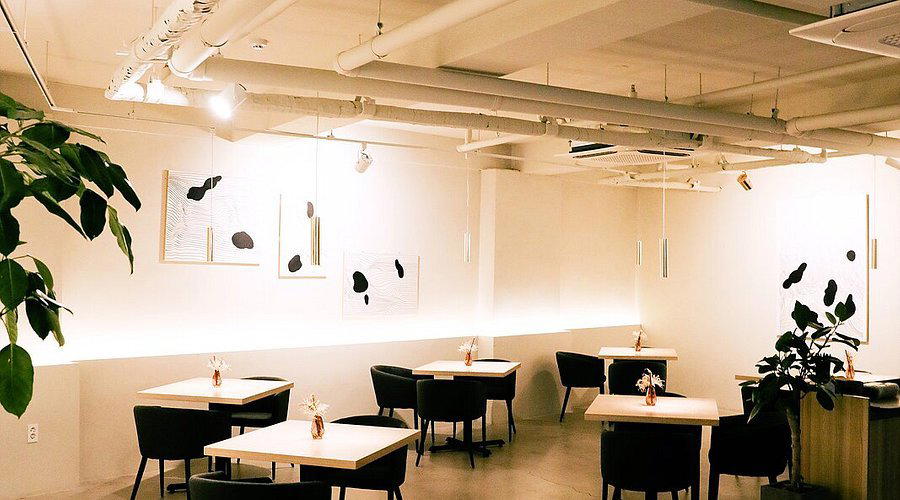
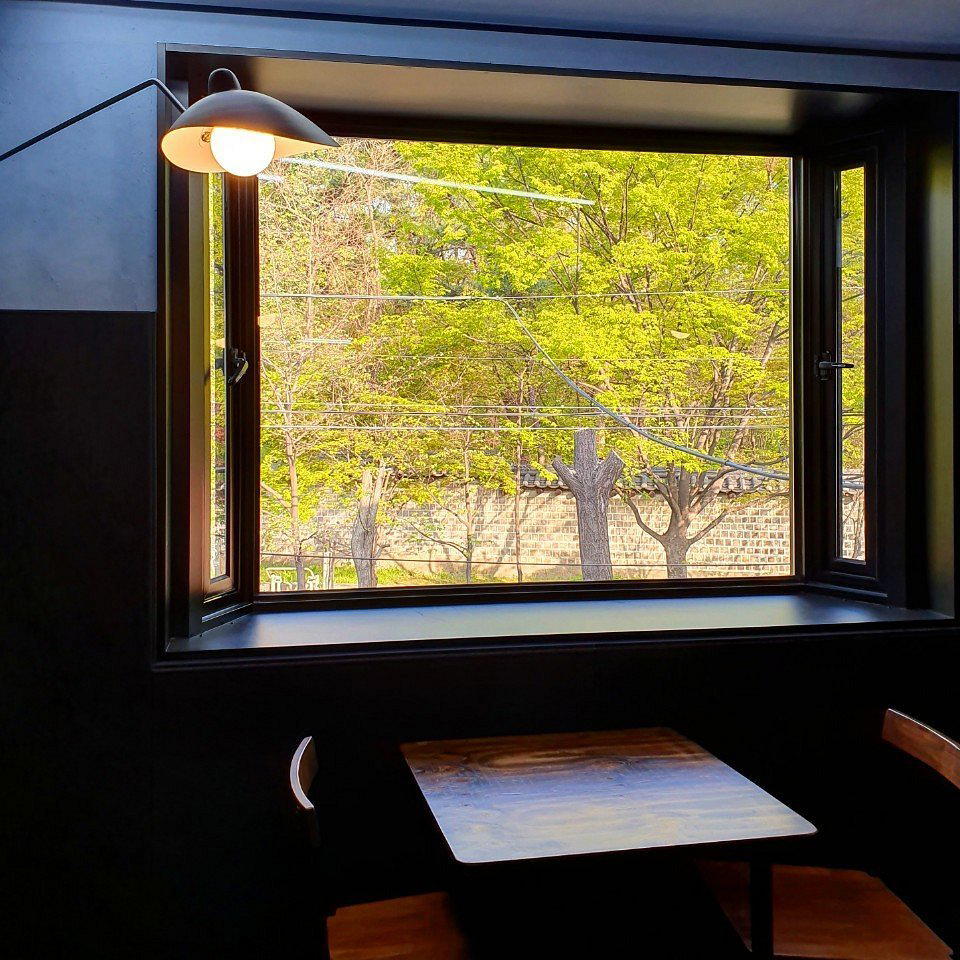
The restaurant sits on the third floor of a building along Toegye-ro 6ga-gil in Jung District, a part of central Seoul that carries the layered texture of old and new that defines much of the city's inner core. Getting there by subway is direct, the area is well-connected to the central Seoul transit grid, and the building's upper-floor placement keeps the dining room insulated from street-level noise. That physical remove contributes to the focused quality of a meal here: you're not watching the city rush past the window, you're concentrated on what arrives at the table.
The Farm as Kitchen Infrastructure
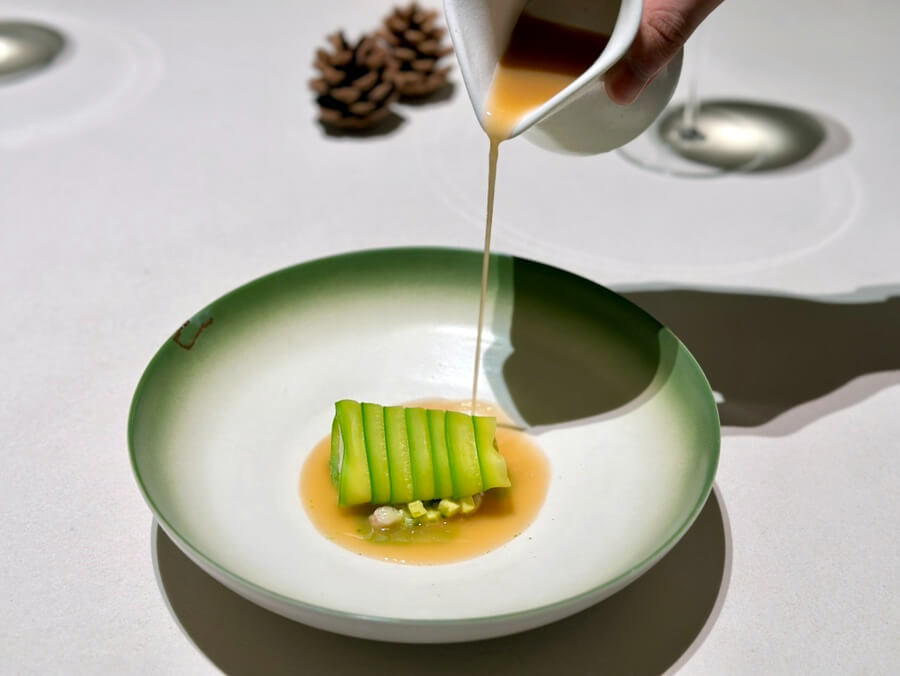
For regulars at Gigas, the through-line that brings them back isn't a single dish or a seasonal menu trick, it's structural consistency rooted in how the kitchen is supplied. The restaurant draws its organic vegetables almost entirely from a family farm, an arrangement that makes it largely self-sufficient in produce. In practical terms, this means the vegetable supply doesn't pivot on Seoul's wholesale market timing or import availability. Ingredients arrive with provenance certainty, which removes a variable that causes inconsistency at other farm-to-table operations where the sourcing claim is aspirational rather than operational.
Mediterranean cooking, in its most honest form, is already a vegetable-forward tradition, it doesn't need to be retrofitted to accommodate plant-centered plates. Gigas works within that logic without the performative gestures that can accompany vegetable-forward menus elsewhere. Vegetables here aren't positioned as substitutes for a protein-anchored plate; they occupy the center of the architecture by default. The We're Smart recognition, which specifically evaluates how chefs engage with plant-based creativity at a serious culinary level, reflects exactly this.
What Keeps the Regulars Returning
Restaurants in Seoul's ₩₩₩ tier, which Gigas occupies, placing it a step below the ₩₩₩₩ pricing of venues like Kwonsooksoo, Kwon Sook Soo in Gangnam, and contemporary formats such as alla prima, tend to attract a mix of first-time visitors drawn by awards and a core group of regulars who came for the novelty and stayed for something else. At Gigas, that something else is the coherence of the food over multiple visits. Because the vegetable supply is consistent and the cuisine sits within a defined Mediterranean framework rather than a constantly shifting contemporary tasting menu, the kitchen doesn't need to reinvent its identity each season. Regulars know what they're returning to, and seasonal variation arrives through ingredient cycles rather than conceptual pivots.
For a venue of this specificity, that's a reasonable profile.
For those who have dined repeatedly at Gigas, the vegetable-forward Mediterranean format also operates as a kind of palate recalibration. Seoul's fine dining scene leans protein-heavy at many price points, and the concentrated, farm-sourced vegetable cookery here reads differently after multiple visits than it does on the first. What initially registers as novelty becomes legible as a consistent culinary language, one that rewards attention rather than demanding it.
Mediterranean Cooking in a Korean Context
Reconstructing Mediterranean cuisine in Seoul is a supply chain problem before it's a culinary one. Olive oils, specific legumes, certain stone fruits, fresh herbs in Mediterranean volumes, these ingredients either arrive through specialized importers at refined cost or require domestic substitution that undermines authenticity. Gigas sidesteps part of this through its farm operation, which addresses the organic vegetable side of the equation directly. The result is a version of Mediterranean cuisine that draws credibility from sourcing discipline rather than from faithful recreation of a specific regional menu.
The comparison to Mediterranean-focused restaurants operating in their home contexts, venues like La Brezza in Ascona, Arnaud Donckele and Maxime Frédéric at Louis Vuitton in Saint-Tropez, or Beat in Calp, is instructive. Those restaurants operate with native ingredient access and cultural continuity. Gigas operates without either, which means its Mediterranean identity rests on principle and technique rather than on place. That distinction matters for understanding what Chef Jung Hawan is actually doing: building a coherent cuisine from a foundational commitment to organic supply and vegetable priority, then expressing that through a Mediterranean lens rather than a Korean one.
For Seoul diners accustomed to the Korean fine dining benchmark set by places like Gaon, Gigas represents a genuinely different entry point. The cooking doesn't reference Korean tradition or attempt a fusion synthesis. It holds to its chosen cuisine type with enough seriousness that the Michelin committee recognized it at the one-star level in 2024, a signal that the format carries weight in a city where the guide has plenty of technically strong options to evaluate.
Korea's Wider Dining Circuit
Beyond Seoul, the regional dining circuit includes venues like Mori in Busan and Baegyangsa Temple in Jangseong-gun, which approach Korean ingredients and tradition from very different angles than a Seoul Mediterranean tasting room. The range across these venues illustrates how Korean fine dining is not monolithic, the Michelin and We're Smart recognition systems are cataloguing a diverse field, and Gigas earns its place in that field through specificity of concept rather than volume of output.
Those planning extended time in Seoul can cross-reference Gigas against the full range of options in our Seoul restaurants guide, and extend into the city's drinking and hospitality culture through our Seoul bars guide, our Seoul hotels guide, our Seoul wineries guide, and our Seoul experiences guide. The restaurant also sits usefully alongside other ₩₩₩ Seoul options such as The Flying Hog in Seogwipo for those comparing price tiers across the broader Korean dining scene.
Planning a Visit
Gigas is priced at ₩₩₩, which positions it at a moderate premium relative to casual dining in Seoul but below the top tier of ₩₩₩₩ tasting counters. The restaurant is located at 30 3층, Toegye-ro 6ga-gil, Jung District, Seoul, the third-floor address is worth confirming before arrival. No phone or website is listed in the public record, which suggests reservations are most reliably managed through third-party booking platforms or direct inquiry. Given the Michelin star awarded in 2024 and the specificity of the format, booking lead time is worth building in, particularly for weekend evenings. The restaurant's organic farm supply base means the menu follows agricultural seasonality, so the experience in spring will read differently than in late autumn, a practical consideration for those who plan to visit more than once.
Frequently asked questions
What type of food is Gigas known for?
What does dinner at Gigas typically cost?
Pricing at Gigas is listed as ₩₩₩.
Does Gigas have a Michelin star or similar recognition?
Gigas has received recognition including: Chef Jung Hawan finds his inspiration in the family’s organic farm. At Gigas, this makes the restaurant nearly self-sufficient when it comes to supplying organic vegetables. The young chef defines his cuisine as Mediterranean, quite unique….
What dish is Gigas famous for?
Gigas doesn't hinge its reputation on a single signature dish. The kitchen's identity comes from its organic vegetable programme, supplied largely by Chef Jung Ha-wan's family farm, which puts produce at the centre of every plate. The We're Smart Green Guide recognised this approach with a 3-Radish award, placing Gigas among the most vegetable-focused restaurants in Seoul.
Is Gigas open every day?
Hours at Gigas: Location.
Where is Gigas located?
Gigas is located at South Korea, Seoul, Jung District, Toegye-ro 6ga-gil, 30 3층, Seoul.
What's the defining dish or idea at Gigas?
The defining idea is structural rather than dish-specific: a near self-sufficient supply chain built on a family-owned organic farm, feeding a Mediterranean menu in a city where that cuisine has almost no footprint. Michelin awarded the restaurant one star in 2024, and We're Smart's 3-Radish rating further singles out the kitchen's commitment to vegetables as a primary ingredient rather than a garnish.
Budget and Context
| Venue | Cuisine | Price | Awards | Notes |
|---|---|---|---|---|
| GigasThis venue (the venue you are viewing) | Organic Mediterranean Fine Dining | $100–150 | 1 Michelin Star · We're Smart World 3 Radishes | Not listed |
| 7th Door | Modern Korean Fermentation Fine Dining | $100–150 | 1 Michelin Star · World's 50 Best #49 | Korean, Contemporary |
| Solbam | Contemporary Neo-Classical Korean | $200–300 | 1 Michelin Star · World's 50 Best #55 | Contemporary |
| Onjium | Modern Korean Royal Court Cuisine | Not listed | 1 Michelin Star · World's 50 Best #14 | Korean |
| L'Amitié | Classic French Fine Dining | $100–150 | 1 Michelin Star · La Liste Top Restaurants | French |
| Zero Complex | Modern French Neo-Bistro | $100–150 | 1 Michelin Star · La Liste Top Restaurants | Korean-French, Innovative |
Recognition history
Dated appearances from independent guides and award organizations, with the underlying list record or original source where available.
Michelin 1 Star
Michelin
Opinionated About Dining Top Restaurants in Asia Recommended
Opinionated About Dining
We're Smart World 3 Radishes
We're Smart World
Full recognition history (5 entries)
Michelin 1 Star
Michelin
Michelin 1 Star
Michelin