Muni

A Michelin-starred Japanese counter in Cheongdam-dong, Muni brings kaiseki-influenced precision to one of Seoul's most competitive dining neighbourhoods. Chef Kim Dong-wook trained in Japan and holds certification as a sake sommelier, giving the drinks program a depth that matches the seasonal kitchen. Dinner runs six evenings a week, with sittings from 6 PM to 10 PM.
Pearl is the En Primeur Club membership app — saves, bookings, and concierge access live there. Same editors, same standards.
- Address
- 16 Dosan-daero 72-gil, Cheongdam-dong, Gangnam District, Seoul, South Korea
- Phone
- +82 2-511-1303
- Directions
- Get directions
 Saves & bookings on Pearl
A Back Alley in Cheongdam, a Counter Worth Finding
Cheongdam-dong is Seoul's most performative dining district: flagship restaurants sit behind glass facades on Dosan-daero, luxury brand addresses stack up along the main boulevard, and reservations at the neighbourhood's better-known counters require planning weeks in advance. Against that backdrop, finding a Michelin-starred Japanese counter in a back alley off the main drag is less a surprise than a confirmation of how the district operates. The restaurants that hold their ground in Cheongdam tend to do so on precision and repeat custom, not spectacle. Muni, at 16 Dosan-daero 72-gil, fits that pattern exactly.
The physical approach sets the register before you reach the door. Back-alley addresses in this part of Gangnam typically signal one of two things: a quietly serious kitchen with no interest in foot traffic, or a nightlife-adjacent concept banking on exclusivity as branding. Muni belongs to the first category. The room operates dinner-only across six evenings a week, Sunday closed, which keeps the rhythm deliberate and the kitchen focused.
The Counter as Stage: Cooking as Live Performance
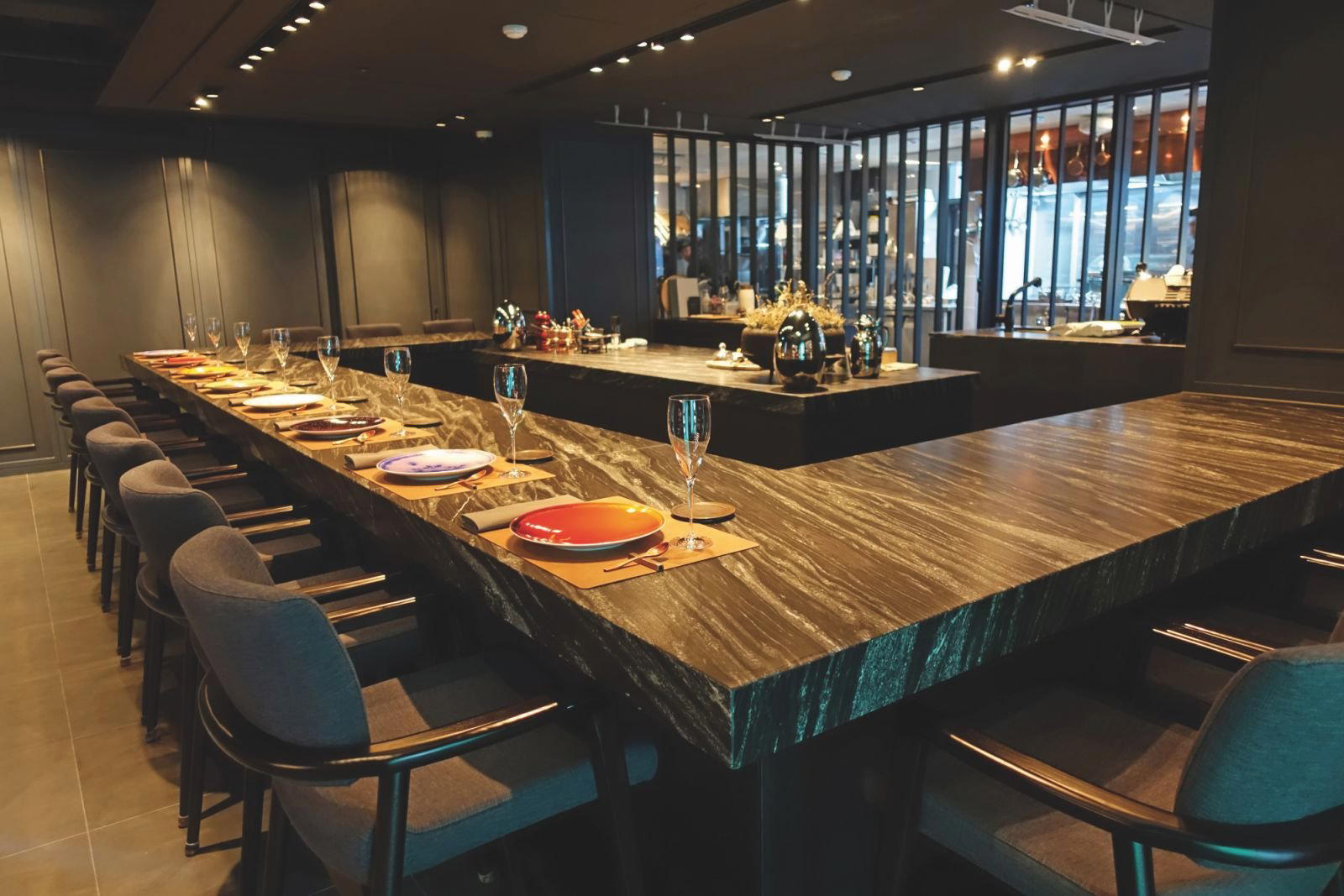
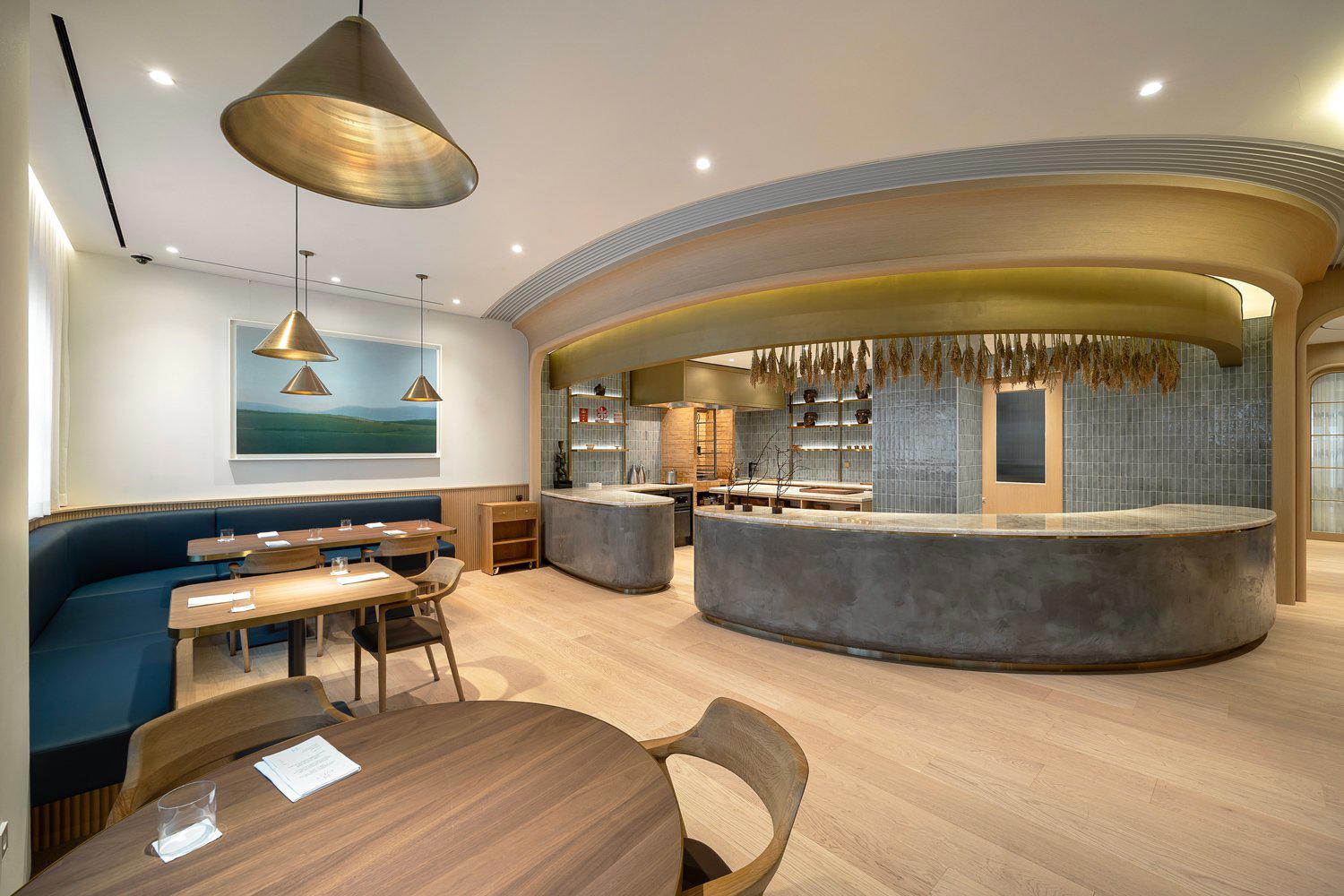
Japanese counter dining in Seoul has expanded considerably over the past decade, moving from a handful of specialist venues in Itaewon and Mapo to a denser cluster of mid-to-high price tier restaurants across Gangnam and Cheongdam. The ₩₩₩₩ price point at Muni places it at the upper end of that cluster, where the expectation at the counter is not simply food delivery but direct engagement with preparation. At this tier, the counter format is the content: watching the sequence of a meal take shape course by course, observing knife work and plating decisions in real time, is what separates a high-end Japanese counter from a conventional tasting menu in a closed kitchen.
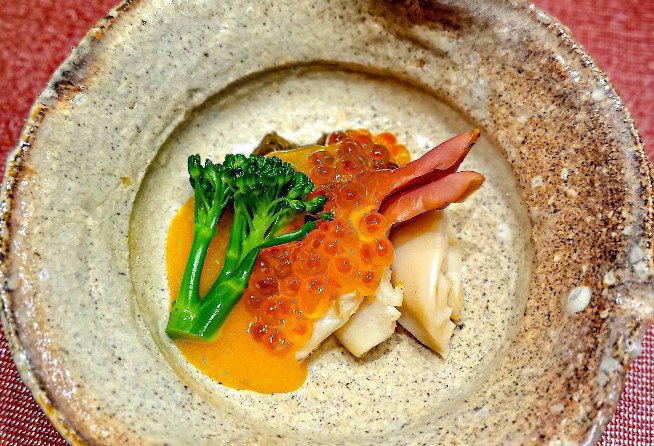
That format has a specific discipline attached to it. Kaiseki, the formal Japanese multi-course tradition rooted in Kyoto and codified over centuries, structures a meal around seasonal ingredients, a prescribed order of courses, and the principle that no single element should dominate. It is one of the more demanding frameworks in professional cooking, precisely because restraint is harder to maintain than elaboration. The approach at Muni draws from that tradition: seasonal ingredients and considered plating are consistent reference points in how the kitchen is described, even if the output does not follow textbook kaiseki to the letter. The distinction matters. A kitchen that respects the grammar of kaiseki without mechanically replicating it tends to produce more interesting food than one that treats tradition as a checklist.
For reference points in the Japanese kaiseki tradition at its most codified form, Isshisoden Nakamura in Kyoto represents the Kyoto source, while Azabu Kadowaki in Tokyo and Myojaku in Tokyo show how the tradition has been adapted within a metropolitan Tokyo context. Muni sits in a third position: kaiseki influence filtered through a Seoul-based Japanese counter, at a price tier that places it among the city's more serious options.
Sake at the Counter: A Credential That Changes the Drink Order
The Kikisake-shi certification held by the chef at Muni is not a commonplace credential. The qualification, awarded by the Japan Sake and Shochu Makers Association, requires demonstrated knowledge across rice variety, regional production methods, food pairing, and service temperature protocols. In practical terms, it means the sake recommendations at this counter carry real technical authority behind them. At ₩₩₩₩ price positioning, where the drinks program typically follows the food in ambition, a sake sommelier running the kitchen rather than the floor shifts the pairing conversation. Ask for recommendations rather than ordering by label, and the meal gains a dimension that a standard wine-by-the-glass service cannot replicate in this context.
Seoul's Japanese restaurant tier has historically been more confident with wine than with sake, partly because the city's fine dining culture developed in parallel with a French-influenced beverage programme. The counter restaurants that have started to treat sake with the same seriousness as a natural wine list represent a smaller, more specialist segment. Muni's approach places it in that segment.
Where Muni Sits in Seoul's Japanese Counter Scene
At the ₩₩₩₩ tier in Seoul, the competitive set for Japanese dining is reasonably well defined. Kirameki and Mitou occupy similar territory in terms of price and format ambition. Sanro and Sobajuu approach Japanese culinary traditions from different angles within the Seoul market. The Michelin one-star recognition Muni holds places it in a verified tier within that set, distinguishing it from unlisted competitors at similar price points.
For context on what the broader Gangnam fine dining scene looks like at this price level, the comparison pool includes Korean contemporary rooms and fusion formats: venues like GAGGEN by Choi Junho operate in the same district with comparable pricing but a different culinary framework. GAGGEN by Choi Junho represents the ambitious Korean-led end of Cheongdam dining; Muni represents the Japanese counter discipline. They answer different questions for the same diner profile. The same contrast applies when mapping Muni against Korean tasting format operators like Gaon or Kwon Sook Soo, both of which sit in Seoul's formal Korean dining tradition rather than the Japanese counter lineage.
What the Michelin listing signals is credibility within the counter format specifically: a kitchen operating at a level where the seasonal discipline, the plating consistency, and the overall structure of the meal met the standard inspectors apply to dedicated Japanese cuisine. That is a more specific credential than a general fine dining star, and it carries weight accordingly.
Planning the Visit
Muni operates dinner service Monday through Saturday, 6 PM to 10 PM, with Sunday closed. The back-alley address in Cheongdam-dong means it is not immediately on the main Dosan-daero strip.
For those extending beyond Seoul, Mori in Busan and Baegyangsa Temple in Jangseong-gun represent distinct endpoints in a South Korea itinerary built around serious food.
Know Before You Go
- Address: 16 Dosan-daero 72-gil, Cheongdam-dong, Gangnam District, Seoul
- Price tier: ₩₩₩₩
- Awards: Michelin One Star (2024)
- Cuisine: Japanese, kaiseki-influenced
- Hours: Monday to Saturday, 6 PM – 10 PM; closed Sunday
- Drinks: Sake programme led by a Kikisake-shi certified chef; ask for pairing recommendations
- Nearest transit: Apgujeong Rodeo (Line 3) or Cheongdam (Line 7)
Price and Positioning
Comparable venues nearby, for context on price, style, and recognition.
| Venue | Cuisine | Price | Awards | Notes |
|---|---|---|---|---|
| MuniThis venue — the venue you are viewing | 압구정동, Japanese Kaiseki Omakase | $$$$ | Michelin 1 Star | Not listed |
| YUN | 소공동, Modern Korean Fine Dining | $$$$ | Michelin 1 Star | Not listed |
| Goryori Ken | Not listed | $$$$ | Michelin 1 Star | 압구정동, Contemporary Japanese with Western Influences |
| Yu Yuan | Sajik-dong, Michelin-Starred Cantonese | $$$$ | Michelin 1 Star | Not listed |
| HANE | 압구정동, Modern Sushi Omakase | $$$$ | Michelin 1 Star | Not listed |
| Sosuheon | 북아현동, Premium Omakase Sushi | $$$$ | Michelin 1 Star | Not listed |
Recognition history
Dated appearances from independent guides and award organizations, with the underlying list record or original source where available.
Michelin 1 Star
Michelin
Michelin 1 Star
Michelin
Michelin 1 Star
Michelin
At a Glance
- Minimalist
- Intimate
- Elegant
- Sophisticated
- Date Night
- Special Occasion
- Solo
- Open Kitchen
- Chefs Counter
- Sake Program
Current opening hours
- Monday
- 6–10 PM
- Tuesday
- 6–10 PM
- Wednesday
- 6–10 PM
- Thursday
- 6–10 PM
- Friday
- 6–10 PM
- Saturday
- 6–10 PM
- Sunday
- Closed
Hours can change for holidays and private events. Last verified .
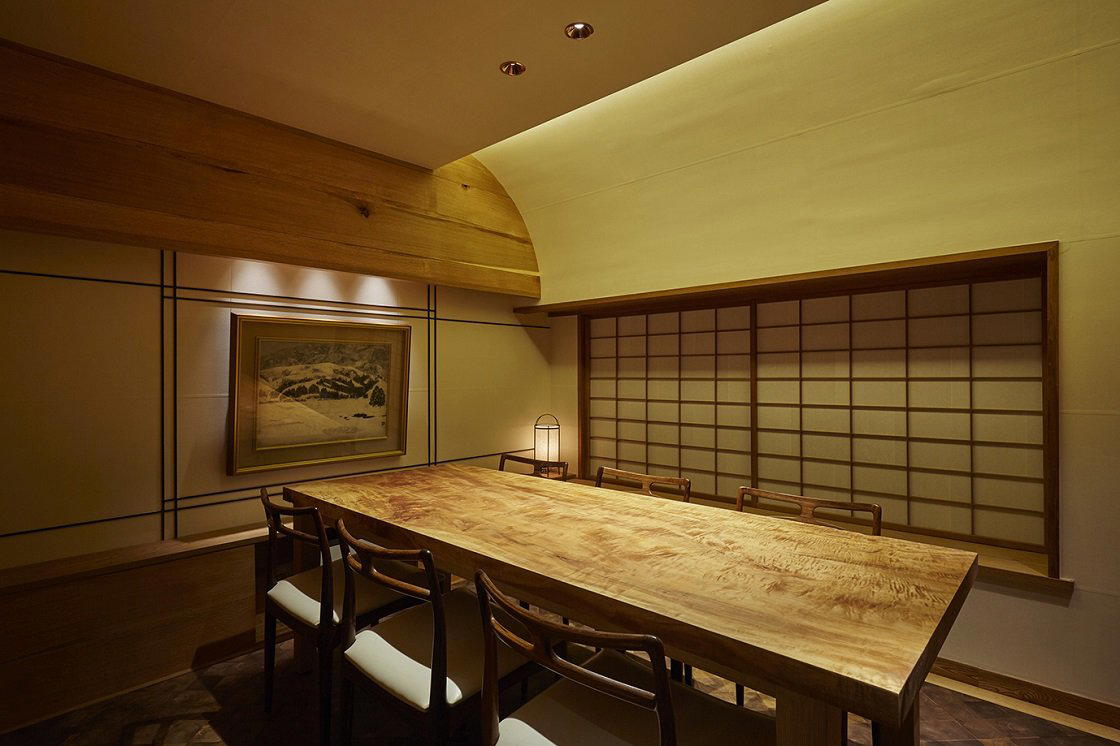
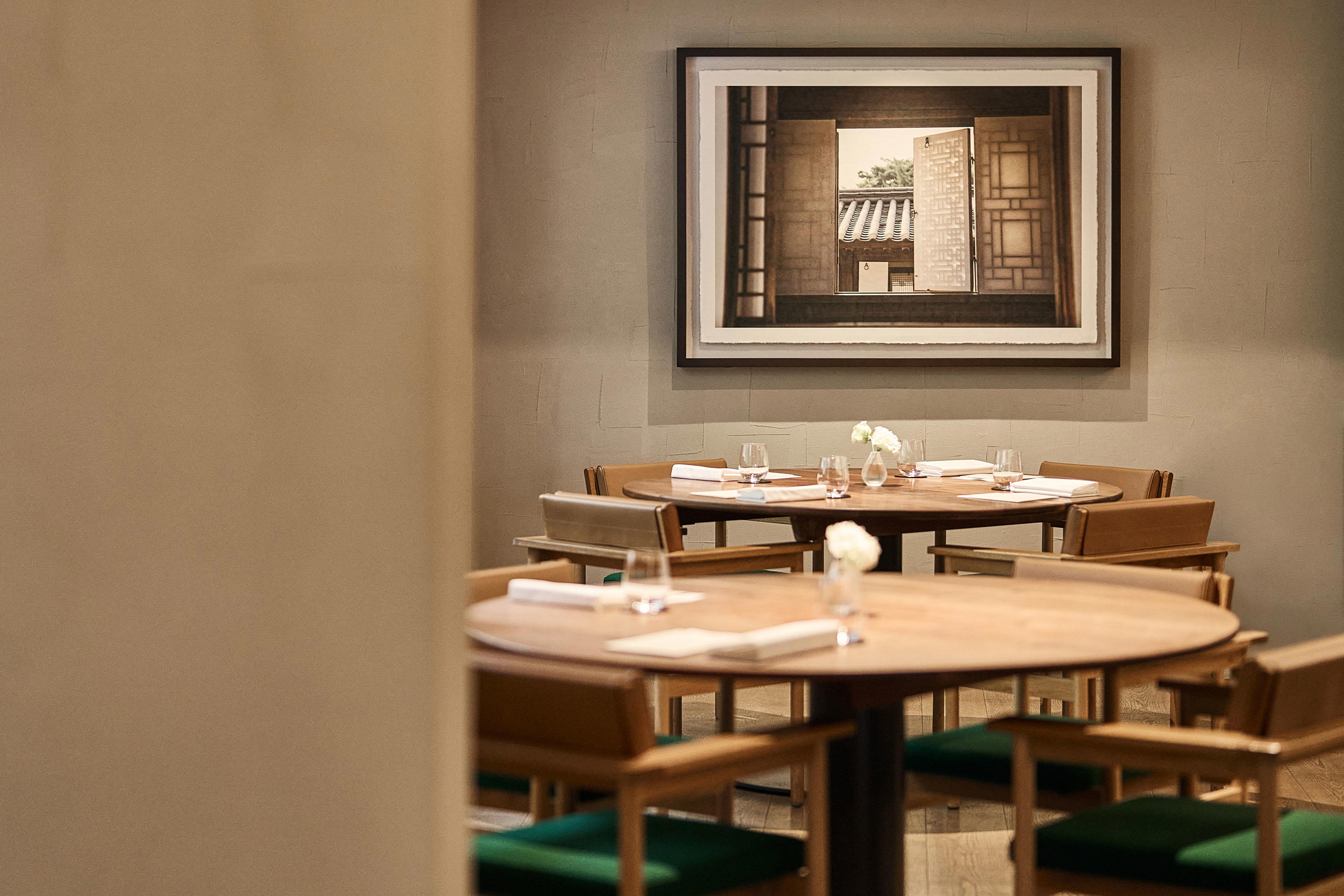
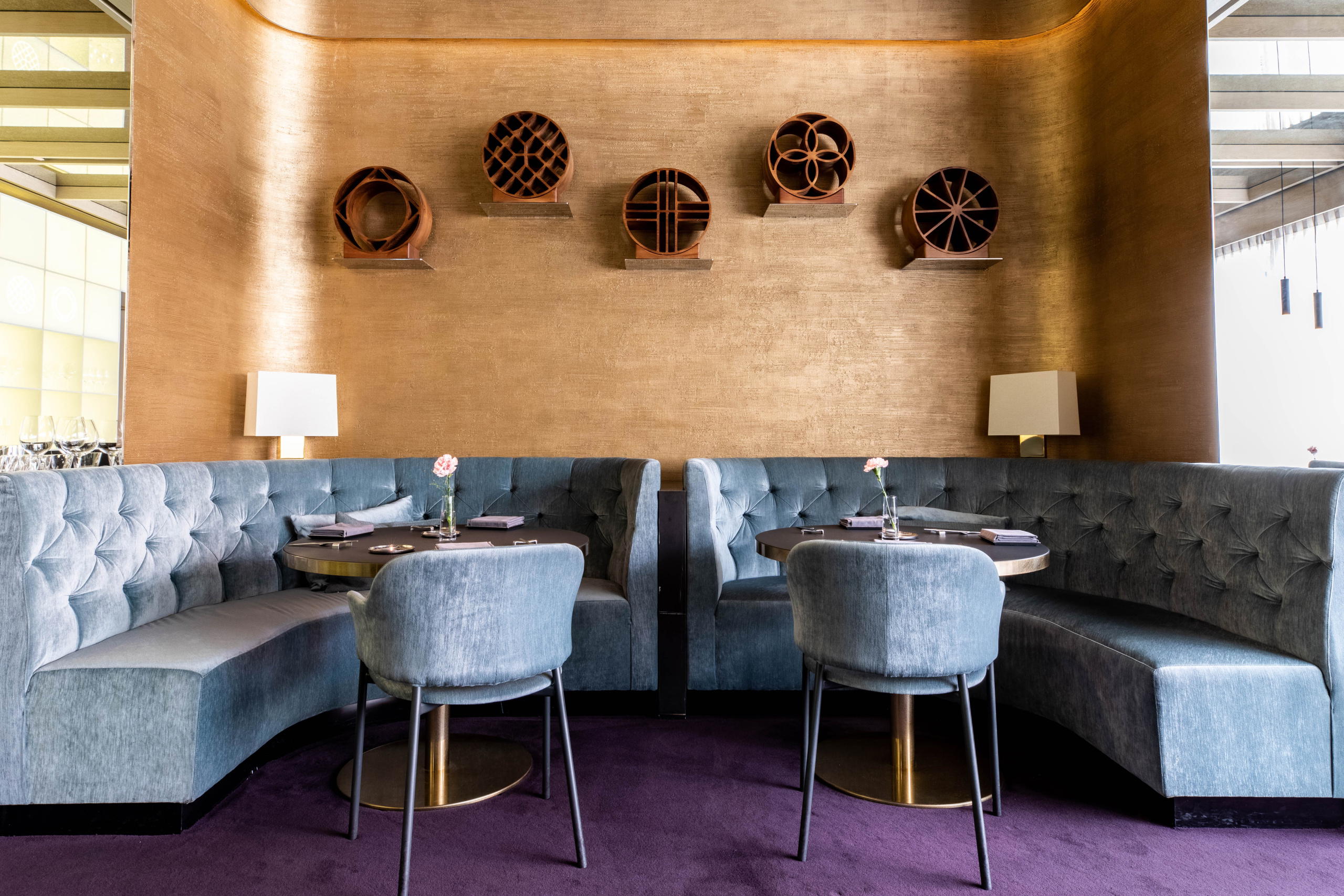
Minimalist design with understated entrance, long counter, open kitchen, and curated ceramics shelves creating a refined, hushed retreat.