Google: 4.6 · 144 reviews
Gestütsgasthof Offenhausen
.png)
On the grounds of the historic Marbach stud farm in Gomadingen, Gestütsgasthof Offenhausen occupies a centuries-old steward's house where chef-patron Marc Winter runs a seasonal kitchen built on hunted game and regional produce. Roast venison shoulder in juniper cream and wild boar cordon bleu with hazelnut crumb define the menu's character. The terrace looks out across monastery buildings dating to the 13th century.
 Discover on Pearl
Pearl is the En Primeur Club membership app — saves, bookings, and concierge access live there. Same editors, same standards.
Where the Swabian Alb Ends Up on the Plate
The Swabian Alb has never been Germany's loudest dining destination. That relative quiet is precisely why what happens at Marbach stud farm in Gomadingen carries weight. Rural Swabia maintains one of the more coherent regional food traditions in southern Germany: game, forest herbs, root vegetables, and the kind of cooking that follows the calendar rather than the trend cycle. Gestütsgasthof Offenhausen sits inside that tradition and takes it seriously.
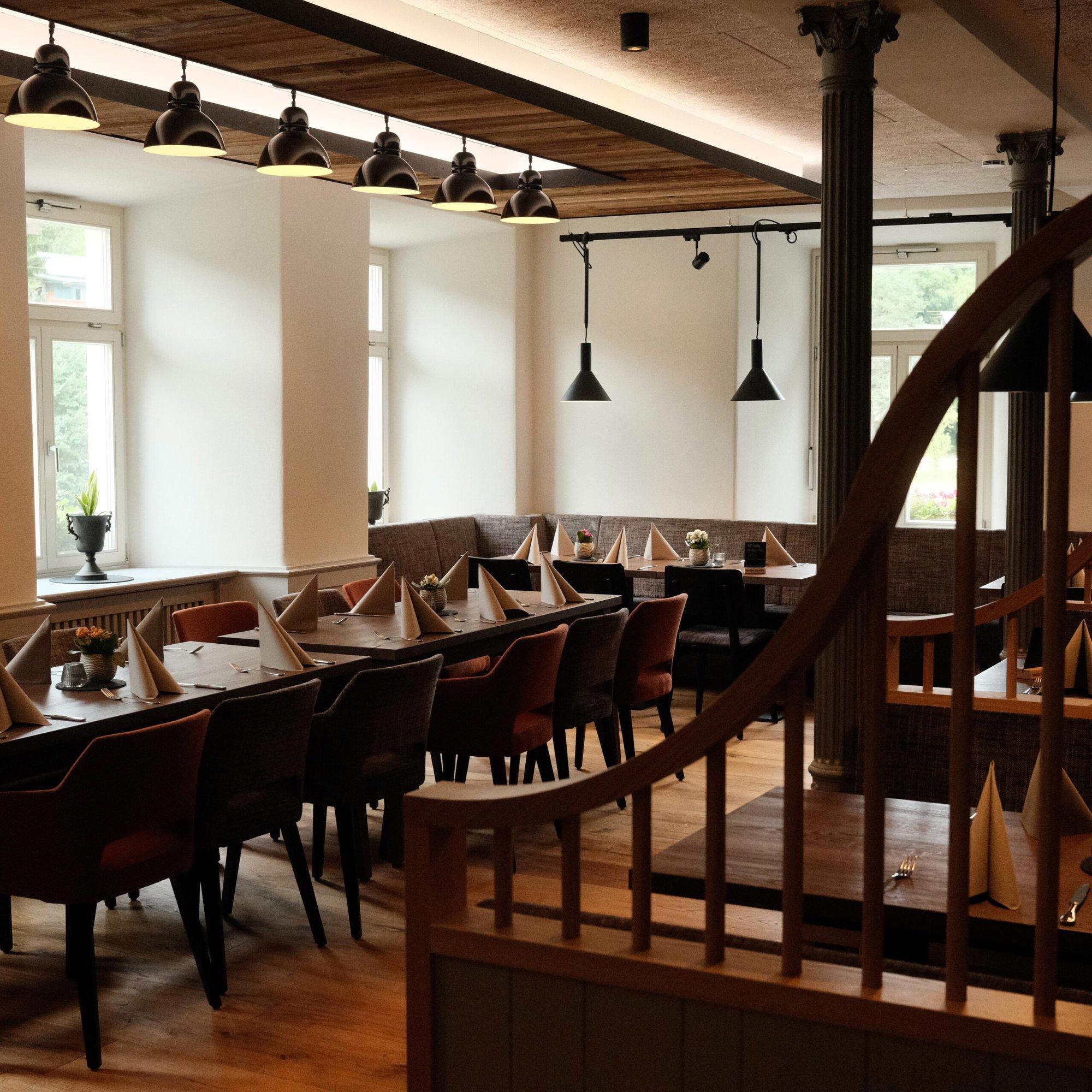
The setting frames everything before a dish arrives. Klosterhof 1, on the grounds of the Marbach stud farm, is one of the older working addresses in this part of Baden-Württemberg. The centuries-old steward's house now contains the restaurant, and the surrounding architecture, including a 13th-century monastery church that today houses the Gestütsmuseum, gives the site an unhurried density of history that few rural German restaurants can match. The Lauter River has its source on the same grounds. This is not a converted barn dressed up for city visitors; it is a building with layered purpose across several centuries.
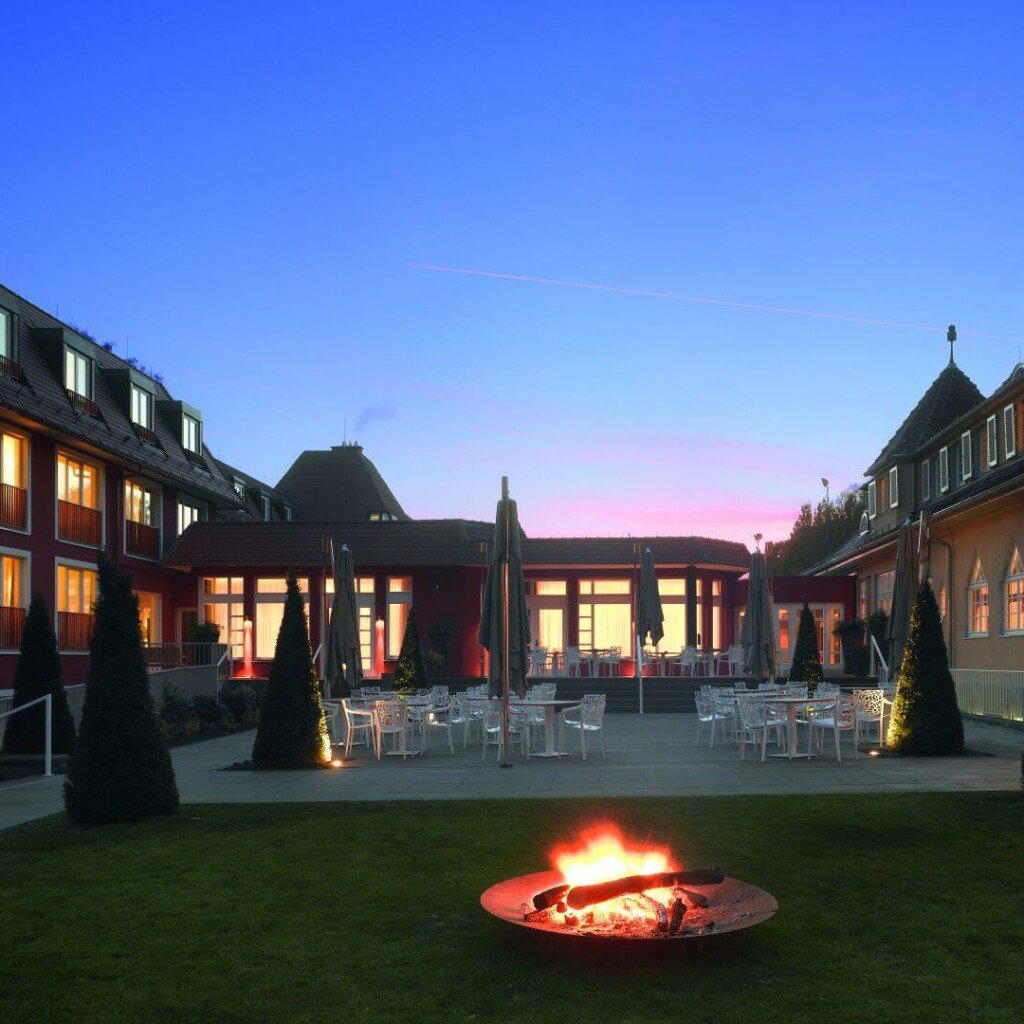
Terrace, which looks directly onto those historical structures, is the most considered seat in the house when weather allows. Sitting outdoors with monastery stonework in the sightline and stud farm activity as background context is a scene that reinforces the kitchen's sourcing logic: the landscape and the plate are in conversation.
The Logic of Hunted Game
In German fine dining, sourcing language has become commonplace to the point of abstraction. Many restaurants claim regional provenance without the infrastructure to back it. At Offenhausen, the sourcing of game operates differently. Chef-patron Marc Winter hunts himself, or sources through his circle of hunter contacts, which means the venison and wild boar on the menu arrive through a supply chain that starts with a specific animal in a specific forest, not a distributor's catalogue.
This matters for several reasons beyond the ethical. Hunted game, handled correctly from field to kitchen, differs in texture and flavour profile from farmed alternatives. The fat distribution is different, the muscle density is different, and the cook's relationship to the product, when they or their peers have tracked it themselves, tends to produce more considered preparation. The approach also anchors the menu to local ecosystems in a way that seasonal vegetable sourcing alone cannot.
The dishes that result from this framework, roast venison shoulder finished in juniper cream and a cordon bleu of wild boar loin with hazelnut crumb, are not attempts to repackage classical game cookery as something else. They work within recognisable structures while using ingredient quality and proportion to separate them from pub-kitchen game dishes. The hazelnut crumb on the wild boar cordon bleu is a precise textural decision; the juniper cream on the venison shoulder is a flavour pairing with deep roots in central European game tradition. Winter applies, as the Michelin recognition notes, just the right dose of modernity without abandoning the logic of the region's cooking.
The menu also includes smaller bites alongside the main courses, which gives the kitchen a format for demonstrating range without requiring a full tasting-menu commitment. For a restaurant operating in a rural setting where local clientele form a substantial part of the trade, that flexibility is structurally important.
Where This Sits Among Germany's Broader Fine Dining Picture
Germany's most discussed restaurants at the moment tend to cluster in predictable places: urban addresses in Munich, Hamburg, or Berlin, and established destination dining villages like Baiersbronn. The Schwarzwaldstube in Baiersbronn and venues like Aqua in Wolfsburg or Vendôme in Bergisch Gladbach operate at price points and levels of abstraction that put them in a different competitive set entirely. JAN in Munich, CODA Dessert Dining in Berlin, and Restaurant Haerlin in Hamburg are all playing a different game at a different scale.
Offenhausen belongs to a smaller category: the regionally rooted, Michelin-recognised country restaurant that answers to a local food culture first and an international fine dining audience second. In that tier, alongside addresses like ES:SENZ in Grassau, the evaluation criteria shift. Consistency of sourcing, relationship to place, and the discipline to cook the region's ingredients at a level above the surrounding average become the relevant measures. By those criteria, a hunted-game kitchen in a 13th-century stud farm complex, recognised in the Michelin guide, is making a coherent argument.
Further afield, restaurants like Schanz in Piesport, Victor's Fine Dining by Christian Bau in Perl, and Waldhotel Sonnora in Dreis demonstrate how rural German fine dining can sustain high-level recognition outside urban centres. Offenhausen's register is more grounded than most of those addresses, but the underlying proposition, that serious cooking belongs in the landscape that produces its ingredients, is shared.
Planning a Visit
Gomadingen sits on the Swabian Alb plateau, a region more commonly visited for its geology, walking trails, and castle ruins than for its restaurants. That context works in the restaurant's favour: a meal at Offenhausen fits naturally into a longer engagement with the area rather than requiring a dedicated culinary detour. The terrace is the most atmospheric option in warmer months, with views across the monastery complex; indoor seating in the steward's house offers a different register, one of thick walls and settled calm appropriate to the building's age.
Given the Michelin recognition and the rural setting, booking ahead is sensible. Country restaurants with this level of profile tend to fill on weekends from a catchment area that extends well beyond the immediate town. Practical details on hours and reservations are leading confirmed directly with the venue. For broader context on where to eat, stay, and explore around the area, see our full Gomadingen restaurants guide, hotels guide, bars guide, wineries guide, and experiences guide.
Those travelling further for German dining benchmarks might also consider Bagatelle in Trier or, internationally, Le Bernardin in New York City and Emeril's in New Orleans as points of comparison for what regionally anchored fine dining looks like across different geographies.
Peer Set Snapshot
These are the closest comparables we have in our database for quick context.
| Venue | Cuisine | Price | Awards | Notes |
|---|---|---|---|---|
| Gestütsgasthof Offenhausen | On the idyllic grounds of Marbach stud farm, which is steeped in history, the ce… | This venue | ||
| Aqua | Contemporary German, Italian/Japanese, Creative | €€€€ | Michelin 3 Star | Contemporary German, Italian/Japanese, Creative, €€€€ |
| Schwarzwaldstube | French, Classic French | €€€€ | Michelin 3 Star | French, Classic French, €€€€ |
| CODA Dessert Dining | Creative | €€€€ | Michelin 2 Star | Creative, €€€€ |
| Vendôme | Modern European, Creative | €€€€ | Michelin 2 Star | Modern European, Creative, €€€€ |
| Tantris | Modern French, French Contemporary | €€€€ | Michelin 2 Star | Modern French, French Contemporary, €€€€ |
Continue exploring
More in Gomadingen
Restaurants in Gomadingen
Browse all →
Hotels in Gomadingen
Browse all →
At a Glance
- Cozy
- Rustic
- Scenic
- Classic
- Special Occasion
- Family
- Terrace
- Historic Building
- Local Sourcing
- Garden
Tasteful and cosy modernized historic setting with a lovely terrace overlooking historical buildings and the Lauter River source.