Graz has a quieter, more local-facing dining register than Vienna or Salzburg, and Gerüchteküche on Gartengasse 28 sits inside that tradition. Against the city's more formal dining rooms, this address occupies a mid-range, neighbourhood-anchored position where the kitchen's choices reveal more about Styrian culinary instincts than any tasting-menu showcase would. For visitors mapping the city's restaurant scene, it earns a place on the same shortlist as Arravané and Adelphia.
Pearl is the En Primeur Club membership app — saves, bookings, and concierge access live there. Same editors, same standards.
- Address
- Gartengasse 28, 8010 Graz, Austria
- Phone
- +4366488318444
- Website
- geruechtekueche.org
- Directions
- Get directions
 Saves & bookings on Pearl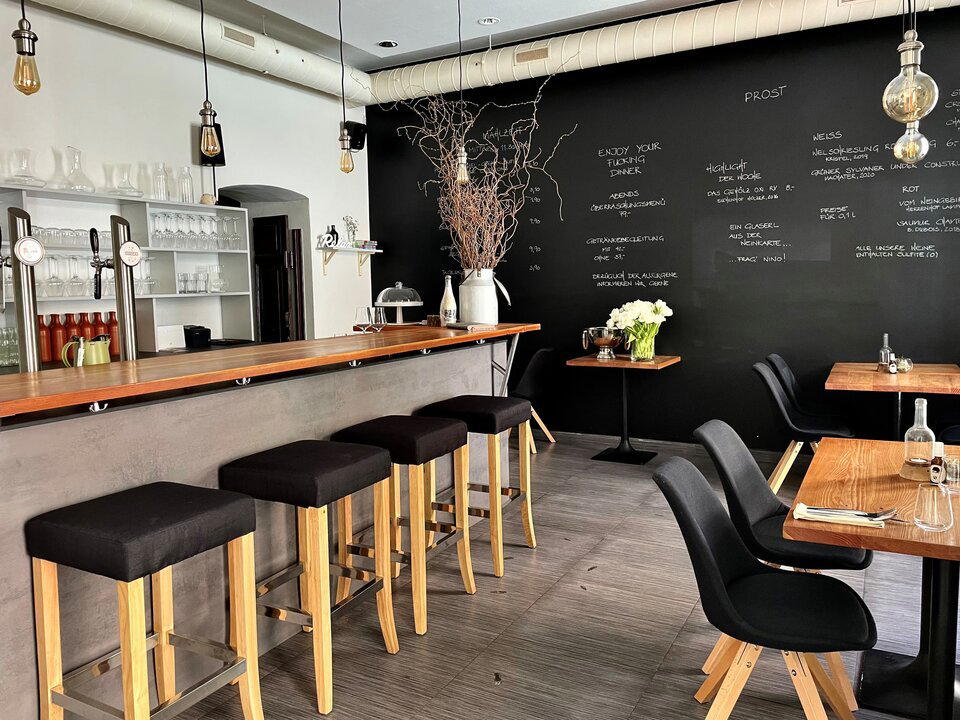
A Street-Level Read on Graz Dining
Graz does not operate on Vienna's terms. The Austrian capital runs on institution and ceremony; Graz runs on something closer to confident regionalism. Along streets like Gartengasse, where Gerüchteküche holds its address at number 28, the city's dining character becomes legible: mid-format rooms, menus shaped by Styrian produce, and a general resistance to the kind of self-conscious fine dining that defines Austria's more tourist-facing cities. That context matters before any conversation about what this particular kitchen does, because the scene sets the expectations.
Styria's position as Austria's food-producing heartland gives Graz restaurants a raw-material advantage that kitchens in Vienna or Salzburg have to import. Pumpkin seed oil, Vulcano cured meats, locally grown grains, and wine from the Südsteiermark vineyards circulate through the city's supply chains in a way that shapes menus from the neighbourhood trattoria level up to formal tasting-counter formats like Aiola im Schloss and aiola upstairs. Gerüchteküche sits somewhere in the middle of that spectrum, a position that carries its own discipline: the kitchen cannot rely on theatrical format or prestige credentials, so the food has to carry the evening on its own terms.
What the Menu Architecture Signals
In Austrian cities of Graz's size and character, a restaurant's menu structure tells you where it thinks it sits. The long, encyclopaedic card, a list of regional classics with minor modern adjustments, tends to mark a venue playing to broad tourist or local-convenience traffic. A shorter, rotation-driven menu with ingredient-led logic marks something more purposeful: a kitchen that is making decisions about what to cook rather than what to stock. Across Graz's neighbourhood dining rooms, the latter approach increasingly signals the more interesting addresses.
What is possible is placing it in the broader Graz context: the city's most discussed mid-range kitchens tend to run shorter menus anchored in seasonal Styrian produce, and particularly credible among them position themselves against farm-to-table addresses like Restaurant Scheucher and seasonal operators like Kehlberghof rather than against the formal international rooms. Its menu architecture functions as a filter: it is not trying to serve everyone, and the choice of what is absent matters as much as what appears.
For reference points at the higher end of Austrian kitchen ambition, Steirereck im Stadtpark in Vienna and Obauer in Werfen represent what Styrian and Alpine ingredient logic looks like when pushed to their formal extreme. Closer in spirit and price register to Graz's neighbourhood mid-tier, Ois in Neufelden shows how a kitchen can make a regional identity legible without ceremony. Gerüchteküche occupies the urban version of that position.
Gartengasse and the Neighbourhood Register
The address itself locates Gerüchteküche inside a part of Graz that operates at a remove from the tourist-facing Hauptplatz circuit. Gartengasse 28 is a street address that filters for guests who already know where they are going. That self-selection shapes the room's atmosphere. The clientele skews local, the room operates at a pace set by its regulars, and the kitchen's reference points are Graz's own rather than borrowed from international fine-dining conventions.
That neighbourhood anchoring places Gerüchteküche in a different competitive frame from the city's more formal rooms. Artis at the creative and premium end, or Adelphia and Arravané in the international-leaning mid-tier, each operate with a different kind of visibility and ambition. Gerüchteküche's position on Gartengasse reads as a deliberate counter to that visibility: the room earns its audience through word of mouth rather than awards cycles or press coverage, which in Graz's dining culture carries its own credibility signal.
Austrian Mid-Tier Dining in Broader Context
Austria's restaurant culture outside its major fine-dining institutions is underreported in international food media, which tends to focus on the Michelin-circuit names. That gap creates space for a dense layer of mid-tier neighbourhood kitchens that operate with genuine culinary seriousness but without the apparatus of awards recognition. Graz, as Austria's second city and Styria's capital, has a particularly well-developed version of this layer. Addresses across the price spectrum, from the €€ farm-to-table register up through €€€€ creative tasting menus, form a scene that rewards residents more than it rewards first-time visitors following a shortlist.
Internationally, the model has close parallels at places like Lazy Bear in San Francisco, where a kitchen operating outside conventional restaurant formats builds its reputation through the specificity of what it chooses to cook rather than through fine-dining signalling. At the formal European extreme, rooms like Le Bernardin in New York City demonstrate what happens when a kitchen's disciplined focus on one ingredient logic sustains across decades. Gerüchteküche operates in a far more modest register, but the underlying principle, that menu architecture is a form of editorial decision-making, connects them across different scales.
Other Austrian kitchens worth mapping against this mid-to-upper register include Landhaus Bacher in Mautern an der Donau, Döllerer in Golling an der Salzach, Schwarzer Adler in Hall in Tirol, Gourmetrestaurant Tannenhof in Sankt Anton am Arlberg, Stüva in Ischgl, Kräuterreich by Vitus Winkler in Sankt Veit im Pongau, and Restaurant 141 by Joachim Jaud in Mieming. Collectively, they illustrate the range of what Austrian regional kitchen thinking looks like when it moves beyond the capital and beyond the Michelin shortlist.
Planning a Visit
Gerüchteküche is located at Gartengasse 28, 8010 Graz. Reservations are essential, and it is open Monday through Friday from 6:30 to 11:30 PM, with Saturday and Sunday closed.
The Essentials
Comparable venues nearby, for context on price, style, and recognition.
| Venue | Cuisine | Price | Notes |
|---|---|---|---|
| GerüchtekücheThis venue — the venue you are viewing | Not listed | $$$ | Not listed |
| Caylend | Not listed | $$$ | Lend, Modern Styrian Fusion with Seafood Focus |
| Aiola im Schloss | Andritz, Regional Styrian Austrian | $$$ | Not listed |
| YAMAMOTO SUSHIBAR | Innere Stadt, Authentic Japanese Sushi | $$$ | Not listed |
| Fürstenstand | Not listed | $$ | Gösting, Traditional Styrian Mountain Restaurant |
| Cafe Mitte | Innere Stadt, Thai Restaurant & Bar | $$ | Not listed |
Continue exploring
More in Graz
Restaurants in Graz
Browse all →
Bars in Graz
Browse all →
Hotels in Graz
Browse all →

At a Glance
- Intimate
- Minimalist
- Elegant
- Quiet
- Sophisticated
- Special Occasion
- Celebration
- Date Night
- Courtyard
- Open Kitchen
- Private Dining
- Natural Wine
- Sommelier Led
- Zero Proof
- Farm To Table
- Local Sourcing
- Zero Waste
- Organic
Current opening hours
- Monday
- 6:30–11:30 PM
- Tuesday
- 6:30–11:30 PM
- Wednesday
- 6:30–11:30 PM
- Thursday
- 6:30–11:30 PM
- Friday
- 6:30–11:30 PM
- Saturday
- Closed
- Sunday
- Closed
Hours can change for holidays and private events. Last verified .
Simple yet stylish courtyard setting with minimalist design; intimate, quiet atmosphere that feels more like a cultural experience than a traditional restaurant.