Michelin Plate
Our verdict
Set inside a remodelled ironworks in Osaka's Naniwa Ward, genso serves French cuisine structured around the four classical elements, fire, earth, wind, and water, each represented by ancient Greek symbols on the menu.

Pearl is the En Primeur Club membership app, where members save venues, book tables and use the concierge.
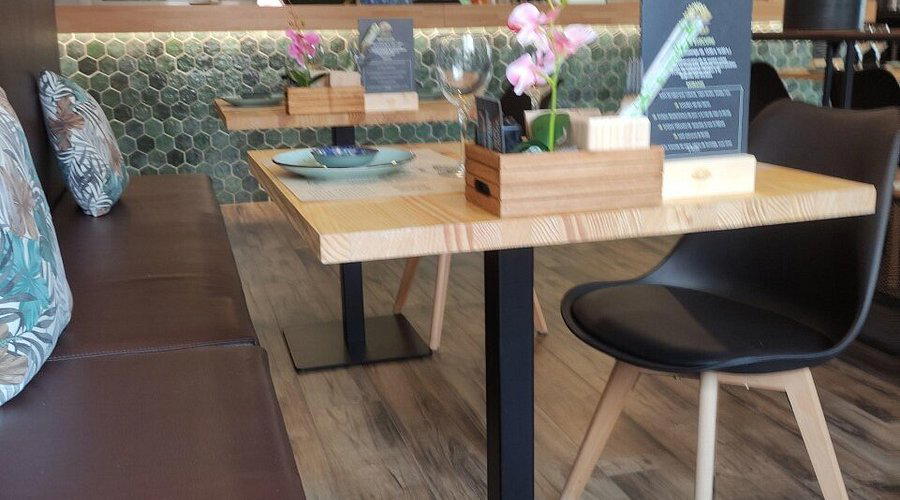
An Industrial Shell, a Classical Framework
Osaka's French dining scene covers an unusually wide range of registers. At one end sit the heavily decorated rooms of La Cime and HAJIME, where multi-course precision commands ¥¥¥¥ price points and Michelin stars in the plural. At the other, a growing number of mid-tier addresses work within the ¥¥¥ bracket, offering serious cooking inside spaces that push back against the hushed-dining-room convention. genso belongs to the second group, and its physical container is the first thing that separates it from the field.
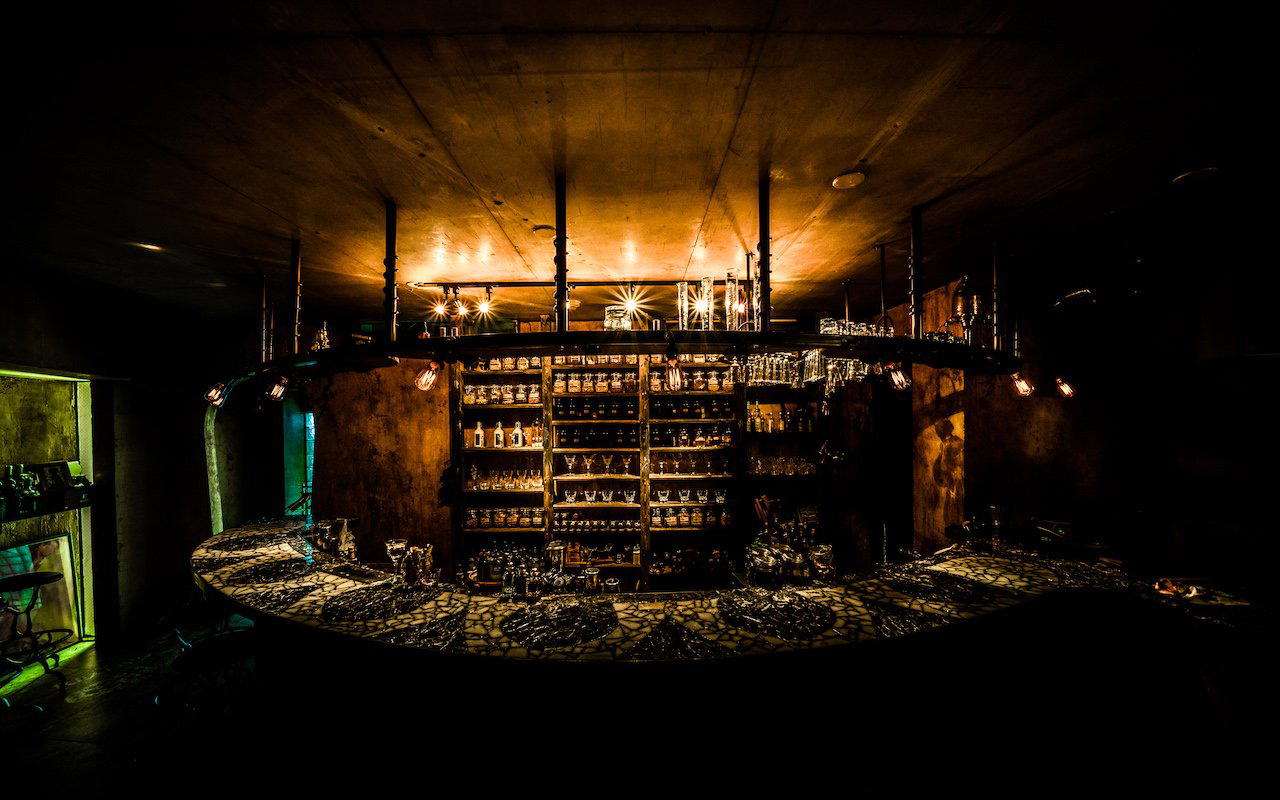
The building is a remodelled ironworks in Naniwa Ward, a district south of central Osaka that sits outside the usual dining-district circuit of Kitashinchi and Shinsaibashi. Walking toward the entrance, you encounter a structure that carries the proportions and material residue of its industrial past: bare metalwork, weight, a certain bluntness in the architecture. That is not incidental to the experience. At genso, the space and the menu operate as a single conceptual argument.
The Architecture of the Menu
French restaurants in Japan have long worked a tension between classical European technique and local ingredient logic. What genso adds is a third organising principle: the four classical elements of ancient Greek philosophy, fire, earth, wind, and water, each assigned its own symbol on the menu and its own cooking grammar.
This is not decorative theming. The element framework appears to govern both technique and ingredient grouping in ways that give the menu an internal coherence unusual at this price point. A platter of vegetables, each grilled through a different application of heat, represents earth. A soup built from herbs and aromatic layers speaks to water. Fire and wind carry their own registers, completing a menu that reads as a complete philosophical system rather than a sequence of loosely connected courses.
The approach places genso in a particular lineage of French cooking in Japan, one that uses European structure as scaffolding while building something local and conceptually specific on top of it. Comparison addresses in this mode include L'Effervescence, French in Tokyo and, at the higher end, Hotel de Ville Crissier, French in Crissier, which represents the Swiss classical tradition that much of Japan's French dining traces through. genso's conceptual ambition is more visible, and more architecturally integrated, than most addresses at its tier.
Space as Editorial Statement
The ironworks setting does specific work that a conventional dining room could not. Industrial architecture at this scale changes the acoustic character of a meal, sound disperses differently in high-ceilinged metal-and-concrete spaces, and it frames the elemental menu concept with a literalness that feels earned rather than forced. Fire, earth, wind, water read differently when the room around you still carries traces of the industrial processes that once used exactly those forces.
Among Osaka's French addresses, this combination of repurposed industrial space and conceptually driven menu has few direct comparisons. Différence and La Bécasse both operate within the French tradition in Osaka, but in more conventional dining-room formats. LE PONT DE CIEL and nent occupy different positions on the price and formality spectrum. genso's industrial shell, paired with its elemental menu architecture, occupies a space in the city's French dining conversation that the others do not.
Where genso Sits in Osaka's French Tier
Osaka's Michelin-recognised French restaurants cluster into two clear tiers. The upper bracket, HAJIME (three stars), La Cime (two stars), operates at ¥¥¥¥ and prices against Tokyo's most-decorated rooms. The Michelin Plate tier, which recognises good cooking without awarding a star, functions as the city's mid-level serious dining layer. genso has held a Michelin Plate in both 2024 and 2025, placing it in that recognised-but-accessible bracket alongside other addresses that deliver technical ambition without the full ceremony overhead of a starred room.
At the ¥¥¥ price point, genso competes in a tier where diners weigh concept, space, and cooking quality against each other. On all three counts, it presents an argument that is harder to make at its price point than the decorated numbers might immediately suggest.
For context on what French cooking at different price and ambition levels looks like across Japan, the scene extends well beyond Osaka: Harutaka in Tokyo, Gion Sasaki in Kyoto, akordu in Nara, Goh in Fukuoka, 1000 in Yokohama, and 6 in Okinawa each represent distinct regional approaches to French and French-influenced cooking.
Planning Your Visit
genso is located at 2 Chome-7-18 Inari, Naniwa Ward, Osaka, outside the central dining corridors of Kitashinchi and Shinsaibashi, which means it draws a more deliberate clientele rather than passing foot traffic. The ¥¥¥ price point positions it accessibly within Osaka's serious dining range, and the Michelin Plate recognition over two consecutive years means it has attracted attention beyond the local audience. Advance planning is advisable, particularly for weekend sittings; the specificity of the concept and setting makes it the kind of address visitors build an evening around rather than fall into.
For broader planning across the city, EP Club's complete guides cover Osaka restaurants, Osaka hotels, Osaka bars, Osaka wineries, and Osaka experiences.
Frequently asked questions
What should I budget for a meal at genso?
Pricing at genso is listed as ¥¥¥.
Where exactly is genso?
genso is located at 2 Chome-7-18 Inari, Naniwa Ward, Osaka, 556-0023, Japan, Osaka.
Is genso Michelin-listed?
genso has received recognition including: The venue, a remodelled ironworks, exudes an industrial vibe. Guests are greeted with cuisine styled on the concept of the four elements of fire, earth, wind and water, represented on the menu by elemental symbols of ancient Greece. A platt….
What should I eat at genso?
The menu is structured around the four classical Greek elements, fire, earth, wind, and water, with each course conceptually tied to one of them. A platter of vegetables grilled by varying techniques represents earth; a herb-laden soup expresses water. Rather than ordering à la carte, expect a set progression where the framework itself is the point, making individual dish selection less relevant than arriving open to the full sequence.
What should I expect cuisine-wise at genso?
How far ahead should I plan for genso?
genso sits at the ¥¥¥ price tier with Michelin Plate recognition in both 2024 and 2025, which places it in a bracket that draws reservations from both Osaka locals and visitors routing through Naniwa Ward. The address at 2 Chome-7-18 Inari puts it off the main Kitashinchi and Shinsaibashi corridors, so foot-traffic walk-ins are unlikely to succeed. Booking two to four weeks ahead is a reasonable minimum; peak travel periods warrant more lead time.
Cuisine and Credentials
| Venue | Cuisine | Price | Awards | Notes |
|---|---|---|---|---|
| gensoThis venue (the venue you are viewing) | Innovative French Fine Dining | $100–150 | Michelin Plate | Not listed |
| HAJIME | Avant-Garde Japanese Fine Dining | $300–500 | 3 Michelin Stars · World's 50 Best #83 | French, Innovative |
| La Cime | Modern French with Japanese Ingredients | $150–200 | 2 Michelin Stars · World's 50 Best #13 | French |
| Kashiwaya Osaka Senriyama | Seasonal Kaiseki Omakase | $200–300 | 3 Michelin Stars · La Liste Top Restaurants | Japanese |
| Taian | Traditional Japanese Kaiseki Omakase | $150–200 | 3 Michelin Stars · La Liste Top Restaurants | Kaiseki, Japanese |
| Fujiya 1935 | Modern Japanese with European influences | $100–150 | 2 Michelin Stars · La Liste Top Restaurants | Innovative |
Recognition history
Dated appearances from independent guides and award organizations, with the underlying list record or original source where available.
Michelin Plate
Michelin
Full recognition history (3 entries)
Michelin Plate
Michelin
Michelin Plate
Michelin