


Michelin Plate · Macarfi 7.1 Food Rating
Our verdict
The menu reads as a straightforward case for Navarrese culinary convention rather than innovation. For visitors after honest regional food at accessible prices, it earns its place in the city's dining circuit.

Pearl is the En Primeur Club membership app — saves, bookings, and concierge access live there. Same editors, same standards.
- Address
- C. Espoz y Mina, 7, 31002 Pamplona, Navarra, Spain
- Phone
- +34 948 22 50 73
- Hours
- Mon 9 AM–10 PMTue ClosedWed 9 AM–10 PMThu–Fri 9 AM–11 PMSat 10 AM–11 PMSun 10 AM–10 PM
- Website
- cafebargaucho.com
- Directions
- Get directions
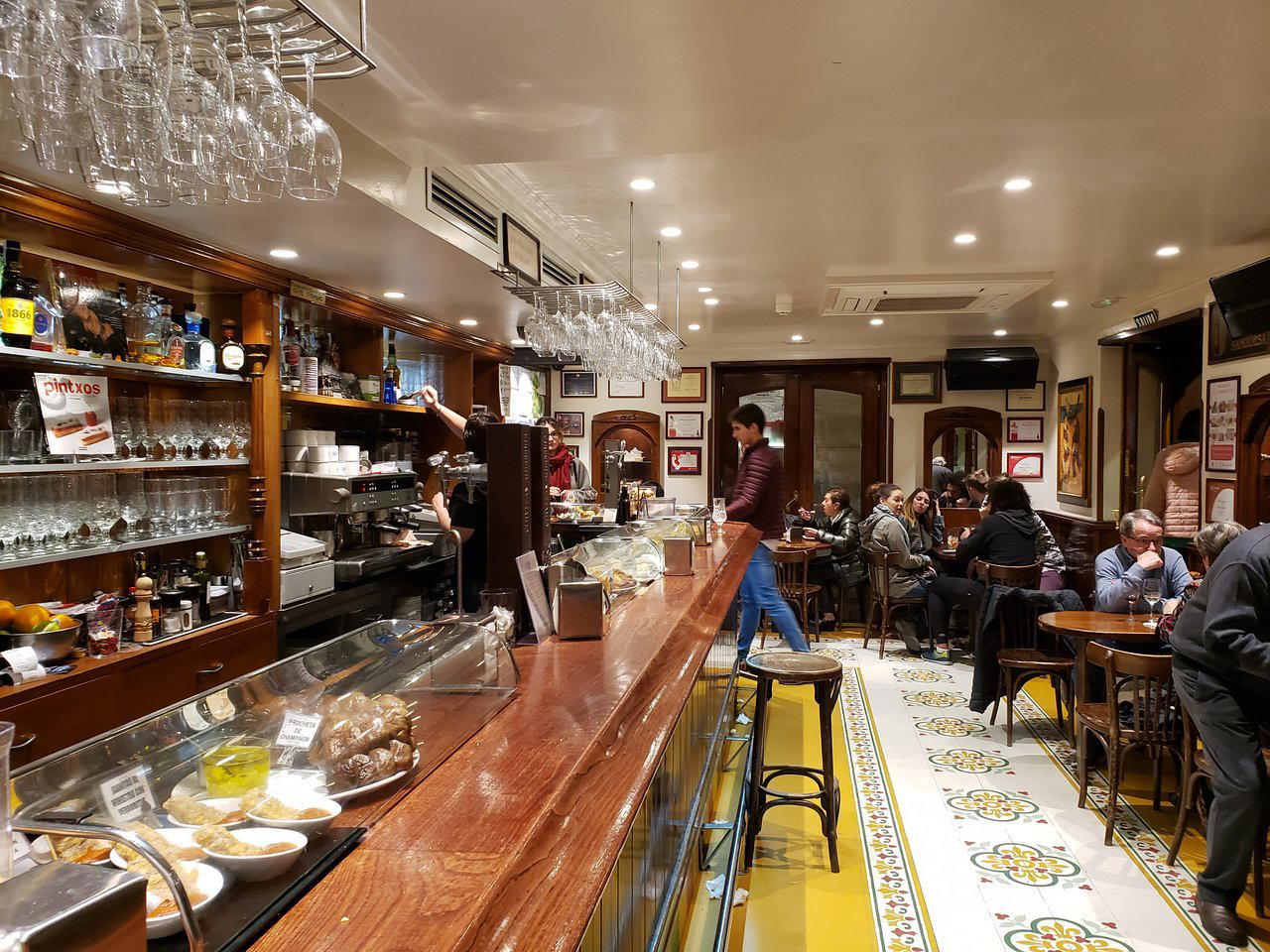
Where Pamplona's Traditional Table Holds Its Ground
Calle Espoz y Mina cuts through the old town of Pamplona with the kind of density that concentrates everyday life alongside tourist movement. The street sits close to the Plaza del Castillo, meaning the foot traffic outside Gaucho's door is constant, and the neighbourhood's stone-fronted buildings set a register of permanence rather than novelty. Inside that context, Gaucho operates as a traditional dining room rather than a destination statement, which in 2025 is its own form of positioning. As Basque Country and Navarre attract considerable attention for technically driven restaurants like Rodero (Modern Spanish, Modern Cuisine) and Europa (Contemporary), the space occupied by honest, conventionally structured cooking becomes both smaller and more clearly defined.
Menu Architecture as Editorial Argument
In Spanish traditional restaurants, the menu is rarely experimental and almost never apologetic about that. The structure follows a logic that reflects the region's agricultural identity: starters that draw on local vegetables (Navarre is one of Spain's principal horticultural zones, producing white asparagus, piquillo peppers, and artichokes at a quality that makes them centerpieces rather than accompaniments), followed by meat and fish courses anchored to seasonal availability. What this architecture communicates, across restaurants in this tier throughout northern Spain, is a commitment to sourcing competence over technique display. The menu at Gaucho, priced at the single-euro-sign tier, sits firmly in that tradition.
That price positioning matters structurally. The single-€ bracket in a Michelin-recognised restaurant is a relatively narrow category. Michelin's Plate designation, which Gaucho has held for both 2024 and 2025, signals cooking that the guide's inspectors consider worthy of attention without the ambition or polish of a starred property. In Pamplona specifically, the starred tier is occupied by restaurants with substantially higher price points: Rodero operates at €€€, Europa at €€€€. Gaucho's Plate recognition at budget pricing places it in a different competitive set entirely, alongside El Merca'o, which occupies the traditional cuisine, €€ bracket.
The Weight of 8,000 Opinions
Volume at that scale, sustained across years of service, filters out fluctuation. It tells you that the kitchen performs consistently across busy summer periods, including the intensity of San Fermín in early July when Pamplona's restaurant sector absorbs enormous pressure, and quieter winter months when the city returns to its local rhythms. The Opinionated About Dining ranking, which placed Gaucho at #582 among leading restaurants in North America in 2025, requires a brief note: OAD's methodology aggregates opinions from a defined set of frequent diners and critics, and ranking classifications can occasionally reflect diner travel patterns rather than strict geographic categorization. The recognition nonetheless signals that the restaurant has registered with an audience extending beyond local Pamplona visitors.
Navarre's Culinary Register, and Where Gaucho Sits Within It
To understand what traditional cuisine means in this specific northern Spanish region, it helps to place Navarre in its broader Spanish food geography. The region lacks the international profile of the Basque Country, which generates restaurants like Arzak in San Sebastián and institutions across Spain's avant-garde tier, from DiverXO in Madrid to El Celler de Can Roca in Girona and Azurmendi in Larrabetzu. But Navarre's traditional table has real depth. The Ribera del Duero influence on wine, the Pyrenean shepherding traditions in lamb and cheese, and the proximity to La Rioja all feed into what regional restaurants draw on. Gaucho's traditional cuisine classification places it within that inheritance rather than against it.
The comparison with restaurants like Auga — Traditional Cuisine in Gijón or Auberge Grand'Maison — Traditional Cuisine in Mûr-de-Bretagne shows how traditional cuisine designations travel across European contexts. In each case, the restaurant's value lies in regional fidelity rather than personal expression, and the diner's expectations should calibrate accordingly. The menu tells you about the region, not about the chef's biography.
Contemporary Pamplona and the Traditional Holdout
Pamplona's restaurant sector has diversified considerably over the past decade. Contemporary formats like Kabo (Contemporary) have entered the market alongside longstanding traditional addresses, while the city's bar culture, explored in depth across our full Pamplona bars guide, continues to anchor the social fabric through pintxos and vermouth culture at places like the storied Café Iruña on the plaza. Within this diversifying scene, restaurants that hold to a direct traditional format occupy an increasingly specific niche: they serve the local population's everyday dining needs while also absorbing visitors who want regional cooking without the formality or price of a tasting menu operation.
Gaucho on Calle Espoz y Mina reads as that kind of address. The location, the price tier, and the sustained recognition from both Michelin and a large volume of public reviewers all point in the same direction: a kitchen operating within a clearly understood traditional mode, executing it with enough consistency to maintain relevance across Pamplona's evolving dining circuit. For a broader picture of where this fits, our full Pamplona restaurants guide maps the city's full range, from the single-star operators to the traditional holdouts. And if you're planning time beyond the table, our Pamplona hotels guide, wineries guide, and experiences guide cover the wider city in the same editorial register.
One note on the Spanish restaurant landscape beyond Navarre: if the traditional format at Gaucho's price point prompts interest in how tradition is handled at higher ambition levels elsewhere in Spain, the reference points are considerable. Aponiente in El Puerto de Santa María and Cocina Hermanos Torres in Barcelona represent the far end of that spectrum. Alhambra in Pamplona itself offers another reference point within the city.
Planning Your Visit
Gaucho sits at C. Espoz y Mina, 7, in Pamplona's old town, within walking distance of the Plaza del Castillo and the major central hotels.
Frequently asked questions
What's the pricing like at Gaucho?
Pricing at Gaucho is listed as €.
What's Gaucho's location?
Gaucho is located at C. Espoz y Mina, 7, 31002 Pamplona, Navarra, Spain, Pamplona.
How It Stacks Up
Comparable options at a glance, pulled from our tracked venues.
| Venue | Cuisine | Price | Awards | Notes |
|---|---|---|---|---|
| GauchoThis venue — the venue you are viewing | Award-Winning Pintxos Bar | $20–30 | Michelin Plate · Macarfi 7.1 Food Rating | Not listed |
| Rodero | Modern Navarran Cuisine | Not listed | 1 Michelin Star · Guía Repsol 2 Soles | Modern Spanish, Modern Cuisine |
| Europa | Contemporary Navarran Fine Dining | $100–150 | 1 Michelin Star · Guía Repsol 1 Sol | Contemporary |
| Bar Gorriti | Traditional Spanish Tapas | Not listed | Not listed | Tapas Bar |
| Café Iruña | Traditional Spanish Tapas & Café | $20–30 | Not listed | Bar |
| El Merca'o | Traditional Spanish Fusion with Asian Touches | Not listed | Michelin Bib Gourmand · Macarfi 7.2 Food Rating | Traditional Cuisine |
Recognition history
Dated appearances from independent guides and award organizations, with the underlying list record or original source where available.
Michelin Plate
Michelin
Macarfi 7.1 Food Rating
Macarfi
Opinionated About Dining Top Restaurants in North America Ranked #582
Opinionated About Dining
Full recognition history (4 entries)
Michelin Plate
Michelin
Continue exploring
More in Pamplona
Restaurants in Pamplona
Browse all →
Bars in Pamplona
Browse all →
Hotels in Pamplona
Browse all →
Details
- Lively
- Classic
- Energetic
- Casual Hangout
- Group Dining
- Historic Building
- Street Scene
- Small Plates
- Vegetarian Friendly
Current opening hours
- Monday
- 9 AM–10 PM
- Tuesday
- Closed
- Wednesday
- 9 AM–10 PM
- Thursday
- 9 AM–11 PM
- Friday
- 9 AM–11 PM
- Saturday
- 10 AM–11 PM
- Sunday
- 10 AM–10 PM
Hours can change for holidays and private events. Last verified .
Bustling old-school Spanish interior with lively local energy.