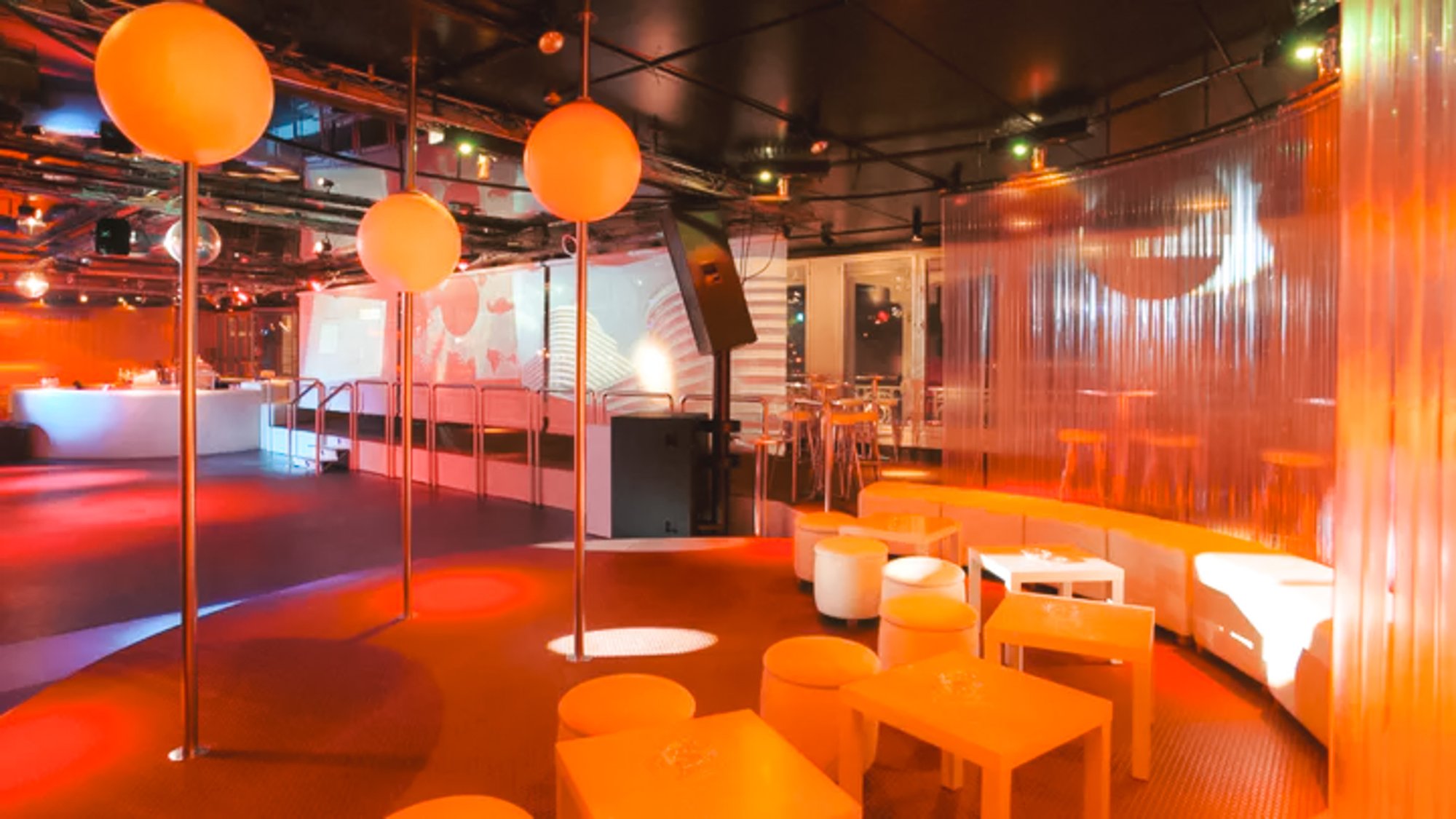
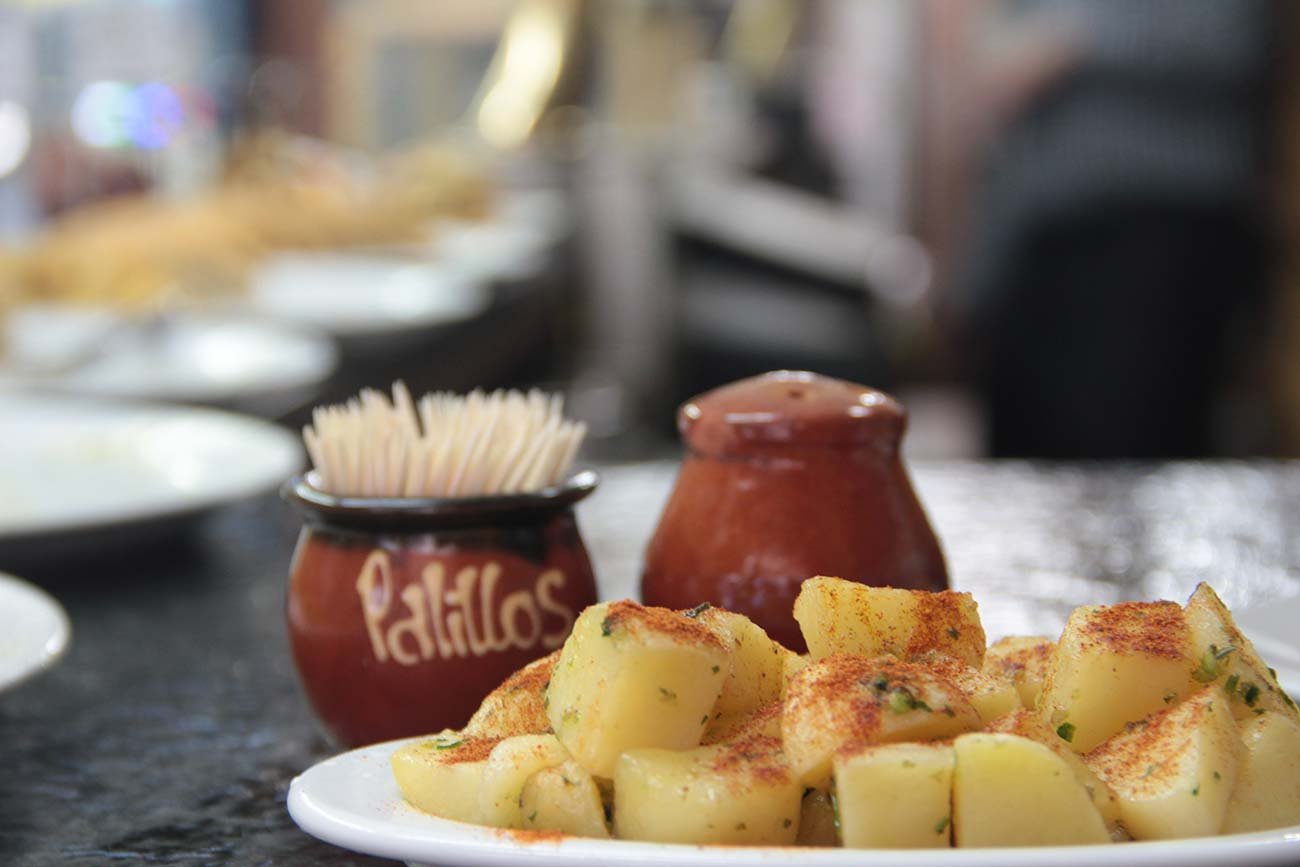
On Pamplona's Plaza del Castillo, Café Iruña has anchored the city's social life since 1888. This is where pintxos culture, Navarrese wine, and the rhythms of northern Spanish bar life converge in a setting of tiled columns and ornate woodwork. Ranked among Europe's top casual dining addresses by Opinionated About Dining in both 2024 and 2025, it remains the clearest expression of what Pamplona's plaza bar tradition actually means.
 Discover on Pearl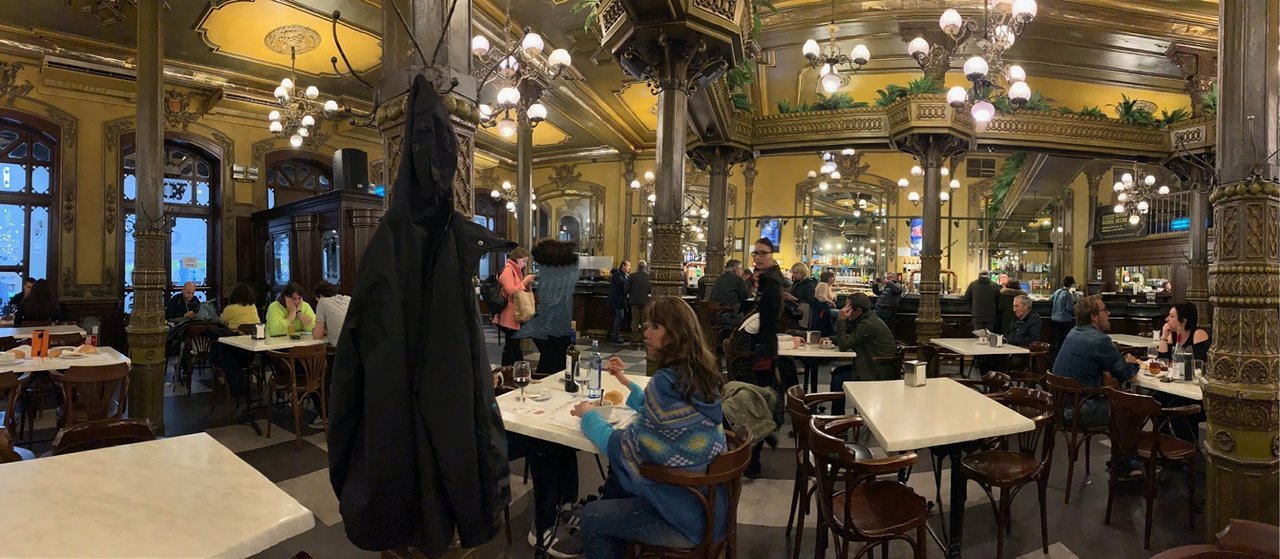
The Plaza Bar as Cultural Institution
There is a particular kind of Spanish bar that functions less as a place to eat and more as a civic anchor — a room that absorbs the routines of an entire city over decades and, in doing so, becomes inseparable from the place itself. Plaza del Castillo, the broad rectangular square at Pamplona's heart, has produced exactly this kind of institution in Café Iruña. Its address at number 44 on the square puts it at the physical and social centre of a city that takes its public life seriously.
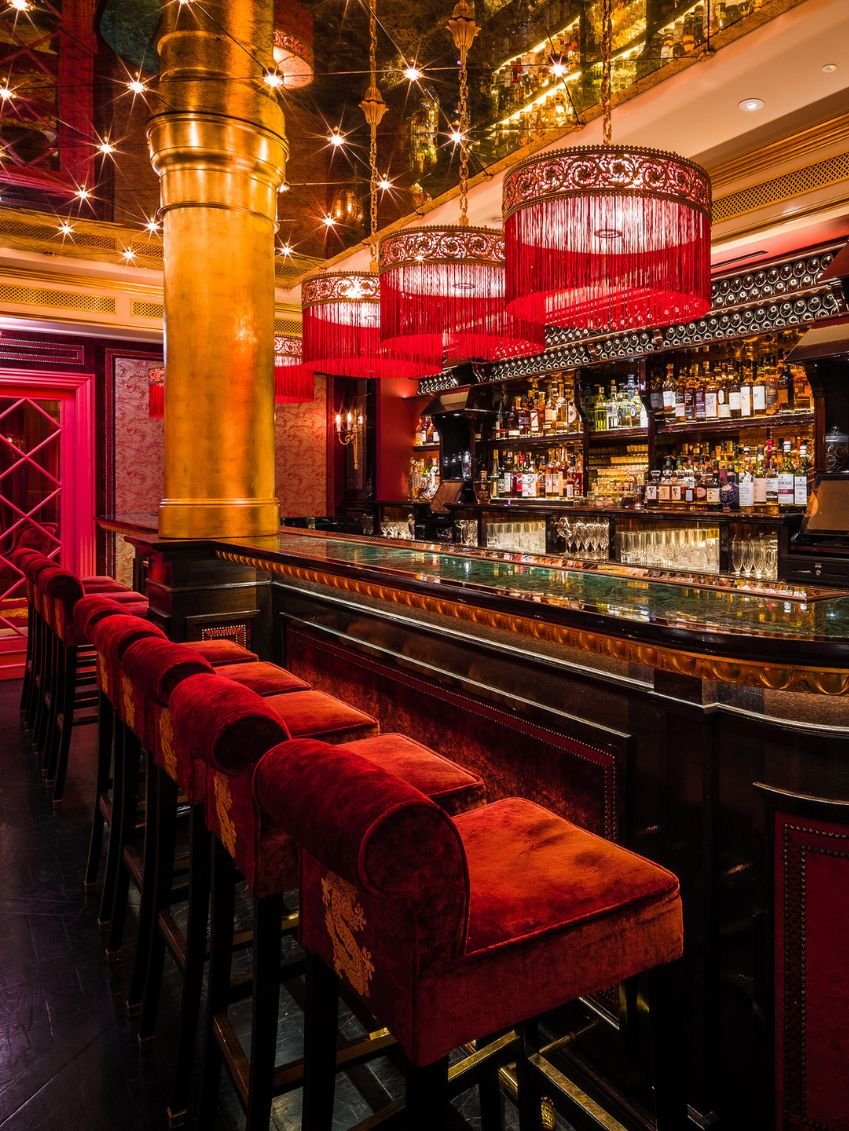
The bar tradition in Navarra and the broader Basque Country operates differently from what visitors accustomed to sit-down dining might expect. The counter and the standing pintxo are not informal or secondary — they are the primary format, the serious one, the one freighted with local identity. Cafés like Iruña, which date their operation to 1888, sit at the older end of that tradition, predating the pintxo bar proliferation of the twentieth century and carrying a formality of design , tiled columns, carved wooden fittings, painted ceilings , that marks them as something closer to the Viennese coffeehouse model than the modern tapas bar. The comparison is not accidental: many of northern Spain's great fin-de-siècle cafés were built by architects and proprietors who had absorbed Central European café culture and translated it into a Spanish idiom.
What the Awards Signal About Position
Opinionated About Dining, the data-driven ranking platform that tracks serious casual eating across Europe, placed Café Iruña at number 343 in its European Casual list for 2024 and moved it to 367 in 2025. Those rankings, drawn from a large pool of critic and expert votes rather than a single institutional guide, tell a specific story: this is not a venue that courts fine-dining attention, nor one that depends on San Fermín festival traffic alone. It holds a position in the European casual tier that reflects consistent quality across a broad-based critical audience. For context, Pamplona's fine-dining tier , represented by addresses like Rodero (Modern Spanish) and Europa (Contemporary), both Michelin-starred , operates in a completely different register. Café Iruña's peer set is the serious casual bar, not the tasting menu room.
A Google rating of 4.0 from nearly 7,900 reviews is, for a venue of this type and age, a signal worth reading carefully. High-volume historic cafés attract a polarised reviewing public: tourists expecting something else, regulars who don't review at all, and first-timers on festival weekends who experience the room under conditions very different from a Tuesday morning in October. The aggregate score across that breadth of visitors, holding steady at 4.0, indicates something more durable than seasonal charm.
Pamplona's Bar Culture in Practice
Northern Spain's bar culture runs on a logic of movement. A serious evening out in Pamplona involves multiple stops , a glass of Navarrese red or txakoli at one counter, pintxos at another, a coffee or patxaran digestif to close. The Spanish concept of the txikiteo or bar crawl is less about excess and more about the social architecture of the city: each bar has its own character, its own moment in the evening, its own regulars. Café Iruña, with its all-day operation from 9am and extended Friday and Saturday hours running to 2am, spans most of that arc. It is open for morning coffee, midday wine, afternoon pintxos, and the long early-hours stretch of a Navarrese weekend.
This temporal range , seven days a week, eleven to seventeen hours a day depending on the day , is not simply a commercial decision. It reflects the role that a plaza café plays in a Spanish city: always available, always the same, a fixed point around which the rest of the day arranges itself. For visitors oriented toward the more concentrated experiences of Bar Gorriti or the traditional cooking at Alhambra, Iruña functions as a different kind of anchor , the place you return to between other places.
Where Café Iruña Sits in Spanish Bar Culture More Broadly
Spain's bar tradition has fractured over the past two decades into increasingly specialised formats. The new-generation pintxo bar, typified by technically precise small bites and short, frequently rotated menus, operates in the same city blocks as century-old cafés but addresses a different appetite. Then there is the high-low polarity visible across Spanish cities: at one end, destinations like DiverXO in Madrid, Arzak in San Sebastián, and El Celler de Can Roca in Girona pull international attention toward Spain's fine-dining tier; at the other, the corner bar remains what most Spaniards actually use, day to day, as their primary point of social contact with food and drink.
The historic plaza café occupies a middle position that is increasingly rare: too old and too architecturally significant to be a simple neighbourhood bar, but too rooted in casual, democratic access to belong to the fine-dining conversation. Parallels exist across Europe , think of Barcelona's Bar Torpedo or New York's P.J. Clarke's in terms of institutional weight, or consider how serious Basque cooking establishments like Azurmendi in Larrabetzu and Aponiente in El Puerto de Santa María occupy an entirely different tier. Cocina Hermanos Torres in Barcelona similarly shows how far the fine-dining register has moved from the café tradition. Café Iruña does not compete in any of those categories. It competes for the particular value of being irreplaceable in its own city.
Planning a Visit
Café Iruña sits at Plaza del Castillo 44, on the square that serves as Pamplona's main gathering point. The café is open daily from 9am, closing at 11pm Sunday through Thursday, and extending to 2am on Friday and Saturday evenings. No booking is required for bar seating in the standard café format. During San Fermín (the second week of July), the square and café operate at full capacity; visitors seeking the room at something closer to its everyday pace should consider a weekday morning or early afternoon visit outside the festival window. For a fuller picture of where Café Iruña sits within Pamplona's dining and drinking options, EP Club's Pamplona restaurants guide, Pamplona bars guide, Pamplona hotels guide, Pamplona wineries guide, and Pamplona experiences guide cover the full range of the city's offer. For a more contemporary take on Pamplona's restaurant scene, Kabo (Contemporary) represents a different point on the city's culinary spectrum.
What It’s Closest To
A small comparison set for context, based on the venues we track.
| Venue | Cuisine | Awards | Notes |
|---|---|---|---|
| Café Iruña | Bar | Opinionated About Dining Casual in Europe Ranked #367 (2025); Opinionated About… | This venue |
| Rodero | Modern Spanish, Modern Cuisine | Michelin 1 Star | Modern Spanish, Modern Cuisine, €€€ |
| Europa | Contemporary | Michelin 1 Star | Contemporary, €€€€ |
| Bar Gorriti | Tapas Bar | Tapas Bar | |
| El Merca'o | Traditional Cuisine | Traditional Cuisine, €€ | |
| Enekorri Restaurante | Contemporary Spanish | Contemporary Spanish |
Continue exploring