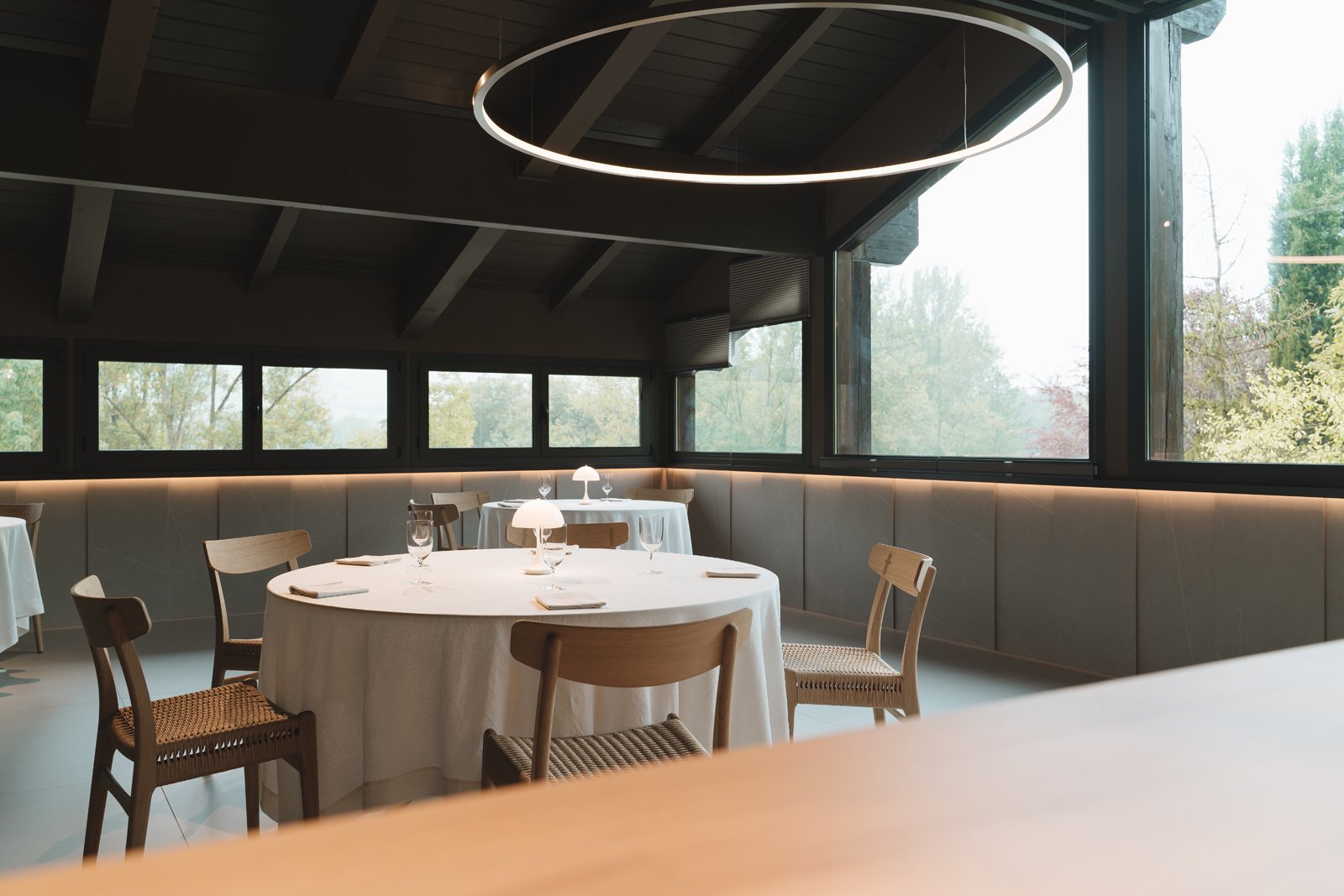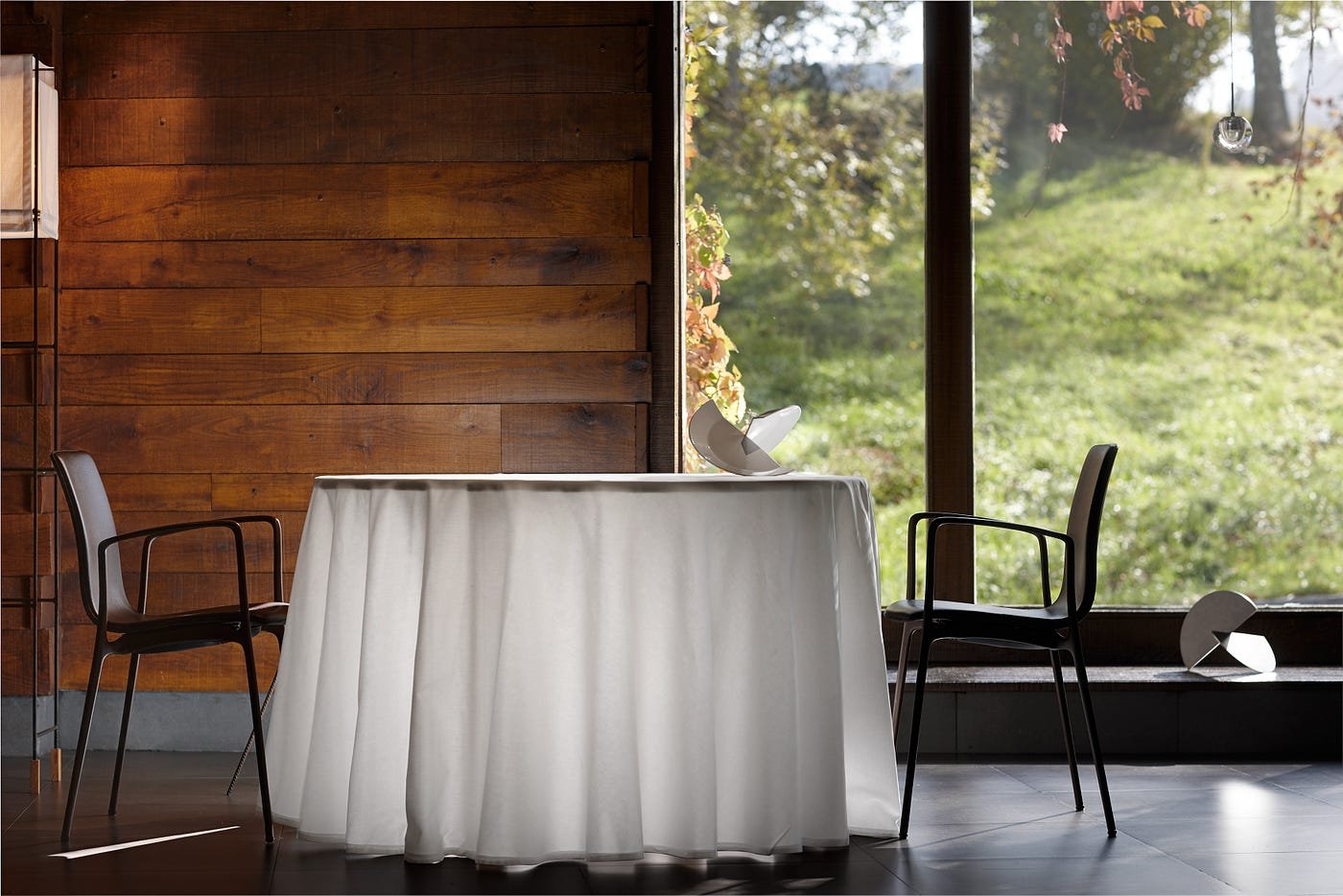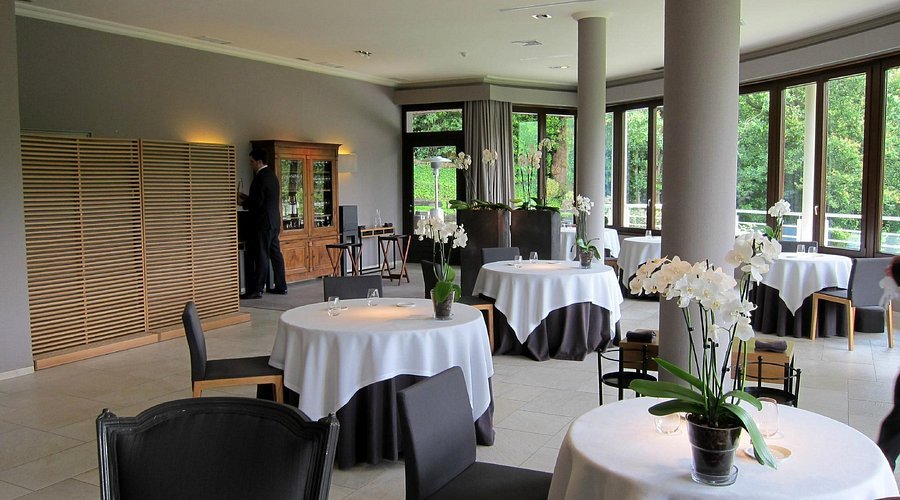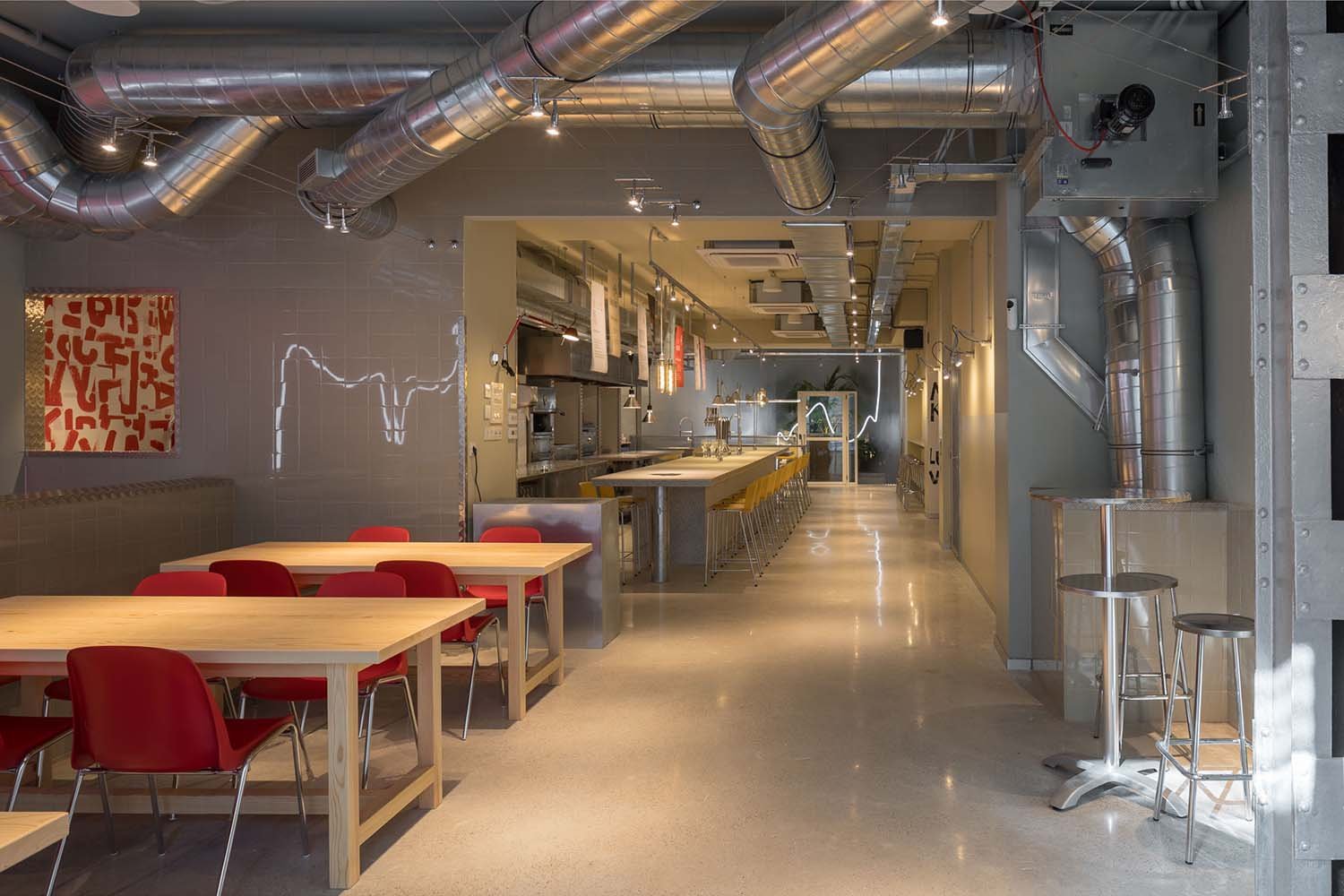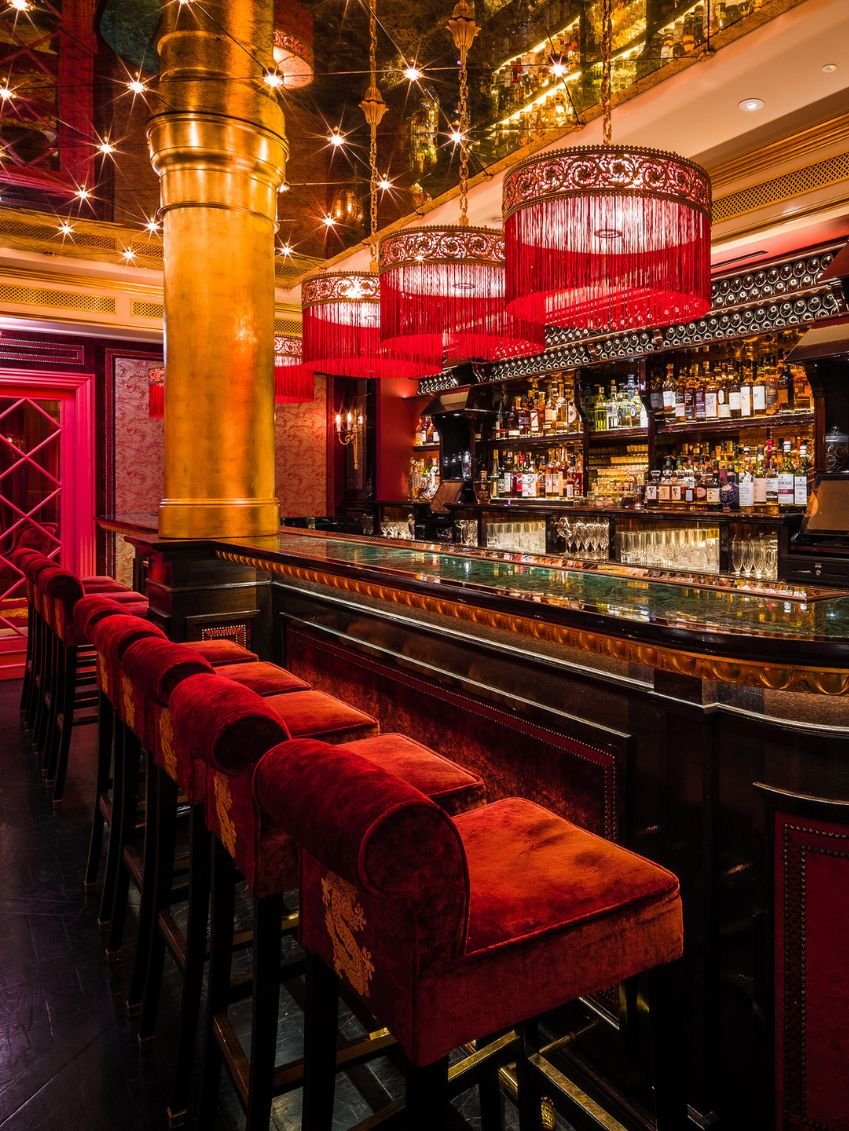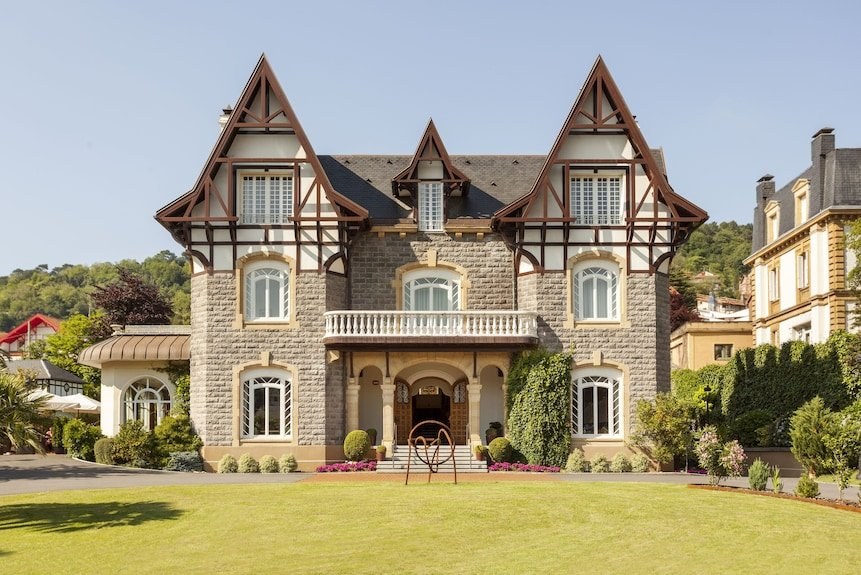
Holding a Michelin star continuously since 1993, Europa occupies a quiet block just off Plaza del Castillo in central Pamplona. The kitchen works within the Basque-Navarrese tradition, producing contemporary interpretations of regional cooking built on local produce. Two tasting menus run alongside an à la carte that allows half-portions, making it the most structurally flexible fine-dining option in the city.
 Discover on Pearl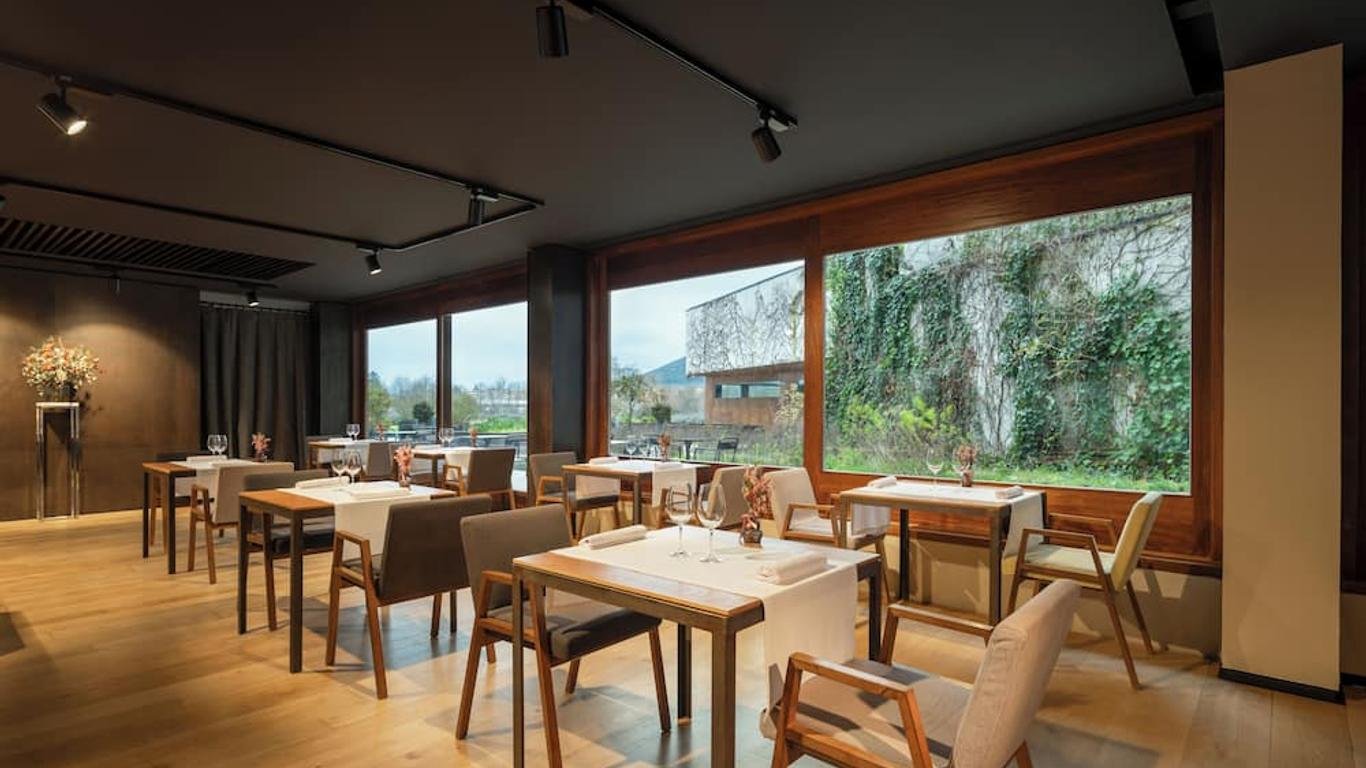
A Street With History, a Room That Rewards Attention
Calle Espoz y Mina sits one block from Plaza del Castillo, the broad civic square that anchors daily life in Pamplona. Walk the street on any morning in July and you will feel the city coil toward San Fermín: barriers stacked against walls, the scent of sawdust on cobblestones, the particular tension that comes before a festival. For most of the year, however, the street returns to something quieter, and Europa, at number eleven, reads the same way: present without announcing itself, the kind of address that rewards those who were already looking for it rather than those drawn in by a shopfront. The proximity to Calle Estafeta, the most-photographed section of the bull-run route, places the restaurant at the geographic and symbolic heart of the city without asking visitors to treat it as a tourist stop.
What Thirty Years of a Michelin Star Implies About the Kitchen
Among the restaurants holding a Michelin star across northern Spain, continuous retention over three decades is a relatively uncommon signal. Arzak in San Sebastián operates in that long-tenure tier; so do a handful of Basque-country addresses where the star functions less as annual validation and more as accumulated institutional recognition. Europa has held its single star since 1993, placing it in the same generational bracket: a kitchen that has been trusted across multiple Michelin editorial cycles, cooking committee changes, and shifts in what the guide rewards.
That longevity matters most when you read the menu structure. Restaurants that chase annual re-evaluation tend to rotate aggressively and signal novelty loudly. Europa's menu architecture is built differently. The à la carte is described as extensive and traditionally inspired, with half-portions available, a format common in Basque fine dining that allows the table to build its own tasting sequence without committing to a fixed chef's menu. That flexibility sits alongside two set menus, the Eugenia and the Degustación, both offered with wine pairing. The result is a kitchen confident enough to let the diner set the pace rather than one that needs a single predetermined sequence to make its argument.
For context on the broader Pamplona fine-dining scene, Rodero and Kabo both hold Michelin stars at the €€€ tier. Europa prices at €€€€, the highest bracket in the local peer set, signalling that the kitchen is positioning itself above both in terms of investment per cover. The question for a diner choosing between them is not simply cost but what kind of experience the menu structure offers. Europa's half-portion à la carte format gives it a distinct identity: it is the Pamplona fine-dining option most willing to let the diner improvise.
The Basque-Navarrese Foundation and What It Means for the Plate
Navarra occupies an interesting culinary position in northern Spain. It sits east of the Basque Country proper, sharing many of the same ingredient traditions (river fish, garden vegetables, high-quality protein from small farms and coastal suppliers) but without the same international visibility that San Sebastián commands. The province has its own appellations, its own vegetable culture, and a tradition of cooking that treats the raw material as the argument rather than the technique. Chef Pilar Idoate's approach, rooted in Basque cooking and applied to Navarrese produce, follows the logic that the leading kitchens in this part of Spain have always operated on: source from the region, cook with precision, and trust that the ingredient justifies the price.
The menu's emphasis on fish and meat, with the flexibility of half-portions, aligns with how Basque fine dining has historically been ordered: multiple small courses self-assembled by the table rather than a single imposed sequence. This is a different structural logic from, say, Azurmendi in Larrabetzu or El Celler de Can Roca in Girona, where the chef's menu is the primary vehicle and the progression is tightly controlled. Europa offers both: the Degustación menu for those who want the kitchen to narrate the meal, and the à la carte for those who want to negotiate it themselves.
The Idoate Vidaurre family's involvement across the operation (kitchen, front of house, and hospitality more broadly) reflects a pattern common to the most durable fine-dining addresses in the Basque region, where family continuity tends to produce floor service that is warm rather than merely correct. Among the options listed in Alhambra and other traditional addresses in Pamplona, that depth of family-led service is a consistent differentiator at the top tier.
Menu Architecture as a Statement of Intent
Two set menus deserve attention as a structural choice, not just a format. Naming one menu after a person (Eugenia) while calling the other Degustación signals that the kitchen thinks about its output in at least two registers: a heritage or personal reference on one hand, and a more genre-standard tasting format on the other. This is a pattern visible at several Spanish fine-dining addresses where the kitchen wants to honour a particular culinary lineage without making the tasting menu feel like a historical exercise. The Eugenia menu, whatever its specific content, carries an implicit editorial instruction to the diner: there is a prior generation of cooking worth remembering here.
Wine pairing is available on both menus, which at €€€€ pricing and in a region with serious appellations (Navarra D.O., proximity to Rioja) is an expected feature rather than a selling point. What matters is that the kitchen has built pairing as an integrated option rather than an add-on, consistent with how Basque and Navarrese fine dining treats the cellar as an extension of the kitchen's argument. For those exploring the broader drinks scene in the city, our full Pamplona bars guide covers options from the historic Café Iruña on Plaza del Castillo to Bar Gorriti for pintxos, both within walking distance of Europa's address.
Timing, Booking, and the San Fermín Factor
Europa opens for lunch Tuesday through Saturday from 1:15 PM to 3:15 PM, and for dinner Wednesday through Saturday from 8:30 PM to 10:15 PM. Monday is lunch-only; Sunday is closed. This schedule reflects a northern Spanish fine-dining rhythm where the lunch service carries as much weight as dinner, a convention less familiar to visitors from cities where dinner dominates the fine-dining calendar.
The San Fermín festival runs annually in the second week of July, and the area around Calle Estafeta and Plaza del Castillo transforms completely during that period. For those visiting specifically for the festival, the restaurant's location means it sits at the edge of the most heavily trafficked zone in the city. Securing a reservation well in advance during that window is not optional at this tier: the city's capacity for visitors increases dramatically while the number of Michelin-starred covers does not. Outside of July, Pamplona operates on a more manageable schedule, and the northern autumn (September through November) is when the surrounding region's produce, including game, wild mushrooms, and autumn vegetables, tends to produce the most compelling menus at this level. The comparison with seasonal peaks at addresses like Aponiente in El Puerto de Santa María or DiverXO in Madrid is instructive: in each case, the season shapes the menu's ambition as much as the kitchen's technique.
For those building a broader Pamplona itinerary, our full Pamplona restaurants guide, hotels guide, wineries guide, and experiences guide cover the city's other tiers. Europa sits at the leading of the dining stack in terms of price and tenure, but Pamplona's eating culture is broad: the transition from a starred lunch at Calle Espoz y Mina to an evening of pintxos in the old town requires almost no planning beyond walking shoes. For contemporary fine dining at a comparable level elsewhere in Spain, Cocina Hermanos Torres in Barcelona and Jungsik in Seoul offer useful international reference points for the contemporary tasting menu format that Europa's Degustación sits within.
Comparable Spots
A fast peer set for context, pulled from similar venues in our database.
| Venue | Cuisine | Price | Notes |
|---|---|---|---|
| Europa | Contemporary | €€€€ | This venue |
| Rodero | Modern Spanish, Modern Cuisine | €€€ | Modern Spanish, Modern Cuisine, €€€ |
| Kabo | Contemporary | €€€ | Contemporary, €€€ |
| Bar Gorriti | Tapas Bar | Tapas Bar | |
| Café Iruña | Bar | Bar | |
| El Merca'o | Traditional Cuisine | €€ | Traditional Cuisine, €€ |
Continue exploring