
Hiroshima’s okonomiyaki culture is built around counter cooking, iron-plate timing, and the easy rhythm of a meal that can follow shopping, drinking, or a late train. Fumi Chan Nagarekawa ten sits in that civic ritual with Tabelog 100 Okonomiyaki selections in 2018, 2019, 2022, 2024, and 2025, giving it stronger credentials than a casual first glance suggests.
Pearl is the En Primeur Club membership app — saves, bookings, and concierge access live there. Same editors, same standards.
- Address
- 1-20 Horikawacho, Naka Ward, Hiroshima, 730-0033, Japan
- Phone
- +81 82-542-8777
- Website
- tabelog.com
 Saves & bookings on Pearl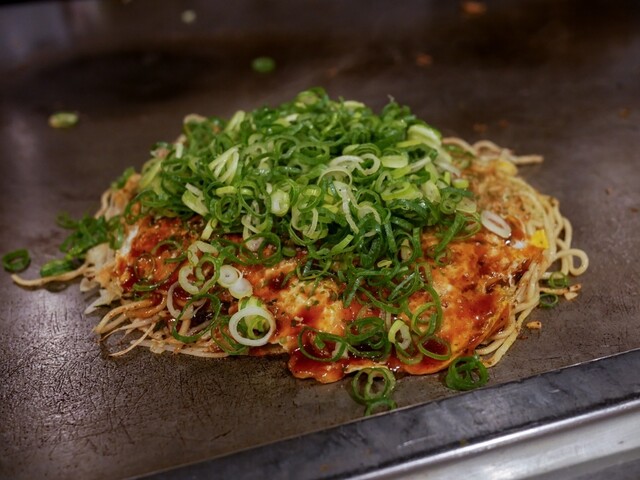
Nagarekawa announces itself in layers: signs, late traffic, the smell of hot griddles, and the quick turnover of diners who know exactly what kind of meal the district is built to deliver. Hiroshima okonomiyaki belongs to that street-level grammar. It is not a hushed tasting-menu format; it is a ritual of heat, cabbage, noodles, sauce, and pacing, watched from close range when the counter is in play and shared without ceremony when the table is full.
That matters in Hiroshima because okonomiyaki is not a side note to the city’s dining identity. It is one of the city’s great democratic foods, with a style distinct from Osaka’s mixed-batter version. Hiroshima’s version is typically layered rather than blended, with cabbage and noodles carrying the architecture of the dish. The pleasure is partly in the sequencing: the iron plate does the work, the cook manages compression and timing, and the diner waits for a dish that feels informal but depends on practiced control.
Hiroshima okonomiyaki as a dining ritual, not a novelty plate
Fumi Chan Nagarekawa ten fits the category where a casual room and serious repetition meet. Its recognition on Tabelog’s Okonomiyaki 100 list across multiple years places it inside a competitive field of specialists rather than among tourist-only grills. The Tabelog score of 3.65 gives another useful signal: in Japan’s user-rating culture, that mark generally indicates sustained local approval rather than a passing surge of attention.
The house format is broader than okonomiyaki alone, with teppanyaki and stir-fried noodles also part of the cooking vocabulary. That breadth is common in Hiroshima’s griddle culture, where the iron plate is both stage and tool. The meal’s customs are simple but specific: arrive ready for heat, watch the build if seated near the grill, and treat the dish as something timed to the plate rather than rushed between courses. This is where the city’s comfort food becomes technical without becoming precious.
Compared with Hiroshima’s higher-spend evening counters such as Kushi Dokoro Dochu or Yakitori Takase, the okonomiyaki specialist occupies a different decision point. The question is not cellar depth, skewer progression, or chef-led omakase rhythm. It is whether the traveler wants the city’s everyday signature in a room with enough recognition to justify a targeted stop. For broader dining contrast, the city also runs from creative cooking at Akai (Creative Cuisine) to bakery-café heritage at ANDERSEN, which makes the okonomiyaki stop feel less like a detour and more like a necessary calibration of Hiroshima’s range.
The Nagarekawa setting changes the pace of the meal
Nagarekawa is one of Hiroshima’s nightlife districts, and that changes how okonomiyaki reads. In a daytime market context, the dish can feel like lunch fuel. Here, it also works as a late social anchor, the kind of meal that can close a round of drinks or sit between errands and an evening out. The presence of sake, shochu, wine, and cocktails on the drinks side underlines the point: this is not only a family lunch format, even if the food itself remains accessible.
The room’s 52-seat layout, with counter and table seating, supports that split personality. Counter seats place the diner closer to the griddle ritual; tables suit groups who want conversation to outrun analysis. Private rooms are not part of the format, which keeps expectations in the right place. This is a public, casual, shared style of eating, more about timing and appetite than discretion.
The recognition history is the trust signal here. Tabelog Okonomiyaki 100 selections in 2018, 2019, 2022, 2024, and 2025 suggest durability in a category where local diners have many alternatives and little patience for weak execution. That is more useful than ornate language. Hiroshima has plenty of places to eat okonomiyaki; the value of this address is that it sits in the city’s central nightlife pattern while carrying repeated category recognition.
Visitors planning a fuller Hiroshima itinerary should treat this as the informal anchor rather than the sole dining statement. Pair it against sake-led or izakaya-style meals such as Bishu Bikou Hamai, sweets and gifting stops such as Butter Cake no Nagasaki Do, or contemporary dining rooms such as CHILAN. For wider planning, use Our full Hiroshima restaurants guide, Our full Hiroshima hotels guide, Our full Hiroshima bars guide, Our full Hiroshima wineries guide, and Our full Hiroshima experiences guide.
Who should put it on the Hiroshima schedule
The strongest case is for travelers who want Hiroshima okonomiyaki in a setting that feels native to the city’s evening rhythm, not isolated from it. The format suits groups, solo diners comfortable at counters, and anyone who prefers a direct local specialty over a long-form dining room. It is less suited to diners seeking quiet formality, private-room service, or a chef-biography narrative.
The broader Japan context helps sharpen the choice. Regional casual food can be as destination-worthy as formal dining when the format is specific and the execution has external recognition. That same logic explains why a traveler might cross-reference a sukiyaki specialist such as -Grilled beef Sukiyaki- KAMAKURA TANUKIAN 鎌倉 たぬき庵 in Kamakura, a Tokyo charcoal-and-tuna room like. 鮪と炭火焼き うお炭 秋葉原店 in Tokyo.cafe in Osaka.know in Kumamoto, (Shoku) Vietnam in Kawasaki, or [Curry Senmon Ten] Maruyama Kyoju. in Sapporo: the appeal lies in a precise local format rather than luxury codes. Even outside Japan, the same specialist logic links casual precision at Jōdo Saké Bar in Los Angeles and Onigiri Time in Pasadena.
Fumi Chan Nagarekawa ten is therefore easy to understand but not generic. It belongs to Hiroshima’s everyday food culture, carries repeated category recognition, and works within the city’s night-district tempo. The editorial call is clear: choose it when the point of the meal is Hiroshima’s griddle tradition itself, served without the theatre of fine dining but with enough signals to separate it from a random walk-in.
Cuisine-First Comparison
Nearby venues at a similar price tier for orientation.
| Venue | Cuisine | Price | Notes |
|---|---|---|---|
| Fumi Chan Nagarekawa tenThis venue — the venue you are viewing | Hiroshima-style Okonomiyaki & Teppanyaki | $ | Not listed |
| Butter Cake no Nagasaki Do | Japanese Butter Cake Shop | $ | Naka |
| Yagenbori Hassho | Hiroshima-style okonomiyaki | $ | Naka |
| Shintenchi Micchan | Hiroshima-style okonomiyaki | $ | Naka |
| Tonkatsu 16 | Tonkatsu | $$ | Naka |
| Denkou Sekka Ekie hiroshima ten | Hiroshima-style okonomiyaki & teppanyaki | $ | Minami |
Recognition history
Dated appearances from independent guides and award organizations, with the underlying list record or original source where available.
Tabelog 100 #88 · No. 88
Tabelog · Tabelog 100 - Okonomiyaki - 2025
Continue exploring
More in Hiroshima
Restaurants in Hiroshima
Browse all →
Bars in Hiroshima
Browse all →
At a Glance
- Lively
- Cozy
- Well Known
- Energetic
- Casual Hangout
- After Work
- Group Dining
- Solo
- Late Night
- Open Kitchen
- Standalone
- Chefs Counter
- Sake Program
- Beer Program
Current opening hours
- Monday
- 11:30 AM–11:30 PM
- Tuesday
- Closed
- Wednesday
- 11:30 AM–11:30 PM
- Thursday
- 11:30 AM–11:30 PM
- Friday
- 11:30 AM–11:30 PM
- Saturday
- 11:30 AM–11:30 PM
- Sunday
- 11:30 AM–10 PM
Hours can change for holidays and private events. Last verified .