One of Frankfurt's most storied traditional restaurants, Gref-Völsings Braterei on Hanauer Landstraße has anchored the city's appetite for honest German cooking for well over a century. The address sits east of the centre, in a stretch that rewards those willing to leave the tourist circuit. Expect the kind of direct roast cooking that Frankfurt's older dining culture built its credibility on.
Pearl is the En Primeur Club membership app — saves, bookings, and concierge access live there. Same editors, same standards.
- Address
- Hanauer Landstraße 132, 60314 Frankfurt am Main, Germany
- Phone
- +494969433530
- Website
- gref-voelsings.de
- Directions
- Get directions
 Saves & bookings on Pearl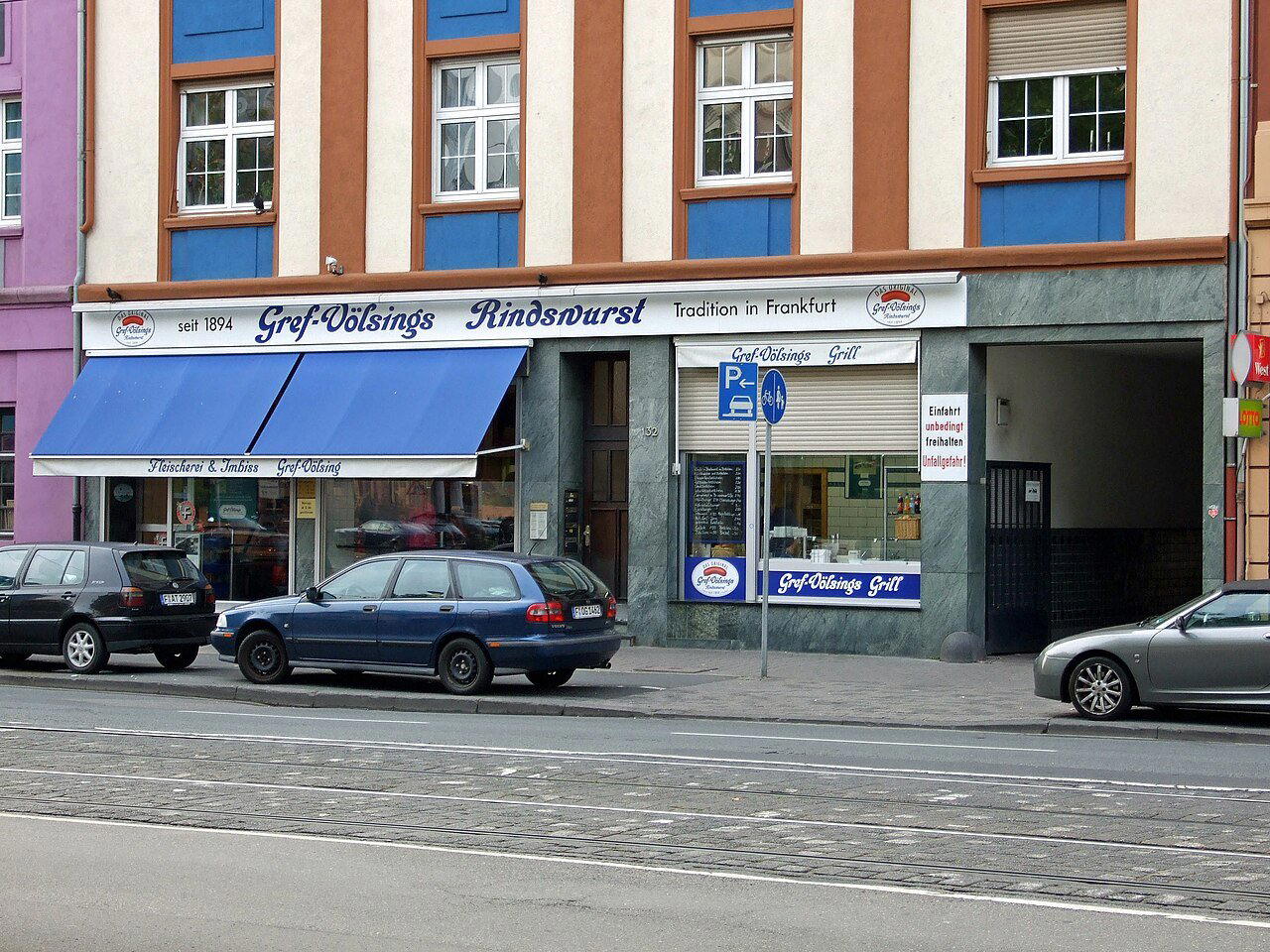
Frankfurt's East End and the Persistence of the Braterei Tradition
There is a particular kind of Frankfurt restaurant that has nothing to prove. It does not chase seasonal tasting menus or imported technique. It earns its place by doing a narrow set of things with accumulated precision, decade after decade. The Braterei format, rooted in the German tradition of specialised roast houses, sits in that category: a focused operation built around fire, fat, and the kind of confidence that comes from institutional repetition. Gref-Völsings Braterei is a traditional German sausage house in Frankfurt am Main, a walk-in-friendly address at Hanauer Landstraße 132 with a €10-per-person price point.
The Ostend address matters for context. Frankfurt's dining conversation tends to cluster around Sachsenhausen's apple wine taverns, the Bahnhofsviertel's immigrant food corridors, and the polished rooms of the banking quarter. The stretch of Hanauer Landstraße that runs east toward the city's industrial fringe occupies a different register: less curated, more functional, which is precisely the kind of neighbourhood that tends to preserve the sort of institution Gref-Völsings represents.
What a Roast House Looks Like When It Has Found Its Register
The Braterei enters your awareness before you're through the door. The smell of rendered fat and caramelised meat crust is the building's real signage, and it performs a sorting function: those who respond to it are already in the right frame of mind for what follows. Tables are close. Light is honest. The room does not perform hospitality; it delivers it.
The menu is short. The decisions are made at the table through the server, whose knowledge of the day's roast, its degree of cookery, and its appropriate accompaniment constitutes the actual service product. At Gref-Völsings, that front-of-house role acts as the connective tissue between kitchen output and guest experience in a way that the server steers you toward the right cut and the right glass of wine or Apfelwein.
The Frankfurt Roast Tradition in European Context
Germany's roast-house culture is often read abroad as direct bürgerlich cooking, but that reading undersells its technical specificity. The management of a large roast, its resting, its carving, the sequencing of service so that different cuts reach the table in correct condition, is a genuine operational discipline. Across Europe, the cities that still maintain dedicated roast houses (London's surviving carving rooms, Paris's rôtisseries, Vienna's Beisl traditions) share a common feature: they tend to be old, because the expertise is cumulative and difficult to replicate on short timelines.
Frankfurt is not a city with a long international profile in fine dining. Its Michelin-starred addresses, strong as some are, occupy a smaller cultural footprint than those of Munich or Hamburg. Restaurants like Aqua in Wolfsburg, JAN in Munich, or Schwarzwaldstube in Baiersbronn represent Germany's fine-dining register at its most decorated. Vendôme in Bergisch Gladbach, Victor's Fine Dining by Christian Bau in Perl, and Waldhotel Sonnora in Dreis demonstrate how Germany's kitchen culture operates at serious depth outside its major cities. More experimental formats like CODA Dessert Dining in Berlin and ES:SENZ in Grassau show a different end of the spectrum. Gref-Völsings sits well outside all of those categories, but it belongs to a tradition that predates most of them and will likely outlast many.
Within Frankfurt specifically, the restaurant occupies a different position from the city's newer generation of dining rooms. ALEJANDRO'S, Allgaiers Restaurant, Ambassel, Ariston, and atm by Deli&Grape represent Frankfurt's more contemporary dining register. Gref-Völsings is the reference point for what existed before that wave, and what continues alongside it.
Autumn and Winter: When the Format Makes Most Sense
Roast-house cooking is not a seasonless proposition. The heavier preparations, the rendered fats, the accompaniments built around root vegetables and braised legumes, are cold-weather food in a way that is both practical and cultural. In Frankfurt, the period from late October through February is when this register makes intuitive sense, when the city's grey-skied pragmatism and the restaurant's no-nonsense warmth align without effort. Visitors planning Frankfurt travel in that window may find Gref-Völsings at its most fitting.
Spring and summer bring a different calculation. The outdoor-facing dining culture of Sachsenhausen and the river promenade pulls the city's appetite outward, and the Braterei format competes less naturally with that mood. That is not a criticism; it is a characteristic. One useful read of a place like this involves understanding when it operates at full resonance, and the colder months are it.
How to Approach the Booking and Visit
Gref-Völsings operates in the category of Frankfurt address where walk-in visits are plausible but carry risk on busier midweek evenings and weekends. The restaurant draws a regular local following rather than a tourist queue, which means the room fills through repeat custom and word of mouth rather than platform-driven demand. Arriving without a reservation on a Thursday or Friday evening may work, but calling ahead can help. The address, Hanauer Landstraße 132, is accessible by tram from the city centre.
Pairing an evening at Gref-Völsings with a meal at one of the city's more contemporary addresses produces a useful cross-section of what Frankfurt's dining culture contains across its different layers.
Restaurant Haerlin in Hamburg, Schanz in Piesport, or internationally calibrated rooms like Le Bernardin in New York City and Atomix in New York City as benchmarks for technical ambition. Gref-Völsings measures itself against none of those. Its benchmark is its own previous performance.
Comparable Options
Comparable venues nearby, for context on price, style, and recognition.
| Venue | Cuisine | Price | Notes |
|---|---|---|---|
| Gref-Völsings BratereiThis venue — the venue you are viewing | Traditional German Sausage House | $$ | Not listed |
| Zum Eichkatzerl | Traditional Hessian Apple Wine Tavern | $$ | Roemerberg |
| Heimat, Frankfurt | Contemporary European with Modern German Influences | $$$ | Roemerberg |
| Freitagsküche | German Contemporary with Cultural Twist | $$ | Goethehaus |
| Pasta Davini | Authentic Italian Pasta | $$ | Roemerberg |
| Gilgamesch | Persian Middle Eastern | $$ | Palmengarten |
Continue exploring
More in Frankfurt
Restaurants in Frankfurt
Browse all →
Bars in Frankfurt
Browse all →

Hotels in Frankfurt
Browse all →

At a Glance
- Classic
- Rustic
- Casual Hangout
- Historic Building
Current opening hours
- Monday
- 7 AM–2 PM
- Tuesday
- 7 AM–4 PM
- Wednesday
- 7 AM–4 PM
- Thursday
- 7 AM–4 PM
- Friday
- 7 AM–4 PM
- Saturday
- 9 AM–1 PM
- Sunday
- Closed
Hours can change for holidays and private events. Last verified .
Casual butcher shop atmosphere with traditional German meat-focused service.