Our verdict
Forsthaus am See sits at the edge of the Starnberger See in Pöcking, occupying the kind of lakeside setting that Bavaria does better than almost anywhere in central Europe. The kitchen draws on the surrounding agricultural region, placing it in a category of destination dining that the area around Munich has quietly cultivated for decades. Check our full Pocking guide for planning context.
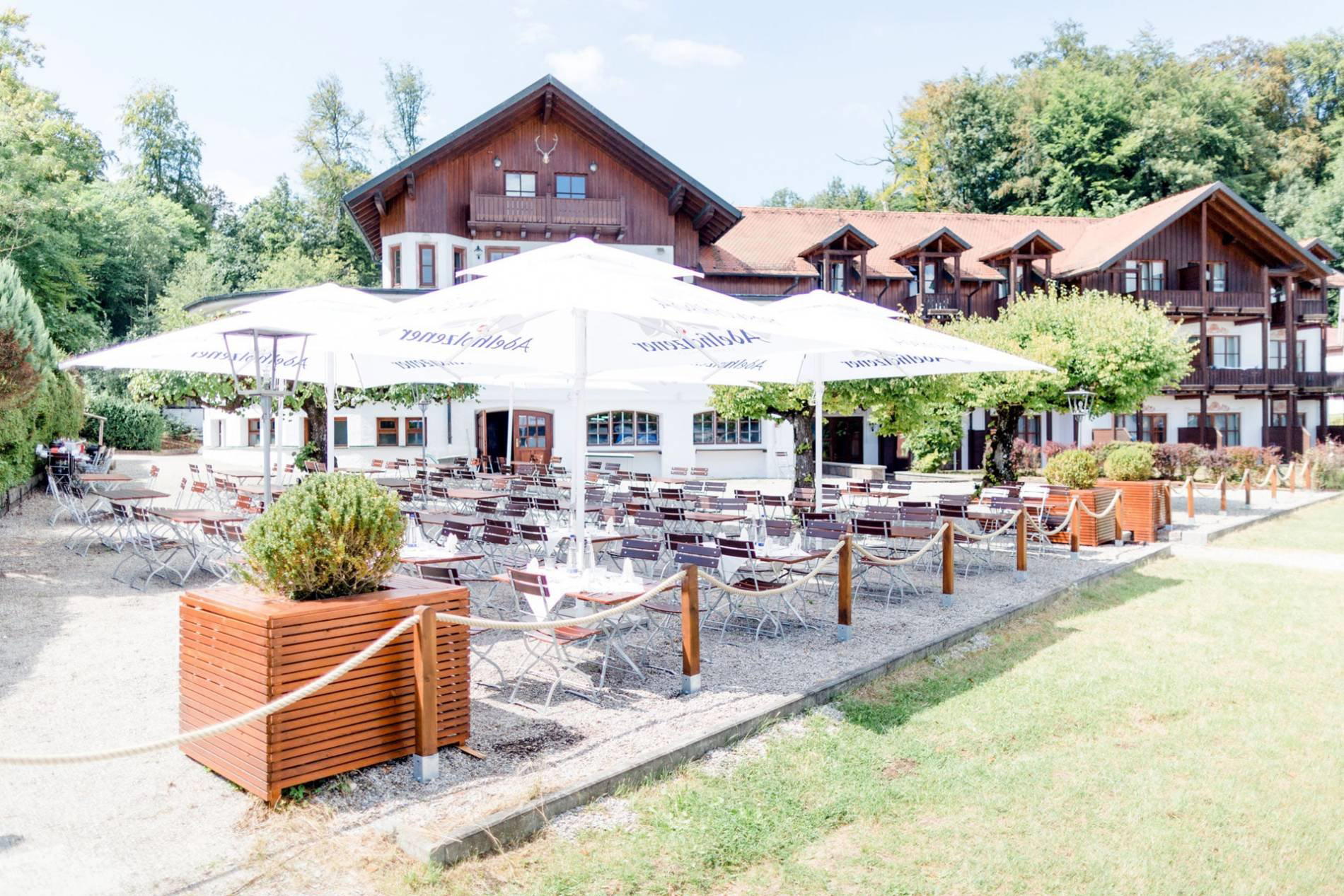
The approach to Forsthaus am See tells you something before you have ordered a thing. The address — Am See 1, Pöcking — places it at the water's edge of Starnberger See, one of Bavaria's deep glacial lakes, ringed by the foothills of the Alps. This is a landscape that has shaped the regional table for centuries: game from the surrounding forests, freshwater fish from the lake itself, dairy from the Alpine foothills to the south. Restaurants in this corridor do not need to import a localist philosophy, it was always here, built into the geography.
Lakeside Bavaria and the Regional Table
The area between Munich and the Bavarian Alps hosts a quieter category of destination dining than the city itself. Where Munich's top-tier rooms, including JAN in Munich, operate within an urban competitive set that prices and performs accordingly, the villages along Starnberger See occupy a different register: unhurried, scenically grounded, and drawing a clientele that often combines a weekend away with a serious meal. Forsthaus am See sits in that tradition, at an address that signals the intention clearly before any menu arrives.
Bavaria's culinary identity has long rested on sourcing proximity. The lakes in this region, Starnberger See, Ammersee, Chiemsee, produce pike-perch, trout, and whitefish that appear on regional menus in forms ranging from rustic to technically refined. The forests deliver venison, wild boar, and mushrooms. The farms between the lake towns and the mountains supply dairy and root vegetables that anchor the cold-season kitchen. This is not a sourcing philosophy adopted in response to a trend; it is the default condition of cooking in this part of Germany, and the better restaurants here are the ones that work within it rather than against it.
Where Forsthaus am See Sits in the Regional Picture
Germany's serious fine-dining tier has spread well beyond Munich and Hamburg. Rooms with Michelin recognition now operate in smaller towns and rural settings across the country, ES:SENZ in Grassau, less than two hours east, represents one example of refined Alpine-adjacent cooking earning national attention. Waldhotel Sonnora in Dreis and Schwarzwaldstube in Baiersbronn demonstrate how rurally situated German restaurants have consistently performed at the country's highest culinary tier, often outpacing city competition in consistency and sourcing depth.
Forsthaus am See operates in this broader pattern of countryside destination dining, where the setting functions as part of the offer rather than a backdrop to it. The lake address at Pöcking places it within reach of Munich, roughly 30 kilometres southwest, which means it draws both from the city's dining public and from visitors using the Starnberger See area as a base. For comparison, Schanz in Piesport and Bagatelle in Trier represent a similar model in the Moselle wine corridor: destination rooms that trade on regional identity and scenic positioning rather than urban density.
Ingredient Logic in the Starnberger See Corridor
The editorial angle that matters most for a room in this position is not the menu format or the dining room aesthetic, it is the sourcing logic. Starnberger See fishing has a documented history stretching back to monastic use of the lake in the medieval period. The Renke, a local whitefish species, is particular to the Alpine lakes and rarely appears on menus outside the immediate region. Game from the surrounding Forstenrieder Park and Starnberger forests enters the regional kitchen in autumn and winter, while the dairy farms of the Voralpenland supply cheeses and cream that have been part of Bavarian cooking for as long as there has been a Bavarian kitchen to speak of.
Restaurants that take this sourcing seriously end up with menus that are, in a meaningful sense, non-transferable, dishes that depend on relationships with specific suppliers, on the seasonal rhythms of a particular lake, on the specific character of milk from a particular elevation. This is what distinguishes the better end of regional German cooking from the merely competent. Internationally, rooms like Le Bernardin in New York City have built reputations around sourcing discipline for fish; in Bavaria, that discipline extends to the full range of the regional larder.
Planning a Visit
Pöcking is accessible from Munich via the S6 S-Bahn line to Starnberg, with the lake villages a short connection or taxi ride from there. The area draws visitors year-round, though the summer months bring the largest crowds to the lake, and tables at destination addresses in this corridor tend to fill well in advance during July and August. The shoulder seasons, May to June and September to October, offer quieter conditions and align with some of the kitchen's strongest sourcing windows: spring brings the first asparagus from the region, and autumn delivers the full scope of game and mushroom cookery. For a broader sense of the dining options across the area, our full Pocking restaurants guide covers the surrounding territory in detail.
Those building a longer trip through southern Germany's serious dining circuit might pair a visit here with time in Munich and a reach further into the Alps. ES:SENZ in Grassau represents the Alpine end of that circuit; JAN in Munich anchors the city end. Forsthaus am See, positioned at the lake between the two, occupies a distinct register, unhurried, scenically rooted, and drawing on one of Bavaria's most consistent and geographically specific larders.
For those comparing destination dining experiences across Germany's broader map, the country's rural fine-dining tier also includes rooms like Aqua in Wolfsburg, Vendôme in Bergisch Gladbach, Victor's Fine Dining by Christian Bau in Perl, GästeHaus Klaus Erfort in Saarbrücken, Ösch Noir in Donaueschingen, Jante in Hanover, Restaurant Haerlin in Hamburg, and CODA Dessert Dining in Berlin. The range across these rooms, in format, price, and sourcing philosophy, reflects how seriously Germany's regional dining scene has developed over the past two decades. International visitors comparing notes might also consider Lazy Bear in San Francisco, which operates a similarly experience-led, sourcing-conscious format in a very different geography.
Frequently asked questions
Is Forsthaus am See a family-friendly restaurant?
The setting at Am See 1 in Pöcking — a lakeside address in a Bavarian village rather than a city dining room — tends to suit a relaxed, multigenerational style of visit. The area around Starnberger See draws families from Munich, particularly on weekends and during summer. Confirm current seating arrangements and any children's provisions directly with the venue before booking.
What is the atmosphere like at Forsthaus am See?
Forsthaus am See sits on the Starnberger See in Pöcking, a setting that shapes the experience more than any interior design decision could. The lake villages in this corridor operate at a different register than Munich's city-centre rooms — quieter, more seasonal in rhythm, with a guest mix that skews toward weekenders and day-trippers from the city rather than business diners. The forested, lakeside context is the defining frame.
How do you get to Forsthaus am See from Munich, and is it worth the trip?
Forsthaus am See is located at Am See 1 in Pöcking, reachable from Munich via the S6 S-Bahn line to Starnberg, followed by a short taxi or local connection to the lake village. The journey takes roughly 40–50 minutes from central Munich, placing it firmly in day-trip or evening-excursion range. For visitors already planning time around Starnberger See, the lakeside address makes it a logical anchor for a meal.
What should I order at Forsthaus am See?
What is documented about the Starnberger See corridor generally is that kitchens in this area draw on strong regional sourcing — lake fish, Alpine dairy, and seasonal produce from the Bavarian hinterland — so those categories tend to anchor the menu logic. check the venue's official channels for current dishes and pricing.
How do I find Forsthaus am See?
Forsthaus am See is located at Am See 1, 82343 Pöcking, Germany, Pocking.
A Quick Peer Check
| Venue | Cuisine | Price | Awards | Notes |
|---|---|---|---|---|
| Forsthaus am SeeThis venue — the venue you are viewing | Bavarian-Apulian Italian Lakeside | Not listed | Not listed | Not listed |
| Schwarzwaldstube | Modern French Fine Dining | $150–200 | 3 Michelin Stars · World's 50 Best #47 | French, Classic French |
| Aqua | Modern European Fine Dining | Not listed | 3 Michelin Stars · World's 50 Best #33 | Contemporary German, Italian/Japanese, Creative |
| Vendôme | Modern German Haute Cuisine | $200–300 | 2 Michelin Stars · World's 50 Best #47 | Modern European, Creative |
| CODA Dessert Dining | Dessert-Inspired Fine Dining | $200–300 | 2 Michelin Stars · World's 50 Best #79 | Creative |
| Tantris | Modern French Fine Dining | $300–500 | 2 Michelin Stars · World's 50 Best #73 | Modern French, French Contemporary |
Continue exploring
More in Pocking
Restaurants in Pocking
Browse all →
Bars in Pocking
Browse all →
Hotels in Pocking
Browse all →
Wineries in Pocking
Browse all →
Details
- Scenic
- Rustic
- Cozy
- Date Night
- Special Occasion
- Group Dining
- Waterfront
- Terrace
- Waterfront
- A La Carte
- Vegetarian Friendly
Relaxed lakeside atmosphere with scenic natural surroundings ideal for unwinding.