Flor de Mayo
Our verdict
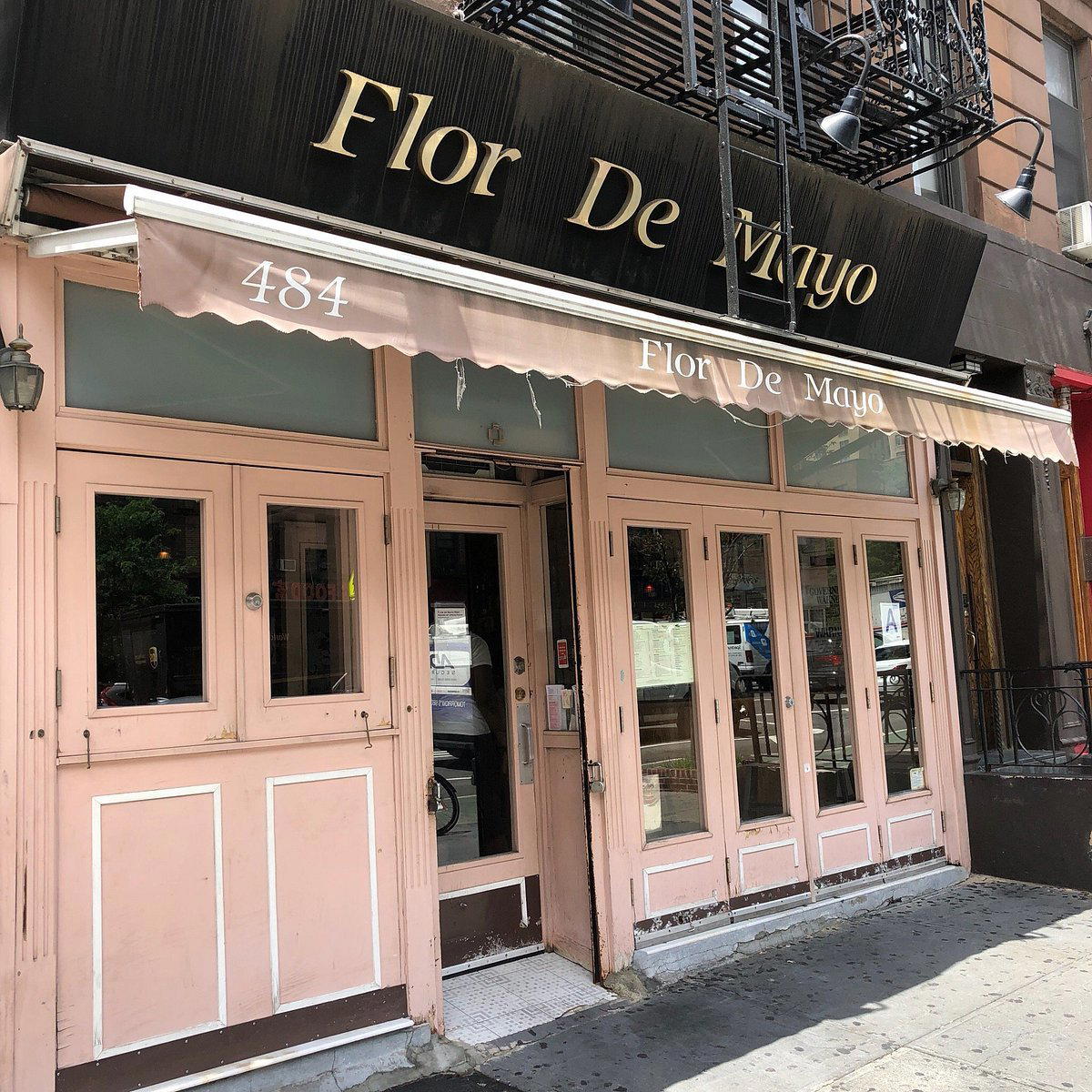
Flor de Mayo at 2651 Broadway brings Cuban-Chinese cooking to the Upper West Side, a combination that traces directly to the Cantonese immigrant communities that shaped Havana's food culture in the mid-twentieth century. The kitchen sits in a price tier that makes it accessible for casual neighbourhood dining while producing dishes that reward attention. For New York City's broader dining map, it occupies a specific and underrepresented niche.

Pearl is the En Primeur Club membership app, where members save venues, book tables and use the concierge.
The menu
What to order
- Lomo Saltado
- Pollo a la Brasa
- Arroz Chaufa
- Tallarín Verde
Where Cuban and Chinese Cooking Actually Meet
The Upper West Side has always sorted its restaurants by neighbourhood utility: places that feed families on weeknights, spots that handle a birthday, counters that absorb the post-movie crowd. Flor de Mayo, at 2651 Broadway, operates squarely in that register, but its kitchen draws on a culinary tradition that most of Manhattan has not given sustained attention. Cuban-Chinese cooking, the product of a documented wave of Cantonese immigration to Cuba beginning in the mid-nineteenth century, produced a hybrid cuisine that ran through Havana's Barrio Chino for generations before arriving in New York with the Cuban diaspora. What appears on the table at Flor de Mayo is not fusion in the contemporary sense, where two traditions are deliberately spliced for novelty, but something older: a cuisine that had a century to settle into its own logic before it crossed another border.
The Arc of a Meal Here
Cuban-Chinese menus tend to move through a different progression than the tasting formats you encounter at New York's higher-priced tiers. At Le Bernardin or Per Se, the meal is sequenced as a deliberate editorial statement, each course commenting on the last. Here, the architecture is more parallel: soups, rice plates, roasted meats, and stir-fried vegetables arrive in a configuration that the table assembles into its own logic. That approach rewards groups, who can cover more of the menu's range, and it also means the meal's narrative arc is partly the diner's to construct.
The Cuban side of the kitchen leans on the roasting traditions that define the island's most recognisable proteins, while the Chinese side contributes wok technique, soy-based braises, and the kind of rice cookery that reads as comfort food across both traditions. Where the two registers meet most directly is in dishes that carry both sets of markers at once: a roasted pork that arrives with the char and fat of a Cuban asado but with seasoning that pulls from Cantonese pantry staples, or a fried rice that holds the structural logic of Chinese technique but reads through the flavour vocabulary of the Cuban kitchen. These crossover points are where the cuisine earns its historical specificity.
The Neighbourhood This Fits Into
Broadway through the 90s and into the low 100s is one of the more genuinely mixed commercial strips in Manhattan, and Flor de Mayo has occupied its position on that corridor long enough to function as a neighbourhood institution in the practical sense rather than the rhetorical one. The Upper West Side's dining character has shifted over the past decade as higher-rent ground floors have pushed independent operators toward less expensive leases, but the Broadway corridor has retained a layer of long-standing independents. A Cuban-Chinese restaurant at this address is not a curiosity or a destination import; it is part of how this specific block has fed its surrounding population.
For visitors plotting a wider New York itinerary, the Upper West Side sits north of the Midtown concentration where most of the city's Michelin-flagged rooms operate. The full New York City restaurants guide maps the distance between that tier and neighbourhood dining, which is considerable in both geography and format. Flor de Mayo belongs firmly to the second category, and that context is relevant to managing expectations in both directions: it is not competing with Atomix or Eleven Madison Park for the same diner on the same night, and it should not be evaluated as if it were.
Cuban-Chinese Cooking in the Broader American Context
New York is one of a small number of American cities where Cuban-Chinese restaurants have existed long enough to have a history. The Chino-Latino tradition, as it is sometimes categorised, was more visible in the city in the 1970s and 1980s, when several dedicated restaurants operated in Midtown and the outer boroughs. The category has contracted since then, making the remaining examples more notable for their persistence than for any recent wave of interest. This is a different situation from the renewed attention to regional Chinese cooking that has expanded the city's Cantonese, Sichuan, and Shanghainese options over the same period.
Across the country, neighbourhood-scale restaurants that carry specific immigrant histories tend to receive less critical infrastructure than destination dining. Compare the documentation around a place like Blue Hill at Stone Barns in Tarrytown, where the farm-to-table argument has been made in detail and at length, to the relative silence around Cuban-Chinese kitchens that have been cooking the same cross-cultural menu for decades. The asymmetry is partly about price point, partly about the critical apparatus that follows awards, and partly about which cuisines have been granted the vocabulary of seriousness. That gap does not reflect the historical depth of what is actually being cooked.
Placing This in a Wider Dining Map
For readers who follow the EP Club's coverage of American fine dining, from The French Laundry in Napa to Smyth in Chicago and Providence in Los Angeles, Flor de Mayo operates in a register several tiers removed. That is not a qualification; it is a description of where the restaurant sits in the city's structure and what kind of visit it suits. The tasting-progression logic that governs a meal at Masa or the farm-sourcing argument behind Single Thread Farm in Healdsburg do not apply here. What applies is whether the kitchen is cooking its tradition with consistency and whether the neighbourhood it has served for years still returns. Both appear to be true.
For comparable neighbourhood-scale operations in other American cities, the pattern of long-running independents anchoring culturally specific cuisines recurs in different forms: Emeril's in New Orleans represents a different version of the equation, where a local culinary identity has been formalized and amplified, while places like Frasca Food and Wine in Boulder built regional wine and cooking credentials into a neighbourhood format. Flor de Mayo is doing something simpler: maintaining a specific culinary tradition at a price point that serves its immediate community.
Planning Your Visit
Flor de Mayo is located at 2651 Broadway, New York, NY 10025, on the Upper West Side. Getting there: The 1 train stops at 96th Street and Broadway, placing the restaurant within a short walk. Format: The kitchen produces a Cuban-Chinese menu suited to table-style ordering rather than a set progression, making it practical for groups of varying sizes. Budget: Pricing sits in the accessible neighbourhood range, well below the $$$$ tier that defines the city's tasting-menu rooms. Reservations: Contact the restaurant directly for current booking arrangements, as phone and online booking details were not available at time of publication. Timing: Weekday evenings tend to offer more relaxed pacing at Upper West Side neighbourhood restaurants than weekend nights, when the corridor draws heavier foot traffic.
Frequently asked questions
Does Flor de Mayo work for a family meal?
The Broadway address and Cuban-Chinese format both lend themselves to groups. The menu's range, moving across rice dishes, roast meats, and stir-fry preparations, gives enough variety that different appetites can be satisfied at one table. It is the kind of neighbourhood restaurant the Upper West Side has historically produced: functional for families without requiring a plan in advance.
Is Flor de Mayo better for a quiet night or a lively one?
Flor de Mayo sits on a working stretch of Broadway through the upper 90s, which keeps the energy grounded rather than performative. Expect the pace of a busy neighbourhood room rather than a quiet dinner-party setting. It functions well as a reliable weeknight table, not as a destination for a hushed occasion.
Is Flor de Mayo one of the last Cuban-Chinese restaurants still operating in New York City?
The Chino-Latino tradition that shaped New York's restaurant history from the 1950s onward has contracted significantly, with most of the original Chinatown-adjacent Cuban-Chinese establishments closing over the past three decades. Flor de Mayo at 2651 Broadway is among the few remaining practitioners of this format in Manhattan, which gives it a documentary value alongside its everyday utility as a neighbourhood table. For readers tracking Cuban-Chinese cooking in the United States, New York and Miami remain the primary cities where this tradition persists in any meaningful form.
What do people recommend at Flor de Mayo?
The Cuban-Chinese kitchen at this Upper West Side address is built around roast pork preparations and rice dishes that reflect the Chino-Latino tradition New York inherited from mid-century Cuban emigration. Regulars tend to orient around the roast meats, which are the clearest expression of where both culinary traditions converge. Because specific menu composition changes, confirming current offerings directly with the restaurant is the reliable approach.
What's Flor de Mayo's location?
Flor de Mayo is located at 2651 Broadway, New York, NY 10025, New York City.
What's the best way to book Flor de Mayo?
At 2651 Broadway, the restaurant draws steady neighbourhood traffic, so timing your visit outside peak dinner hours on weekends gives you the best chance of being seated promptly.
How It Stacks Up
Comparable venues nearby, for context on price, style, and recognition.
| Venue | Cuisine | Price | Notes |
|---|---|---|---|
| Flor de MayoThis venue (the venue you are viewing) | Chino-Latino Peruvian-Chinese Fusion | $20–30 | Not listed |
| Urubamba | Traditional Peruvian | $20–30 | Jackson Heights |
| Rulin | Modern Chinese Hand-Pulled Noodles | $20–30 | Union Square |
| Cafe Bar J.F. | South American Tavern / Peruvian-leaning New American | Not listed | Williamsburg |
| Gotham Bar and Grill | Dining | Not listed | New York City |
| Ikyu Sushi II | Authentic Japanese Sushi | Not listed | Upper East Side-Lenox Hill-Roosevelt Island |